
Recommended Free Tools
There is no single best Android kiosk software solution for 2026: the right choice depends on whether you need a single-app kiosk, multi-app device, browser terminal, digital-signage player, POS system, or centrally managed fleet. Hexnode is the strongest overall UEM pick, Scalefusion offers compelling value, and SureLock is the clearest standalone lockdown option.
Android kiosk software restricts a phone, tablet, POS terminal, signage player, or shared work device to one application, an approved group of applications, a browser workflow, or a custom launcher. The most important buying decision is not the product’s position in a list; it is whether you need simple lockdown or full device lifecycle management.
Key takeaways
- Hexnode UEM is the strongest overall choice when advanced Android kiosk controls and centralized fleet management matter more than the lowest price.
- Scalefusion displayed annual-plan pricing of $2, $3.50, and $5 per device per month for its Essentials, Growth, and Business tiers during the August 16, 2026 research snapshot.
- 42Gears SureLock is the clearest standalone Android kiosk product, with a displayed price of $2.99 per device per month during the research snapshot.
- Android Enterprise supports company-owned dedicated devices locked to one application or an allowlisted group of applications through single-app and multi-app configurations.
- Browser kiosks are appropriate only when the complete workflow works reliably through a browser, including redirects, permissions, printing, downloads, authentication, and offline behavior.
- Exact Android version, OEM, Google Mobile Services, peripheral, enrollment, and recovery compatibility must be confirmed on the production device before purchase.
Quick comparison of the 11 Android kiosk solutions
The products below are not identical categories. The shortlist includes full UEM and MDM platforms, a standalone kiosk-lockdown product, browser-focused software, a remote-support-led platform, and a Samsung-specific management option. “Verify” means the research established the product as a candidate but did not establish enough current first-party detail for a definitive feature claim.
| Product | Best for | Product type | Single-app | Multi-app | Browser kiosk | Remote management | Public price signal |
|---|---|---|---|---|---|---|---|
| Hexnode UEM | Advanced kiosk controls | Full UEM | Documented kiosk capability | Documented kiosk capability | Boot-time website launch and browser lockdown documented | UEM console | Verify current plan pricing |
| Scalefusion | Value-oriented managed fleets | Full UEM | Documented | Verify exact tier | Website allowlisting documented | Cloud management | $2–$5/device/month displayed on annual plans |
| Esper | Developer-led dedicated-device fleets | Dedicated-device UEM | Documented in category coverage | Verify exact configuration | Verify | Monitoring and operational management | Custom pricing |
| 42Gears SureLock | Standalone Android lockdown | Standalone kiosk software | Documented | Defined kiosk environment documented | Verify exact browser workflow | Separate UEM or 42Gears products may be needed | $2.99/device/month displayed |
| ManageEngine MDM Plus | Existing ManageEngine customers | Full MDM | Android kiosk capability documented in current comparison coverage | Verify exact edition | Verify | MDM console | Verify current licensing |
| AirDroid Business | Remote support and troubleshooting | Business device management | Verify exact plan | Verify exact plan | Verify | Remote access and monitoring | Verify current edition pricing |
| KioWare | Browser-only public kiosks | Browser kiosk | Browser workflow | Not the primary use case | Specialist browser kiosk | Verify fleet-management depth | Verify current pricing |
| Miradore | Small mixed-device environments | MDM | Verify current Android scope | Verify current Android scope | Verify | MDM console | Verify current pricing |
| Microsoft Intune | Microsoft-centric IT environments | Enterprise UEM | Android dedicated-device configuration | Android dedicated-device configuration | Depends on managed app and configuration | Intune administration | Depends on Microsoft licensing |
| IBM MaaS360 | Regulated enterprise mobility | Enterprise UEM | Verify current dedicated-device scope | Verify current dedicated-device scope | Verify | Enterprise management | Custom or modular pricing |
| Samsung Knox Manage | Samsung-only fleets | Hardware-specific UEM | Verify exact Knox configuration | Verify exact Knox configuration | Verify | Samsung Knox management | Verify current package pricing |
This is an editorial shortlist based on current product documentation, vendor pricing pages, and comparison research. It is not a claim that every product was hands-on tested. Vendor-authored comparison pages are useful for identifying candidates but should not be treated as independent benchmark evidence.
#1 Best Overall

- ANTI-THEFT TABLET KIOSK FOR PUBLIC SETTINGS: Built for retail managers, hospitality staff, and IT teams. An anti-theft TORX bolt secures the tablet inside the clamp, and a second TORX-secured connection locks the case to the pole, helping prevent unwanted removal in retail stores, hotels, restaurants, schools, offices, trade shows, and other high-traffic environments.
- UNIVERSAL CLAMP FIT FOR 7.9"–11" TABLETS, UP TO 2.2 LBS: Adjustable clamps fit tablet widths from 5" to 7.125" and heights from 7.87" to 9.68". Three included silicone pad thicknesses (2mm, 3mm, 4mm) let you match the clamp to your tablet's exact thickness for a secure, no-wobble hold. Tablet ports and buttons remain fully accessible once mounted. Bare tablet only; cases are not compatible. Please measure your tablet to ensure compatibility before purchase.
- FULL TILT & 360° ROTATION: Adjustable head tilts +20°/-110° (130° total range) and rotates 360° for portrait or landscape orientation, allowing flexible viewing angles for POS transactions, check-in stations, and interactive displays.
- STABLE COUNTERTOP DESIGN WITH BOLT-DOWN OPTION: 11.2" stand height with base dimensions of 6.29" W x 9.05" D provides stable placement. Base can be bolted down for added security and stability.
- INTEGRATED CABLE ROUTING: Tablet charging cord can be routed through the pole to maintain an organized and professional countertop setup.
What is Android kiosk software?
Android kiosk software locks an Android device into a controlled purpose, such as one application, an allowlisted group of applications, a browser-based service, digital signage, a POS workflow, or a custom launcher. Professional products can add enrollment, app deployment, remote configuration, monitoring, reporting, security policy, content distribution, and recovery controls.
Android itself provides a dedicated-device model. According to Google’s Android Enterprise dedicated-device documentation, administrators can use managed company-owned devices with single-app or multi-app restrictions, allowlisted applications, managed Google Play, and controls that prevent users from reaching the normal home screen. Android’s developer documentation describes related dedicated-device, device-owner, lock-task, enrollment, and operating-system management capabilities.
Third-party products differ in what they add to Android’s native controls. Some primarily provide a launcher and escape prevention. Other products add cloud enrollment, app lifecycle management, remote control, content scheduling, device telemetry, support workflows, branding, and integrations.
Which Android kiosk software is best for each deployment?
| Deployment need | Most suitable shortlist | Why | Main caution |
|---|---|---|---|
| Advanced retail or self-service kiosk | Hexnode UEM | Broad kiosk, browser, app, peripheral, branding, and UEM controls | May be more platform than a tiny fleet needs |
| Cost-conscious managed fleet | Scalefusion | Publicly displayed entry pricing with enrollment, app, kiosk, and allowlisting features | Compare feature gates between tiers |
| Developer-led product fleet | Esper | Dedicated-device operations, staged rollouts, custom applications, and telemetry | Confirm hardware and AOSP compatibility |
| Simple lockdown of existing Android devices | 42Gears SureLock | Standalone kiosk product rather than a mandatory full UEM | Separate tools may be needed for lifecycle management |
| Browser-only public terminal | KioWare | Specialist browser-kiosk focus | Native apps and complex peripherals may require another platform |
| Remote troubleshooting of distributed devices | AirDroid Business | Remote access and monitoring are central considerations | Validate lockdown depth and OEM limitations |
| Microsoft 365 and Entra ID environment | Microsoft Intune | Fits an existing Microsoft identity, endpoint, and compliance program | Dedicated-device setup and licensing can be complex |
| Samsung-standardized hardware | Samsung Knox Manage | Samsung-specific enrollment and device controls | Advantages do not transfer equally to other OEMs |
1. Hexnode UEM: best overall for advanced kiosk controls
Hexnode UEM is the best overall Android kiosk software choice in this shortlist when a business needs deep kiosk configuration together with centralized UEM administration.
Free tools Windows power users keep installed
One-click scans. No signup required.
Hexnode targets SMB, mid-market, retail, self-service, single-app, multi-app, and web-app deployments. Hexnode’s Android kiosk browser documentation describes boot-time launch of a specified website, support for multiple configured web apps, and restrictions on software and hardware keys that could let a user escape the browser.
Hexnode is more than a local launcher lock. Buyers should evaluate its app controls, peripheral restrictions, branding, remote-management features, enrollment options, reports, and policy administration as part of a broader fleet-management decision.
Best for: Retail, self-service, web-app kiosks, and organizations that need extensive centralized controls.
Watch-outs: Verify current pricing by edition, device type, billing term, Android release, OEM, and required add-ons. A few tablets may not justify a full UEM.
What’s actually slowing this PC down?
Pick the symptom - the matching free tool is one click away.
Verdict: Choose Hexnode when control depth and fleet administration matter more than the lowest software price.
2. Scalefusion: best value-oriented full UEM option
Scalefusion is a strong value pick for organizations that need cloud enrollment, app deployment, Android kiosk mode, and device management without starting with an enterprise-negotiated platform.
Scalefusion’s published kiosk pricing page displayed Essentials at $2 per device per month, Growth at $3.50 per device per month, and Business at $5 per device per month when billed annually during the August 16, 2026 research snapshot. The same page listed Android Enterprise, Android zero-touch enrollment, silent app installation, website allowlisting, device groups, branding, and reports among the plan signals.
Those figures are observed vendor-page pricing, not guaranteed quotes. Confirm monthly versus annual billing, taxes, minimum device counts, promotional terms, support levels, and whether the required browser, peripheral, automation, security, and reporting controls are included in the selected tier.
Quick wins for a faster PC:
Clear out junk files and repair common Windows errorsFree Scan →Scan for outdated or missing drivers - takes under a minuteDriver Scan →Best for: Cost-conscious small and mid-sized organizations managing straightforward Android Enterprise kiosk fleets.
Watch-outs: The entry tier may not include every control required for unattended, regulated, payment, or highly customized deployments. Some labels on the pricing page were incomplete or untranslated during research, so feature definitions should be confirmed before purchase.
Verdict: Scalefusion is one of the most attractive public-price options when the fleet needs real UEM capabilities rather than only a local kiosk launcher.
3. Esper: best for developer-led and large dedicated-device fleets
Esper is best suited to organizations that treat Android devices as part of a product, service, or operational platform rather than as ordinary employee phones.
Esper is oriented toward dedicated Android deployments involving custom applications, engineering teams, DevOps processes, staged releases, device telemetry, operational monitoring, and large fleets. Capterra’s Android kiosk software listings describe Esper among platforms used to deploy, lock down, update, remotely monitor, and control Android kiosk devices.
Esper can be excessive for a few tablets or a basic web form. It also requires careful compatibility review for AOSP hardware, specialized Android builds, devices without Google Mobile Services, and custom firmware.
Best for: Custom Android hardware, enterprise product fleets, staged application rollouts, and engineering-led operations.
Watch-outs: Public pricing may require a sales conversation. Confirm supported device-management modes, Android versions, OEMs, peripherals, and recovery behavior.
Verdict: Esper is a strong technical choice when deployment engineering and fleet operations are central requirements.
Rank #2
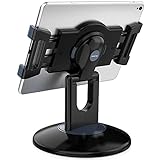
- Highly flexible - The 360° rotatable base and tablet bracket holder combined with a folding arm offer unparalleled adjustment for typing or showcasing without missing any viewing angles. Turn display in a second between cashier and shopper or switch landscape/portrait mode instantly.
- Business-oriented - Two size rubber padded bracket holders collectively fit 6" - 13" tablets or any gadgets with width or height measurement in the range of 6.6"-9.6" (Please noticed that both two clips fit cases less than 0.5" thickness), An ideal docking station stand for perfect match of large or small tablet pcs typically used at restaurant shop point of sale, office home desk, etc.
- Ergonomic design - Quick attach/detach of holder with simple push of the button creates no hassle for easy storage and carrying. A true universal ipad kiosk stand with easy pull handlebar and dedicated space for power cord charging.
- Broad application - Not only does it make your ipads/android/windows surface tablets a desktop display computer, it allows you to type, press, view, swivel with great stability. Confidently interact with customers at restaurant, check out at register, collaborate in group meeting at office, present products or services at showroom, and many more.
- Steady support - Light and smooth turning of bracket holder/arm provides high efficiency in busy settings. The weighted base plus hard folding arm offer sturdy structure to withstand weights of large tablets and heavy operation on the device, a professional grade tablet stand.
4. 42Gears SureLock: best standalone Android lockdown app
42Gears SureLock is the clearest standalone Android kiosk software choice for buyers who mainly need to restrict existing phones or tablets without adopting a complete UEM suite.
The official SureLock pricing page displayed a standalone price of $2.99 per Android device per month during the research snapshot. 42Gears also states that SureLock is included at no extra cost with certain SureMDM Standard, Premium, and Enterprise plans; confirm the current plan terms directly.
The SureLock Android FAQ addresses single-app mode, notification and status-bar restrictions, multiple-device configuration, kiosk controls, and administrator exit procedures. SureLock is intended for purpose-specific Android deployments, including smartphones, tablets, rugged devices, and unusual hardware, but compatibility still needs to be checked by exact model and Android version.
Windows Errors? Fix Them Before They Spread
Repair common Windows errors and clear accumulated junk for a smoother, more stable PC - no reinstall needed.Free scan · no reinstallCrashes, No Sound, or Screen Glitches?
Random freezes, missing sound and display glitches usually trace back to one bad driver. Find and replace yours safely.Free scan · under a minuteBest for: Small and medium deployments, single-purpose workflows, rugged Android hardware, and businesses seeking focused lockdown.
Watch-outs: A standalone lockdown app is not automatically a full device lifecycle platform. Inventory, zero-touch enrollment, app updates, remote support, reporting, and recovery may require SureMDM, another UEM, or separate tools.
Verdict: Choose SureLock when the main requirement is controlled access rather than comprehensive fleet administration.
5. ManageEngine Mobile Device Manager Plus: best for existing ManageEngine customers
ManageEngine Mobile Device Manager Plus is most compelling when an organization already uses ManageEngine and wants Android kiosk controls within a broader MDM environment.
The platform is an established MDM candidate for mixed mobile fleets, inventory, app distribution, device policy, and Android kiosk administration. It is identified as an enterprise MDM option in current 2026 Android kiosk comparison coverage.
ManageEngine may be administratively heavier than a kiosk-only product, especially if the deployment contains only one or two devices. Confirm the current free-edition limits, Android dedicated-device support, kiosk feature availability, enrollment modes, and whether licensing is device-based or user-based for the intended scenario.
Best for: Existing ManageEngine environments, mixed mobile fleets, and IT departments wanting a traditional MDM console.
Watch-outs: Do not rely on old forum posts for current plan limits or capabilities.
The Tool Desk
Outbyte PC Repair FREERepair Windows errors before they cause bigger problemsFix Now →Outbyte Driver Updater FREEScan for outdated or missing drivers - takes under a minuteDriver Scan →Verdict: ManageEngine is a sensible ecosystem choice, but it is not automatically the simplest kiosk-only solution.
6. AirDroid Business: best when remote support is central
AirDroid Business is a strong candidate when remote viewing, remote control, monitoring, and troubleshooting are more important than having the deepest possible kiosk policy engine.
Distributed retail, logistics, field-service, signage, and unattended deployments can benefit from remote operations because support staff may need to diagnose a frozen application, inspect device status, restart a device, or reduce an on-site visit. Current comparison coverage identifies AirDroid Business as an Android kiosk option with unattended remote-access functionality.
Remote access should be evaluated separately from kiosk security. Confirm whether the selected edition provides screen viewing, unattended control, remote reboot, logs, file transfer, and diagnostics on the exact Android OEM and version. Review privacy, consent, access logging, and data-exposure implications for customer-facing terminals.
Best for: Geographically distributed devices where remote support and monitoring are operational priorities.
Watch-outs: Verify lockdown depth, Android Enterprise support, remote-control limitations, and plan-specific kiosk features.
Verdict: AirDroid Business is attractive for remote operations, but it should not be selected on remote-control features alone.
7. KioWare: best for browser-only public kiosks
KioWare is best for browser-only public kiosks where visitors should access a website, catalog, form, reservation service, or online public resource and nothing else.
Do these 3 things before closing this tab:
1Repair Windows errors before they cause bigger problems2Fix the driver behind crashes, sound loss and screen glitches3Clear out junk files and repair common Windows errorsA specialist browser kiosk can be a better fit than a full UEM when the workflow is entirely web-based. Typical deployments include libraries, government terminals, visitor check-in, catalog lookup, public internet access, and web forms. Current comparison coverage lists KioWare as a browser-specific kiosk option.
Before choosing a browser shell, verify URL allowlisting, redirects, multiple domains, cookies, session persistence, file uploads and downloads, camera and microphone permissions, printing, payment pages, offline behavior, crash relaunch, full-screen mode, browser settings, history, share sheets, and external intents.
Rank #3

- Highly flexible - The 360° rotatable base and tablet bracket holder combined with a folding arm offer unparalleled adjustment for typing or showcasing without missing any viewing angles. Turn display in a second between cashier and shopper or switch landscape/portrait mode instantly.
- Business-oriented - Two size rubber padded bracket holders collectively fit 6" - 13" tablets or any gadgets with width or height measurement in the range of 6.6"-9.6" (Please noticed that both two clips fit cases less than 0.5" thickness), An ideal docking station stand for perfect match of large or small tablet pcs typically used at restaurant shop point of sale, office home desk, etc.
- Ergonomic design - Quick attach/detach of holder with simple push of the button creates no hassle for easy storage and carrying. A true universal ipad kiosk stand with easy pull handlebar and dedicated space for power cord charging.
- Broad application - Not only does it make your ipads/android/windows surface tablets a desktop display computer, it allows you to type, press, view, swivel with great stability. Confidently interact with customers at restaurant, check out at register, collaborate in group meeting at office, present products or services at showroom, and many more.
- Steady support - Light and smooth turning of bracket holder/arm provides high efficiency in busy settings. The weighted base plus hard folding arm offer sturdy structure to withstand weights of large tablets and heavy operation on the device, a professional grade tablet stand.
Best for: Public terminals and web services that do not require native Android applications.
Watch-outs: Browser kiosk software may not provide the same app deployment, hardware policy, fleet inventory, or recovery depth as a UEM.
Verdict: Choose KioWare when the requirement can be stated simply as “open this web experience and prevent everything else.”
8. Miradore: best for smaller mixed-device environments
Miradore is a candidate for small organizations that manage multiple operating systems and need basic Android device management with kiosk functionality.
Miradore may suit an organization that values a simpler MDM experience, inventory, and policy management across a modest mixed-device fleet. The available research did not establish enough current first-party detail to make definitive claims about its Android kiosk modes, enrollment options, pricing, device support, or advanced dedicated-device controls.
Confirm current official documentation before purchase, particularly for Android Enterprise, QR enrollment, zero-touch enrollment, devices without Google Mobile Services, multi-app kiosk behavior, remote support, and app lifecycle management.
The Tool Desk
Outbyte Driver Updater FREEFix the driver behind crashes, sound loss and screen glitchesFind Drivers →Outbyte PC Repair FREERepair Windows errors before they cause bigger problemsFix Now →Best for: Smaller mixed Android and Apple environments with straightforward management needs.
Watch-outs: Miradore may not offer the dedicated-device depth, remote-control tooling, or custom-fleet workflows of Esper, Hexnode, or Scalefusion.
Verdict: Miradore is worth evaluating when simplicity and mixed-device management matter, but its exact kiosk fit requires current vendor verification.
9. Microsoft Intune: best for Microsoft-centric IT environments
Microsoft Intune is a natural Android kiosk candidate when the organization already uses Microsoft Entra ID, Microsoft 365, Windows management, Conditional Access, and Microsoft security tooling.
Intune can fit fleets managed alongside Windows endpoints and identity policies, but Android dedicated-device configuration depends on the enrollment mode, managed applications, device restrictions, selected browser or app, and Microsoft licensing. The kiosk experience is therefore more configuration-dependent than the product name alone suggests.
Confirm current Android Enterprise dedicated-device support, exact configuration paths, licensing requirements, managed Google Play behavior, app permissions, and recovery workflows. Intune may be a poor fit for a small kiosk-only deployment that does not otherwise use Microsoft management.
Best for: Microsoft 365 organizations standardizing identity, compliance, and endpoint administration.
Watch-outs: Setup and licensing can be more involved than with a purpose-built kiosk platform.
Quick wins for a faster PC:
Repair Windows errors before they cause bigger problemsFix Now →Fix the driver behind crashes, sound loss and screen glitchesFind Drivers →Clear out junk files and repair common Windows errorsFree Scan →Verdict: Choose Intune when kiosk management belongs inside an existing Microsoft endpoint strategy.
10. IBM MaaS360: best for regulated enterprise mobility programs
IBM MaaS360 is best considered by large or regulated organizations that need broader endpoint governance, compliance, identity, reporting, and mobile-security controls alongside Android kiosk management.
MaaS360 is likely excessive for a handful of public tablets. Pricing and functionality may depend heavily on selected modules, integrations, and enterprise negotiations, so buyers should request a scenario-specific quote and feature statement.
Verify the current Android dedicated-device and kiosk feature set, enrollment methods, hardware support, reporting, compliance integrations, remote operations, and data-retention policies before making a selection.
Crashes, No Sound, or Screen Glitches?
Random freezes, missing sound and display glitches usually trace back to one bad driver. Find and replace yours safely.Free scan · under a minuteWindows Errors? Fix Them Before They Spread
Repair common Windows errors and clear accumulated junk for a smoother, more stable PC - no reinstall needed.Free scan · no reinstallBest for: Large enterprises, regulated industries, and existing IBM security or endpoint-management customers.
Watch-outs: A broad enterprise mobility program may impose more cost and administration than a dedicated kiosk product.
Verdict: MaaS360 is an enterprise governance option, not a default value choice for simple kiosk lockdown.
Rank #4

- Secure any 7.9" to 11" tablet against theft, built for retail managers, IT teams, and facility coordinators: the adjustable keyed locking clamp secures iPad, Samsung Galaxy Tab, and other 7.9" to 11" tablets against theft and tampering, ideal for retail stores, healthcare check-in desks, hospitality counters, offices, trade shows, and other high-traffic public spaces. Requires bare tablet, not compatible with cases. Tablet not included.
- Works with Square, PayPal, and other audio jack card readers: unlike enclosed kiosk stands, the open clamp design keeps your tablet's audio jack fully accessible, so you can run Square, PayPal Here, and other audio jack-based card readers while the tablet is securely mounted. Turn any floor kiosk into a fully functional POS checkout station without removing your payment hardware.
- Height adjustable tablet floor stand for shared-use spaces, adjusts with the tablet already mounted: adjustable pole height allows comfortable viewing for standing or seated users without unlocking or removing the device, making this tablet kiosk floor stand suitable for customer check-in, self-service kiosks, and shared interaction points. All hardware included for a straightforward, one-person setup.
- 360 degree rotation, +/-90 degree tilt, portrait or landscape, locked in place: rotate freely between portrait and landscape orientation and tilt to eliminate glare or match your application layout. Use portrait mode for POS checkout, visitor sign-in forms, and loyalty registration; switch to landscape for digital menus, video displays, and product demos. Both rotation and tilt adjust without tools.
- Cable alignment clips keep cords organized, charging port accessible while mounted: built-in cable alignment clips on the back of the pole route charging and data cables neatly along the stand, eliminating loose wires on the floor. The tablet's charging port remains fully accessible while mounted, so you can keep your device powered throughout continuous operation without removing it from the stand. The 9.4 lb steel stand has a 13.6" x 17.4" triangular base for freestanding stability, or bolt it to the floor via pre-drilled mounting holes for permanent installations, recommended for high-interaction touchscreen environments.
11. Samsung Knox Manage: best for Samsung-only fleets
Samsung Knox Manage is the strongest specialist candidate when every kiosk device is a supported Samsung phone or tablet and the organization wants Samsung-specific enrollment and device controls.
Free tools Windows power users keep installed
One-click scans. No signup required.
Samsung-standardized retail, field, and shared-device fleets can benefit from Knox capabilities, particularly when the organization already uses Samsung Knox enrollment. Buyers must distinguish Knox Manage from Knox Mobile Enrollment and broader Knox Suite bundles because enrollment, management, security, and kiosk features may be licensed separately.
Hardware-specific benefits do not transfer equally to Lenovo, Zebra, Xiaomi, AOSP, or other Android devices. Confirm the exact Galaxy model, Android release, kiosk configuration, browser behavior, hardware restrictions, enrollment route, and package licensing.
Best for: Samsung Galaxy tablets and phones managed as a standardized fleet.
Watch-outs: Samsung Knox Manage is not a hardware-neutral recommendation.
Verdict: Choose Knox Manage when Samsung standardization is a deliberate part of the deployment design.
How do single-app and multi-app kiosk modes differ?
Single-app kiosk mode launches one application and prevents the user from leaving it. Single-app mode suits POS, check-in, time clocks, digital signage, surveys, and single-purpose field tools.
Multi-app kiosk mode exposes a controlled group of applications through a managed launcher or allowlist. Multi-app mode suits warehouse, delivery, logistics, retail-associate, and shared-employee devices that need combinations of a scanner, browser, camera, support tool, and business application.
“Multi-app kiosk” does not mean the same thing across vendors. One product may provide only an allowlist. Another may add a branded launcher, folders, shortcuts, widgets, controlled settings, and role-based layouts. Ask vendors to demonstrate the exact user interface and escape paths.
When is a browser kiosk better than an app kiosk?
A browser kiosk is better when the complete workflow is dependable in a browser and does not require native Android applications or specialized hardware integrations.
Browser deployments need more than a locked URL. Test redirects, authentication, cookies, session persistence, multiple backend domains, camera and microphone permissions, printing, downloads, uploads, payments, full-screen behavior, external links, browser crashes, and network loss. A kiosk browser that blocks navigation may also block a legitimate identity provider, payment page, file picker, or scanner integration.
Hexnode’s documented browser controls include launching a specified website at boot, configuring multiple web apps, and disabling software and hardware keys in lockdown mode. That makes it a useful example of the difference between a browser kiosk and a general Android launcher lock.
Do you need a standalone kiosk app or a full UEM?
You need a standalone kiosk app when the main job is to restrict a small number of existing devices. You need a UEM when enrollment, inventory, app deployment, reporting, remote support, security policy, and bulk administration are equally important.
| Requirement | Standalone kiosk app | Full UEM or MDM |
|---|---|---|
| Lock one device to one app | Usually a strong fit | Available, but may add complexity |
| Manage dozens to thousands of devices | May require additional products | Primary use case |
| Automated enrollment | Often limited or separate | QR, zero-touch, Knox, NFC, or platform-specific options may be available |
| Managed app distribution | Basic or separate | Central policy and app lifecycle management |
| Remote monitoring and recovery | Varies widely | Usually a core evaluation area |
| Cost and administration | Potentially lower and simpler | Higher feature breadth and administrative overhead |
SureLock illustrates the standalone model, while Hexnode, Scalefusion, Esper, ManageEngine, Intune, MaaS360, and Knox Manage represent broader management approaches. SureMDM sits closer to the UEM side and lists kiosk restrictions, single-application mode, shared-device support, app management, remote support, and enrollment features on its pricing page.
How does Android Enterprise dedicated-device management work?
Android Enterprise dedicated-device management treats the company-owned device as a fully managed endpoint rather than a personal phone. Administrators can provision a device owner, use managed Google Play, allowlist applications, apply restrictions, and enforce lock-task or dedicated-device behavior.
Common enrollment paths include Android Enterprise QR-code enrollment, Android zero-touch enrollment, Samsung Knox Mobile Enrollment, NFC provisioning, vendor enrollment agents, and manual installation. Android’s dedicated-device developer documentation also describes ADB-based enrollment for development and testing.
Zero-touch is not a universal switch. Eligible hardware, reseller participation, the management platform, Android Enterprise support, and the selected enrollment configuration all matter. A device without Google Mobile Services may not behave like a standard Android Enterprise device.
Recommended Free Tools
What hardware and Android compatibility should you verify?
Android kiosk compatibility must be checked by exact device model, firmware, Android version, OEM, management mode, and Google-services availability. “Works with Android” is not a sufficient purchasing claim.
| Compatibility question | Why it matters | What to confirm |
|---|---|---|
| Which Android versions are supported? | Kiosk APIs and enrollment behavior change across releases | Vendor’s current version matrix for the production model |
| Is Android Enterprise supported? | Dedicated-device and device-owner controls depend on management mode | Fully managed, dedicated-device, lock-task, and managed Google Play support |
| Does the device use AOSP or lack Google Mobile Services? | Google Play and standard enrollment may not be available | Alternative provisioning and APK-management paths |
| Is the device Samsung, Zebra, rugged, Android TV, or specialized POS hardware? | OEM firmware and APIs affect buttons, peripherals, and remote control | Exact model-level compatibility and required OEM licenses |
| Are peripherals required? | Scanners, printers, cameras, NFC, USB, Bluetooth, and payment readers may need special support | Driver, permission, certification, and kiosk-policy behavior |
| Does the device have Google Play? | Managed Google Play and some enrollment flows may depend on GMS | Whether the product supports devices without Google Play Services |
42Gears’ SureLock FAQ demonstrates why supported Android versions and device compatibility should be checked rather than assumed. Consumer tablets can also stop receiving security updates, kill background services, reboot during updates, provide unreliable charging, or use firmware that interferes with kiosk APIs.
Independent reader supportYour contribution helps us test, update, and keep practical guides available for everyone.What happens after reboot, offline operation, or app failure?
A production kiosk should preserve its restrictions after reboot and loss of connectivity, but the business workflow itself may not continue offline unless the application supports local caching or offline transactions.
Ask every vendor whether the platform:
- Starts kiosk mode automatically after reboot, battery depletion, and system updates.
- Relaunches the foreground application after a crash or forced close.
- Retains restrictions while the device is offline.
- Queues policy, app, and content changes until connectivity returns.
- Supports remote reboot, health checks, watchdog behavior, and diagnostic logs.
- Provides a controlled maintenance window for app or operating-system updates.
- Allows recovery if the kiosk launcher or managed application fails.
- Prevents users from escaping during an update or unexpected error page.
Android’s dedicated-device documentation discusses operating-system update controls, including freezing an operating-system version over critical periods in supported deployments. Confirm how the selected product exposes that capability and what happens when a device misses the update window.
Do these 3 things before closing this tab:
1Fix the driver behind crashes, sound loss and screen glitches2Clear out junk files and repair common Windows errors3Scan for outdated or missing drivers - takes under a minuteBest Value

- UNIVERSAL TABLET COMPATIBILITY (9.7"–13.1"): Designed to fit most tablets within the 9.7" to 13.1" size range, including iPad, Samsung Galaxy Tab S series, Microsoft Surface Pro, Lenovo Tab series, Fire HD models, and more. Load capacity up to 15 lbs. Bare tablets only; cases are not compatible. Turn a tablet you already own into a dedicated kiosk or POS station instead of purchasing a single-purpose terminal. Please verify device compatibility before purchase.
- SECURE, TAMPER-RESISTANT DESIGN: Built for retail managers, hospitality staff, and IT teams. Secure enclosure helps deter tampering, making this tablet stand suitable for retail stores, hotels, restaurants, offices, schools, and other public-facing environments.
- 180° TILT & 90° ROTATION: Adjustable tilt up to 180° and 90° screen rotation allow portrait or landscape viewing to support POS software, digital signage, surveys, and interactive displays.
- MULTIPLE INSTALLATION OPTIONS: Use as a freestanding countertop stand with a 7.87" round base, secure the base to a wood surface with the included screws, or run cables through a desk using the grommet mount (requires a ¼" hole, up to 1.57" desk thickness). All necessary hardware included.
- COLD-ROLLED STEEL CONSTRUCTION: Durable steel build supports tablets up to 15 lbs while maintaining a stable 7.1" stand height (11.57" fully extended) and professional appearance.
How should administrators exit kiosk mode?
Every deployment needs a documented break-glass procedure that works for authorized staff and does not expose an easy escape route to the public.
Evaluate the administrator PIN or password, cloud-console exit command, offline recovery, local maintenance procedure, factory-reset consequences, remote wipe behavior, and whether the exit method still works when the device cannot contact the management server. SureLock’s official FAQ specifically covers exiting kiosk mode, making exit and recovery a concrete evaluation item rather than an afterthought.
Do not hide the recovery procedure from the support team. Store it securely, test it on the exact hardware, and document what happens if the kiosk app is damaged, the device is offline, the administrator account is unavailable, or a system update changes the interface.
How should pricing and total cost be compared?
Kiosk software pricing must be compared on equivalent capabilities, billing periods, device counts, support levels, and add-ons rather than on the lowest headline number.
What’s actually slowing this PC down?
Pick the symptom - the matching free tool is one click away.
| Product or tier | Displayed price signal | Billing context | Important qualification |
|---|---|---|---|
| 42Gears SureLock | $2.99/device/month | Standalone Android subscription displayed during research | Lockdown software may not replace full UEM capabilities |
| Scalefusion Essentials | $2/device/month | $24 shown when billed annually | Confirm included kiosk controls, minimums, taxes, and current terms |
| Scalefusion Growth | $3.50/device/month | $42 shown when billed annually | Compare advanced feature gates |
| Scalefusion Business | $5/device/month | $60 shown when billed annually | Confirm current plan contents and support |
| 42Gears SureMDM Standard | $3.99/device/month | Price displayed on vendor MDM page | Verify current plan, billing, and feature scope |
| Hexnode, Esper, AirDroid, KioWare, Miradore, Intune, MaaS360, Knox Manage | Not established in this research pass | May involve public tiers, modules, or custom quotes | Request a scenario-specific current quote |
The prices above were displayed at the time of the August 16, 2026 research snapshot and can change. Budget separately for Android hardware, commercial mounts and enclosures, power and cable management, network connectivity, payment hardware, scanners, printers, app development, content management, installation, replacement devices, field support, and physical tamper protection.
A low monthly software price can still produce a high total cost of ownership if the deployment needs custom integrations, cellular connectivity, commercial-grade hardware, remote hands, payment certification, or large-scale enrollment.
What security controls matter in an Android kiosk?
A professional Android kiosk deployment should be assessed for device-owner management, lock-task enforcement, Safe Mode restrictions, factory-reset protection, USB debugging restrictions, notification and status-bar restrictions, hardware-key controls, screen-capture blocking, app allowlisting, certificate management, Wi-Fi and VPN policy, password and screen-lock policy, remote wipe, local-admin restrictions, and rooted-device handling.
No kiosk product makes a physically accessible device completely secure. Software cannot prevent power removal, cable unplugging, theft, camera obstruction, physical damage, network disconnection, or every possible recovery-mode attack. Use commercial mounts, enclosures, tamper-resistant cabling, suitable power supplies, and a recovery plan alongside software lockdown.
Do these 3 things before closing this tab:
1Scan for outdated or missing drivers - takes under a minute2Clear out junk files and repair common Windows errors3Fix the driver behind crashes, sound loss and screen glitchesWhat special cases can invalidate a kiosk choice?
Payment terminals
Payment workflows may require dedicated payment applications, NFC, external readers, hardware-backed security, OEM certification, PCI-related controls, and restrictions on remote support during transactions. Do not use an ordinary tablet-kiosk recommendation for payment deployment until the payment provider validates the exact hardware, software, and integration.
Digital signage
Digital signage needs scheduled content, playlists, offline caching, automatic playback, orientation and brightness control, watchdog restart, remote screenshots, proof-of-play reporting, and hardware suitable for continuous operation. A signage player is not automatically equivalent to an interactive kiosk manager. 42Gears’ product overview lists SureVideo separately, illustrating the distinction between signage playback and general kiosk lockdown.
Devices without Google Mobile Services
AOSP hardware, China-market devices, Android forks, devices without Google Play Services, Android TV hardware, and embedded terminals may not support Android Enterprise or Managed Google Play in the same way as standard GMS devices. Require a vendor compatibility matrix before committing to a fleet.
Browser escape routes
Browser kiosks can fail through unrestricted redirects, downloads, file pickers, share sheets, external intents, deep links, keyboard shortcuts, notification panels, accessibility features, browser settings, or error pages that expose system controls. Test these paths on the actual device and browser version.
How should Android kiosk software be evaluated?
A practical editorial buying framework should weight lockdown depth most heavily, followed by compatibility, enrollment, remote operations, app management, security, pricing transparency, and administration. The framework below is a decision aid, not a hands-on product score.
| Criterion | Suggested importance | Questions to ask |
|---|---|---|
| Lockdown depth | 20% | Can the product enforce single-app, multi-app, browser, settings, notification, button, and escape restrictions? |
| Android compatibility | 15% | Does it support the Android Enterprise mode, OEM, AOSP build, rugged hardware, and GMS status? |
| Enrollment and deployment | 15% | Are QR, zero-touch, Knox, NFC, bulk, and recovery workflows available? |
| Remote operations | 15% | Can administrators monitor, reboot, support, diagnose, update, and recover devices remotely? |
| App and content management | 10% | Are managed Play, private apps, silent installation, version pinning, rollback, configuration, and content distribution supported? |
| Security and compliance | 10% | Are wipe, factory-reset protection, certificates, restrictions, audit logs, and compliance controls available? |
| Pricing transparency | 10% | Are plans, minimums, feature gates, billing terms, support, and add-ons clear? |
| Ease of administration | 5% | Are policy design, roles, documentation, and field workflows understandable? |
Android kiosk deployment checklist
- Confirm the exact production device model, Android version, firmware, OEM, and Google Mobile Services status.
- Decide whether the deployment needs single-app, multi-app, browser, signage, POS, shared-device, or custom-fleet behavior.
- Choose fully managed or dedicated-device enrollment rather than relying on consumer screen pinning.
- Confirm Android Enterprise, QR-code, zero-touch, Knox, NFC, ADB-development, or vendor-agent enrollment requirements.
- Configure the kiosk application, browser allowlist, or multi-app launcher.
- Restrict settings, notifications, status bar, hardware buttons, USB debugging, Safe Mode, screenshots, and external intents as required.
- Configure managed Google Play, private applications, APK delivery, permissions, app updates, and version rollback.
- Test reboot, battery depletion, app crash, network loss, DNS failure, management-server outage, and backend outage.
- Establish and securely document an administrator exit and offline break-glass procedure.
- Test operating-system and application update scheduling, rollback, and maintenance windows.
- Validate scanners, printers, cameras, microphones, Bluetooth, NFC, USB, payment readers, and other peripherals.
- Add physical mounting, enclosure, cable, power, network, and tamper controls.
- Pilot the software on the exact production hardware before buying or enrolling the entire fleet.
- Document recovery steps for field staff, including what to do when the device is offline or the kiosk launcher fails.
Final recommendations by scenario
- Best overall: Hexnode UEM for advanced controls and centralized management.
- Best value: Scalefusion when public pricing and broad UEM functions are important.
- Best for developer-led fleets: Esper for custom Android deployments, staged releases, and operational telemetry.
- Best standalone kiosk app: 42Gears SureLock for focused lockdown without requiring a full UEM purchase.
- Best for Microsoft environments: Microsoft Intune when Android kiosks belong inside an existing Microsoft endpoint strategy.
- Best for Samsung-only fleets: Samsung Knox Manage when hardware is standardized on supported Samsung devices.
- Best browser kiosk: KioWare when the entire public workflow is browser-based.
- Best for remote support: AirDroid Business when unattended access, monitoring, and troubleshooting are central.
These labels are editorial judgments by deployment scenario, not universal market rankings. A single unattended kiosk, a 50-device retail fleet, a 5,000-device product deployment, and a payment terminal have different requirements and should not be forced into the same “best” answer.
Frequently Asked Questions
Is Android screen pinning enough for a professional kiosk?
Android screen pinning is generally not equivalent to professionally managed dedicated-device mode. A managed kiosk deployment can provide persistent enforcement after reboot, allowlisted applications, centralized policy, app management, recovery, reporting, and device-owner controls that consumer screen pinning may not provide.
Can Android kiosk software work without internet access?
Many kiosk products can retain local restrictions while a device is offline, but offline kiosk enforcement is different from offline business operation. Confirm whether the application can authenticate, cache content, process transactions, relaunch after failure, queue changes, and recover without contacting the management server.
Crashes, No Sound, or Screen Glitches?
Random freezes, missing sound and display glitches usually trace back to one bad driver. Find and replace yours safely.Free scan · under a minuteWindows Errors? Fix Them Before They Spread
Repair common Windows errors and clear accumulated junk for a smoother, more stable PC - no reinstall needed.Free scan · no reinstallWhat is the cheapest Android kiosk software in this comparison?
The lowest displayed public price in this research was Scalefusion Essentials at $2 per device per month when billed annually, while 42Gears SureLock displayed $2.99 per device per month. The prices were observed during the August 16, 2026 research snapshot and are not directly comparable until feature tiers, billing terms, minimums, taxes, and support are checked.
Can Android kiosk software support payment terminals?
Android kiosk software may support a payment application or peripheral, but payment deployments require validation from the payment provider and hardware vendor. Confirm NFC, external readers, certification, hardware-backed security, PCI-related controls, remote-support restrictions, and the exact Android device before deployment.
Does Android kiosk software prevent physical tampering?
Android kiosk software can restrict applications, settings, buttons, notifications, and administrative actions, but software cannot prevent power removal, theft, cable disconnection, physical damage, or every recovery-mode attack. Commercial mounts, enclosures, tamper-resistant cables, suitable power, and field-recovery procedures remain necessary.
The Bottom Line
Bottom line: Choose Android kiosk software by deployment type, not by a universal ranking. Hexnode is the strongest overall UEM pick, Scalefusion is the leading value-oriented full-management option, Esper suits technical dedicated-device fleets, SureLock is the clearest standalone lockdown product, and KioWare is the specialist choice for browser-only public terminals. Validate the exact hardware, Android version, enrollment mode, peripherals, offline behavior, update process, and recovery procedure before committing to a fleet.
What’s actually slowing this PC down?
Pick the symptom - the matching free tool is one click away.
Quick Recap
Product prices and availability are accurate as of the date/time indicated and are subject to change. Any price and availability information displayed on Amazon at the time of purchase will apply.

