
Free tools Windows power users keep installed
One-click scans. No signup required.
The 7 Best Audio Editing Apps for macOS depend on the job: GarageBand is the easiest free music starter, Audacity is the best free waveform editor, Logic Pro is the strongest Mac-native music DAW, REAPER offers the best value, Adobe Audition excels at dialogue repair, Ableton Live suits electronic performance, and Hindenburg targets spoken-word production.
That list includes both waveform editors and digital audio workstations (DAWs), which are not interchangeable. Waveform editors are usually quicker for trimming, noise removal, conversion, and one-file fixes. DAWs are better for multitrack recording, arrangement, mixing, automation, virtual instruments, plug-ins, and projects that may need revision.
Key takeaways
- Audacity is the strongest free general-purpose waveform editor, while GarageBand is the better free starting point for music creation on a Mac.
- Logic Pro is the best overall choice for serious Mac-based music production, but Apple currently lists macOS 15.6 or later and Apple-silicon hardware as requirements.
- REAPER provides a fully functional 60-day evaluation, then costs $60 for an eligible discounted license or $225 for a commercial license before VAT and local taxes.
- Adobe Audition is strongest for professional dialogue cleanup, spectral repair, podcast production, and video workflows rather than beat-making or live electronic performance.
- Ableton Live is designed for electronic production, clips, loops, sampling, and performance; Hindenburg is the more natural specialist for radio, interviews, and spoken-word work.
Quick comparison: which macOS audio app should you choose?
| App | Best for | Price model | Beginner-friendly? | Full DAW? | Key limitation |
|---|---|---|---|---|---|
| Logic Pro | Serious music production, recording, composition, and mixing | Standalone purchase or Apple Creator Studio subscription | Moderately | Yes | Requires newer macOS and Apple-silicon Mac hardware according to Apple’s current product page |
| GarageBand | First music project, demos, simple recording, and basic podcast work | Free Mac download | Yes | Beginner-oriented DAW | Limited advanced routing, restoration, and project-management features |
| Audacity | Trimming, voice recording, noise reduction, conversion, and simple multitrack editing | Free and open source | Yes, after a short learning period | No, although it supports multitrack work | Less polished and flexible than commercial project-based DAWs |
| REAPER | Advanced users seeking a customizable, low-cost full DAW | 60-day evaluation; $60 eligible discounted license or $225 commercial license | Not immediately | Yes | Setup, routing, shortcuts, and templates may require manual configuration |
| Adobe Audition | Dialogue repair, spectral editing, podcasts, broadcast, and video post-production | Subscription; check current plan and renewal price | Moderately | Hybrid editor and multitrack workstation | Subscription cost and less emphasis on instruments or live performance |
| Ableton Live | Electronic music, loop-based composition, sampling, and live performance | Tiered editions; check current edition and price | Moderately for its target workflow | Yes | Overkill for basic voice-file editing and traditional cleanup |
| Hindenburg | Podcasts, radio, journalism, interviews, and documentary narration | Check current plan and price | Yes for spoken-word workflows | Spoken-word-focused workstation | Not intended for MIDI-heavy composition or virtual-instrument production |
How do you choose between a waveform editor and a DAW?
Choose a waveform editor when the job is mainly to open, inspect, trim, clean, convert, or export an audio file. Choose a DAW when the job involves multiple tracks, musical arrangement, instruments, automation, buses, plug-ins, or repeated revisions.
| Work you need to do | Best first choices | Why |
|---|---|---|
| Trim, crop, normalize, or convert a recording | Audacity; ocenaudio as an alternative | Fast file-oriented editing without the overhead of a complete music-production environment |
| Start a first music project | GarageBand | Accessible instruments, loops, effects, recording, arranging, mixing, and sharing |
| Produce an album, score, or full band recording | Logic Pro or REAPER | Multitrack recording, arrangement, mixing, automation, instruments, and plug-ins |
| Make electronic music or perform live | Ableton Live | Clip, loop, sampling, sound-design, and performance-oriented workflow |
| Edit interviews and podcasts | Hindenburg, Adobe Audition, or REAPER | Better project-based editing, speech processing, mixing, and revision workflows |
| Repair clicks, hum, noise, or damaged dialogue | Adobe Audition | Waveform, multitrack, and spectral views support detailed restoration |
| Work between Mac, Windows, and Linux | Audacity or REAPER | Both have cross-platform value, although projects and plug-ins still require care when moved between systems |
1. Logic Pro: best overall for serious music production on a Mac
Logic Pro is the best overall macOS app for musicians, producers, composers, and songwriters who want a deep, Mac-native DAW. Logic Pro combines multitrack recording, editing, mixing, automation, instruments, effects, and mastering in one environment.
Quick wins for a faster PC:
Fix the driver behind crashes, sound loss and screen glitchesFind Drivers →Repair Windows errors before they cause bigger problemsFix Now →Scan for outdated or missing drivers - takes under a minuteDriver Scan →#1 Best Overall

- [Natural Audio Clarity] Operated with frequency response of 50Hz-16KHz, the podcasting XLR mic delivers balanced audio range, likely to resonate with your audience. Directional cardioid dynamic microphone corded will not exaggerate your voice, while rejects unwanted off-axis noise for vocal originality and intelligibility during your PS5 gaming streaming video recording. (Tips: Keep the top of end-addressing XLR dynamic microphone AM8 facing audio source, and suggested recording range is 2 to 6 in.)
- [XLR Connection Upgrade-Ability] To use XLR connection, connect the podcast microphone to an audio interface (or mixer) using a separate XLR cable (NOT Included) . Well-connected and smooth operation improves audio flexibility to make you explore various types of music recording singing. The streaming mic isolates the pristine and accurate sound from ambient noise with greater no interference and fidelity. (RGB and function key on mic are INACTIVE when using XLR connection.)
- [USB Connection with Handy Mute] Skip the hassle of setting something up and plug the cable to play the dynamic USB microphone directly, which suits for beginner creators or daily podcast. You can quickly control the gamer mic with tap-to-mute that is independent of computer/Macbook programs to keep privacy when live streaming. LED mute reminder helps you get rid of forgetting to cancel the mute. (RGB and function key are only available for USB connection, but NOT for XLR connection)
- [Soothing Controllable RGB] RGB ring on the desktop gaming microphone for PC, with 3 modes and more than 10 light colors collection, matches your PC gears accessories for gaming synergy even in dim room. You can control the RGB key button of the dynamic microphone USB directly for game color scheme gaming or live streaming. Configured memory function, the streaming microphone RGB no need to repeated selections after turnning off and brings itself alive when power on. (Only available for USB connection)
- [More Function Keys] Computer microphone with headphones jack upgrades your rhythm game experience and gets feedback whether the real-time voice your audience hear as expected. Get the desired level via monitoring volume control when gaming recording. Smooth mic gain knob on the PC microphone gaming has some resistance to the point, easily for audio attenuation or boost presence to less post-production audio. (Only available for USB connection)
Apple’s Logic Pro product page also identifies Dolby Atmos and Spatial Audio workflows, GarageBand project compatibility, and Ableton Link support. GarageBand compatibility makes Logic Pro a particularly sensible upgrade path: a beginner can start with Apple’s simpler application and move projects into a more capable production environment later.
Why choose Logic Pro
- It covers songwriting, recording, arrangement, mixing, effects, virtual instruments, and mastering.
- It is tightly integrated with the Mac ecosystem.
- It supports spatial-audio workflows, including Dolby Atmos.
- It can open GarageBand projects, reducing the friction of upgrading.
What should Mac users check?
Apple currently lists macOS 15.6 or later and a Mac with Apple silicon for Logic Pro. That requirement is important for owners of older Intel Macs; “Mac-compatible” does not mean that every historical Mac can run the current release.
Apple also lists Apple Creator Studio at $12.99 per month or $129 per year for new subscribers after a 30-day trial, with education pricing of $2.99 per month or $29.99 per year. The retrieved Apple material confirms that Logic Pro is also available as a standalone Mac app but does not establish the standalone purchase price, so check the live Apple listing before buying.
Who should skip Logic Pro?
Skip Logic Pro if the task is only trimming a voice memo, converting WAV to AAC, or removing a short pause. Logic Pro’s breadth can make a simple file edit slower, and the current hardware requirement excludes some older Macs.
2. GarageBand: best free starting point for beginners
GarageBand is the best free macOS starting point for beginners who want to make music, record a voice, create a demo, or assemble a simple podcast project. GarageBand is a beginner-oriented DAW rather than a traditional waveform repair utility.
Apple describes GarageBand for Mac as a music-creation and recording studio with instruments, presets, guitar and voice effects, virtual drummers, loops, recording, mixing, and sharing. GarageBand can also receive tracks from an iPhone or iPad and work with Logic Remote.
The Mac App Store lists GarageBand as free. The retrieved Mac listing states macOS 15.6 or later; verify the live listing because app compatibility can change. Do not transfer the mobile listing’s track-count claims to the Mac version without checking the Mac-specific information.
Why choose GarageBand?
- The interface is less intimidating than a professional DAW.
- Loops, virtual instruments, drummers, presets, and effects make a first project quick to start.
- GarageBand is useful for demos, basic music, voice recordings, and straightforward podcast work.
- GarageBand offers a natural path toward Logic Pro for users who outgrow its simpler workflow.
Where does GarageBand fall short?
GarageBand is not the first choice for detailed spectral repair, complex spoken-word editing, elaborate routing, or large professional projects. A podcaster who regularly edits long interviews may find Hindenburg, Audition, or REAPER more efficient. A musician needing deep automation and advanced mixing will eventually want Logic Pro or another full DAW.
Windows Errors? Fix Them Before They Spread
Repair common Windows errors and clear accumulated junk for a smoother, more stable PC - no reinstall needed.Free scan · no reinstallOutdated Drivers Are Slowing You Down
One free scan finds every outdated or missing driver and matches the right update for your exact hardware.Free scan · exact hardware match3. Audacity: best free general-purpose audio editor
Audacity is the best free general-purpose waveform editor for trimming, recording, noise reduction, simple multitrack work, classroom use, and file conversion. Audacity is free, open source, and cross-platform rather than Mac-exclusive.
The official Audacity Mac download page lists Intel, Apple-silicon, and universal-binary availability. That processor choice makes Audacity practical for a wider range of Macs than applications whose current releases require Apple silicon. Audacity’s official FAQ also helps distinguish the desktop application from unofficial iOS and Android apps.
Rank #2
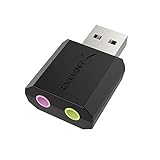
- PLUG IN AND HEAR SOUND IN SECONDS - USB Type-A connector with a 3.5mm stereo headphone output and a separate 3.5mm mono microphone input. No drivers, no software, no external power - the adapter is USB bus-powered and is recognized as a standard USB audio device.
- WORKS ON WINDOWS, MAC AND LINUX - Driverless on Windows 98SE/ME/2000/XP/Server 2003/Vista/7/8, Linux and Mac OSX, and compliant with the USB Audio Device Class 1.0 specification, so any system that supports class-compliant USB audio will see it. Select it as the sound output and input device after plugging it in.
- TWO JACKS, TWO JOBS - The green jack is stereo OUT for headphones or powered speakers; the pink jack is mono microphone IN for a 3.5mm mic. It does NOT support 4-pole headsets on a single combo plug, it does NOT power passive speakers, and it does NOT add surround sound - it is a stereo 2-channel adapter.
- FOR LAPTOPS AND DESKTOPS THAT NEED AN AUDIO PORT BACK - Adds a headphone and mic port to a laptop, desktop, or mini PC whose onboard jack has failed or was never there. Managed and work-issued computers can block new USB audio devices by policy - check with your IT department before ordering for a company machine.
- SABRENT SUPPORT AND WARRANTY - What is in the box: one USB audio sound adapter. Backed by a 1-year limited warranty, extended to 2 years when you register within 90 days on the manufacturer's website.
What Audacity does well
- Opens quickly for one-file edits.
- Handles trimming, fades, level changes, recording, and common cleanup tasks.
- Provides a free route into waveform editing.
- Works across macOS, Windows, and GNU/Linux, which helps when files must move between operating systems.
What Audacity does not replace
Audacity is not a complete replacement for Logic Pro, REAPER, or Ableton Live when the project requires sophisticated routing, virtual instruments, extensive automation, or a polished nondestructive workflow. Audacity can support multiple tracks, but its file-oriented editing model is less comfortable for complex productions.
“Free” also does not mean that every plug-in, codec, or third-party effect is free. Export options and optional encoders can vary by installation, so check the available formats in the installed version rather than assuming every format is present.
Why can’t Audacity record from my microphone?
First check System Settings → Privacy & Security → Microphone and allow Audacity to access the microphone. Then choose the intended input and output devices in Audacity, make a short test recording, and inspect the meters for clipping, one-sided input, or silence. If the official app is not listed, quit and reopen Audacity after changing the permission.
A retrieved official page showed Audacity 3.7.7, but that page was crawled before the August 2026 research snapshot. Treat that number as historical rather than as the guaranteed current version.
4. REAPER: best value for advanced users
REAPER is the best value for technically inclined musicians, podcasters, engineers, and sound designers who want a full DAW without committing to a subscription. REAPER is powerful and economical, but its low price does not make it the easiest application to learn.
The official REAPER purchase page lists a fully functional 60-day evaluation with no registration or personal details required. The page lists a $60 discounted license and a $225 commercial license. The discounted license is for personal use, individuals or businesses with annual gross revenue of no more than $20,000, and educational or nonprofit organizations; it is not automatically valid for every commercial user.
Recommended Free Tools
The same purchase page says a license includes free upgrades through REAPER version 8.99 and may be installed on multiple computers if used on only one computer at a time. The page identifies REAPER 7.78 dated July 18, 2026. The REAPER download page should remain the source of truth for the current installer and compatibility details.
Why REAPER is such good value
- It provides a complete recording, editing, mixing, routing, automation, and plug-in environment.
- The evaluation period is long enough to test a real workflow rather than a brief demo.
- The license model can be substantially cheaper over several years than a subscription.
- Its customization supports templates, shortcuts, scripts, routing schemes, and specialized production setups.
What is the trade-off?
New users may need to configure project templates, input and output routing, plug-ins, shortcuts, and defaults themselves. REAPER is a strong recommendation for users willing to learn their tools, not for someone who wants the most guided first experience.
REAPER’s download information states support across macOS 10.5 through macOS 26, although some features require newer releases. Compatibility is still not guaranteed for every plug-in or audio-interface driver, particularly on old Macs.
5. Adobe Audition: best for professional dialogue repair and restoration
Adobe Audition is the best choice in this list for professional dialogue repair, podcast production, audio restoration, and video workflows that benefit from Adobe integration. Audition brings waveform, multitrack, and spectral displays into one application.
Rank #3

- Custom three-capsule array: This professional USB mic produces clear, powerful, broadcast-quality sound for YouTube videos, Twitch game streaming, podcasting, Zoom meetings, music recording and more
- Blue VO!CE software: Elevate your streamings and recordings with clear broadcast vocal sound and entertain your audience with enhanced effects, advanced modulation and HD audio samples
- Four pickup patterns: Flexible cardioid, omni, bidirectional, and stereo pickup patterns allow you to record in ways that would normally require multiple mics, for vocals, instruments and podcasts
- Onboard audio controls: Headphone volume, pattern selection, instant mute, and mic gain put you in charge of every level of the audio recording and streaming process
- Positionable design: Pivot the mic in relation to the sound source to optimize your sound quality thanks to the adjustable desktop stand and track your voice in real time with no-latency monitoring
Adobe’s Audition product page positions the application for creating, mixing, editing, and restoring audio, including precision editing, podcasts, video, sound effects, and cleanup. Integration with Premiere Pro is a major advantage for video editors who need to move audio between editing and post-production workflows.
Why choose Audition?
- Spectral editing can make clicks, hum, noise, and other localized problems easier to inspect and repair.
- Waveform and multitrack views support both file repair and assembled productions.
- Audition fits naturally into an Adobe video workflow.
- It is better suited to professional dialogue cleanup than music-first applications such as Ableton Live.
What does Audition cost?
Audition uses subscription-based licensing, but the retrieved Adobe material does not establish a stable standard price. Adobe promotional pricing can differ from the normal renewal price. Check the current standalone or Creative Cloud plan, geography, tax treatment, trial duration, and renewal terms before subscribing.
Audition is a poor fit for buyers avoiding subscriptions or users whose main goal is beat-making, virtual instruments, or live electronic performance. Audition is also more valuable when the user needs its restoration and post-production strengths or already works with Premiere Pro.
6. Ableton Live: best for electronic music and creative performance
Ableton Live is the best macOS choice in this group for electronic producers, beat-makers, live performers, loop-based composition, sampling, and creative sound design. Ableton Live is a full DAW, but its clip- and performance-oriented workflow is fundamentally different from a traditional waveform editor.
The Tool Desk
Outbyte PC Repair FREERepair Windows errors before they cause bigger problemsFix Now →Outbyte Driver Updater FREEScan for outdated or missing drivers - takes under a minuteDriver Scan →The official Ableton Live product page should be checked for current edition names, features, system requirements, and pricing. Edition differences matter, so do not treat Intro, Standard, Suite, or any current replacement structure as interchangeable.
Why choose Ableton Live?
- Clip and loop workflows support nonlinear composition and experimentation.
- Sampling, instruments, effects, arrangement, and performance controls suit electronic production.
- Live performance is a central design goal rather than an afterthought.
- Ableton Live can synchronize with compatible software and hardware through Ableton Link; Apple also documents Link support in Logic Pro.
Who should not choose Ableton Live?
Ableton Live is excessive for trimming interviews, converting recordings, or removing a short section from a voice file. Its workflow can also feel unfamiliar to users who expect a conventional linear editor. If the article’s audience primarily means “edit recorded audio files,” ocenaudio or Fission is a more category-accurate alternative than Ableton Live.
7. Hindenburg: best specialist app for spoken-word production
Hindenburg is the best specialist choice here for journalists, radio producers, podcasters, documentary makers, and editors who mainly assemble interviews, narration, and other spoken-word material. Hindenburg’s value is workflow focus: speech assembly, leveling, voice processing, and delivery are more central than music composition.
Check the Hindenburg website for current product names, included features, pricing, plan terms, and macOS requirements before publication or purchase. The available research does not establish a stable current plan structure.
Why choose Hindenburg?
- The spoken-word focus can reduce the technical setup required for podcast and radio production.
- Interview, narration, and documentary workflows are a better fit than music-first DAWs.
- Users who regularly produce dialogue may prefer its focused approach over a general-purpose music environment.
What are Hindenburg’s limitations?
Hindenburg is not the right primary tool for MIDI-heavy composition, virtual instruments, elaborate music arrangement, or live electronic performance. Subscription or plan costs may also be less attractive for occasional users. Automated leveling and voice processing should be monitored critically because aggressive processing can introduce artifacts.
Which app is best for free audio editing on macOS?
Choose Audacity for free file editing and GarageBand for free beginner music creation. The distinction matters more than the word “free.” Audacity is designed around recording and manipulating audio files; GarageBand is designed around accessible music creation with instruments, loops, effects, arrangement, and mixing.
Rank #4

- Studio-Quality Sound for Clear Podcast Recording – The K66 USB podcast microphone delivers studio-quality, broadcast-level audio using a high-performance condenser capsule and cardioid pickup pattern that focuses on your voice while reducing unwanted background noise. Designed as a reliable microphone for PC, it features a wide 40Hz–18kHz frequency response and a 46kHz sampling rate to reproduce rich lows, smooth mids, and clear highs for natural, detailed vocals. With –45dB ±3dB sensitivity, it captures balanced sound without distortion during expressive speaking. Ideal for podcasting, voice-over, online classes, meetings, and professional content creation.
- Intelligent Noise Reduction Mode for Cleaner Podcast Audio – This podcast microphone features an advanced Noise Reduction Mode designed for clearer, more focused voice recording in real-world environments. Press and hold the mute button to enable noise reduction (blue indicator). In this mode, the microphone helps reduce keyboard clicks, PC fan noise, air conditioner hum, and background chatter. Default Mode maintains a warm, natural vocal tone for quiet spaces. Designed as a reliable microphone for PC, it allows creators to identify the active mode instantly and adapt as needed, ensuring clear audio for podcasting, gaming, streaming, online classes, meetings, and recording.
- True Plug-and-Play USB Microphone with Wide Device Compatibility – Engineered for effortless plug-and-play use, the K66 USB microphone requires no drivers, apps, or software installation. Simply connect and start recording on Windows PC, Mac, laptops, PS4, PS5, and tablets. Included USB-C and Lightning adapters ensure seamless compatibility with iPhone, iPad, and modern USB-C phones and devices, making it easy to switch between desktop and mobile recording. Ideal for creators working across multiple platforms, this microphone delivers consistent, high-quality audio for YouTube, TikTok, Twitch, Zoom, Discord, OBS Studio, Streamlabs, podcasting, livestreaming, and professional voice recording.
- Real-Time Zero-Latency Monitoring with Adjustable Volume Control – This podcast microphone features real-time, zero-latency monitoring through a built-in 3.5mm headphone jack, allowing you to hear exactly what’s being recorded without delay. Designed as a reliable microphone for PC, it includes a dedicated monitoring volume control that lets you adjust headphone listening levels independently for accurate and comfortable audio monitoring. Real-time feedback helps identify distortion, background noise, or uneven volume before it affects your final recording, making this podcast microphone ideal for podcasting, streaming, online teaching, voice-over work, and professional content creation.
- Precision Audio Adjustment Knobs for Full Sound Control – This podcast microphone gives creators hands-on control with dedicated knobs for microphone volume, monitoring volume, and echo adjustment. Fine-tune mic gain to maintain clear, balanced vocal output, adjust headphone monitoring levels independently for comfortable listening, and add or reduce echo to enhance depth and presence. Designed as a reliable PC microphone, these intuitive physical controls allow fast, on-the-fly adjustments without software, helping identify distortion, background noise, or level inconsistencies instantly. Ideal for podcasting, streaming, ASMR, voice-overs, singing, and professional multi-platform recording.
| Need | Better free choice | Reason |
|---|---|---|
| Cut a voice recording, remove sections, or export a different format | Audacity | It is the more direct waveform-editing tool |
| Record guitar, piano, vocals, or a simple song | GarageBand | Instruments, loops, presets, and beginner-oriented music workflows |
| Make a simple demo or casual podcast | GarageBand or Audacity | Choose GarageBand for music and Audacity for file-focused editing |
| Build a complex, revisable production | Neither may be ideal | Consider REAPER, Logic Pro, Audition, or Hindenburg according to the workflow |
Which app is best for podcasts and interviews?
Hindenburg is the most focused choice for spoken-word production, while Adobe Audition is stronger for detailed restoration and REAPER is the best value for users willing to configure a full DAW. GarageBand can handle simple podcast work, but it is not designed primarily around long-form dialogue editing.
Choose Hindenburg when speed and spoken-word organization matter most. Choose Audition when spectral repair, restoration, and Premiere Pro integration matter. Choose REAPER when the project needs flexible routing, automation, plug-ins, and a low long-term cost. Use Audacity for uncomplicated, mostly destructive edits to individual files.
Do these 3 things before closing this tab:
1Scan for outdated or missing drivers - takes under a minute2Clear out junk files and repair common Windows errors3Fix the driver behind crashes, sound loss and screen glitchesWhich app is best for music production on a Mac?
Choose Logic Pro for broad Mac-native music production and Ableton Live for electronic, loop-based, or performance-oriented work. REAPER is the value-focused alternative for users who want extensive customization, while GarageBand is the easiest starting point for a first song or demo.
| Music goal | Recommended app | Important trade-off |
|---|---|---|
| Learn recording and make a first song | GarageBand | Advanced routing and production features are limited |
| Produce songs, albums, or scores | Logic Pro | Current release requires newer macOS and Apple-silicon hardware |
| Make beats, use clips, sample, or perform live | Ableton Live | Less convenient for simple voice-file editing |
| Customize a full production environment at low cost | REAPER | More initial setup and a steeper learning curve |
How much do these macOS audio apps cost over time?
Compare licensing models over two or three years rather than comparing only the first download price. GarageBand and Audacity are free; REAPER is a one-time license with an evaluation period; Logic Pro can be bought as a standalone Mac app or accessed through Apple Creator Studio; Adobe Audition uses subscription licensing; Ableton Live uses tiered editions; and Hindenburg’s current plan structure must be checked.
| App | Known pricing information from the research | What to verify before purchase |
|---|---|---|
| GarageBand | Free in the Mac App Store | Current macOS requirement and Mac-specific compatibility |
| Audacity | Free and open source | Official installer, available export options, and third-party plug-in costs |
| REAPER | 60-day evaluation; $60 eligible discounted license; $225 commercial license | License eligibility, VAT/local taxes, and current upgrade policy |
| Logic Pro | Standalone Mac app or Apple Creator Studio at $12.99/month or $129/year for new subscribers; education pricing is listed separately | Standalone price, subscription renewal terms, and hardware compatibility |
| Adobe Audition | Subscription; retrieved material did not establish a stable standard price | Geography, promotional period, renewal price, trial, and standalone versus bundle terms |
| Ableton Live | Tiered editions; current price not established in the research | Current editions, feature limits, price, upgrade policy, and macOS requirements |
| Hindenburg | Current plan details require verification | Plan names, included processing and export features, price, and renewal terms |
REAPER’s discounted license is not universally available to commercial users, and Adobe promotional pricing should not be treated as a permanent renewal price. Apple Creator Studio pricing also applies to the bundle, not necessarily to a standalone Logic Pro purchase.
Independent reader supportYour contribution helps us test, update, and keep practical guides available for everyone.What should you check before installing an audio editor on macOS?
Check the macOS version, processor architecture, audio-interface drivers, plug-in formats, and project compatibility before installing the latest release. A Mac application may support Intel, Apple silicon, or both, and older releases may support an older macOS version than the current release.
- Mac processor: Confirm whether the app and important plug-ins support Intel, Apple silicon, or both.
- macOS version: Check the application’s current minimum requirement, not only its historical compatibility.
- Audio interface: Confirm that the interface has a driver or class-compliant support appropriate to the macOS release.
- Plug-ins: Check Audio Units (AU), VST, and VST3 support as needed. Intel-only plug-ins may require translation layers, while old 32-bit plug-ins generally do not run on modern macOS.
- Project interchange: A Logic Pro, REAPER, Ableton Live, or Audition project will not necessarily open natively in another application.
- Version direction: A project saved in a newer application may not open in an older version. Keep rendered stems, consolidated WAV files, MIDI files, and track notes when collaboration matters.
Older Intel Macs deserve special caution. A product may have supported Intel historically while its current version requires Apple silicon or a newer macOS release.
How do you set up a microphone or audio interface?
Connect the microphone or interface, select it in the application’s audio preferences, grant microphone permission, record a short test, and check latency and clipping before starting the real session.
- Connect the microphone or audio interface directly or through a reliable powered hub.
- Open the app’s audio preferences and select the intended input and output device.
- Choose a sensible sample rate and buffer size, keeping the interface and project settings aligned.
- On macOS, open System Settings → Privacy & Security → Microphone and allow the application to access the input.
- Record a short test and check that the waveform and meters move on the expected channel.
- Look for clipping, excessive background noise, one-sided input, and unexpected software monitoring.
- Use a smaller buffer while recording if monitoring latency is distracting; increase the buffer during heavy mixing if the system becomes unstable.
- Use direct hardware monitoring when the interface supports it and software monitoring introduces too much delay.
Apple’s GarageBand support documentation specifically notes that macOS may require permission for GarageBand to access built-in or connected audio inputs. The same permission concept applies broadly when another audio application cannot access a microphone.
How should you handle noise reduction, latency, and sample-rate problems?
Use the lightest effective cleanup, match sample rates, and treat monitoring latency as a recording-setup issue rather than a microphone-quality issue.
What’s actually slowing this PC down?
Pick the symptom - the matching free tool is one click away.
Best Value

- [Convenient Setup] Plug and play recording USB microphone for PC, with 5.9-Foot USB cable included for computer PC laptop, is connected directly to USB-A port for recording music, computer singing or podcast. The office condenser microphone for computer is easy to use and install. (NOT compatible with Xbox and Phones)
- [Durable Metal Design] Solid sturdy metal construction design, the computer microphone for Zoom meetings with stable tripod stand is convenient when you are doing voice overs or livestreams on YouTube. Durable material extends the service life of the voice-over microphone.
- [Mic Volume Knob] Gaming condenser USB mic compatible for PS4 with additional volume knob itself has a louder or quieter adjustment and is more sensitive. Your voice would be heard well enough through the zoom microphone USB when gaming, skyping or voice recording. Also, you can adjust your volume to zero and protect your privacy.
- [Widely Use] USB-powered design, the condenser microphone for recording no need the 48v Phantom power supply, works well with Cortana, Discord, voice chat and voice recognition. The podcast microphone for Mac, with USB-B to USB-A/C cable, is compatible with desktop, laptop or PS4/PS5, which meets most of your daily recording needs.
- [Clear Output Voice] Cardioid condenser microphone for PC captures your voice properly, producing clear smooth and crisp sound. Great computer recording mic for gamers/streamers/youtubers focus on the main source and reduces background noise. The streaming microphone does the job well for broadcast ,OBS and teamspeak.
Noise reduction
Noise reduction is not magic. Excessive processing can create metallic, watery, or phasey artifacts. Where an application supports a noise profile, capture a clean section of room tone, apply the smallest reduction that solves the problem, and compare the result with the original. Keep the original recording before processing.
Do not automatically stack aggressive noise reduction, gating, equalization, and compression. Use manual edits and gentle processing where possible, then listen on more than one playback system.
Latency
Software monitoring can produce a delay between speaking or playing and hearing the result. Lower the buffer for recording, raise it for demanding mixes, and use direct monitoring when available. Input latency does not necessarily indicate a poor microphone or interface.
Sample-rate mismatch
A mismatch between the audio interface, macOS audio settings, and project can cause speed or pitch changes, clicks, or failed playback. Keep the interface and project sample rates aligned, and check the Audio MIDI Setup utility if the selected rate does not match the application.
How should you export and deliver finished audio?
Keep a lossless master such as WAV or AIFF, then create a separate AAC or MP3 delivery copy when the destination requires compressed audio. An exported project file is not the same thing as an editable project, and an MP3 does not preserve the quality of a WAV or AIFF master.
- Project file: Preserves the editable session, track arrangement, processing, and routing within the application.
- WAV or AIFF: Appropriate for a high-quality master or further production.
- AAC or MP3: Useful for sharing or distribution when a compressed file is required.
- Sample rate and bit depth: Follow the technical specification of the destination rather than choosing values arbitrarily.
- Mono versus stereo: Spoken-word delivery may be mono or stereo depending on the production and platform requirements.
- Loudness: Podcast, broadcast, music-streaming, video, and social-video destinations can use different requirements; there is no single universal loudness target.
Before destructive processing or final export, save an unprocessed master and back up the project, source recordings, plug-in settings, and any external sample files.
What is the best audio editing app for older Macs?
There is no single older-Mac winner because current compatibility depends on the exact Intel or Apple-silicon processor, macOS release, interface driver, and plug-ins. Audacity is the safest first investigation because its official Mac download offers Intel and Apple-silicon options, while REAPER documents broad historical macOS support, although features and current plug-ins may still require newer systems.
Do not install an old application solely because it runs on an old Mac without checking security, plug-in, export, and project-compatibility consequences. A current version may be unavailable for older hardware, and a project created in a current release may not open in the older release available to the Mac.
Do these 3 things before closing this tab:
1Fix the driver behind crashes, sound loss and screen glitches2Clear out junk files and repair common Windows errors3Scan for outdated or missing drivers - takes under a minuteFinal recommendations by user
| If you are… | Start with… | Upgrade or alternative path |
|---|---|---|
| Editing a short recording or voice memo | Audacity | Try ocenaudio for a simpler waveform-editor experience |
| Making your first song | GarageBand | Move to Logic Pro when the project needs deeper production features |
| Producing serious music on a newer Mac | Logic Pro | Consider REAPER for customization or Ableton Live for performance-oriented production |
| Producing electronic music or performing live | Ableton Live | Compare current editions before purchase |
| Editing professional dialogue and repairing damaged audio | Adobe Audition | Consider REAPER for lower long-term cost or Hindenburg for speech-focused production |
| Producing interviews, radio, or podcasts | Hindenburg | Choose Audition for spectral restoration or REAPER for a customizable full DAW |
| Seeking professional features at the lowest qualifying one-time cost | REAPER | Confirm whether the $60 discounted license applies to your use |
Frequently Asked Questions
Is Audacity or GarageBand better for audio editing on a Mac?
Audacity is better for trimming, cleaning, recording, and converting audio files, while GarageBand is better for beginner music creation with instruments, loops, effects, arrangement, and mixing. Choose Audacity for waveform editing and GarageBand for a first song or demo.
Is Logic Pro free on macOS?
Logic Pro is not established as a free app in the supplied research. Apple lists Logic Pro as a standalone Mac app and as part of Apple Creator Studio, which Apple lists at $12.99 per month or $129 per year for new subscribers after a 30-day trial; check Apple’s current standalone price before buying.
Can an old Intel Mac run these audio editing apps?
Some apps, including Audacity and REAPER, have documented Intel or broad historical macOS support, but current compatibility depends on the exact macOS version, application release, audio-interface driver, and plug-ins. Apple currently lists Logic Pro for macOS 15.6 or later on Apple-silicon Macs.
What is the best audio editing app for podcasts?
Hindenburg is the most focused spoken-word option, Adobe Audition is strongest for detailed repair and Adobe video workflows, and REAPER offers the best value for users willing to configure a full DAW. Audacity is sufficient for simpler one-file edits.
Windows Errors? Fix Them Before They Spread
Repair common Windows errors and clear accumulated junk for a smoother, more stable PC - no reinstall needed.Free scan · no reinstallOutdated Drivers Are Slowing You Down
One free scan finds every outdated or missing driver and matches the right update for your exact hardware.Free scan · exact hardware matchThe Bottom Line
Bottom line: Choose Audacity for free waveform editing, GarageBand for a free first music project, Logic Pro for serious Mac music production, REAPER for advanced features at a low one-time cost, Adobe Audition for professional dialogue restoration, Ableton Live for electronic performance, and Hindenburg for spoken-word production. The best app is the one whose workflow matches the work—not the one with the broadest feature list.
Quick Recap
Product prices and availability are accurate as of the date/time indicated and are subject to change. Any price and availability information displayed on Amazon at the time of purchase will apply.

