
No single app can diagnose every PC failure. The most useful free toolkit combines HWiNFO for hardware information and sensor logging, OCCT for active stability tests, MemTest86 for bootable RAM testing, and CrystalDiskInfo for drive-health checks. AIDA64 Extreme is the strongest paid all-in-one alternative.
These tools answer different questions. A sensor monitor can show overheating or throttling, but it does not prove that a component is electrically healthy. A stress test can reproduce instability, but a failure may involve several parts. A S.M.A.R.T. status of “Good” does not guarantee that a drive will not fail. Use the results as evidence, then isolate the suspected component.
Important: this article compares the tools and their documented capabilities; it does not claim hands-on testing on a specific test PC. The versions, prices, and availability below were checked against the supplied official sources on August 10, 2026.
Quick comparison
| Rank | Tool | Best for | Platform and cost | Reports or logs | Main limitation |
|---|---|---|---|---|---|
| 1 | HWiNFO | Monitoring, inventory, and evidence collection | Windows; free for personal, non-commercial use | Yes | Primarily observes and records; it is not a substitute for targeted stress tests |
| 2 | OCCT | Active stability testing and reproducing crashes | Windows and Linux; Personal edition free for non-commercial use | Yes, including test reports | High loads can create extreme heat and ambiguous failures |
| 3 | MemTest86 | Dedicated RAM diagnosis | Bootable UEFI USB; free edition, paid Pro edition | Yes | Requires a USB drive and cannot by itself identify whether the fault is the DIMM, slot, memory controller, or settings |
| 4 | CrystalDiskInfo | Quick HDD, SSD, and NVMe health checks | Windows; free | Displays and can preserve S.M.A.R.T. information | Drive, USB-bridge, RAID, and controller support varies |
| 5 | AIDA64 Extreme | Paid, unified inventory, monitoring, benchmarking, and stability testing | 64-bit Windows 10 and newer; 30-day trial, then paid | Yes | Paid, Windows-focused, and its most aggressive tests generate substantial heat and power |
Minimum practical toolkit: install HWiNFO, OCCT, MemTest86, and CrystalDiskInfo. Add the relevant drive manufacturer’s utility when storage is involved. Choose AIDA64 Extreme instead if you want one paid interface for inventory, sensors, reports, benchmarks, and configurable stress tests.
Recommended Free Tools
#1 Best Overall

- 【1】*** MUST see the 3rd pictures in listing that highlights the correct PCI slots to work ***. Using this kit wrongly on motherboard other PCIe port is not the reason of "Doesn't Work". Please make sure the motherboard has PCI slot before placing the order. The Large Desktop PC motherboard diagnostic card is NOT a PCIe card but a Standard PCI card. If the PC has PCIe express slots only, please see my other listing with the "V8 PCIe Diagnostic Kit" instead. ***DO NOT push the Wrong pins with excess force to avoid issue. MUST MAKE SURE PSU 4 / 6 / 8 pin power connector pins match and fit to the tester exact same 4, 6, 8 pins CORRECTLY although the PSU tester is fault tolerant and preventive.
- 【2】This starter kit comes with 1 large PCI test board and 1 small laptop test board for the old desktop PCs and old laptops diagnosis respectively. The large test board comes with【BIOS SPEAKER】to get the desktop PC motherboard Bios beep codes. The 【motherboard power switch cable】is nice to quick check the sticky or damaged PC motherboard power switch button and cable causing no power ON issue. The【the Anti Static Wrist Strap】is a plus to help discharge static during the PC repairs. The 【ATX PSU tester】in this kit is either Blue or Black Color with EXACT same features to quick test the 20/24 pins PC ATX PSUs.
- 【3】Nice starter kit for old computers no Power On / Auto Power OFF / no POST / no Display / no Boot ...etc. diagnosis. No need to swap Known Good Parts in the computer repairs. Save time and money!! All parts are packed well and stored neatly in a nice 【Portable Carrying Storage Case】. A overall great starter kit to add to our tool boxes! Great for computer class learning and old PCs quick troubleshooting needs as well.
- 【4】Please see the listing for the instruction PDFs. *****【On the listing page】, scroll down to after the "Product Information" table the "Product guides and documents" section, BOTH the pictorial "User Guide (PDF)" and the "User Manual (PDF)" are needed. *****. ***** Besides, please DO NOT discard the ITEM PACKING Included Paper Manual Note Printout since that also contains the complete Instruction folder info!!! *****
- 【5】Online Easy Guide and Pictorial Manuals to guide step by step with complete list of codes description. Downloadable manuals to stay updated. Welcome to conact if any question or need helps. Quality Genuine Computer Hardware Diagnostic Test Starter Kit with Free Lifetime Customer Service Supports from 29 years professional computer hardware work experienced seller.
What a PC hardware diagnostic tool actually does
“Hardware diagnostic tool” describes several categories rather than one type of software:
- Inventory tools identify the CPU, motherboard, GPU, memory, storage, firmware, drivers, and supported capabilities.
- Monitoring tools display live temperatures, clocks, fan speeds, voltages, power readings, utilization, and throttling indicators.
- Stress testers create controlled CPU, GPU, memory, VRAM, storage, or combined workloads to make load-dependent errors appear.
- Memory testers exercise RAM, ideally outside the installed operating system so that more of the memory is available for testing.
- Storage-health tools read S.M.A.R.T., NVMe health data, temperatures, endurance indicators, and error information reported by the drive.
- Benchmarks measure performance. An unusually low score can reveal severe throttling or misconfiguration, but a normal score is not a complete health diagnosis.
- OEM tools provide manufacturer-specific pre-boot tests, firmware updates, warranty workflows, and access to platform sensors that generic tools may not expose.
The distinction matters. A temperature reading is an observation, not a component test. A benchmark score is a performance measurement, not proof of reliability. A passed stress test means only that no error was detected during that selected workload, with those settings, for that duration.
How these tools were ranked
The ranking weighs five practical criteria:
- Diagnostic coverage: CPU, GPU, VRAM, RAM, storage, cooling, motherboard sensors, and power-related behavior.
- Evidence quality: repeatable results, error counts, timestamps, sensor graphs, exported reports, and hardware identification.
- Isolation: the ability to test the CPU without the GPU, memory separately, GPU core separately from VRAM where possible, individual drives, or one memory module at a time.
- Safety and interpretation: whether the tool is read-only or writes data, how much heat and power it can produce, and how clearly it communicates what a result proves.
- Compatibility and access: operating-system support, UEFI requirements, USB and RAID limitations, free-edition restrictions, and commercial licensing.
“Best” therefore means best for a defined job, not universally best. A free monitoring tool may be the right first choice for overheating, while a bootable memory tester is better for intermittent blue screens and corrupted files.
1. HWiNFO: best overall monitoring and evidence collection
Best for: identifying the hardware in a PC, watching temperatures and clocks, recording behavior during a crash or game, and collecting evidence for a repair shop, seller, or warranty claim.
Do these 3 things before closing this tab:
1Fix the driver behind crashes, sound loss and screen glitches2Repair Windows errors before they cause bigger problems3Scan for outdated or missing drivers - takes under a minuteHWiNFO is primarily an analysis, monitoring, and reporting application. It provides detailed hardware inventory, real-time sensors, alerts, reports, and logging for supported CPUs, GPUs, motherboards, drives, fans, clocks, power sensors, and other devices. The developer lists HWiNFO v8.50 as the stable release checked for this article, released July 8, 2026. The installer requires Windows 7 x64 or later, and a portable package is available; the developer also documents support for Windows ARM64 platforms. See the version history and license terms.
The standard edition is free for personal, non-commercial use. Commercial users and people who need expanded automation features should select the appropriate Pro license. Do not assume that a free personal license covers a repair business, managed service, or company fleet.
How to use HWiNFO for troubleshooting
- Download it from the official HWiNFO site.
- Choose Sensors-only when you need live readings rather than a full inventory window.
- Let the PC sit idle for about five minutes and record the baseline readings.
- Enable sensor logging before starting a game, application, or controlled test. A saved log is more useful than a screenshot because it shows what happened before the failure.
- Compare idle, sustained-load, and peak values for CPU package temperature, GPU temperature, GPU hotspot where available, fan speed, power, effective clocks, drive temperature, and throttling indicators.
- Correlate the timestamp of a crash, freeze, restart, or performance drop with the sensor log.
What HWiNFO can reveal
- A CPU or GPU clock dropping while temperature or power limits are reached.
- A fan that never ramps up, stops, or is not being reported by the firmware.
- A drive becoming unusually hot or disappearing from the system.
- Whether a laptop is operating within the limits its firmware exposes.
- The exact model, firmware version, memory configuration, and sensor names needed for further research or an RMA.
What HWiNFO cannot prove
A high temperature is not automatically evidence of a failed CPU or GPU. Thermal limits differ by chip, firmware, laptop design, cooler, and workload. Likewise, a software-reported voltage is a motherboard, CPU, GPU, or drive sensor reading—not laboratory measurement of the power supply. HWiNFO can show a power-related symptom or correlation, but it cannot fully validate PSU electrical quality.
Missing readings are not automatically failures. Laptop firmware and unusual desktop controllers often expose fewer fan, voltage, or temperature sensors. HWiNFO’s current releases include an integrated stress-test feature, but its core strength remains observation and logging; use OCCT or AIDA64 for more deliberate active stability testing.
Quick wins for a faster PC:
Scan for outdated or missing drivers - takes under a minuteDriver Scan →Clear out junk files and repair common Windows errorsFree Scan →Verdict: Start here for almost every Windows PC problem. It gives context to the results from every other tool in this list.
2. OCCT: best for active stability testing
Best for: reproducing random crashes, restarts, freezes, graphics failures, and instability caused by an overclock, undervolt, XMP/EXPO profile, power limit, cooling problem, or marginal component.
OCCT is built around repeatable tests that perform calculations with known expected results and check for errors. The official download page lists OCCT v17.0.12 for Windows and Linux, released July 21, 2026. Its Personal edition is free for non-commercial use and includes the core testing functions. Available categories include CPU + RAM, CPU, Linpack, Memory, 3D, 3D Adaptive, Compute, VRAM, Power, and monitoring-only workflows. See the official download page and OCCT’s explanation of stability testing.
A sensible OCCT test sequence
- Back up important data and return CPU, GPU, and RAM settings to conservative defaults. Disable overclocks, undervolts, and XMP/EXPO while diagnosing unexplained instability.
- Record idle readings with HWiNFO or OCCT’s monitoring view.
- Start with a short CPU + RAM run to look for an immediate reproducible error.
- Test the CPU alone.
- Test memory separately.
- Use 3D or 3D Adaptive for GPU-core stability.
- Use the VRAM test for graphics-memory errors.
- Use the combined Power test only after individual tests are stable and only while watching temperature, power, fan behavior, and cabling-related symptoms.
- Repeat any failure at stock settings. A result that disappears after removing an aggressive profile points toward configuration or platform stability rather than automatically proving that a part is defective.
There is no universal OCCT pass duration that certifies every PC. Begin conservatively, extend the run only when temperatures and system behavior remain safe, and repeat a suspected failure under the same conditions before drawing a conclusion.
Interpreting OCCT failures
| Failure | Possible causes |
|---|---|
| CPU-only error | CPU instability, overheating, undervolt, motherboard power delivery, BIOS behavior, or another platform problem |
| CPU + RAM error | RAM, CPU memory controller, timings, voltage, motherboard, or PSU; OCCT specifically warns that this result is not enough to blame the memory |
| Memory-only error | RAM, memory controller, DIMM slot, timings, voltage, or BIOS compatibility |
| 3D error | GPU core, graphics driver, GPU temperature, GPU power delivery, or PSU |
| VRAM error | Graphics memory, GPU board, temperature, driver, or test compatibility |
| Power-test shutdown | PSU protection, insufficient capacity, cabling, motherboard, cooling, or a defective component |
OCCT’s CPU and memory documentation explains why combined failures require isolation. Its Windows memory test also leaves some memory reserved for the operating system, so it complements rather than replaces MemTest86.
Rank #2

- 52 piece variety of terminal adapters enable connection to most vehicle harness connectors, both foreign and domestic
- 8 piece back probe set allows tapping of sensor signals and live readings - Includes new Spoon Probes
- 10 piece interchangeable test lead set (64 inch) with probes, alligator and crocodile and clips - also includes 48” stacking banana plug test leads
- Clear storage case included & helps you stay organized
- Kit is designed to provide wide testing coverage and quicken the test process
Safety limitations
The Power test loads the CPU and GPU together and can push power consumption and temperatures much higher than ordinary desktop use. OCCT notes that an undersized or failing PSU may trigger protection quickly. Stop immediately if temperatures rise abnormally, a fan fails, the machine emits unusual electrical or mechanical noises, the display becomes corrupted, or the system becomes unstable in a way that risks data loss. Do not run a high-load test on hardware with a burning smell, visible PSU damage, or a swollen laptop battery.
Verdict: OCCT is the best general-purpose tool for provoking instability, but a failure identifies an error under particular conditions—not the exact failed physical part.
3. MemTest86: best dedicated RAM diagnostic
Best for: proving that memory errors occur outside Windows, validating a new RAM kit, investigating blue screens or corrupted files, and checking whether XMP/EXPO or manual memory tuning is stable.
MemTest86 boots from a USB drive and tests system memory independently of the installed operating system. The current release checked here is MemTest86 v11.7 Build 1000, published May 4, 2026. It supports x86, x86-64, and ARM64 hardware but requires UEFI in the current release; legacy-BIOS systems need the older v4 release. The official download page provides the current image and requirements.
The free edition is available for ordinary use. The paid Pro edition adds configurable reports, automation, and additional deployment features; the official comparison page lists Pro at US$116 at the time checked. See the free-versus-Pro comparison before using it commercially.
Creating the MemTest86 USB
- Download the current MemTest86 USB package and extract the ZIP file.
- Insert a USB drive larger than 1 GB.
- Run the included ImageUSB utility.
- Select the correct USB drive.
- Choose Write image to USB drive.
- Select the included image file and write it to the drive.
Warning: writing the image erases the selected USB drive. Verify the drive selection and copy off any files you need first. The developer documents the process in its Windows USB creation instructions.
Running and interpreting the test
- Restart the PC and open the manufacturer-specific boot menu. Common keys include Esc, F9, F11, or F12, but the correct key depends on the PC or motherboard.
- Select the UEFI entry for the USB drive.
- Allow the default sequence to run.
- Record the error count, address, test number, and reported module or channel.
The default configuration uses four passes. The developer gives example times of approximately 15 minutes for one pass and two hours for four passes, but actual time depends on memory capacity, speed, CPU, and settings. See the execution-time guidance.
Any repeatable memory error deserves investigation. It does not automatically prove that the DIMM itself is defective. Other causes include aggressive XMP/EXPO timings, incorrect voltage, CPU memory-controller instability, a motherboard slot or signal-integrity issue, BIOS compatibility, power problems, or instability that appears only when multiple modules are installed.
Isolation procedure for memory errors
- Disable XMP/EXPO and restore default or conservative memory settings.
- Update the motherboard BIOS if the release notes address memory compatibility or stability.
- Test one DIMM at a time in the motherboard’s recommended slot.
- Move the same DIMM to another appropriate slot and test again.
- Repeat with the other DIMM.
- Only re-enable the memory profile after stock settings pass.
If each stick passes alone but the pair fails together, suspect memory-controller load, slot behavior, timings, voltage, BIOS compatibility, or board layout—not automatically a bad stick. MemTest86’s troubleshooting guidance covers this distinction.
Verdict: MemTest86 is the strongest specialist choice for RAM because it operates outside Windows. It is slower and less convenient than a Windows test, but its independent boot environment makes it valuable when the operating system itself may be involved.
4. CrystalDiskInfo: best quick storage-health check
Best for: checking whether an HDD, SATA SSD, or NVMe drive is reporting warning signs before investigating slow booting, freezes, disappearing drives, or suspected storage failure.
CrystalDiskInfo reads drive identity, temperature, S.M.A.R.T. attributes, and health information. The official site lists CrystalDiskInfo 9.9.2, dated July 25, 2026. It supports many internal drives and parts of USB, Intel RAID, and NVMe storage, but coverage depends on the controller and bridge. Check the official product page and its FAQ for limitations.
What its health labels mean
- Good: no monitored threshold condition has triggered.
- Caution: a monitored health condition has crossed a configured threshold.
- Bad: a vendor-defined critical condition has been reached.
- Unknown: health information is unavailable or cannot be interpreted.
For hard drives, caution conditions can include reallocated sectors, pending sectors, and uncorrectable sectors. SSD status depends on vendor-specific remaining-life or threshold attributes. The official health-status documentation explains the categories and triggers.
Rank #3
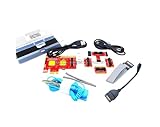
- ATTN : Please DO study the listing page the "Product Guides and Documents" section, the "Instructions for Use (IFU) (PDF)" guide for all manual links at the end of the PDF, to use this kit correctly and easily. 【The item PACKING】 includes the paper printout with the same Complete Instruction Folder with PDFs and APP. 【Only use the tested APP in the folder】 【BOTH 64bit for Newer Androids and 32bit Manufacturer APP】 are available, passed the Android security scan checks and Google Play pending. MUST use the Android APP to display results on the screen, NO Traditional DIGITAL Display to show the POST codes, Great Ease to save hassles of diagnostic codes lookup one by one manually.
- Easy To Use Unique USB Diagnosis with Videos and PDF Guides. 【MUST study the Guides Before Use】 New latest smartphone technology in using the USB ports ( Standard USB / micro USB / Type C ) to diagnose the computers. 【NOT just getting the electric power but RUNNING the Diagnosis Data through USB ports】. A very powerful Essential Nice Handy computer repair tool kit for quick help on diagnosing Desktop PC, Server, Laptop, All-in-one PC, Android Smartphone / Tablet, customized built miniPC and Mac machines ... etc. A great motherboard tester diagnostic kit that provides the most accuracy and effectiveness in making the computer troubleshooting and repairs much easier.
- USB Diagnosis Unique Feature - Save hassles of taking the dusty PCs or laptops apart. Follow the English PDF user guides to power on and let the Android APP to work with this new test kit to auto scan the motherboard for faulty components quickly. When testing different PCs together, make sure follow the listing User Guide(PDF) to see 【Latest Updates with PRECAUTIONs and Extra Tech Tip】 to UNPLUG the USB cable between each test and restart to clear the last cached working motherboard diagnosis data. The ONBOARD USB cable is needed to plug to the Android charger, the other dedicate USB cable connects to motherboard USB port. Connect this 2 USB cable wrongly causes the unstable connectivity.
- All-in-one Multiports support - Different complete bus connector adapter parts included. Made of quality PCB, transistors and capacitor components. Direct pinpointing the faulty motherboard components to greatly reduce the costs yet increase the effectiveness in the computer diagnostic repairs. Videos and the PDFs instructions please see the listing "Videos" section and the "Product guides and documents" section for more details.
- Tested and brought to you by 29 years IT Professionals This kit works with all machines with USB ports including New Old Desktop PC and Laptop Computers, IBM compatible, Mac machines (using USB), Android devices Smartphones and Tablet PCs. Comes with Step by Step Easy Guides, videos instructions, PDF pictorial manuals with Easy Flowcharts and Latest Updates with Precautions. Great for PC Technicians, Computer Owners, Computer Class Student Learners and PC DIY Lovers, Hardware Traders, professionals and novices . Nice Essential must have to add to our computer tool boxes.
Storage-check workflow
- Download the Standard Edition from the official Crystal Dew World site.
- Select each drive in the drive selector.
- Record the model, firmware, temperature, power-on hours, total host reads and writes where available, health status, and important S.M.A.R.T. attributes.
- Save or copy the information before replacing a drive or changing cables.
- If the status is Caution or Bad, back up important data immediately.
- Confirm the result with the drive manufacturer’s diagnostic utility.
A “Good” status is not a guarantee. The drive may still have filesystem corruption, a bad cable, an unreliable USB bridge, a controller or firmware problem, thermal throttling, intermittent power, or a failure mode not represented in the available S.M.A.R.T. attributes. Conversely, some vendor-specific attributes can look alarming without being directly comparable across brands.
When to use the manufacturer’s tool
- Seagate SeaTools provides S.M.A.R.T. checks, short self-tests, short generic tests, and long tests that may read every sector.
- Samsung Magician provides health checks, S.M.A.R.T. information, diagnostics, firmware updates, and secure erase, although several functions are limited to Samsung-branded products.
- Crucial Storage Executive provides health, temperature, firmware, and management functions for supported Crucial drives.
- SanDisk Dashboard displays model, capacity, firmware, health, and S.M.A.R.T. information for supported drives.
Do not begin a destructive test, secure erase, or surface operation on the only copy of important data. Back up first.
Windows Errors? Fix Them Before They Spread
Repair common Windows errors and clear accumulated junk for a smoother, more stable PC - no reinstall needed.Free scan · no reinstallOutdated Drivers Are Slowing You Down
One free scan finds every outdated or missing driver and matches the right update for your exact hardware.Free scan · exact hardware matchVerdict: CrystalDiskInfo is the fastest readable first check for storage health, but vendor tools and backups matter when the drive reports a warning or the symptoms do not match the health label.
5. AIDA64 Extreme: best paid all-in-one suite
Best for: technicians, enthusiasts, and users who want one polished Windows application for hardware inventory, sensor monitoring, reports, benchmarks, and configurable stability tests.
AIDA64 Extreme combines detailed hardware and software inventory with real-time sensors, benchmarks, and a System Stability Test. The current version checked here is AIDA64 Extreme 8.30.8300, released April 28, 2026. The v8 series officially supports 64-bit Windows 10 and newer. See the official download page.
The trial lasts 30 days. The official store lists the Extreme license at $65.95 for three PCs with one year of maintenance at the time checked. Prices, maintenance terms, and regional availability can change; verify them on the official store.
Free tools Windows power users keep installed
One-click scans. No signup required.
Using the System Stability Test
- Install AIDA64 Extreme or start the trial.
- Open Tools → System Stability Test.
- Begin with one subsystem: CPU, FPU, cache, system memory, local disks, or GPU.
- Watch temperatures, fan speeds, voltage and power readings, graphs, minimum/maximum/average values, and the test log.
- Use a combined test only after individual tests are stable.
- Stop immediately if temperature, power, noise, or system behavior becomes unsafe.
The FPU option is particularly aggressive: AIDA64 describes it as producing the highest processor heat and power output. The developer recommends the Stability Test for troubleshooting rather than routine monitoring. The System Stability Test manual documents the controls and readings.
Advantages and trade-offs
Advantages: deep inventory, strong reporting, visible sensor graphs, configurable component-by-component loads, and a unified interface for users who prefer a paid suite.
Trade-offs: it overlaps with the free HWiNFO-plus-OCCT combination, is Windows-focused, and can be dense for inexperienced users. Combined tests can also make failures ambiguous because several subsystems are loaded together. Low-level hardware access may conflict with unusual or older hardware; AIDA64’s manual documents options for disabling low-level detection modules if the application itself causes stability problems. See the AIDA64 Extreme manual.
Verdict: AIDA64 Extreme is the best convenience option for users who want an all-in-one paid suite, but it is not required for most home troubleshooting.
The Tool Desk
Outbyte Driver Updater FREEFix the driver behind crashes, sound loss and screen glitchesFind Drivers →Outbyte PC Repair FREEClear out junk files and repair common Windows errorsFree Scan →Which tool should you use first?
| Symptom or goal | Start with | Follow-up |
|---|---|---|
| Overheating, throttling, or loud fans | HWiNFO | Log a controlled OCCT or AIDA64 test while watching the relevant temperature, clock, fan, and power sensors |
| Random crashes or restarts | HWiNFO | Use OCCT CPU, GPU, memory, and carefully selected Power tests to isolate the failure |
| Blue screens or corrupted files | MemTest86 | Check storage health and run the manufacturer’s drive diagnostic |
| Suspected bad RAM | MemTest86 | Disable XMP/EXPO, test one DIMM and slot at a time, then retest as a pair |
| Drive warning, freezing, or slow boot | CrystalDiskInfo | Back up immediately, then use the drive manufacturer’s tool and check cables, bridges, firmware, and filesystem health |
| GPU artifacts or driver crashes | HWiNFO | Run OCCT 3D and VRAM tests, check driver state, temperatures, clocks, and power behavior |
| New-build validation | HWiNFO plus MemTest86 | Run isolated OCCT CPU, memory, GPU, and VRAM tests; check motherboard firmware and drivers |
| Used-PC inspection | HWiNFO plus CrystalDiskInfo | Run short, conservative OCCT tests and perform a physical inspection |
| No POST or no display | UEFI, motherboard, or OEM diagnostics | Use minimum-hardware isolation; Windows tools are unavailable if Windows cannot boot |
| Laptop battery concern | powercfg /batteryreport or the OEM tool |
Compare capacity information with symptoms and arrange battery service or replacement when appropriate |
A safe, evidence-based diagnostic workflow
1. Protect data and hardware first
- Back up important files before stress testing or storage diagnostics.
- Do not run destructive storage tests on the only copy of important data.
- Do not stress a PC with a burning smell, visible electrical damage, a swollen battery, liquid damage, or a physically damaged PSU.
- Ensure the cooler is mounted correctly, fans work, vents are clear, and the PC has adequate airflow.
2. Record the starting configuration
Note the BIOS version, installed DIMMs and slots, GPU model, storage models and firmware, PSU model and cabling, and any recent driver or hardware changes. Save current BIOS settings before changing them.
3. Return tuning to stock
Disable CPU and GPU overclocks, undervolts, experimental power limits, and XMP/EXPO while diagnosing unexplained instability. If the machine passes at stock but fails with a memory profile or undervolt enabled, the profile is not necessarily “bad,” but it is not stable in that system under those conditions.
4. Observe before loading
Use HWiNFO to record idle temperatures, clocks, fan speeds, power readings, drive temperatures, and throttling indicators. This baseline helps distinguish a pre-existing cooling or sensor problem from a failure that appears only under load.
Rank #4

- CEL Doctor: The ANCEL AD310 is one of the best-selling OBD II scanners on the market and is recommended by Scotty Kilmer, a YouTuber and auto mechanic. It can easily determine the cause of the check engine light coming on. After repairing the vehicle's problems, it can quickly read and clear diagnostic trouble codes of emission system, read live data & hard memory data, view freeze frame, I/M monitor readiness and collect vehicle information
- Sturdy and Compact: Equipped with a 2.5 foot cable made of very thick, flexible insulation. It is important to have a sturdy scanner as it can easily fall to the ground when working in a car. The AD310 OBD2 scanner is a well-constructed mechanic tool with a sleek design. It weighs 12 ounces and measures 8.9 x 6.9 x 1.4 inches. Thanks to its compact design and light weight, transporting the device is not a problem. The buttons are clearly labelled and the screen is large and displays results clearly
- Accurate Fast and Easy to Use: The AD310 scanner can help you or your mechanic understand if your car is in good condition, provides exceptionally accurate and fast results, reads and clears engine trouble emission codes in seconds after you fixed the problem. This device will let you know immediately and fix the problem right away without any car knowledge. No need for batteries or a charger, get power directly from the OBDII Data Link Connector in your vehicle
- OBDII Protocols and Car Compatibility: Many cheap scan tools do not really support all OBD2 protocols. AD310 scanner as it can support all OBDII protocols such as KWP2000, J1850 VPW, ISO9141, J1850 PWM and CAN. This device also has extensive vehicle compatibility with 1996 US-based, 2000 EU-based and Asian cars, light trucks, SUVs, as well as newer OBD2 and CAN vehicles both domestic and foreign. Pls confirm with our customer service whether it is compatible with your vehicle before purchasing
- Home Necessity and Worthy to Own: This is an excellent code reader to travel or home with as it weighs less and it is compact in design. You can easily slide it in your backpack as you head to the garage, or put it on the dashboard, this will be a great fit for you. The AD310 is not only portable, but also accurate and fast in performance. Moreover, it covers various car brands and is suitable for people who just need a code reader to check their car
5. Test one subsystem at a time
Start with isolated CPU, memory, GPU, VRAM, or storage checks. Combined tests are useful for reproducing a whole-system failure, but they are weaker for identifying the cause. Change one variable at a time and repeat any failure.
What’s actually slowing this PC down?
Pick the symptom - the matching free tool is one click away.
6. Separate detection, reproduction, isolation, and confirmation
- Detection: the tool reports an error, warning, abnormal reading, or crash.
- Reproduction: the same error occurs again under controlled conditions.
- Isolation: changing one component, slot, setting, cable, or workload makes the failure follow or disappear.
- Confirmation: an independent test or known-good replacement supports the suspected diagnosis.
This is why no software result alone proves that a PSU, motherboard, cooler, or memory module is definitively defective. Software can expose power-related instability, but proper PSU electrical validation requires appropriate electrical test equipment or replacement with a known-good unit.
Independent reader supportYour contribution helps us test, update, and keep practical guides available for everyone.Useful Windows and manufacturer alternatives
Windows Security: Device performance & health
Windows 10 and Windows 11 include Device performance & health in Windows Security. It checks broad issues involving storage capacity, battery life, applications, software, and Windows Time, then offers recommendations. Open Windows Security and select Device performance & health. It is useful for a quick overview but does not replace CPU, GPU, RAM, or PSU testing. Microsoft documents the feature in its Device performance & health guide.
Windows storage health
For supported NVMe drives, open Settings → System → Storage → Advanced storage settings → Disks & volumes → Properties. Windows can display critical warnings such as low spare capacity, degraded reliability, or read-only status. Microsoft recommends backing up data when a critical warning appears. This built-in health monitoring does not cover SATA SSDs and HDDs in the same way it monitors NVMe SSDs. See Microsoft’s storage-warning guidance.
Windows Memory Diagnostic
Run mdsched.exe to use Windows Memory Diagnostic. It is a convenient first check when creating a bootable USB is impractical, but it is a lighter and less informative option than MemTest86. For intermittent errors, overclock validation, or an RMA-quality record, use MemTest86 and test individual modules and slots.
The Tool Desk
Outbyte PC Repair FREERepair Windows errors before they cause bigger problemsFix Now →Outbyte Driver Updater FREEFix the driver behind crashes, sound loss and screen glitchesFind Drivers →Laptop battery report
Open an elevated Command Prompt and run:
powercfg /batteryreportWindows creates an HTML report with installed battery information, recent usage, and capacity-related data. Microsoft’s battery guidance explains the command and report. The report can show capacity decline, but it does not replace an inspection for swelling, heat, or physical damage.
OEM and pre-boot diagnostics
If the computer cannot boot into Windows, use the PC or component manufacturer’s pre-boot diagnostics, BIOS/UEFI hardware tests, and warranty tools. Dell, HP, Lenovo, ASUS, Acer, motherboard vendors, GPU vendors, and drive vendors may expose platform-specific tests that generic Windows software cannot. Follow the exact instructions for the model; there is no universal key combination or memory-slot arrangement.
Special cases and common misdiagnoses
MemTest86 finds errors only when two sticks are installed
This pattern can result from memory-controller load, DIMM-slot signal differences, XMP/EXPO timings, voltage, BIOS compatibility, or a marginal module that passes alone but fails in a pair. Return to stock settings, test each DIMM separately, change slots according to the motherboard manual, and retest the pair before replacing hardware.
CrystalDiskInfo says “Good,” but the drive freezes
Check the SATA or USB cable, USB-to-SATA or USB-to-NVMe bridge, RAID controller, firmware, filesystem, thermal behavior, and intermittent power or connection loss. A controller failure or filesystem problem may not appear in the displayed health attributes. Back up data before further testing and use the manufacturer’s diagnostic tool.
What’s actually slowing this PC down?
Pick the symptom - the matching free tool is one click away.
OCCT reports a CPU + RAM error
Do not immediately blame the RAM. The error can involve the CPU, memory, memory controller, motherboard, timings, voltage, or PSU. Run CPU-only and memory-only tests, restore conservative BIOS settings, test one DIMM at a time, and monitor temperatures and power behavior independently.
A stress test passes, but games still crash
The selected workload may not reproduce the actual failure. The problem could involve a graphics driver, a particular game, a long warm-up period, VRAM, PCIe behavior, transient power, storage, or software. Increase the test scope methodically and compare the crash conditions with HWiNFO logs. A pass means only that no error was detected for that test, duration, configuration, and environment.
If the crash evidence points to a missing, outdated, or incompatible Windows hardware driver, Outbyte Driver Updater is an optional next step for checking and updating driver status before retesting.
A drive’s health percentage looks high
SSD health percentages are vendor-defined endurance or remaining-life indicators. They are useful evidence but cannot predict the exact failure date. Back up when the status changes to Caution or Bad, Windows reports a critical warning, the drive disconnects, unusual noise appears, or an attribute changes rapidly.
Do these 3 things before closing this tab:
1Repair Windows errors before they cause bigger problems2Scan for outdated or missing drivers - takes under a minute3Clear out junk files and repair common Windows errorsLaptop sensor data is incomplete
Laptop firmware often exposes fewer sensors than a desktop motherboard. Missing fan speed, voltage, or temperature fields may be a platform limitation rather than proof that the hardware is healthy or faulty. Use the OEM’s pre-boot diagnostics and service documentation when generic software cannot see the relevant sensor.
Best Value

- PCI ISA Interface: This PC diagnostic card adopts standard PCI and ISA interface, easy access to desktop PC.
- 4 Digit Display: This PC mother board adopts 4 digit display, the first 2 digits indicate the current error code, and the last 2 digits indicate the previous error code.
- Strong Compatibility: This PC diagnostic 4 digit card is compatible with ny kind motherboards with the PCI and ISA bus slot. Suitable for all computers with PCI or ISA interface.
- Dual POST Code Display: This motherboard diagnostic card possesses self checking remote display function and dual POST code display, easy to view the POST code.
- High Reliability: The POST code display is composed of a dual dot matrixs hexadecimal read out that displays Power On Self Test (POST) status codes.
The PC has no POST or no display
Windows applications cannot diagnose a system that cannot boot far enough to run Windows. Follow the motherboard or OEM manual and work through a minimum configuration:
- Disconnect unnecessary external peripherals.
- Check motherboard diagnostic LEDs, beep codes, or POST codes if available.
- Reseat RAM and the GPU only when appropriate and with power removed.
- Try one known-good memory module in the slot specified by the manual.
- Use integrated graphics if the processor and motherboard support it.
- Clear CMOS using the manufacturer’s documented procedure.
- Use OEM or motherboard pre-boot diagnostics.
Avoid repeatedly powering a system with suspected electrical damage. If the machine remains dead, component isolation with known-good parts or professional service is more appropriate than repeatedly running software tests.
Why some popular lists are misleading
Many “best diagnostic tool” lists combine tools that answer unrelated questions. For example, a broad suite such as AIDA64 may appear beside CrystalDiskInfo, an Intel-only processor test, and a browser-based stuck-pixel utility. Those are not interchangeable categories: CrystalDiskInfo reads storage telemetry, Intel Processor Diagnostic Tool is limited to Intel processors, and JScreenFix is a display utility rather than a general PC hardware diagnostic tool. Intel documents the processor tool’s scope and platform limits in its support article and download page.
Free tools Windows power users keep installed
One-click scans. No signup required.
Monitoring is also frequently presented as testing. HWiNFO can show that a CPU reached a temperature limit or that a GPU clock dropped, but it does not establish that the part can perform correctly under all workloads. OCCT and AIDA64 actively load components; MemTest86 tests memory outside Windows; CrystalDiskInfo reads drive-reported health. Keeping these roles separate makes the result easier to interpret.
Finally, an unsupported “tested by experts” label is not a methodology. A credible hands-on comparison would disclose the test hardware, Windows and BIOS versions, tool versions, test durations and settings, tuning state, known-good baseline, any intentionally introduced fault, pass/fail criteria, repeated runs, and saved evidence. Without that information, “compared” or “expert-recommended” is more accurate than “tested by experts.”
Best choice by reader need
| Need | Best choice | Reason |
|---|---|---|
| One free tool to understand the whole PC | HWiNFO | Broad inventory, sensors, reports, alerts, and logging |
| Find instability by stressing components | OCCT | Dedicated CPU, GPU, RAM, VRAM, and power tests |
| Prove or rule out RAM problems | MemTest86 | Runs outside Windows and reports memory-test errors |
| Check whether an SSD or HDD is deteriorating | CrystalDiskInfo | Readable S.M.A.R.T. and health information |
| Paid inventory plus stress testing | AIDA64 Extreme | Unified reports, sensors, benchmarks, and stability tests |
| Samsung SSD problem | Samsung Magician | Brand-specific diagnostics, health information, and firmware features |
| Seagate drive problem | SeaTools | Vendor-specific short, long, and self-tests |
| No-boot or no-POST problem | OEM or UEFI diagnostics | Operating-system tools may be inaccessible |
| Remote or commercial technician workflow | Appropriately licensed HWiNFO, MemTest86 Pro, OCCT Pro or Enterprise, or AIDA64 Business or Engineer | Commercial licensing, automation, deployment, and reporting requirements matter |
Frequently Asked Questions
Can one program test the entire PC?
No. HWiNFO provides the broadest monitoring and inventory, OCCT actively tests several subsystems, MemTest86 specializes in RAM outside Windows, CrystalDiskInfo reads storage-health telemetry, and AIDA64 combines many functions in a paid suite. Even AIDA64 cannot definitively diagnose every motherboard, PSU, firmware, or intermittent software problem.
Does a failed test prove that a component is defective?
No. It proves that the system produced an error under the selected conditions. Repeat the failure, return tuning to stock, isolate one subsystem at a time, and confirm with an independent test or known-good replacement. For example, a CPU + RAM error can involve the CPU, memory controller, motherboard, timings, voltage, or PSU.
Quick wins for a faster PC:
Clear out junk files and repair common Windows errorsFree Scan →Scan for outdated or missing drivers - takes under a minuteDriver Scan →Is CrystalDiskInfo’s “Good” status safe to trust?
Treat it as a positive health indication, not a guarantee. S.M.A.R.T. and NVMe attributes do not cover every cable, controller, firmware, filesystem, power, or intermittent connection problem. Back up immediately for Caution, Bad, a Windows critical warning, repeated disconnects, unusual noise, or rapidly changing attributes.
Should I run stress tests with XMP, EXPO, or an overclock enabled?
Not when diagnosing unexplained instability. Return the CPU, GPU, and RAM to conservative stock settings first. After the system passes at stock, re-enable one profile or tuning change at a time and retest. This separates a hardware fault from an unstable configuration.
What is the best tool for a PC that will not boot?
Windows tools cannot run if the PC cannot reach Windows. Use the motherboard or OEM’s UEFI and pre-boot diagnostics, check POST LEDs or codes, follow the model-specific minimum-configuration procedure, and test known-good parts where available. Do not repeatedly power a machine with suspected electrical damage.
The Bottom Line
For most readers, install HWiNFO, OCCT, MemTest86, and CrystalDiskInfo. Use HWiNFO to establish what the PC is doing, OCCT to reproduce load-dependent instability, MemTest86 to investigate RAM independently of Windows, and CrystalDiskInfo to check drive-reported health. Use the manufacturer’s storage utility for confirmation and AIDA64 Extreme when a paid all-in-one workflow is worth the cost.
Interpret every result narrowly: a warning or error is evidence to investigate, while a pass means only that no problem appeared under the tested conditions. Back up first, return tuning to stock, monitor heat and power, isolate one variable at a time, and use OEM or professional diagnostics when the machine cannot boot or the suspected fault involves electrical safety.
Quick Recap
Product prices and availability are accurate as of the date/time indicated and are subject to change. Any price and availability information displayed on Amazon at the time of purchase will apply.

