
What’s actually slowing this PC down?
Pick the symptom - the matching free tool is one click away.
iTechGuides is reader-supported. When you buy through links on our site, we may earn an affiliate commission. As an Amazon Associate I earn from qualifying purchases. Learn more
Start with Ollama if you want a straightforward way to install and run local models; choose llama.cpp if you want hands-on control over GGUF files, quantization, accelerator backends, or server settings. They can also work together: prepare a GGUF model and import it into Ollama. Neither project is a universal speed winner, so the right choice depends on your hardware, model, and workflow.
Which should you run for local AI?
For most people trying local AI for the first time, Ollama is the easier starting point. Its official quickstart covers macOS, Windows, and Linux, and its documentation describes running a local model without an API key. Ollama’s download and quickstart is the natural place to begin.
Choose llama.cpp when you want to work more directly with model files and inference options. Its documentation covers GGUF models, quantization, multiple accelerator backends, hybrid CPU/GPU inference, and a configurable server. That flexibility is useful when you want to make specific choices about how a model runs, but it also means taking a more hands-on route.
PC Slower Than It Used to Be?
A free scan shows the junk files, broken settings and background clutter dragging Windows down - then fixes them in one click.Free scan · Windows 10 & 11Outdated Drivers Are Slowing You Down
One free scan finds every outdated or missing driver and matches the right update for your exact hardware.Free scan · exact hardware match| What matters most | Better starting point | Why |
|---|---|---|
| Accessible installation and a local runtime | Ollama | Its quickstart documents macOS, Windows, and Linux. Model and hardware compatibility still depend on your computer and the model you choose. |
| Direct control of GGUF files, quantization, and inference options | llama.cpp | It documents GGUF workflows, quantization, accelerator backends, and configurable serving. |
| Use a prepared GGUF with Ollama | Both, in sequence | Prepare the GGUF first, then import it with Ollama’s Modelfile workflow. |
| Get the highest speed on your computer | Benchmark both on your setup | Documentation and feature lists do not establish a general performance winner. |
Is Ollama easier than llama.cpp?
Ollama is generally the more approachable starting point if your goal is to install a local runtime and run a model without configuring every inference detail yourself. Its documented download options span the three common desktop operating systems, and its local API does not require an API key. See the Ollama quickstart and API documentation.
#1 Best Overall

- Built for Local AI Development: AMD Ryzen AI Halo is designed for local AI development and inference, featuring 128GB unified memory and support for up to 200B parameter models to build and run intensive AI workloads locally.
- 128GB Unified Memory: Features 128GB LPDDR5x unified memory at 8000 MT/s with 256 GB/s memory bandwidth, providing a shared memory pool across the CPU, GPU, and NPU to support larger AI models.
- AMD Ryzen AI Max+ 395 Processor: Features 16 cores, 32 threads, and Zen 5 architecture, paired with AMD Radeon 8060S integrated graphics featuring 40 RDNA 3.5 compute units and an AMD XDNA 2 NPU with up to 50 TOPS.
- Linux AI Developer Platform: Purpose-built for Linux-based AI development with full AMD ROCm software support and preloaded tools, models, and workflows optimized for local AI development.
- Compact, Connected Design: Includes a 2TB M.2 SSD, 10GbE LAN, Wi-Fi 7, Bluetooth 5.4, USB-C connectivity, and HDMI 2.1b.
llama.cpp offers a lower-level workflow. You select compatible GGUF files and can configure details such as quantization, backend, and server behavior. That can be a better fit if you value control over setup simplicity. The trade-off is that you may need to make more decisions about the model file and runtime configuration yourself.
How do their model workflows differ?
llama.cpp: work directly with GGUF
llama.cpp uses GGUF model files and documents working with compatible Hugging Face models, local files, and conversion tools. It also documents quantization options, which let you choose prepared model variants with different size and precision trade-offs. The project’s documentation and repository explain its model and quantization workflow.
Rank #2

- Unlock next-generation AI computing with AMD Ryzen AI Max+ 395 processor featuring 16 cores, 32 threads, up to 5.1GHz boost clock, and integrated Ryzen AI engine delivering up to 126 TOPS AI performance. EVO-X3 is designed for local AI models, content creation, development, and professional workloads.
- OCuLink External GPU Expansion – Upgrade Beyond a Mini PC: Take your graphics performance further with a dedicated OCuLink (PCIe 4.0 x4) interface. Connect an external GPU dock to add desktop-class graphics power for AAA gaming, AI acceleration, 3D rendering, video production, and advanced creative applications. EVO-X3 gives you the flexibility of a compact PC with workstation-level expansion capability.
- AI NPU with XDNA 2 ARCHITECTURE - Powered by 16 “Zen 5” CPU cores, 50+ peak AI TOPS XDNA 2 NPU and a truly massive integrated GPU driven by 40 AMD RDNA 3.5 CUs, the Ryzen AI MAX+ 395 is a transformative upgrade and delivers a significant performance boost over the competition. The Ryzen AI Max+ 395 excels in consumer AI workloads like the llama.cpp-powered application: LM Studio. Shaping up to be the must-have app for client LLM workloads, LM Studio allows users to locally run the latest language model without any technical knowledge required and unleash their creativity and productivity.
- AMD RADEON 8090S iGPU GAMING PC - The AMD Radeon RX 8060S offers all 40 CUs with up to 2.9 GHz graphics clock and uses the new RDNA 3.5 architecture. The powerful iGPU is positioned between an RTX 4060 and 4070 laptop GPU and therefore enables gaming in FHD at maximum details in most demanding games. The 8060S can also utilize the full 128GB pool, which is perfect for running LLMs such as Deepseek 70B Q8, which runs comfortably on this machine.
- EIGHT CHANNEL LPDDR5X - LPDDR5X is a new ground breaking memory small form factor installed on-board. With blazing speeds up to to 8000MT/s, it runs 1.5x faster than the DDR5 SODIMMs; 90% better performance over DDR5 SODIMMs in video conferencing and photo editing; 30% better performance in productivity apps; 12% better performance in digital content workloads.
Ollama: run models through its runtime or import GGUF
Ollama provides its own model workflow and can also import a GGUF file through a Modelfile and ollama create. Its GGUF import guide says the file must already be prepared or quantized: Ollama does not quantize GGUF during import. In practice, that makes the projects complementary if you want to prepare a model with one toolchain and run it through Ollama.
Which one works better with your GPU?
There is no one answer for every GPU. llama.cpp documents CUDA and other accelerator backends, as well as hybrid CPU/GPU inference. That breadth gives you more backend choices to investigate, but it does not prove that llama.cpp will be faster on every supported device. Ollama also supports hardware acceleration, with actual behavior depending on the operating system, hardware, and selected model.
Rank #3

- 【High-Performance APU】The MS-S1 MAX features an AMD Ryzen AI Max+ 395 APU, integrating a Zen 5 architecture CPU (up to 5.1GHz, 16C/32T, 64M L3 Cache), an RDNA 3.5 GPU, and an NPU (50 TOPS). The total system output is 126 TOPS. It provides powerful parallel computing capabilities for demanding AI workflows. It is ideal for running local LLMs, multimodal models, and computationally intensive tasks
- 【128GB UMA Memory】Equipped with up to 128GB of LPDDR5x-8000MT/s unified memory, it enables the CPU and GPU to access a shared, high-bandwidth memory pool with extremely low latency. Ideal for large-scale AI inference, 3D workloads, and complex timelines in video editing. It eliminates traditional VRAM bottlenecks, ensuring smoother data transfer during high-intensity computations. The UMA design maximizes performance stability under high loads
- 【Flexible Expansion】The MS-S1 MAX features USB4 V2 (up to 80Gbps), dual 10GbE LAN, HDMI 2.1 (up to 8K60), a full-length PCIe x16 expansion slot, and dual M.2 slots supporting up to 16TB RAID 0/1. Wi-Fi 7 provides stronger signal coverage and a more stable wireless experience. The slide-out design facilitates upgrades and maintenance. It easily adapts to personal, studio, or rack-mount enterprise environments
- 【High-Efficiency Cooling System】Utilizing an aerospace-grade aluminum alloy chassis, copper base plate, six heat pipes, dual turbine fans, and advanced PCM thermal conductive material, it maintains stable cooling performance even under continuous load. This system supports 130W continuous power and 160W peak power operation, with a built-in 320W power supply. It boasts multiple global certifications including CCC, FCC, UL, CE, and UKCA, ensuring stable and reliable operation in various environments
- 【Cluster Design】Two MS-S1 MAX units can be configured as a dual-unit cluster to run a large 235B Q4 model locally, achieving an output speed of 10.87 tok/s. Supporting 2U rack deployment, multiple MS-S1 MAX units can be cascaded into a distributed cluster to create a high-efficiency AI computing center. A cluster of four MS-S1 MAX units successfully ran a DeepSeek-R1 671B Q4 large model. A reserved cluster power-on interface allows for unified start-up and shutdown
Check the current platform and backend documentation for the specific computer you plan to use: llama.cpp and Ollama. A model that is too large for available memory can be a poor fit regardless of runtime. Also plan for storage: Ollama’s Windows documentation notes that downloaded model files can occupy tens to hundreds of GB; the actual amount depends on the models you download.
Independent reader supportYour contribution helps us test, update, and keep practical guides available for everyone.Do you need an API or server?
Both projects document local serving options, including OpenAI-compatible interfaces. llama.cpp’s server documentation describes REST and OpenAI-compatible routes alongside options such as parallel decoding, continuous batching, multimodal support, tool use, and a web UI. See its server documentation.
Rank #4
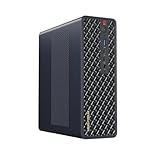
- 【Leading AI Mini Workstation】MINISFORUM AI MS-S1 Max Workstation comes with AMD Ryzen AI Max+ 395 processor, which uses AMD's latest generation Zen 5 architecture. It has 16 Cores and 32 Threads, the boost clock is up to 5.1GHz. The overall processor performance is up to 126 TOPS, and the NPU performance reaches up to 50 TOPS. AMD Ryzen AI enables improved productivity, advanced collaboration, and improved efficiency.
- 【AMD Radeon 8060S Graphics 】The MS-S1 Max Mini PC equipped with AMD Radeon 8060S Graphics which built on the new generation of RDNA 3.5 architecture AMD graphics, it brings ultra-high frame rate experiences and advanced content creation features anywhere and delivers staggering performance. It can handle all your computing and multimedia tasks efficiently.
- 【Five 8K Video Output】This MS-S1 Max Workstation comes with five video outputs, 1x HDMI (8K@60Hz), 2x USB4(40Gbps,Alt DP2.0,PD out 15W) and 2x USB4 V2(80Gbps,Alt DP2.0,PD out 15W) Outputs, which support multiple monitors display at the same time and provide a larger and wider filed of view and improve your work efficiency. It is used in fields that require high-performance computing and graphics processing, including digital signage and securities trading, as well as work that uses CAD, such as engineering design, scientific calculations, animation production, and post-production for movies and television
- 【 Fast and Stable Wire & Wireless Speed】It comes with Two 10G Lan Ports for wired connection and and Wi-Fi 7 / BT5.4 for wireless connection, which increased the network speed greatly and expand its functions and improved performance of computer to a large extent and allows you to use more networks such as software routers (OpenWRT / DD-WRT / Tomato etc.), firewalls, NAT, network isolation etc.
- 【Large Storage & Flexible Expandability】This Workstation equipped with 64GB LPDDR5-8000MHz + 2TB M.2 2280 PCIe4.0 SSD. There is another PCIe4.0 SSD slot available for up to 8TB, these SSD slots are compatible with RAID0 and RAID1, you can store movies, videos, photos, important files easily. What’s more, it also comes with 1x standard PCIex16 slot(PCIe4.0x4) inside.
Ollama documents a local API server and an OpenAI-compatible local endpoint in its API documentation. Its local use is separate from its hosted cloud API: the documentation says local requests do not require an API key, while cloud API requests do. If you are connecting a particular client, check the exact endpoint and features it needs; “OpenAI-compatible” does not by itself guarantee that every API feature behaves identically.
The Tool Desk
Outbyte PC Repair FREEClear out junk files and repair common Windows errorsFree Scan →Outbyte Driver Updater FREEScan for outdated or missing drivers - takes under a minuteDriver Scan →Which is faster on your computer?
You cannot determine a general speed winner from the projects’ feature lists. A useful comparison needs to hold constant the model, quantization, context size, hardware, and runtime settings. Different choices can change the result, so a claim about one setup should not be applied to a different computer or workload.
Ollama’s June 5, 2026 article about Ollama 0.30 reports “up to 20% faster” NVIDIA performance for Gemma 4 26B, Q4_K_M, on an NVIDIA RTX 5090. That is an Ollama-published claim tied to that stated setup, not an independent llama.cpp-versus-Ollama benchmark; it does not establish which runtime will be faster on your machine. See the Ollama 0.30 announcement.
Quick Recap
How to choose and test
- Start with your goal. Try Ollama for a simple local setup; start with llama.cpp if you specifically want to control GGUF selection, quantization, backend, or server configuration.
- Pick a model that fits your computer. Check the model’s file size and requirements against your available memory and storage before downloading it.
- Use the same workload for a fair comparison. If you compare runtimes, keep the model, quantization, context size, hardware, and relevant settings the same.
- Check the client requirements. If an app needs an API or server feature, verify that the chosen runtime supports the exact route and behavior it uses.
- Consider a combined workflow. If you have a prepared GGUF and prefer Ollama’s runtime, follow its import guide and create a model from a Modelfile.
Product prices and availability are accurate as of the date/time indicated and are subject to change. Any price and availability information displayed on Amazon at the time of purchase will apply.

