
iTechGuides is reader-supported. When you buy through links on our site, we may earn an affiliate commission. As an Amazon Associate I earn from qualifying purchases. Learn more
A feature needs AI only if it measurably improves a defined user or business outcome compared with simpler software or manual control. Start with the problem—not the technology—and compare rules, existing tools, traditional AI, and generative AI. Then test the benefit and decide what happens when the system is wrong.
Start with the outcome, not the AI
Write down the user’s problem and the result the feature is supposed to improve before selecting an implementation. “Add an AI assistant” is a proposed solution, not an outcome. A more useful goal might be reducing the time people spend finding an answer, helping them locate relevant items, or processing a defined type of request more effectively.
Google Cloud recommends deciding whether the expected result calls for generative AI, another kind of AI, or no AI at all. Google People + AI Research similarly advises confirming that a product or feature requires AI or would be enhanced by it. Google People + AI Research, Patterns and Google Cloud’s use-case guidance both put the need ahead of the technology.
The Tool Desk
Outbyte PC Repair FREERepair Windows errors before they cause bigger problemsFix Now →Outbyte Driver Updater FREEFix the driver behind crashes, sound loss and screen glitchesFind Drivers →Check whether AI solves a problem simpler options cannot
AI can be useful for recommendations and personalization, prediction, understanding natural language, or recognizing images. But those capabilities do not automatically make AI the best choice. Rules or heuristics can be preferable when outcomes need to be predictable and transparent, and a manual control may be better when users want to make the choice themselves. An automated suggestion that makes a task harder—or takes control away from the user—does not create value merely because it uses AI.
#1 Best Overall

- Stunning 15.6" FHD IPS Display: Experience crisp 1920x1080 resolution on this 15.6 inch laptop with an IPS panel that delivers wide viewing angles and vivid colors. The narrow-bezel design maximizes screen real estate for comfortable viewing on this Win 11 laptop, whether you're studying or working.
- Celeron J4105 Processor & 256GB SSD: Powered by a reliable Celeron J4105 processor paired with 12GB DDR4 memory and a fast 256GB M.2 SSD. This laptop computer supports SSD expansion up to 2TB and TF card expansion up to 1TB, so your storage grows with your needs. Delivers smooth multitasking for daily productivity.
- AI-Powered Win 11 Laptop: Built-in AI features enhance your productivity with smart assistance for writing, summarizing, and task management. Pre-installed with Win 11 and includes Office 365 subscription. This student laptop is backed by 1-year warranty and 24/7 customer support.
- All-Day 7000mAh Battery & 180° Hinge: The high-capacity 7000mAh battery keeps this laptop powered through long classes or meetings. The 180-degree lay-flat hinge lets you share your screen effortlessly during presentations. This durable laptop computer adapts to your dynamic workflow.
- Versatile Connectivity Hub: Equipped with USB 3.2, Type-C, Mini HDMI, and 3.5mm audio jack to connect all your peripherals. Stay online anywhere with high-speed 5G WiFi and Bluetooth 4.2. This college laptop keeps you connected at home, in the library, or on the go.
Before building a custom feature, check whether an existing product or a deterministic rule already meets the need. Microsoft’s AI Decision Framework recommends defining the desired outcome and experience, then considering whether an existing tool can do the job. Microsoft AI Decision Framework
Match the approach to the task
“AI” covers different capabilities. The input, the output, and how much predictability the task requires help determine what kind of system—if any—to use. Traditional predictive AI is particularly suited to structured data; generative AI is suited to tasks such as summarization, content generation, advanced transcription, and working across modalities such as text, images, video, or audio. Classification and detection may be handled by a pretrained traditional model if it meets the requirements.
Rank #2
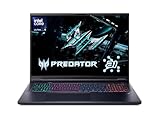
- Desktop-Level Performance, Anywhere: Get legendary gaming performance with the Intel Core Ultra 9 275HX processor, delivering ultra-smooth gameplay and future-ready AI (Up to 13 NPU TOPS). Offload tasks like background removal and audio optimization to the NPU for seamless streaming and gaming, while Intel Application Optimization enhances performance on classic titles.
- Game-Changing Realism: Powered by NVIDIA Blackwell architecture, GeForce RTX 5070 Ti Laptop GPU unlocks the game changing realism of full ray tracing. Equipped with a massive level of 992 AI TOPS horsepower, the RTX 50 Series enables new experiences and next-level graphics fidelity. Experience cinematic quality visuals at unprecedented speed with fourth-gen RT Cores and breakthrough neural rendering technologies accelerated with fifth-gen Tensor Cores.
- Supreme Speed. Superior Visuals. Powered by AI: DLSS is a revolutionary suite of neural rendering technologies that uses AI to boost FPS, reduce latency, and improve image quality. DLSS 4 brings a new Multi Frame Generation and enhanced Ray Reconstruction and Super Resolution, powered by GeForce RTX 50 Series GPUs and fifth-generation Tensor Cores.
- The Ultimate in Ray Tracing and AI: NVIDIA RTX is the most advanced platform for full ray tracing and neural rendering technologies that are revolutionizing the ways we play and create. Over 700 games and applications use RTX to deliver realistic graphics and incredibly fast performance with cutting-edge AI features like DLSS Multi Frame Generation.
- Immersive Depth and Detail: At 18 inches with a 16:10 aspect ratio, the pristine WQXGA screen offering vibrant colors with up to 100% DCI-P3 operates at a fast 240Hz refresh and 3ms overdrive response time. Alongside the suite of features from NVIDIA G-SYNC and NVIDIA Advanced Optimus, you're guaranteed that whatever's on-screen is a distinct viewing delight.
| Approach | Often fits | Key question |
|---|---|---|
| Rules or heuristics | Known conditions with outcomes that should be consistent and explainable | Can the cases be expressed clearly as rules, and are users comfortable with the automation? |
| Traditional predictive AI | Prediction or classification based on structured data; some recognition and detection tasks | Is there suitable data, and does the model meet the required accuracy, latency, and control needs? |
| Generative AI | Summarization, content generation, advanced transcription, or interpreting and producing varied content | Is open-ended output useful, and can its variability and errors be managed? |
| Combined approach | Workflows where a predictive capability and a generative interface serve different parts of the task | Does each component add value, and can the whole workflow be evaluated? |
The choice can also depend on training data, control, time to market, latency, and model metrics. Google Cloud’s guidance distinguishes generative AI from traditional AI and notes that some applications combine prediction with generative interfaces. Google Cloud: When to use generative AI or traditional AI
Distinguish AI behavior from ordinary software
Conventional software is often rule-based and deterministic: it follows specified instructions and remains fixed until someone changes those instructions. AI may instead use data to predict, generate, recognize complex patterns, or adapt to context. These are practical indicators, not a universal legal or technical definition. A particular policy or jurisdiction may classify systems differently and impose its own oversight requirements.
Rank #3

- It's possible on your Intel AI PC - Equipped with an Intel Core Ultra 7 processor (Series 2), the Aspire 14 Al brings new AI experiences in productivity, creativity and security through a combination of CPU, GPU and NPU. This combo delivers the speed and responsiveness to handle any task with ease -along with all-day battery life of up to 22 hours and smooth multitasking performance. (Battery life was measured under specific test settings pursuant to video playback scenarios)
- New AI Superpowers - Discover the power of Recall (preview), improved Windows search, and Click to Do (preview) on Copilot plus PCs. Effortlessly locate past content, perform natural searches, and interact with text and images – all while ensuring your data remains private and you stay productive. ( Copilot plus PC experiences vary by device and market and may require updates continuing to roll out through 2025; Recall and Click to Do will be coming to European Economic Area later in 2025; timing varies. See aka.ms/copilotpluspcs)
- Indulge Your Eyes - Immerse yourself in a world of vibrant detail with a breathtaking 14" WUXGA 1920 x 1200 ultra high-resolution display. This expansive, panoramic screen is your canvas for entertainment, artistic creativity, and captivating AI experiences that will leave you in awe.
- Smart and Effortless AI - Intelligent AI solutions are at your fingertips with AcerSense. Streamline settings, optimize your video presence, and elevate communication - all with intuitive AI that’s easy to use and enhances productivity seamlessly. Just press the AcerSense key on the backlit keyboard for instant access and experience the magic of AI
- Style and Substance - The Aspire 14 Al boasts a sleek, durable, and lightweight aluminum chassis, with an ultra-modern design and a 180° lie-flat hinge for versatile and convenient use on the go. Ideal for work, study, or creative pursuits wherever you are.
For a jurisdiction-specific explanation of these indicators, see Digital NSW’s guide to identifying AI.
Independent reader supportYour contribution helps us test, update, and keep practical guides available for everyone.Test measurable value in the real workflow
Set a baseline before launching a pilot or feature, then measure the outcome that matters to the people or business using it. A convincing demonstration is not evidence that a feature improves a real workflow. Google Cloud’s support-chatbot guidance lists possible measures including operational costs, inquiry volume handled, agent hours, time to resolution, escalations, first-contact resolution, and customer satisfaction. These are candidate metrics, not reported results or promises of improvement. Google Cloud’s use-case guidance
Rank #4

- 【POWERFUL INTEL N150 CPU (UP TO 3.6GHZ)】 Powered by the 15W Intel Twin Lake N150 4-Core processor, this 15.6" laptop smoothly handles 20+ browser tabs and 1080P Zoom video calls simultaneously with zero lag. Ideal for college students and remote workers needing quiet, high-efficiency performance.
- 【8-SEC FAST BOOT & LAG-FREE DAILY USE】 Pre-installed with Windows 11 Home, this laptop delivers lightning-fast 8-second boots and instant app launches. Built for 3-5 years of everyday stability, it easily runs online classes and office tasks without the annoying lag of cheap budget PCs.
- 【16GB RAM + 512GB NVME SSD & EXPANDABLE】 Features 16GB DDR4 RAM and a huge 512GB M.2 NVMe SSD (up to 3500MB/s speed) for fast multitasking and file loading. Includes an expandable DDR4 SODIMM slot and a Micro SD slot supporting up to 1TB extra storage for 250,000+ media files.
- 【15.6" FHD DISPLAY & 175° FLAT HINGE】 Features a crisp 15.6-inch 1920x1080 Full HD screen with an 85% screen-to-body ratio for sharp visuals. The 175° flat-lay hinge allows project teams and students to easily lay the screen flat and share documents across the table during group meetings.
- 【USA FINAL ASSEMBLY & 2-YEAR WARRANTY】 Finalized and quality-tested in the USA for maximum reliability. Backed by an industry-leading 2-Year Manufacturer Warranty, 90-Day Hassle-Free Returns, and US-based customer service with fast 50-hour local replacement support for complete peace of mind.
- Choose measures that correspond to the stated problem rather than metrics that are easy to collect but do not show user value.
- Compare the feature with the current process or a simpler alternative.
- Include operating and integration effort, latency, and data availability in the assessment.
- Decide in advance what result would justify continuing, changing, or stopping the feature.
The cited guidance does not establish a universal threshold for worthwhile AI or report achieved chatbot performance. The threshold has to be set and tested for the product, users, and constraints in question.
Decide who handles errors and approvals
Assess how repeatable the task is, how serious an error could be, whether a person can detect it, and how time-sensitive the decision is. Microsoft emphasizes that delegating work to AI does not transfer accountability: people remain responsible for appropriate direction, validation, and approval. Microsoft Support’s guidance on choosing Copilot or an agent
Use the answers to decide how much oversight the feature needs. Low-impact suggestions may need a different review path from outputs that affect important decisions. Where mistakes are consequential or hard to detect, require appropriate human review and approval before the result is used.
Quick Recap
Use a decision check before building
- State the outcome: Name the user or business problem and how you will measure improvement.
- Check simpler alternatives: Try manual control, clear rules, or an existing tool where they could meet the need.
- Identify the task and inputs: Decide whether the work is structured prediction, classification or detection, open-ended generation, or a combination.
- Weigh constraints: Consider predictability, transparency, user preference, available data, latency, and integration effort.
- Plan for mistakes: Assess error impact and detectability, and define when a person must validate or approve the output.
- Test against a baseline: Measure the feature in its intended workflow and continue only if it delivers the defined benefit.
Product prices and availability are accurate as of the date/time indicated and are subject to change. Any price and availability information displayed on Amazon at the time of purchase will apply.

