
Quick wins for a faster PC:
Repair Windows errors before they cause bigger problemsFix Now →Scan for outdated or missing drivers - takes under a minuteDriver Scan →Clear out junk files and repair common Windows errorsFree Scan →iTechGuides is reader-supported. When you buy through links on our site, we may earn an affiliate commission. As an Amazon Associate I earn from qualifying purchases. Learn more
A microVM gives untrusted code a guest operating system and kernel instead of letting it share the host kernel directly. That is a stronger isolation boundary, not a complete permissions policy: the files, credentials, network routes, and host services deliberately exposed to the guest still determine what it can reach. For safer execution, combine the VM boundary with strict host-side controls and carefully scoped interfaces.
What the microVM boundary protects—and what it does not
In a microVM, generated code runs inside a guest machine. With Firecracker, Linux KVM and the virtualization boundary are the first isolation layer. Firecracker’s design documentation says that its guest vCPU threads should be treated as malicious once started and contained by that boundary. The host still runs the virtual machine monitor (VMM) and its API server, so the VMM process must also be constrained. Firecracker’s design documentation describes this architecture.
Isolation does not mean the guest can never affect host resources. A guest can access only what the virtual devices and host integration paths make available, but those paths may include a shared workspace, a passed file descriptor, a host service, credentials, or a network route. Treat each exposed interface as an explicit permission to review and limit.
Can a guest read host files or use the host account?
A guest user account does not protect the host by itself; the virtualization boundary does that work. The guest may have root-equivalent privileges within its own VM while remaining unable to read host files, provided the host has not exposed those files, a sensitive descriptor, or a service that can provide them. Arm’s educational example makes the point directly: “The guest account isn’t an additional isolation boundary.” Its guide also gives the guest passwordless sudo, reinforcing why guest-level account restrictions must not be mistaken for host protection. Arm’s Firecracker learning path
#1 Best Overall

- 【AMD Ryzen 4300U True 4-Core CPU: Outperforms N95 & i3-10110U】KAMRUI P2 Mini PC is equipped with true 4-core AMD Ryzen 4300U processor built on advanced 7nm Zen2 architecture,This means you get consistent, unthrottled performance for hours on end, whether you’re running multiple browser tabs, streaming 4K content, or managing virtual machines. Compare that to Intel N95 (4 efficiency cores that throttle under load) or Intel i3-10110U (only 2 cores total), and the difference is night and day: The KAMRUI P2 AMD Ryzen 4300U (28W) is 40% faster than the Intel i3-10110U and 25% faster than the Intel N95 in multi-core tasks, ensuring smooth, lag-free performance even during heavy workloads.
- 【Integrated AMD Radeon Graphics: 2.5X Stronger for Tri 4K】The KAMRUI P2 AMD 4300U Mini PC have unlocked the full potential of the built-in AMD Radeon Vega 5 graphics with 28W power delivery, making it 2.5 times stronger than the Intel UHD graphics found in the N95 and i3-10110U. This means you can enjoy Tri 4K@60Hz displays without a single stutter, perfect for productivity setups, home theaters, or even light photo/video editing and casual gaming. While the Intel N95/i3-10110U struggle to run a single 4K display without lag, The KAMRUI AMD 4300U Mini PC handles Tri 4K effortlessly, turning your workspace into a high-efficiency hub or your living room into a premium entertainment center.
- 【Large Storage Capacity, Easy Expansion】KAMRUI Pinova P2 mini computers is equipped with 16GB LPDDR4 for faster multitasking and smooth application switching. 512GB M.2 SSD ensures fast startup, fast file transfers and plenty of storage space,eliminating slow loading times and ensuring fast responsiveness. the two storage slots (1x M.2 2280 SATA/NVMe PCIe3.0 slot, 1x M.2 2280 SATA slot) can be combined to provide up to 4TB of total storage(Not included). This gives you enough space for all your projects, media and data.
- 【4K Triple Display】KAMRUI Pinova P2 4300U mini desktop computers is equipped with HDMI2.0 ×1 +DP1.4 ×1+USB3.2 Gen2 Type-C ×1 interfaces for faster transmission, Triple 4K@60Hz Display, KAMRUI P2 mini computer is ideal for visual home entertainment, home office, conference rooms, etc. USB3.2 Gen2 Type-A port ×2 with a transfer speed of up to 10 Gbps (21 times faster than USB 2.0) for efficient data transfer. Ideal for seamless multitasking between spreadsheets, browsers and presentations, or for an immersive entertainment experience.
- 【USB3.2 Gen2 Type-C 10Gbps, Versatile connectivity】KAMRUI P2 mini desktop pc fast and versatile connectivity! The USB3.2 Gen2 Type-C port offers a data transfer rate of 10Gbps and simultaneously supports DisplayPort 1.4 video output. The P2 AMD Ryzen 4300U Mini PC is complemented by Gigabit LAN, WiFi and Bluetooth, so nothing stands in the way of a productive working environment.
On the host, Firecracker’s jailer prepares privileged resources such as cgroups and a chroot, drops privileges, and then launches the VMM as an unprivileged process. After that handoff, the VMM can access only resources granted by a privileged party—for example, a file copied into its chroot or a descriptor passed to it. Firecracker advises protecting jailer input paths from modification by unprivileged users; its production guidance also recommends separate UID/GID pairs for instances where practical. See the jailer documentation and production host setup guide.
How to layer controls around a microVM runner
Use the VM boundary together with host process restrictions, narrow resource grants, and deliberate network policy. Firecracker’s production guidance recommends the jailer or equally restrictive host controls; a dedicated unprivileged identity; least-privilege access to resources; regular patching; and configured limits.
Rank #2

- 【Great power in a small computer】Get fast performance from the AMD Ryzen 5 3500U CPU (2.1GHz-3.7GHz, 4 Cores 8 Threads) inside this mini pc, TDP 15W up to 25W. It's perfect for all your home office and business use, like daily computing, web browsing, and smooth media streaming. This small desktop computer handles everyday tasks easily and quietly.
- 【Work on many things at once with lots of storage】This mini PC comes with 16GB of fast DDR4 RAM (expandable up to 32GB), allowing you to smoothly run multiple programs, dozens of browser tabs, and large files all at once. It also features a spacious 512GB NVMe SSD that provides ample storage and delivers dramatically faster boot-ups, app launches, and file transfers compared to a traditional hard drive.
- 【See everything clearly on one or two 4K screens】Connect one or two monitors for more space to work or play. Dual HDMI ports on this mini pc support super sharp 4K Ultra HD video. It's great for doubling your work area for business or watching movies in high definition.
- 【Fast modern connections in a tiny box】Enjoy a better and more stable internet connection with the latest WiFi 6. Use Bluetooth 5.3 to connect wireless headphones, keyboards, and mice without wires. This small pc is very compact to save desk space and has extra USB ports (USB 2.0×2, USB 3.0×2, Type-c 2.0×1, Type-c 3.2 full featured×1, HDMI×2) for your printer, webcam, or other computer accessories.
- 【Reliable Warranty and Support】We provides 1 year warranty for each Mini computers. So you don't need to worry about any product problems. If you have any questions about the product, please contact our customer service, we will provide 24-hour professional technical support and serve you at any time.
- Constrain the host VMM. Start Firecracker with the release jailer, or apply host process controls at least as restrictive. Use a dedicated non-privileged account, protect the jailer’s input paths, and pass only the files and descriptors the VM needs. The jailer uses controls such as cgroups and chroot before dropping privileges.
- Keep the process sandbox enabled. Use Firecracker’s default seccomp filters. Debug binaries and experimental GNU targets do not install the defaults; custom filters override them and can weaken the boundary if misconfigured. Check the Firecracker seccomp documentation for the deployed release.
- Limit resources and duration. Set workload-appropriate CPU, memory, process, file-size, and file-descriptor limits, and enforce a maximum runtime. Firecracker provides resource controls, but operators must configure them for the workload.
- Filter network access on the host. Firecracker’s I/O rate limiting is not destination filtering: its design documentation says outbound guest traffic is untrusted and Firecracker does not filter it. Apply host-level egress rules for the destinations and protocols the job actually needs.
- Patch the host stack. Follow distribution security advisories for the host and guest kernels and host microcode. A VM boundary depends on the underlying virtualization stack remaining maintained.
- Inventory every integration path. Decide whether the VM receives metadata, API sockets, shared workspaces, credentials, access to host services, or other host-provided interfaces. Document each one and restrict it to the task’s needs.
- Account for hardware side channels. The virtualization boundary should not be presented as eliminating all side-channel risk. The 2020 Firecracker design paper describes mitigation as a layered, ongoing effort; host and hardware operations remain part of the security posture. Firecracker design paper (USENIX NSDI 2020)
How to make each generated-code job disposable
An ephemeral job can reduce guest residue if its writable storage and integration paths are actually discarded. Arm’s learning-path example illustrates the lifecycle: prepare a clean base filesystem, create a private TAP interface, start a VM with fixed CPU and memory, copy in a program, collect outputs and logs, stop Firecracker, then delete the writable disk and interface. The example does not mount a host filesystem into the guest or provide the host’s SSH private key.
Outdated Drivers Are Slowing You Down
One free scan finds every outdated or missing driver and matches the right update for your exact hardware.Free scan · exact hardware matchPC Slower Than It Used to Be?
A free scan shows the junk files, broken settings and background clutter dragging Windows down - then fixes them in one click.Free scan · Windows 10 & 11That is an educational flow, not a production setup to copy unchanged: the example starts Firecracker as host root without the jailer. Arm explicitly advises adding production controls before running untrusted generated code. Ephemeral disks alone are not sufficient if jobs can use persistent shared workspaces, retrieve credentials, reach host services, or send data out over an unrestricted network.
Rank #3

- 【AMD Ryzen 3 5300U CPU: Outperforms N150 & 3500U】 BOSGAME E5 mini PC is powered by the TSMC 7nm FinFET architecture AMD Ryzen 3 5300U processor (4 Cores, 8 Threads, up to 3.8GHz boost, 6MB total cache). Compared to low-end Intel N150 or 3500U chips which only have 4 single threads and throttle under load, the 5300U delivers over 30% faster multi-core speed. Run 30+ browser tabs, large Excel sheets, and Zoom meetings simultaneously without system lag.
- 【8GB DDR4 RAM & 256GB NVMe SSD Storage】 Installed with high-speed 8GB DDR4 dual-channel memory and a fast 256GB M.2 2280 SSD, eliminating slow boot times and application loading delays. To accommodate growing data requirements, the upgradeable hardware design features dual SODIMM slots that allow you to expand memory up to 64GB RAM, ensuring smooth operation during heavy multitasking.
- 【High-Capacity Dual M.2 SSD Storage Expansion】 Never worry about running out of space for your business files. In addition to the pre-installed 256GB system drive, the motherboard houses an extra empty internal M.2 2280 NVMe PCIe 3.0 slot. This allows you to easily add a second solid-state drive for up to an additional 2TB of storage capacity (upgrades not included) without needing to remove or reinstall the original operating system.
- 【Radeon 6-Core Graphics & Triple 4K Displays】 Integrated with official AMD Radeon Graphics (6 Graphics Cores, 1500 MHz frequency) for casual gaming, photo editing, and crisp 4K media decoding. Featuring 1x HDMI 2.0 port, 1x DisplayPort, and 1x Full-Function Type-C port, the E5 outputs true 4K@60Hz resolution to three monitors at once. This multi-screen setup eliminates constant window-switching for traders, programmers, and office workers.
- 【Dual 2.5GbE LAN Ports for Advanced Networking】 Experience fast wired network transmission speeds up to 2500Mbps without lagging or buffering. The integration of dual 2.5 Gigabit Ethernet ports (powered by Realtek RTL8125 controller) makes this compact computer an exceptional hardware choice for tech enthusiasts. Easily configure it into software routers, hardware firewalls (pfSense, OpnSense), home NAS servers, or local homelabs.
Packaged tools can combine a microVM with additional layers, but check their documented exceptions rather than assuming every integration stays inside the VM. Docker’s local sandbox documentation describes workspace sharing, clipboard access, and local stdio MCP servers that run on the host outside the sandbox VM. Those are Docker-specific documented behaviors, not properties of microVMs generally. Docker local sandbox documentation
Independent reader supportYour contribution helps us test, update, and keep practical guides available for everyone.How to evaluate a sandbox design
When choosing a self-hosted runner or packaged sandbox, evaluate the whole path from the generated code to host resources—not only whether the product uses a microVM. A Linux host with KVM support is the relevant enabling category for a self-hosted Firecracker runner; verify hardware and deployment fit for the system you plan to use.
Rank #4

- Office Gaming Mini PC - UPGRADED GMKtec Nucbox M5 Ultra Series is equipped with the powerful AMD Ryzen 7 7730U processor, 8 Cores/16 Threads, Base 2.00GHz (Power Saving Quiet Mode) with Turbo Boost up to 4.50GHz (Performance Mode) in BIOS settings, Based on the ZEN 3+ architecture, this small but powerful mini pc delivers satisfying results in productivity, office work, and gaming. 35% Performance increase over AMD Ryzen 5 7430U/ Ryzen 7 5700U, 5600U, 5560U, 5500U.
- 16GB DDR4 RAM & 256GB PCIe SSD - Installed with DDR4 16GB RAM (1x16GB), the Nucbox M5 Ultra mini pc support expansion to 64GB RAM. Featured with 256GB M.2 2280 PCIe 3.0 SSD, support dual slot expansion to 4TB SSD. (Upgrades not included)
- DUAL NIC LAN 2.5G RJ45 - Fast Network Speeds: Enjoy up to 2500Mbps data transmission speed without worrying about lagging. Ideal for working, gaming, and surfing the internet. Great for Untangle, Pfsense or as a server office PC.
- Mini Desktop Computer with 4K Triple Screen Display - Nucbox M5 Ultra integrates AMD Radeon Graphics 8 Cores 2000 MHz GPU to deliver powerful graphics processing power to easily handle the demands of complex design software, 4K@60Hz UHD video editing, and playback. It can connect to 3 display screens simultaneously.
- Fast Internet WiFi 6E + BT5.2 Connection - GMKtec Mini PC with WiFi-6E Wireless, have 2.5G/5G/6G triple band, more faster and lower latency. Bluetooth 5.2 allowing you more quickly to connect other wireless devices (headset, mouse, keyboard, etc.) Interface features 2*USB3.2 ports, 2*USB2.0 ports, 1*HDMI 2.0 port(4K@60Hz), 1*USB-C port(PD/DP/DATA), 1*DP Port, 1*Audio 3.5mm (HP&MIC), 1*DC Power Port.
- Does the workload share the host kernel, or run behind a virtualization boundary?
- How are the host-side VMM or runtime processes restricted?
- Which files, credentials, metadata, host services, and shared workspaces are exposed?
- Where is outbound network traffic filtered, and which destinations are allowed?
- What CPU, memory, disk, process, descriptor, and runtime limits are enforced?
- What persists between jobs, and how are writable storage and interfaces cleaned up?
- Who patches the host, guest, VMM, and related security controls?
Firecracker’s project documentation reports a steady creation rate of five microVMs per host core per second for a specific configuration: a minimal Linux kernel, a single-core CPU, and 128 MiB of RAM. Its example is 180 microVMs per second on a 36-physical-core host. This is a project-published, configuration-specific mutation rate—not a benchmark of generated-code execution or a guarantee for another host or workload. Firecracker design documentation
Free tools Windows power users keep installed
One-click scans. No signup required.
The Firecracker design, seccomp, jailer, and production setup pages are live upstream documentation; the cited pages do not state publication dates, and their behavior should be checked against the release in use. The Arm guide is an educational example. The design paper cited above was published in 2020.
Quick Recap
Best Value
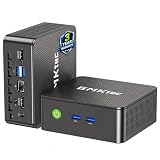
- WHY CHOOSE G3 ULTRA MINI PC PENTIUM GOLD 7505 - Choose the Intel Pentium Gold 7505 for snappier everyday responsiveness: It delivers up to 30% faster single-core performance than the Ryzen 5 3500U, making office apps and web browsing feel noticeably quicker, while its Intel UHD Graphics (48 EUs) provides 2.4x the GPU performance of the N100 & N150's 24-EU graphics, ensuring smoother 4K streaming and light photo editing.
- 16GB RAM MEMORY & 512GB STORAGE - GMKtec Nucbox G3 Ultra mini computer is prebuilt with 16GB LPDDR4 RAM at 3200 MT/s, you will enjoy a speedier experience with Built-in 512GB M.2 SATA Hard Drive. Our mini desktop pc boots up in seconds, work on multiple browser tabs, software applications and quickly transfers files. There is a primary slot and secondary expansion storage. Primary slot is M.2 2280 PCIE and secondary slot is M.2 2280 SATA.
- RICH INTERFACE - Nucbox pentium mini computer is equipped with 3* USB 3.2 Gen2 ports, up to 10Gbps/S, 1*USB 2.0, HDMI(4K@60Hz)*2, 3.5mm Audio Jack. Supports WiFi 6, and Gigabit Ethernet RJ45 2.5GbE network connectivity, Bluetooth 5.2. This Mini PC supports multiple device connection and can be used with servers, monitoring equipment, office equipment, displays, projectors, televisions, etc.
- 4K DUAL SCREEN DISPLAY - Mini desktop computer is equipped with upgraded Intel Graphics(max 1000MHz), supports 4K video playback and AV1 decoding, connect the pc with a projector as a home theatre, enjoy a variety of entertainments. Two HDMI 2.0 ports allows you to multi-task efficiently on two 4K@60Hz displays.
- UPGRADED COOLING FAN - The G3 Ultra has upgraded the cooling fan to reduce fan noise and thermals. We are using an upgraded thermal paste as well to help reduce heat on the CPU.
Product prices and availability are accurate as of the date/time indicated and are subject to change. Any price and availability information displayed on Amazon at the time of purchase will apply.

