
What’s actually slowing this PC down?
Pick the symptom - the matching free tool is one click away.
iTechGuides is reader-supported. When you buy through links on our site, we may earn an affiliate commission. As an Amazon Associate I earn from qualifying purchases. Learn more
You can build an event-driven inventory sync with n8n that aims to propagate changes in under a minute, but none of the platforms’ cited documentation guarantees that end-to-end latency. The result depends on your event delivery, workflow processing, API limits, store configuration, and workload. Treat “sub-minute” as a target to measure in your own environment—not a platform feature or promise.
A reliable design does more than copy quantities: it defines which system owns the inventory value, maps the same item and location across systems, handles duplicate events and failures, and periodically checks for drift. Airtable can serve as a coordination layer, but confirm its current API, webhook behavior, authentication, and request limits before relying on it for triggers or writes.
How do I sync inventory between Shopify and WooCommerce?
Use platform events to start a workflow, then have n8n validate and normalize the event, identify the corresponding item and location, apply your source-of-truth rules, write the intended value to the destination, and record the outcome. Add retries for transient failures and a reconciliation process to find missed updates.
Recommended Free Tools
Shopify documents the inventory_levels/update webhook topic, with inventory access scope listed for inventory-level topics. WooCommerce supports webhooks for product events and a REST API for external integrations. These mechanisms can notify a workflow about changes; they do not prove that another platform accepted an update. Your workflow must perform that write and inspect its response.
#1 Best Overall

- 【Unique Designed Screen Setting】It allows you to customize the screen display according to your preferences. With this innovative feature, you can easily set the language, adjust volume settings, select connection options, and view stored and total barcodes. Experience unparalleled convenience and flexibility as you personalize the settings of your Tera HW0009 to suit your specific needs. 【Package Includes: Barcode Scanner x1, Charging Cradle x1, Charging Cable x1, User Manual x1】
- 【Superior Global CMOS Imaging Scanning】This advanced scanner excels in fast and accurate reading of both ordinary and high-density barcodes, including challenging formats like PDF417 found on driver's licenses. Its exceptional performance effortlessly handles various scanning scenarios, including underwater scanning, reading barcodes on silver paper, reflective materials, and more.
- 【Charging Cradle & 2500mAh Large Battery】Designed with a convenient charging cradle, the HW0009 barcode scanner allows you to easily charge it whenever it's not in use. In addition, the scanner itself is equipped with a powerful 2500mAh battery, ensuring seamless all-day operation without the need for frequent charging.
- 【3-in-1 Connections & Widely Compatible】 Tera HW0009 wireless barcode scanner can work with bluetooth & 2.4G wireless & usb wired. The transmission distance can be 328ft in barrier free environment and 114ft in obstacles environment using 2.4G USB dongle. It can be connected with a variety of devices, such as smartphones, computers, POS, tablets. In addition, it is also compatible with various operating systems, such as windows 11/10/8/7/xp, Mac OS, iOS, android, linux.
- 【1D 2D QR code Programmable】2D: QR code, Data Matrix, PDF417(including PDF417 on driver’s license), Aztec, Maxicode, Micro QR, Micro PDF417; 1D: UPC/EAN, Code 128/EAN128, GS1-128, ISBT-128, Standard 2 of 5, Matrix 2 of 5, Code 39, Code 32, Code 93, Code 11, Codabar, PLESSEY, MSI, GSI Databar, ITF-14, GS1.
See Shopify’s webhook documentation, WooCommerce’s webhook documentation, and the WooCommerce REST API overview. Confirm the current API version, scopes, and store configuration as you implement.
Choose event-driven, polling, or a hybrid
| Approach | What it does | Trade-off |
|---|---|---|
| Event-driven | Starts processing when a configured event arrives. | Can reduce detection delay, but depends on event delivery and the receiving workflow. |
| Scheduled polling | Checks for changes on a recurring schedule. | Is straightforward to reason about, but adds interval-based delay and API reads. |
| Hybrid | Uses events for prompt updates and scheduled reconciliation to detect drift. | Adds a second process to operate, but provides a recovery path if an event or workflow run is missed. |
For inventory that must stay aligned, a hybrid design is a sensible default: use events to initiate updates, then compare mapped records periodically and repair discrepancies in controlled batches. Reconciliation is an engineering safeguard, not a guarantee that every event will be delivered.
What should Airtable do in the sync?
Decide whether Airtable is the source of truth, a mapping and configuration store, an audit view, or some combination. Do not assume its role from the fact that it is present in the architecture. In particular, confirm Airtable’s current official documentation for webhook behavior, payload lifecycle, authentication, and API limits before using it as an event trigger or write destination. The available platform documentation cited here does not establish those Airtable details.
If Airtable only coordinates the workflow, keep the operational contract explicit: which fields are authoritative, which system writes them, and whether the table records current state, event history, or both. Avoid making an Airtable record the authority for a quantity unless the business has deliberately chosen that ownership model and can manage its consistency and availability accordingly.
How should you define inventory ownership and identity?
Define the quantity and authority first
Specify exactly what the workflow synchronizes: on-hand stock, available-to-sell stock, or another quantity. Decide whether one system is authoritative or whether more than one store may make legitimate inventory changes. A two-way workflow without conflict rules can oscillate between values or overwrite a newer adjustment.
Rank #2

- Larger battery enables longer continuous usage and twice the stand-by time. With the unique battery indicator light showing the remaining battery level, no more Low Battery Anxiety.
- The curved handle is extended and widened. With specially designed smooth and flat trigger for a better grip.
- The orange anti shock silicone protective cover can prevent scratches and friction even when dropped from up to 6.56 feet. IP54 technology protects the wireless barcode scanner from dust.
- Plug and play with the USB receiver or the USB cable, no driver installation needed. Easy and quick to set up. Wireless transmission distance reaches up to 328 ft. in barrier free environment.
- Supports almost all 1D Barcodes: Febraban Bank Code, Codabar, Code 11, Code93, MSI, Code 128, EAN-128, Code 39, EAN-8, EAN-13, UPC-A, ISBN, Industrial 25, Interleaved 25, Standard 25, Matrix. Reads damaged, fuzzy, reflective and smudged barcodes.
If one system owns stock, treat changes elsewhere as requests or inputs according to an explicit rule, rather than automatically allowing every system to overwrite every other system. If multiple systems can mutate inventory, define how conflicts are resolved—for example, which adjustments are accepted and how the workflow determines which state wins. The right rule depends on the business process; the platform documentation does not prescribe one.
Map products and locations explicitly
Use a stable SKU when it is unique and consistently maintained, or keep an explicit cross-platform mapping. Shopify variant IDs, WooCommerce product IDs, and Airtable record IDs are different identifiers; do not assume they correspond. Define what happens when a SKU is missing or duplicated, and how bundles, variable products, and products with stock tracking disabled are handled.
Preserve location or warehouse identity when stock is location-specific. Shopify’s inventory model associates inventory levels with inventory items and locations, so a product-level quantity alone may not represent the stock you intend to sync. Do not combine locations or map them by guesswork.
How can n8n orchestrate the workflow?
n8n is documented as a workflow automation tool with Cloud and self-host options. Its WooCommerce node lists product retrieval and update operations. If a required operation is not exposed by a built-in node, an HTTP Request or other direct API call is a possible pattern, provided you implement the platform’s authentication and API requirements. Check the current node and API capabilities for the versions you deploy.
Use the workflow as a series of understandable stages rather than one opaque chain:
Rank #3

- 【3-in-1 Multifunction Inventory Barcode Scanner】- The wireless barcode scanner is a multi-functional mode inventory scanner, Including scan gun mode, collection function, and inventory mode. You can create 180 storage libraries and store 400,000 data. Our inventory barcode scanners are mainly used in warehouses, medical, cosmetics stores, supermarkets, banks, logistics, libraries, shops, etc
- 【Powerful Recognition】This bar code scanner can read one-dimensional barcodes and two-dimensional codes in all directions. Identify 1D: Codabar, Code 11, Code93, MSI, Code 128, EAN,UPC,Code 39, UPC-A, ISBN, Industrial 25, Standard25, Matrix;Recognize 2D: QR, DataMatrix, PDF417, Aztec, Micro PDF417. It can also read the QR code on the screen of other smart devices.
- 【2.4G Wireless Long-distance Transmission】- Our wireless barcode scanner is connected to the computer through a 2.4G wireless USB receiver, supports WINDOWS XP/7/8/10 system, and is compatible with office software such as WORD/EXCEL/Text; the inventory barcode scanner transmits distance when there is no obstacle outdoors It can reach 200M/696 feet, and it can reach 50M/164 feet when there are obstacles or indoors
- 【Data Storage】 With Internal 4MB flash, the device can store barcode data when away from the receiver and update the data when back to wireless transmission range. Support up to 100,000 barcodes storage when offline. And if you don’t need to transfer data to the pc, you can have it stored in the device and export it when you need to
- 【Plug and play for Easy Portability】- Insert the USB wireless receiver into the computer, turn on the inventory scanner and connect to the computer immediately, plug and play, no need to install drivers or software, Compatible with most POS systems except those requiring proprietary hardware integrations or direct app-level integration.
- Receive. Accept the configured platform event or scheduled poll. Keep the event handler focused so it can validate input and hand off work without conflating receipt with successful synchronization.
- Validate and normalize. Check that required identifiers and quantity fields are present, normalize the quantity and event data to your inventory contract, and reject or route malformed input for review.
- Resolve. Look up the mapped SKU or explicit cross-platform identity and the relevant location. Stop and report missing or ambiguous mappings instead of writing to a guessed item.
- Apply ownership and loop rules. Determine whether the event is allowed to change the authoritative value, and whether it was generated by a previous sync write.
- Write and verify. Update the intended destination through its node or API and capture the response. A successful trigger or workflow start is not evidence that the destination accepted the change.
- Record the outcome. Store enough information to investigate the event, mapping, attempted write, response, and timing without treating an audit entry as proof that every other system is current.
- Recover. Retry eligible transient failures with bounded waits; route persistent or non-retryable failures to operator review.
n8n’s documentation describes its workflow automation capabilities, and its WooCommerce node documentation lists supported operations. For requests that hit rate limits, n8n documents retry, wait, batching, and pagination patterns in its rate-limit handling guidance.
Outdated Drivers Are Slowing You Down
One free scan finds every outdated or missing driver and matches the right update for your exact hardware.Free scan · exact hardware matchPC Slower Than It Used to Be?
A free scan shows the junk files, broken settings and background clutter dragging Windows down - then fixes them in one click.Free scan · Windows 10 & 11Built-in nodes or direct API calls?
| Option | Best fit | Consideration |
|---|---|---|
| Built-in n8n node | The node exposes the operation and fields the workflow needs. | Confirm operation coverage and behavior against the version you run. |
| Direct API request | You need an operation, field, or request detail not exposed by a node. | You must handle authentication, request details, errors, and API changes yourself. |
Cloud or self-hosted n8n?
| Option | Operational responsibility | Decision point |
|---|---|---|
| n8n Cloud | Uses n8n’s hosted option. | Evaluate deployment constraints and how data handling fits your requirements. |
| Self-hosted | Your team operates the deployment. | Account for the operational responsibility and deployment constraints your team can support. |
The cited documentation does not establish a universal best choice between these deployment options; select based on your operational and data-handling requirements.
Independent reader supportYour contribution helps us test, update, and keep practical guides available for everyone.How do you prevent overselling, loops, and duplicate writes?
Inventory updates can reappear as new events: a workflow writes to one platform, that platform emits an event, and the event starts another run. Prevent the loop by recording source or event metadata where supported, or by comparing normalized values before writing. A run that receives a value already present at the destination should not write it again without a reason.
Make writes idempotent. Reprocessing the same event should converge on the same intended stock state, not apply the change twice. This is especially important when an API response is delayed or a workflow retries after an uncertain outcome. Prefer setting the intended quantity over applying an unguarded increment or decrement, unless the platform operation and your event contract explicitly require a delta.
Do not treat “last event received” as a universal conflict rule: arrival order may not reflect the order of legitimate business adjustments. Record enough event and processing context to apply the chosen ownership rule consistently, and route conflicts the workflow cannot resolve safely to review.
Free tools Windows power users keep installed
One-click scans. No signup required.
Rank #4
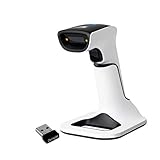
- Compatible with most POS systems except those requiring proprietary hardware integrations or direct app-level integration
- No Software Needed: No need to download or install any software or apps with this sleek handheld 3-in-1 wireless, Bluetooth, and USB scanner with vibration capabilities to help in noisy environments.
- Next Gen Smart Charging Stand: One base that can do it all. Wireless Transmission from stand to scanner. Holds scanner. Charges scanner's built-in rechargeable Li-Ion battery via lighting connectors
- Scan Modes: Connect to Mac or Windows computers, Android or Apple mobile devices, and POS systems to start scanning barcodes with one of the 3 available modes - manual, continuous, and auto sense
- Code Compatibility: Scan 1D barcodes including UPC, EAN, Code128, Code39, Code11, Codabar, and many others; Scan 2D barcodes including PDF417, Aztec code, Data Matrix, QR Code, Micro PDF, Interleaved, and others. Doesn't work with Maxicode
What happens when a webhook or API call fails?
Separate transient failures, such as a rate-limit response or temporary service problem, from errors that a retry will not fix, such as invalid data or insufficient permissions. Use bounded retries and waits for eligible failures; batch or pace work when the destination is limiting requests. Send persistent failures to a dead-letter queue or operator review path rather than retrying indefinitely.
Shopify says API limits vary by API and may be temporarily reduced for platform stability. Do not design around a fixed sustainable write rate without checking the specific API and version. n8n’s rate-limit guidance describes patterns including Retry On Fail and Loop Over Items with Wait for retrying and pacing work.
WooCommerce signs webhook payloads with HMAC-SHA256 when a secret is configured, provides delivery logs, and automatically disables a webhook after repeated failures. Validate the signature at the receiver and monitor delivery state so a disabled webhook does not silently become an extended inventory gap. See WooCommerce’s webhook documentation.
How do you measure whether sync is really sub-minute?
Measure the complete path, not just n8n execution time. Capture timestamps for event receipt, workflow start, destination write completion, and confirmation or later reconciliation. Calculate observed propagation time from the triggering change to the destination’s accepted update, and report median and tail latency from actual runs under representative load. Do not publish a benchmark until you have those measurements.
Quick wins for a faster PC:
Scan for outdated or missing drivers - takes under a minuteDriver Scan →Repair Windows errors before they cause bigger problemsFix Now →Set an alert threshold for lag that reflects the business risk, and define who reviews failed or delayed runs and how they can safely be replayed. Shopify’s API limit documentation notes that limits can vary, which is one reason a fixed sub-minute performance promise is not defensible without testing under the account’s actual workload.
Quick Recap
What should you test before relying on the sync?
- A normal stock change in each direction your design permits, including the expected product and location.
- A duplicate delivery or replay of the same event, confirming that stock is not applied twice.
- A sync-originated update that emits another event, confirming that it does not create a loop.
- A missing or duplicate SKU, an unmapped location, and a product with stock tracking disabled.
- A temporary rate limit or service failure, confirming bounded retry and later recovery.
- An invalid payload or permissions error, confirming it is routed for correction rather than retried blindly.
- A failed or disabled webhook, confirming that monitoring or reconciliation detects the resulting drift.
- Peak-volume runs representative of the store’s real workload, with measured end-to-end latency rather than assumed speed.
Product prices and availability are accurate as of the date/time indicated and are subject to change. Any price and availability information displayed on Amazon at the time of purchase will apply.

