
Recommended Free Tools
iTechGuides is reader-supported. When you buy through links on our site, we may earn an affiliate commission. As an Amazon Associate I earn from qualifying purchases. Learn more
To find out whether your SonicWall firewall is end of life, look up its exact model in SonicWall’s Product Life Cycle table and confirm the lifecycle phase. A product that is no longer sold may still receive limited support; at End of Support (EOS), SonicWall says it stops technical support, firmware updates and upgrades, and hardware replacement. Your next step may be another SonicWall appliance, a different on-premises or virtual firewall, or a cloud-delivered secure-access design—not automatically a SASE service.
How to check whether your SonicWall is at end of life
- Find the appliance’s exact model and variant, such as TZ270 or SOHO 250W. Do not rely on a family name alone.
- Search for that model in SonicWall’s Product Life Cycle table.
- Read the phase and dates for the exact product row. If the model is absent, SonicWall says some legacy products are not shown publicly; check the product in your MySonicWall account.
- Check the appliance’s support contract and subscriptions separately. Their purchase or renewal status does not change the hardware’s lifecycle phase.
The dates below reflect SonicWall’s table and notices as available on October 7, 2026. Lifecycle information can change, so verify the current entry before making a purchase or migration decision.
What SonicWall’s lifecycle phases mean
“EOL” is often used loosely to mean a product is old or unavailable for sale. SonicWall lists several distinct stages, and their support implications differ.
| Phase | What SonicWall says it means | What it means for planning |
|---|---|---|
| Last Order Day (LOD) | SonicWall announces its intent to begin the EOL process. The product remains active and support contracts continue to be sold. | Start evaluating a migration, but do not treat the notice itself as the end of support. |
| Active Retirement Mode (ARM) | SonicWall stops actively manufacturing or selling the product. The stated period is two years after LOD; support remains available for active contracts, with limited firmware feature and bug-fix conditions. | Confirm what support and firmware coverage your contract actually provides; plan for replacement rather than assuming new purchases or features will remain available. |
| One-Year Support Last Order Day | The last day to buy a one-year support contract or bundled subscription that can keep the product supported until EOS. | Check eligibility and timing directly with SonicWall or your provider before relying on another support term. |
| Limited Retirement Mode (LRM) | SonicWall says no new firmware features will be added; software and firmware support is limited to critical bugs and vulnerabilities. The table describes a three-year period beginning after ARM. | Do not assume routine enhancements or fixes for noncritical issues will be available. |
| End of Support (EOS) | SonicWall ends technical support, firmware updates and upgrades, and hardware replacement. Some security subscriptions may still be offered, but SonicWall says it no longer technically supports the appliance or those services running on it. | Assess the security and operational risk of continuing to run the appliance, and establish a supported replacement plan. |
Examples of SonicWall lifecycle dates
These examples illustrate why the model number and lifecycle phase matter. They are not a substitute for checking the live entry for your exact SKU.
#1 Best Overall

- APPLIANCE ONLY: Hardware unit sold without a service subscription — security services, firmware updates and support are NOT included and must be purchased separately to activate protection.
- PERFORMANCE: Up to 2.5 Gbps firewall inspection, 1 Gbps threat prevention and 1.2 Gbps IPSec VPN throughput driven by SonicWall's patented Reassembly-Free Deep Packet Inspection (RFDPI) engine.
- CONNECTIVITY: 8x1GbE + 2x1G SFP in a desktop form factor; zero-touch deploy and manage on-box or via cloud Network Security Manager (NSM).
- THREAT PROTECTION: SonicOS 8 delivers intrusion prevention, gateway anti-malware, application control, TLS/SSL decryption, Capture ATP multi-engine sandboxing (RTDMI) and reputation-based content & DNS filtering with an active service subscription.
- BUILT FOR SMALL BUSINESS & BRANCH: Secure SD-WAN, IPSec and SSL VPN plus Zero-Trust Network Access through Cloud Secure Edge keep distributed sites and remote workers protected.
| Product or notice | Lifecycle information listed | Important distinction |
|---|---|---|
| SOHO 250W, SOHO 250, 350, 350W, 500, and 500W | EOS listed as October 1, 2026 | That date has passed as of October 10, 2026. Check the exact model in SonicWall’s current table. |
| SOHO and SOHOW | EOS listed as April 16, 2026 | Confirm the exact model and current support status rather than assuming all products called “SOHO” share one date. |
| NSa 2700 | LOD: October 31, 2025; ARM begins November 1, 2025; LRM begins November 1, 2027; one-year support LOD: November 1, 2029; EOS: November 1, 2030 | SonicWall recommends NSa 2800 and above as a replacement path; that recommendation is not a capacity match for every deployment. |
| NSa 3700 | LOD: October 31, 2025; ARM begins November 1, 2025; LRM begins November 1, 2027; one-year support LOD: November 1, 2029; EOS: November 1, 2030 | SonicWall recommends NSa 3800 and above; validate sizing and requirements before selecting a model. |
The NSa dates and recommended paths come from SonicWall’s August 31, 2025 Last Time Buy notice. SonicWall describes the newer devices as offering higher performance, a longer support lifecycle, and newer services; those are vendor statements, not an independent capacity comparison. The notice does not establish direct replacement mappings for every SonicWall family.
Software and subscription notices are not appliance EOS
SonicWall separately says Network Security Manager (NSM) On-Prem 4.0.0 and below reaches EOS on October 30, 2026, and recommends upgrading to 4.1.0 or later. This is a management-software lifecycle issue, not the EOS date of a firewall appliance. See the NSM On-Prem EOS notification.
Rank #2

- SonicWall TZ270W Appliance Only - No Service Subscription (02-SSC-2823) - Combines enterprise-grade firewalling with integrated 802.11ac Wave 2 Wi-Fi to deliver secure wired and wireless connectivity in one compact device for small offices and clinics.
- Blocks zero-day threats and ransomware with Capture ATP sandboxing enhanced by RTDMI, plus IPS and anti-malware scanning for layered protection.
- Eliminates the need for separate access points in smaller spaces thanks to built-in high-speed wireless that is simple to deploy and manage.
- Supports VPN, SD-WAN, and TLS 1.3 decryption to secure hybrid cloud access and remote workers while maintaining usability and performance.
- Delivers gigabit performance with up to 750,000 concurrent connections to handle growth in users, devices, and SaaS applications.
SonicWall also announced that the Threat Protection Security Suite (TPSS) bundle would be retired effective May 1, 2025 for TZ270, TZ370, and TZ470 variants, with affected products eligible for the Essential Protection Security Suite (EPSS). That notice concerns subscription SKUs, not an appliance EOL declaration. Check the TPSS retirement notice for the affected products and terms.
Free tools Windows power users keep installed
One-click scans. No signup required.
Choose between an appliance migration and SASE
A firewall and SASE address related but different design needs. A firewall appliance or virtual/cloud NGFW can protect a site, network, or cloud environment. SASE is a cloud-delivered approach to secure access, often considered for distributed users and applications. A SASE service is not automatically a one-for-one replacement for a site firewall, and some designs may need both local infrastructure protection and cloud-delivered access controls.
Rank #3
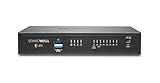
- SonicWall TZ370 with 1 Year APSS - TotalSecure (02-SSC-6819) - Designed for growing SMBs that need more throughput and scalability, delivering multi-gigabit firewall performance with best-in-class price to performance.
- Advanced Protection Service Suite (APSS) offers next-generation security combining Gateway AV, IPS, Application Control, Content Filtering, 24×7 Support, Capture ATP sandboxing, and RTDMI. Protects against ransomware, zero-day exploits, and encrypted attacks with multi-layered threat prevention and scalable, enterprise-grade performance.
- Protects against encrypted malware and intrusions using DPI-SSL inspection, IPS, anti-malware, and Capture ATP sandboxing with RTDMI detection.
- Secure SD-WAN intelligently steers traffic across links to reduce MPLS costs and improve cloud application performance for branch users.
- The SonicWall TotalSecure Trade Up program enables customers with an eligible SonicWall or third-party firewall to upgrade to a new Gen 7 appliance bundled with a protection service suite such as Essential or Advanced. This all-in-one option simplifies purchasing by combining next-generation hardware with active security services, helping organizations modernize defenses and maintain continuous protection in a single package.
Stay with SonicWall
SonicWall’s product catalog lists NSa, NSsp, NSv, TZ, and TZ80 families, among other products. If continuity with SonicWall is important, check the exact model’s lifecycle, current availability, subscriptions, sizing, and any official migration guidance. A shared family name does not by itself establish that a newer appliance is the right successor.
Consider another physical, virtual, or cloud NGFW
Fortinet describes FortiGate NGFW options for physical, virtualized, and cloud deployments, with ranges for branch, campus, and data-center use. Its materials also describe integrated SD-WAN and ZTNA capabilities. These are vendor-described categories and features, not independent performance comparisons. Review the Fortinet NGFW overview against your actual requirements.
Rank #4
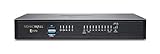
- SonicWall TZ570 Appliance Only - No Service Subscription (02-SSC-2833) - First desktop TZ with multi-gigabit interfaces, delivering up to 4 Gbps firewall throughput for demanding SMB and branch deployments.
- Defends against ransomware, zero-day exploits, and encrypted threats using RTDMI, DPI-SSL, IPS, and Capture ATP multi‑engine sandboxing.
- Advanced networking with VLAN segmentation, secure SD-WAN, and high-performance VPN supports hybrid cloud and remote work at scale.
- Centralized management via NSM provides visibility, analytics, and consistent policy orchestration across distributed locations.
- Handles up to 1.25 million concurrent connections to support sustained growth in bandwidth and devices.
Evaluate cloud-delivered access when the users and applications call for it
Prisma Access is described by Palo Alto Networks as a SASE product and includes firewall-as-a-service. Fortinet’s product catalog lists FortiSASE for cloud-based security for work-from-anywhere and remote access, alongside FortiGate and SD-WAN categories. Evaluate these options when distributed-user access is central to the problem; determine separately how sites, local devices, and other infrastructure will be protected.
Build a requirements-based comparison
There is no universal replacement winner in the available product information. Compare candidates against the same deployment, traffic, security, and operating requirements; vendor product descriptions do not establish equivalent capacity.
Quick Recap
Best Value
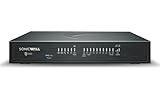
- APPLIANCE ONLY: Hardware unit sold without a service subscription — security services, firmware updates and support are NOT included and must be purchased separately to activate protection.
- PERFORMANCE: Up to 3.5 Gbps firewall inspection, 1.5 Gbps threat prevention and 1.6 Gbps IPSec VPN throughput driven by SonicWall's patented Reassembly-Free Deep Packet Inspection (RFDPI) engine.
- CONNECTIVITY: 8x1GbE + 2x1G SFP in a desktop form factor; zero-touch deploy and manage on-box or via cloud Network Security Manager (NSM).
- THREAT PROTECTION: SonicOS 8 delivers intrusion prevention, gateway anti-malware, application control, TLS/SSL decryption, Capture ATP multi-engine sandboxing (RTDMI) and reputation-based content & DNS filtering with an active service subscription.
- BUILT FOR GROWING SMALL BUSINESS: Secure SD-WAN, IPSec and SSL VPN plus Zero-Trust Network Access through Cloud Secure Edge keep distributed sites and remote workers protected.
| Comparison area | Questions to answer |
|---|---|
| Deployment | Do you need a branch or data-center appliance, a virtual or cloud firewall, cloud-delivered access for users, or a hybrid design? |
| Capacity | What throughput do you need with the relevant protections, TLS inspection, VPN, and real traffic mix enabled? Use comparable test conditions when evaluating published figures. |
| Footprint | How many locations, users, remote workers, and cloud environments must the design cover? |
| Functions | Which IPS, application control, web filtering, VPN or ZTNA, SD-WAN, high availability (HA), logging, and central-management functions are required? |
| Operations | What policy conversion, monitoring, staff training, and cutover work will a change require? How familiar is the team with each management approach? |
| Lifecycle | What are the support dates for the exact appliance or service, operating system, subscriptions, and management software? |
| Total cost | What are the combined hardware, subscription, support, management, migration, and multi-year renewal costs? |
| Portability and recovery | How will you handle configuration conversion, VPN peers, rules and objects, certificates, identity integration, and rollback if cutover fails? |
Plan the migration before the old firewall reaches EOS
- Record the current state. Capture the exact appliance model, lifecycle phase, contract and subscription status, firmware version, interfaces, HA setup, VPN peers, policies, certificates, identity integrations, logging, and management dependencies.
- Define the target design. Decide whether the requirement is a same-vendor appliance migration, a cross-vendor NGFW, SASE access, or a combination. Map required features and traffic flows before comparing products.
- Validate capacity and compatibility. Size the candidate for the expected traffic with required security services enabled. Check interfaces, VPN, SD-WAN, HA, management, subscriptions, and support dates; do not infer a direct match from the old model’s name.
- Prepare and test policy conversion. Review converted rules, address and service objects, NAT, certificates, authentication, VPN settings, logging, and exceptions in a test environment or staged setup where possible.
- Schedule a controlled cutover. Document the change window, dependencies, validation checks, responsible operators, and rollback conditions. Verify that critical applications and remote access work before retiring the old configuration.
- Close lifecycle gaps. Confirm that the chosen hardware or service, firmware or operating system, subscriptions, and management platform each have an understood support path.
Product prices and availability are accurate as of the date/time indicated and are subject to change. Any price and availability information displayed on Amazon at the time of purchase will apply.

