
The Tool Desk
Outbyte Driver Updater FREEScan for outdated or missing drivers - takes under a minuteDriver Scan →Outbyte PC Repair FREEClear out junk files and repair common Windows errorsFree Scan →iTechGuides is reader-supported. When you buy through links on our site, we may earn an affiliate commission. As an Amazon Associate I earn from qualifying purchases. Learn more
To find what a website is built with across a large list, use a bulk technology lookup or API for broad coverage, then run a JavaScript-enabled browser scan on sites where runtime behavior matters. A detector matches observable clues—such as HTML, scripts, headers, cookies, or network requests—to known technology fingerprints; it cannot inspect a site’s private source code or guarantee a complete stack inventory.
A 2026 article reported roughly twice as many detections from headless Chrome as from HTTP-level checks on three sites. That is an illustrative, author-reported comparison, not a general benchmark.
How website technology detection works
A detector gathers public signals from a page and compares them with patterns associated with known technologies. Those signals may include HTML fragments, JavaScript variables, script URLs, response headers, cookies, DNS evidence, and requests made while the page runs. The open-source Wappalyzer project documents pattern-based matching against HTML, JavaScript variables, response headers, and other evidence; its matching rules can express required, excluded, or implied technologies. Wappalyzer’s project documentation describes the approach.
- Collect evidence. A scanner requests a page or loads it in a browser and records the signals it can observe.
- Match fingerprints. It compares those signals with known patterns associated with software, services, and frameworks.
- Apply matching rules. Rules can require a signal, exclude a match when contradictory evidence appears, or infer a related technology.
- Report matches. The result is a set of technologies supported by the evidence observed in that scan—not a guaranteed inventory of the site’s full implementation.
Think of a result as “evidence consistent with this technology.” A missing match does not prove a technology is absent: a clue may be hidden, appear only on another route, load after consent, or be created only after JavaScript executes. The cited sources do not establish false-positive or false-negative rates across a representative set of sites.
#1 Best Overall

- ROBUST CAPTURE SOLUTION: The Brother ADS-4300N Professional Desktop Scanner is a great choice for busy offices and workgroups, built for the demands of how work now works
- FAST, MULTI-PAGE SCANNING: Scans single and double-sided materials in a single pass, in both color and black / white, at up to 40ppm(1) for increased productivity. Quickly scan a variety of document sizes and types via the large, 80-page capacity auto document feeder to help optimize efficiency. Add additional sheets with continuous scanning mode for even greater productivity.
- EASILY ADAPTS TO YOUR EXISTING WORKFLOWS: Provides wide driver support (TWAIN, WIA, ISIS, and SANE) for easy integration, as well as a number of scan-to destinations including email, cloud services(2), SharePoint, SSH Server (SFTP), USB memory stick, and more.
- FLEXIBLE CONNECTIVITY: Features built-in Ethernet network interface to easily set up and share on your network. Scan-to your mobile device(3) with AirPrint and Brother Mobile Connect.
- TRIPLE LAYER SECURITY: Offers Triple Layer Security features to help safeguard sensitive documents and securely connect to the device and network.
Why a browser scan can detect more than an HTTP fetch
An HTTP-only scan can inspect the response it receives, but it does not execute the page’s JavaScript. A browser scan can observe changes made after scripts run, as well as requests triggered during page execution. Those additional signals may expose technologies that are not apparent in the initial response.
The article behind the “2×” claim, posted by SwiftKit on DEV Community on October 2, 2026, reports these counts from its author’s test:
Rank #2

- BEST FOR SMALL BUSINESSES – Engineered for extraordinary productivity, the Brother DCP-L2640DW Monochrome (Black & White) 3-in-1 combines laser printer, scanner, copier in one compact footprint and delivers high-quality black & white prints
- FAST PRINTER WITH EFFICIENT SCANNING – Produces documents quickly with print speeds up to 36 ppm(2) and scan speeds up to 23.6/7.9 ipm(3) (black/color). A 50-page auto document feeder(4) allows for convenient, time saving multi-page scanning and copying
- FLEXIBLE CONNECTION OPTIONS – Easily navigate the changing demands of your business with secure multi-device connectivity via built-in dual-band wireless (2.4GHz / 5GHz) and Ethernet. Or connect locally to a single computer via USB interface
- BROTHER MOBILE CONNECT APP – Print, scan, and manage your wireless printer anytime, from almost anywhere from your mobile device. Order Brother Genuine Supplies, track toner usage, and complete more work on-the-go(5)
- CHOOSE BROTHER GENUINE TONER – When it’s time to replace your toner, be sure to choose Brother Genuine TN830 or TN830XL replacement toner. And with Refresh EZ Print Subscription Service, you’ll never worry about running out of toner again and you’ll enjoy savings of up to 50%(6) on Brother Genuine Toner. Get started with Refresh today with a Free Trial(1)
| Site | HTTP-level detections (HTML, headers, and DNS) | Headless Chrome detections |
|---|---|---|
| notion.so | 18 | 38 |
| allbirds.com | 16 | 29 |
| hubspot.com | 33 | 56 |
These are the article author’s results for three sites, not an independently established industry benchmark. The article also describes using headless Chrome and matching browser-observed requests, including script URLs and XHR activity. Its comparison supports the narrower point that browser execution can reveal additional signals in some cases; it does not show that browsers always find twice as many technologies. Read the SwiftKit article and its reported method.
PC Slower Than It Used to Be?
A free scan shows the junk files, broken settings and background clutter dragging Windows down - then fixes them in one click.Free scan · Windows 10 & 11Outdated Drivers Are Slowing You Down
One free scan finds every outdated or missing driver and matches the right update for your exact hardware.Free scan · exact hardware matchChoose a bulk detection workflow
The right approach depends on whether you prioritize volume, fresh results, low latency, or JavaScript-aware detection. These workflows can be combined rather than treated as exclusive choices.
Rank #3

- UPGRADED SECURITY & FIRMWARE SUPPORT: New LK301E comes with an updated firmware version, with security improvements optimized through firmware enhancements to ensure stable and secure operation for office use.
- LAN USB DEVICE SHARING: Easily share up to 3 USB 3.0 devices over your Local Area Network via a stable wired Ethernet connection. With the Xiiaozet Virtual USB Tool, connected peripherals can be accessed by any computer within the same LAN as if they were locally connected. Note: Works only within the same subnet; not supported over VPN or the internet.
- GIGABIT NETWORK & USB 3.0 PERFORMANCE: Built with a high-performance 880MHz Dual-Core CPU and 4Gbit DDR RAM to ensure smooth, low-latency USB over IP transmission. Combined with a Gigabit Ethernet port and USB 3.1 Gen 1 support (up to 5Gbps), it delivers reliable performance for data-intensive tasks such as scanning and large file transfers.
- EXCLUSIVE ONE-TO-ONE CONNECTION: Features a secure single-user access system to ensure data integrity and stable performance. While devices are visible to multiple users on the network, only one computer can connect and control a specific device at a time, preventing data conflicts. Ideal for sensitive hardware like license dongles and security keys.
- WIDE COMPATIBILITY WITH CLEAR LIMITATIONS: Supports standard USB peripherals including printers, scanners, flash drives, and software dongles. Backward compatible with USB 2.0/1.1. Please Note: Not compatible with protocol-converting devices (e.g., USB-to-Serial, CAN adapters) or wireless USB receivers. Not recommended for real-time isochronous devices such as webcams or audio equipment.
| Workflow | Best fit | Trade-offs and checks |
|---|---|---|
| Browser extension | Inspecting one site while visiting it | Convenient for individual manual checks, but not designed to process a large URL list. Wappalyzer recommends its extension for manual research. See its recommendations. |
| Cached bulk lookup | Large lists where speed and cost matter more than immediate freshness | Wappalyzer’s lookup page describes CSV or TXT uploads of up to 100,000 URLs and says cached results are verified within the last 30 days. Confirm current capacity, coverage, and freshness terms before relying on them. See the technology lookup details. |
| Live lookup or API | Smaller or higher-priority sets where current evidence matters | The lookup page says live lookups count as five lookups each. API documentation says business-plan access is required, each request supports up to 10 URLs, and ordinary lookups cost one credit per URL. Live recursive lookups cost five credits per URL and may complete asynchronously. These are documented terms that can change, so verify them before planning a run. Lookup details · API documentation. |
| Browser-rendered scan | Sites where JavaScript-created state or runtime network activity is important | Can expose signals unavailable to a plain fetch, but browser execution adds infrastructure and resource costs. The three-site comparison above is not a general performance or detection benchmark. |
| Open-source fingerprint implementation | Teams that need control over matching logic and scan infrastructure | Requires maintaining the fingerprints and scan behavior. The Wappalyzer project is an example of a pattern-based implementation. View the project. |
For bulk lookup services, Wappalyzer documents CSV/TXT upload and CSV/JSON export on its lookup page. For automated integration, it points users to its API. The API’s plan, request, credit, and asynchronous-processing terms make it important to estimate cost and completion time before sending a large job.
A practical approach for thousands of domains
For a custom pipeline, use the least expensive scan that answers the question, then escalate selectively. This avoids paying the cost of browser execution for every domain when a basic response already provides useful evidence.
Rank #4

- 【Wi-Fi Network Connection】NetumScan wifi barcode scanner can connect to Wi-Fi TCP, UDP and other network protocols, support Internet MQTT/HTTP protocol, and enable cloud server data transmission.
- 【Bluetooth Data Transfer】Bluetooth barcode scanner can be directly applied to Android, iOS, Windows, Mac OS system devices, support HID, BLE and SPP (secondary development) modes data transmission.
- 【Powerful Barcode Recognition】Wireless 2d barcode scanner supports mainstream 1D and 2D barcode scanning, such as QR code, Data Matrix, PDF 417, FedEx, USPS, VIN, etc. It can scan barcodes from different media, not only printed barcodes, but also screen barcodes.
- 【Convenient and Rechargeable】NetumScan barcode scanner comes with a charging cradle, providing power at any time, ensuring full-day work. When it is out of range reading in Auto Mode, the scanned data will be automatically saved to the scanner memory buffer and transmitted to the host when back to the wireless coverage.
- 【Small and Sturdy】NetumScan barcode reader is suitable for all-day use, with a battery life of up to 40 hours per charge. It has a rugged design, dust-proof and moisture-proof. Moreover, the built-in long-life trigger guarantees a continuous productivity of 10 million times, for the best reliability. This scanner can be used in the most practical way according to different scanning tasks, in various solutions such as retail, warehousing, manufacturing, logistics, etc.
- Define the target. Decide whether you need a broad technology inventory, current evidence for selected sites, or proof of a particular technology. A page-level lookup is not necessarily an inventory of every route or subdomain.
- Run an HTTP-level pass. Collect the initial response and its observable signals for broad coverage. Record the URL, scan time, and evidence so results can be interpreted in context.
- Identify uncertain or high-priority cases. Escalate sites where a missing match matters, the relevant technology is likely to load after scripts run, or the initial evidence is inconclusive.
- Render selected pages in a browser. Capture the rendered page and browser network activity, then match the additional evidence against fingerprints. SwiftKit’s article describes this as part of its own implementation approach, not as a universal recipe.
- Keep results scoped and reproducible. Store which route and scan mode produced each match. A scan of one page at one moment should not be presented as a definitive description of an entire site.
SwiftKit’s practical suggestions include blocking unnecessary media, handling JavaScript safely, collecting browser network requests, respecting robots.txt, and expecting some sites to block automation. These are implementation considerations from the article, not guarantees that a browser scan will succeed on every site.
Free tools Windows power users keep installed
One-click scans. No signup required.
What a technology report can and cannot tell you
- It can indicate public evidence. A match means the observed page exposed signals consistent with a technology fingerprint.
- It cannot reveal private implementation details. Fingerprinting is not access to source code, configuration, or every backend component.
- It cannot turn silence into proof of absence. A technology may be used without exposing a detectable fingerprint in the pages or states scanned.
- Its scope depends on what was scanned. Routes, consent choices, timing, and whether JavaScript ran can change the available evidence.
- Its confidence depends on the evidence and rules. The cited material does not quantify detector accuracy across a representative corpus, so avoid treating an unqualified list as complete or definitive.
When to use a browser instead of a plain fetch
Use an HTTP-level scan when you need inexpensive, broad initial coverage and the signals in the response are sufficient for your task. Add browser rendering when you need to observe JavaScript-created state or requests made during execution, or when a plain fetch leaves an important result unresolved. A browser pass is a targeted way to gather more evidence, not a guarantee of twice the detections.
Quick Recap
Best Value
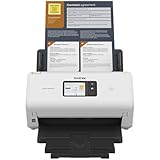
- IDEAL FOR SMALL OFFICE, HOME OFFICE AND WORK FROM HOME USERS - A compact, easy to use, complete organization solution.
- INCREASES PRODUCTIVITY - With single and dual-sided scanning speeds of up to 40ppm1 and capacity of up to 60 pages.
- VERSATILE & CONVENIENT - Scans several document types and sizes, with multiple scan-to destinations and connectivity options including wireless/wired Ethernet network and Brother Mobile Connect2 application for Android and iOS.
- ONE-TOUCH CONTROL - A user-friendly 2.8-inch color touchscreen gives users full control at their fingertips
- TRIPLE LAYER SECURITY - Helps safeguard sensitive documents and to securely connect to device and network
Product prices and availability are accurate as of the date/time indicated and are subject to change. Any price and availability information displayed on Amazon at the time of purchase will apply.

