
Quick wins for a faster PC:
Repair Windows errors before they cause bigger problemsFix Now →Fix the driver behind crashes, sound loss and screen glitchesFind Drivers →iTechGuides is reader-supported. When you buy through links on our site, we may earn an affiliate commission. As an Amazon Associate I earn from qualifying purchases. Learn more
To check whether your internet connection supports IPv6, open test-ipv6.com in your browser and run its simple test. It checks whether this browser, on its current network path, can reach IPv6 test endpoints. A pass is useful evidence of IPv6 connectivity—not proof that every device, app, or network setting is ready to stop using IPv4.
How to check IPv6 in 10 seconds
- Open test-ipv6.com in a browser with JavaScript enabled. The site says JavaScript and cross-site scripts are needed for the full test.
- Run the simple test and note whether the result shows IPv4 only, IPv4 plus IPv6, or IPv6.
- Interpret the result as a check of this browser and connection path—not every device using the same Wi-Fi.
- If the simple test suggests a problem, run the detailed test to inspect IPv4-only, IPv6-only, and dual-stack access, large-packet handling, and whether the ISP resolver can reach IPv6-only authoritative DNS.
test-ipv6.com describes its approach this way: “The combination of successes and failures tells a story about how ready you are for when publishers start offering their web sites on IPv6.” That is the site’s description of what its checks indicate, not an independent certification of network readiness.
What the result tells you
IPv4 works, but IPv6 does not
The tested browser reached IPv4 endpoints but did not demonstrate IPv6 connectivity. That result alone cannot identify the cause: it could involve the ISP, router, device, VPN, DNS, or filtering configuration. The test is not a diagnosis of which component is responsible.
The Tool Desk
Outbyte Driver Updater FREEScan for outdated or missing drivers - takes under a minuteDriver Scan →Outbyte PC Repair FREEClear out junk files and repair common Windows errorsFree Scan →Both IPv4 and IPv6 work
This is a dual-stack result: the tested path can reach services over both protocol families. RFC 6586 defines dual-stack as full support for IPv4 and IPv6 in hosts and routers. For everyday use, that is useful IPv6 capability while retaining IPv4 compatibility; it does not establish that all devices and applications on the network have the same support.
#1 Best Overall

- DUAL-BAND WIFI 6 ROUTER: Wi-Fi 6(802.11ax) technology achieves faster speeds, greater capacity and reduced network congestion compared to the previous gen. All WiFi routers require a separate modem. Dual-Band WiFi routers do not support the 6 GHz band.
- AX1800: Enjoy smoother and more stable streaming, gaming, downloading with 1.8 Gbps total bandwidth (up to 1200 Mbps on 5 GHz and up to 574 Mbps on 2.4 GHz). Performance varies by conditions, distance to devices, and obstacles such as walls.
- CONNECT MORE DEVICES: Wi-Fi 6 technology communicates more data to more devices simultaneously using revolutionary OFDMA technology
- EXTENSIVE COVERAGE: Achieve the strong, reliable WiFi coverage with Archer AX1800 as it focuses signal strength to your devices far away using Beamforming technology, 4 high-gain antennas and an advanced front-end module (FEM) chipset
- OUR CYBERSECURITY COMMITMENT: TP-Link is a signatory of the U.S. Cybersecurity and Infrastructure Security Agency’s (CISA) Secure-by-Design pledge. This device is designed, built, and maintained, with advanced security as a core requirement.
IPv6 works, but a detailed check fails
Read the name of the failed check rather than treating every failure as an IPv6 outage. Reachability, large-packet handling, and resolver behavior are separate checks. test-ipv6.com describes its ISP-resolver check as bonus information, not a requirement for reaching IPv6 websites today.
Why ordinary browsing can hide an IPv6 problem
On dual-stack hosts, clients may use Happy Eyeballs to try address-family connections in parallel and reduce user-visible delay. RFC 8305, a December 2017 IETF Standards Track document, says parallel attempts can help clients connect more quickly when particular addresses or address families are blocked, broken, or sub-optimal. A working fallback can therefore make browsing seem normal even when the IPv6 path has a problem; a direct test can reveal the difference.
Rank #2
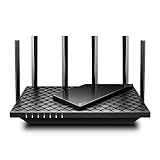
- 𝐆𝐢𝐠𝐚𝐛𝐢𝐭 𝐖𝐢𝐅𝐢 𝐟𝐨𝐫 𝟖𝐊 𝐒𝐭𝐫𝐞𝐚𝐦𝐢𝐧𝐠 – Up to 5400 Mbps WiFi for faster browsing, streaming, gaming and downloading, all at the same time. Performance varies by conditions, distance to devices, & obstacles such as walls.
- 𝐅𝐮𝐥𝐥 𝐅𝐞𝐚𝐭𝐮𝐫𝐞𝐝 𝐖𝐢𝐅𝐢 𝟔 𝐑𝐨𝐮𝐭𝐞𝐫 – Equipped with 4T4R and HE160 technologies on the 5 GHz band to enable max 4.8 Gbps ultra-fast connections.Power:12 V 2.5 A
- 𝐂𝐨𝐧𝐧𝐞𝐜𝐭 𝐌𝐨𝐫𝐞 𝐃𝐞𝐯𝐢𝐜𝐞𝐬 – Supports MU-MIMO and OFDMA to reduce congestion and 4X the average throughput
- 𝐄𝐱𝐭𝐞𝐧𝐬𝐢𝐯𝐞 𝐂𝐨𝐯𝐞𝐫𝐚𝐠𝐞 - Covers up to 2,000 sq. ft. High-Power FEM, 6× Antennas, Beamforming, and 4T4R structures combine to adapt WiFi coverage to perfectly fit your home and concentrate signal strength towards your devices.
- 𝐌𝐨𝐫𝐞 𝐕𝐞𝐧𝐭𝐬, 𝐋𝐞𝐬𝐬 𝐇𝐞𝐚𝐭 – Improved vented areas help unleash the full power of the router
What a pass does not certify
An IPv6 reachability pass is not proof that a network can safely turn off IPv4. Applications may lack IPv6 support, and bugs can remain in code that has not been exercised over IPv6. RFC 6586 documented such practical issues in April 2012 and recommended dual-stack for general-purpose networking at that time, while describing IPv6-only use as suitable for early adopters or highly controlled networks. That is a dated recommendation, not a universal rule for every modern deployment.
What to do if IPv6 fails
- Repeat the test on another device or network path before changing router settings. This helps determine whether the result is limited to the original browser or connection, though it does not by itself identify the cause.
- Run the detailed test and note which specific checks fail. A failure for IPv6-only endpoints differs from a large-packet or resolver check.
- If the same IPv6 reachability issue persists across devices on your connection, contact your ISP and share the test result. The browser check cannot establish whether the provider or your local equipment is responsible.
Household checks and network-operator measurements answer different questions
A browser test is for the path used by an individual visitor. RIPE NCC’s RIPEness framework is an operator-facing view for participating organizations: it tracks IPv6 resources, routing visibility, route6 and reverse DNS configuration, plus a measured use indicator. RIPE NCC describes RIPEness as a prototype and best-effort service, not a consumer test of a household connection.
Rank #3

- Dual-band Wi-Fi with 5 GHz speeds up to 867 Mbps and 2.4 GHz speeds up to 300 Mbps, delivering 1200 Mbps of total bandwidth¹. Dual-band routers do not support 6 GHz. Performance varies by conditions, distance to devices, and obstacles such as walls.
- Covers up to 1,000 sq. ft. with four external antennas for stable wireless connections and optimal coverage.
- Supports IGMP Proxy/Snooping, Bridge and Tag VLAN to optimize IPTV streaming
- Access Point Mode - Supports AP Mode to transform your wired connection into wireless network, an ideal wireless router for home
- Advanced Security with WPA3 - The latest Wi-Fi security protocol, WPA3, brings new capabilities to improve cybersecurity in personal networks
Adoption percentages also depend on what is measured. Google’s IPv6 statistics describe the percentage of Google users accessing Google over IPv6, not all networks or all internet traffic. A search snapshot dated September 5, 2026 reported 50.30%; Google’s page is dynamic, so the value should be treated as date-specific. Separately, RFC 9386, published in 2023, estimated IPv6-capable users at 29.5% as of January 2022. That historical estimate uses a different population and method, so it is not directly comparable to Google’s user-access figure.
Quick Recap
Rank #4

- 𝐑𝐨𝐚𝐦 𝟔 𝐀𝐗𝟏𝟓𝟎𝟎 𝐝𝐮𝐚𝐥-𝐛𝐚𝐧𝐝 𝐬𝐩𝐞𝐞𝐝𝐬 - Wi-Fi 6 Speeds up to 1,201 Mbps (5 GHz) and 300 Mbps (2.4 GHz) for up to 60 devices simultaneously. Actual Wi-Fi speeds vary based on source bandwidth, environment, distance to devices, and obstacles. ◇§
- 𝐏𝐨𝐫𝐭𝐚𝐛𝐥𝐞 𝐚𝐧𝐝 𝐝𝐮𝐫𝐚𝐛𝐥𝐞 𝐝𝐞𝐬𝐢𝐠𝐧 - Roam 6 AX1500 is a pocket-sized travel router compactly designed for trips and adventures, featuring a 1 Gbps WAN/LAN port and a 1 Gbps LAN port for reliable wired connectivity.
- 𝗦𝗲𝗰𝘂𝗿𝗲 𝗪𝗶-𝗙𝗶 𝗼𝗻-𝘁𝗵𝗲-𝗴𝗼 - Connects to public Wi-Fi and creates a private, secure network for all your devices. Supports multiple devices at once, ideal for hotels, Airbnbs, airports, and even home use. VPN connectivity enables secure remote work.
- 𝐌𝐮𝐥𝐭𝐢𝐩𝐥𝐞 𝐰𝐚𝐲𝐬 𝐭𝐨 𝐜𝐨𝐧𝐧𝐞𝐜𝐭 - (1) Router Mode: Connects to public Wi-Fi, ISP, or phone (USB tethering). (2) AP/RE/Client Mode: Adds WiFi to wired setups, extends WiFi, or connects wired devices wirelessly.
- 𝐎𝐮𝐫 𝐜𝐲𝐛𝐞𝐫𝐬𝐞𝐜𝐮𝐫𝐢𝐭𝐲 𝐜𝐨𝐦𝐦𝐢𝐭𝐦𝐞𝐧𝐭 - TP-Link is a signatory of the U.S. Cybersecurity and Infrastructure Security Agency’s (CISA) Secure-by-Design pledge. Advanced security is integrated into the device’s design, development, and ongoing maintenance.
Product prices and availability are accurate as of the date/time indicated and are subject to change. Any price and availability information displayed on Amazon at the time of purchase will apply.

