
iTechGuides is reader-supported. When you buy through links on our site, we may earn an affiliate commission. As an Amazon Associate I earn from qualifying purchases. Learn more
A private data network is a network intended for a defined organization or authorized users rather than unrestricted public access. The term can describe several different things: a network using private IP addresses, a VPN connecting networks over shared infrastructure, a private cellular network, or a cloud private endpoint. These are related ideas, not interchangeable technologies—and “private” alone does not mean traffic is encrypted or secure.
What “private data network” means
There is no single implementation behind the phrase. Its meaning depends on whether someone is talking about IP addressing, a protected connection, cellular service, or access to a cloud service.
- Private IP network: An internal network uses IP addresses that are not globally unique and are intended for use within an organization or cooperating organizations.
- VPN: A virtual network runs over existing physical networks to connect users, devices, or sites. It can protect communications, but the underlying infrastructure is not necessarily dedicated to the organization.
- Private cellular network: Cellular infrastructure serves devices authorized by an organization, often at a particular site.
- Cloud private endpoint: A network interface with a private IP address in a virtual network connects to a managed cloud service. This is a specific cloud access method, not a general synonym for private networking.
So, when someone says “private data network,” it is useful to ask what is private: the address space, the authorized access, the communications path, or the connection to a particular service.
Quick wins for a faster PC:
Scan for outdated or missing drivers - takes under a minuteDriver Scan →Repair Windows errors before they cause bigger problemsFix Now →How private IP addresses work
The Internet Engineering Task Force (IETF) reserved three IPv4 address blocks for private internets in RFC 1918, published in 1996:
#1 Best Overall

- Semi-ruggedized
- NetCloud SASE Secure Connect included
- Compact 4G LTE router
- Embedded Cat 6 LTE Modem
- Compatible with Private Cellular
| Private IPv4 block | Address range |
|---|---|
| 10/8 | 10.0.0.0–10.255.255.255 |
| 172.16/12 | 172.16.0.0–172.31.255.255 |
| 192.168/16 | 192.168.0.0–192.168.255.255 |
Organizations can assign addresses from these ranges without coordinating each assignment with an Internet registry. The addresses are not globally unique: different organizations can use the same address independently. For that reason, RFC 1918 says private-address routing information should not be propagated across inter-enterprise links, and packets using those addresses should not be forwarded across them. Read RFC 1918 from the RFC Editor.
Private-addressed devices can communicate inside their enterprise. When they need to reach outside services, a gateway can mediate that access; using private addresses does not give devices globally routable addresses.
Rank #2

- 4G LTE Cat 4 Cellular Connectivity: Reliable Cat 4 LTE with speeds up to 150/300 Mbps download for rural and backup connectivity — insert a SIM card and get online anywhere with cellular coverage, no cable or D
- Dual-Band Wi-Fi 5 Performance: Delivers 867+300 Mbps for buffer-free 4K streaming, competitive gaming, and video conferencing across your entire home with dual-band beamforming technology
- Comprehensive VPN & WAN Failover: WireGuard, OpenVPN, IPsec VPN server and client built in; automatic WAN failover switches to cellular when your primary internet drops — keep critical connections alive without interruption
- 4x Fast Ethernet ports for wired devices plus a nano SIM slot supporting major carriers worldwide. Connect desktop PCs, IP cameras, and IoT gear directly. Compact design with external antennas for reliable LTE reception
- Compact design ideal for small offices, retail kiosks, and failover WAN. Plug in a SIM and get internet anywhere cellular signal is available. 4G Cat.4 delivers up to 150 Mbps download speed
Private addressing is not the same as a VPN
A private IP address describes where an address is intended to be used and how it is routed. A VPN describes a logical network built over physical networks. NIST defines a VPN as “A virtual network built on top of existing physical networks that can provide a secure communications mechanism for data and IP information transmitted between networks or between different nodes on the same network.” See the NIST CSRC glossary entry for VPN.
A VPN can connect private networks across a shared public network, but it does not make that shared network physically exclusive to the organization. Conversely, using private IP addresses does not by itself create a VPN or encrypt traffic.
Rank #3

- 4G LTE CAT4 ROUTER - Providing high speed internet without fixed contract, up to 150 Mbps download speed and 50 Mbps uplink speed; Complete frequency bands for national coverage (B2/B4/B5/B12/B13/B14/B66/B71). It is great for any temporary or permanent sites that require highly reliable internet, such as remote sites, RVs, Vehicles, boats, solar powered CCTV cameras, vending machines, M2M, etc.
- ENHANCED SIGNAL in REMOTE LOCATION - Unlike regular routers that support a few frequency bands only, this router supports extended frequency bands like B66 and B71, offering great signal coverage even in rural areas. It also equips with 3 high performance antennas with magnetic base.
- DUAL SIM CARD SLOTS - Backup between two cellular networks, works with all 3 cellular carriers, i.e. Verizon, AT&T and T-Mobile networks. Confirmed compatibility with Verizon SIM cards since JULY, 2024 - APN vzwinternet (SIM cards and data plans purchased separately).
- Wi-Fi - IEEE 802.11b/g/n, both AP and client mode; It provides WiFi hotspot from cellular and wired network.
- DTU for IoT - Provide data transmission for a variety of RS485 devices (like IoT sensors, PLC machines, Cashier registers, smart meters, etc) and extra Diginal Input and Digital Output for remote control.
Private cellular networks, APNs, and cloud endpoints
Private cellular networks
A private or non-public cellular network uses cellular infrastructure for devices authorized by an organization, commonly at a site such as a factory, mine, port, or warehouse. The GSMA described these networks in October 2020 as a way to provide enterprise devices with site-specific connectivity, including local coverage and capacity. See the GSMA overview of private and dedicated networks.
Industrial examples described by Verizon Business include prioritizing quality of service, high-definition video for quality inspection, industrial robotics, digital twins, and remote maintenance. These are vendor-described use cases, not independent performance benchmarks or a guarantee that a particular deployment will deliver those results. See Verizon Business’s private-network overview.
Rank #4
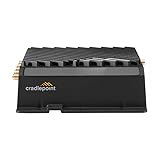
- 🚗 HIGH-PERFORMANCE VEHICLE CONNECTIVITY: The R920 router, paired with the NetCloud Mobile service plan, offers a ruggedized GNSS/GPS-enabled in-vehicle network solution. The Advanced Mobile service plan provides advanced features like threat management, web filtering, application visibility, analytics, and GNSS/GPS functionality such as location tracking and cellular coverage maps.
- 🌐 RUGGEDIZED IoT SOLUTION: When combined with the NetCloud Ruggedized IoT service plan, the R920 becomes a versatile, ruggedized 4G LTE router for connecting and safeguarding IoT devices at scale. It's ideal for environmentally harsh IoT use cases, supporting private networks, and offers extensibility with APIs, SDKs, and edge containers.
- 📶 FAST, RELIABLE CONNECTIVITY: The R920 offers Cat 7 LTE for fast video and data uploads. You can enhance dependability by adding a second LTE or 5G cellular modem. It also supports Wi-Fi 6 for improved connections.
- 🔒 UNIFIED EDGE SECURITY: The router comes with application-aware multizone firewalls, IDS/IPS, and optional FIPS 140-3 Level 1 Implementation Under Test. It ensures secure connectivity, prioritizes access to public safety networks, and extends edge security.
- 🌐 NETCLOUD SERVICE: NetCloud Service provides powerful cloud management features for managing IoT at scale. It includes features like coverage maps, content filtering, intrusion detection, application-aware analytics, and more. It simplifies deployment, connection, and security for edge applications at scale.
Private APNs
A private access point name (APN) is an operator service that can route mobile data toward a corporate network endpoint. It is related to private mobile connectivity, but an APN should not be treated as encryption by itself. UK government guidance updated in 2015 discussed private APNs in the context of 3G and 4G devices; that dated, generation-specific guidance is not a statement about every current operator service. Read the UK government’s enterprise considerations guidance.
Free tools Windows power users keep installed
One-click scans. No signup required.
Cloud private endpoints
A cloud private endpoint typically places a network interface with a private IP address in a virtual network so it can connect to a managed cloud service. It is one provider-specific access pattern, not a general-purpose private network or automatically a VPN. Provider features and terminology can change, so check the relevant cloud documentation for the service in use. See Microsoft Learn’s overview of Azure private endpoints.
Best Value

- Wide Carrier Compatibility: Works with major 4G providers including AT&T and T-Mobile with download speeds up to 150Mbps. Simply insert a SIM card and get all your Wi-Fi devices connected to the internet, convenient for places where cable internet is unavailable, such as holiday cabins or remote cameras. Fully supports 4G LTE Frequency Band: B2/B3/B4/B5/B7/B8/B12/B13/B17/B25/B26/B66/B41 WCDMA: B2/B4/B5/B8 (Verizon requires TTL set to 64 or 65 based on different data plan)
- High-Speed Connectivity: 4G LTE Cat4 with cellular download up to 150Mbps and N300 dual-band wireless speeds reaching 300Mbps for smooth streaming, lag-free online gaming, and quick file sharing
- Enhanced Signal Coverage: High-gain four antennas expand signal reach throughout houses, providing reliable internet connection for 32 smart home devices via wired LAN links with 4 fast Ethernet ports
- Advanced Security Features: Embedded L2TP, PPTP, OpenVPN, and WPA3 encryption safeguard data privacy, while Mesh capability allows seamless roaming network expansion across rooms
- Simple Setup Process: Built-in standard SIM card slot with plug-and-play functionality allows immediate cellular internet access without configuration, featuring user-friendly web interface for effortless management
Does a private network make data secure?
No—not on its own. Private addressing limits the intended scope of those addresses; it does not establish that traffic is encrypted, that devices are trustworthy, or that access is correctly restricted. RFC 1918 explicitly does not address security considerations. NIST’s VPN definition describes a mechanism that can provide secure communications, but actual protection still depends on how the VPN and surrounding systems are configured.
Assess the controls rather than relying on the label. Depending on the design, relevant controls include authentication, encryption, routing restrictions, filtering, and endpoint protections.
How to identify the right kind of private network
When a requirement calls for a “private data network,” clarify the implementation before choosing technology. Compare the options on these points:
Do these 3 things before closing this tab:
1Repair Windows errors before they cause bigger problems2Fix the driver behind crashes, sound loss and screen glitches3Clear out junk files and repair common Windows errors- Scope: Is the need for internal IP addressing, a VPN overlay, private cellular service, or a cloud private endpoint?
- Reachability: Which users, devices, sites, and services should connect? Should outside access pass through a gateway?
- Infrastructure and control: Can existing shared infrastructure meet the need, or does the design require dedicated or site-specific network elements?
- Security controls: What authentication, encryption, routing, filtering, and endpoint protections are required?
- Geography and performance: For cellular deployments in particular, what site coverage and capacity are needed?
RFC 1918 gives examples of internal systems that may not need direct outside connectivity, including airport arrival and departure displays, internal systems in banks and retail chains, and router interfaces on internal networks. These illustrate why an organization might keep devices internally addressable rather than expose each one directly to the public internet.
Quick Recap
Product prices and availability are accurate as of the date/time indicated and are subject to change. Any price and availability information displayed on Amazon at the time of purchase will apply.

