
Do these 3 things before closing this tab:
1Fix the driver behind crashes, sound loss and screen glitches2Repair Windows errors before they cause bigger problems3Scan for outdated or missing drivers - takes under a minuteiTechGuides is reader-supported. When you buy through links on our site, we may earn an affiliate commission. As an Amazon Associate I earn from qualifying purchases. Learn more
To change a production schema without breaking live application versions, expand it first, migrate readers and writers while both old and new representations work, then contract by removing the old structure only after every consumer has moved. This expand-and-contract pattern manages compatibility; it does not by itself make a database operation nonblocking or provide high availability.
What expand and contract protects against
During a rolling deployment, old and new application instances may run at the same time. A one-step rename or drop can leave old instances querying a column that no longer exists. Expand and contract inserts a compatible intermediate state: add the new structure while preserving the old one, update application code and data, and defer cleanup until the old structure is no longer used.
GitLab describes the overlap explicitly: versions N and N+1 can coexist against the expanded schema. Its compatibility guidance also says, “One way to guarantee zero-downtime updates for on-premise instances is following the expand and contract pattern.” That statement describes a staged method, not a guarantee that every migration or deployment will avoid interruption. GitLab’s backwards-compatibility guidance and its separate infrastructure and upgrade procedure supply important qualifications.
How to replace a column safely
Consider a framework-independent example: an application stores whether an item is published in a boolean column named published, and the new design uses a status enum. Assume a rolling deployment with old and new application instances and asynchronous workers potentially active together; no particular database engine, version, or framework is assumed here. The safe sequence depends on those specifics in a real deployment.
#1 Best Overall
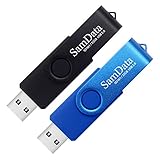
- [Package Offer]: 2 Pack USB 2.0 Flash Drive 32GB Available in 2 different colors - Black and Blue. The different colors can help you to store different content.
- [Plug and Play]: No need to install any software, Just plug in and use it. The metal clip rotates 360° round the ABS plastic body which. The capless design can avoid lossing of cap, and providing efficient protection to the USB port.
- [Compatibilty and Interface]: Supports Windows 7 / 8 / 10 / Vista / XP / 2000 / ME / NT Linux and Mac OS. Compatible with USB 2.0 and below. High speed USB 2.0, LED Indicator - Transfer status at a glance.
- [Suitable for All Uses and Data]: Suitable for storing digital data for school, business or daily usage. Apply to data storage of music, photos, movies, software, and other files.
- [Warranty Policy]: 12-month warranty, our products are of good quality and we promise that any problem about the product within one year since you buy, it will be guaranteed for free.
1. Expand: add the new representation
Add status without renaming or removing published. Choose a shape that the currently deployed code can tolerate—for example, whether the new column may initially be null depends on the application’s read/write behavior and database constraints. Verify the expanded schema remains usable by the current application before deploying code that relies on it.
Expansion can also mean adding a table or an index rather than a column. GitLab’s compatibility guide gives the example of adding an index before deploying application code that depends on it. The exact operation still needs review for the target engine and version; an additive schema change is not automatically fast or lock-free.
2. Migrate: reconcile existing data and move consumers
Backfill existing rows by translating each boolean value into the intended enum value. Define the mapping explicitly, including how nulls, unexpected values, and concurrent updates are handled. For a large or frequently written table, treat the backfill as an observable operation rather than assuming it will finish safely as part of a deploy. Make it idempotent or resumable where appropriate, and establish a completion check before switching reads or removing the old field.
Then deploy application changes that tolerate the transitional schema. A rollout may temporarily include old code reading and writing published and newer code using status. If both fields are written during that period, specify which is authoritative, how each write is reflected in the other representation, and what happens if one write succeeds and the other fails. Dual writing without a consistency and recovery rule can create contradictory data.
Move reads to status only when the data needed by those reads has been backfilled and verified. Account not just for web application instances, but also workers, scheduled jobs, reporting queries, integrations, and any other consumer. If a consumer is deployed separately, its rollout is part of the migration.
Rank #2

- Transfer speeds approximately 10 times faster than standard PNY USB 2.0 Flash drives
- Store and transfer large files faster than ever with USB 3.0 technology
- Allows for quick and Easy transfer of all content
- The 256GB Turbo USB 3.0 Flash Drive can hold approximately 47, 349 songs
- Sliding collar, capless design with integrated loop makes it easy to attach to key chains, backpacks and etc.
3. Contract: remove the old representation later
After all code and data paths have moved, remove published in a later migration. Check for less visible dependencies as well: GitLab’s column-removal guidance calls out ActiveRecord schema caches and database views, and recommends separating the step that makes the application ignore a column from the later step that drops it in the documented case. Indexes, constraints, and compatibility code may also need their own cleanup. GitLab’s migration guidance on avoiding downtime explains these dependency and timing concerns.
Use gates to decide when to advance
Do not advance phases because a deploy command finished. Define evidence for each transition before starting:
What’s actually slowing this PC down?
Pick the symptom - the matching free tool is one click away.
- Before expansion: confirm the new structure is compatible with currently running code and determine the engine-specific DDL behavior, expected lock impact, timeout policy, and recovery plan.
- Before switching reads: verify the backfill is complete for the relevant records, validate the mapping, and confirm writes during the backfill cannot leave stale values behind.
- Before contract: establish that every application version, worker, report, view, and schema cache no longer depends on the old structure; confirm required background work is complete.
- Before a later upgrade that assumes the migration is done: check the actual completion state, not just whether the migration was queued or started.
GitLab’s multi-node upgrade procedure requires appropriate load balancing and high-availability mechanisms, calls for upgrading one minor release at a time, and requires waiting for required background migrations to finish. Those are GitLab-specific procedures, not universal instructions for every application or hosting platform. They illustrate why schema compatibility, worker sequencing, and deployment architecture are separate parts of a no-downtime outcome. See GitLab’s multi-node zero-downtime upgrade requirements.
Compatibility, database execution, and infrastructure are separate risks
A schema can be compatible with old and new code while the DDL itself still blocks queries, takes a long time, or encounters operational limits. Likewise, a fast schema change cannot compensate for an application topology without redundancy or for deploying components in an unsafe order.
- Compatibility risk: old code, new code, background workers, views, and other consumers must all work with the transitional schema.
- Database execution risk: the engine and version determine transaction behavior, lock acquisition, table rewrites, and whether an operation can run concurrently. Table size and active write load affect the practical impact.
- Infrastructure risk: availability depends on deployment topology, load balancing, failover capacity, and upgrade sequencing. The migration pattern is not a substitute for high availability.
- Data risk: backfills and dual writes can produce stale or inconsistent values unless their ordering, validation, and failure handling are designed explicitly.
Why a destructive one-step change is different
The comparison below is qualitative: actual lock behavior, runtime, and recovery options cannot be determined without the target schema operation, database and version, table characteristics, and deployment design.
Rank #3

- Value NAS with RAID for centralized storage and backup for all your devices. Check out the LS 700 for enhanced features, cloud capabilities, macOS 26, and up to 7x faster performance than the LS 200.
- Connect the LinkStation to your router and enjoy shared network storage for your devices. The NAS is compatible with Windows and macOS*, and Buffalo's US-based support is on-hand 24/7 for installation walkthroughs. *Only for macOS 15 (Sequoia) and earlier. For macOS 26, check out our LS 700 series.
- Subscription-Free Personal Cloud – Store, back up, and manage all your videos, music, and photos and access them anytime without paying any monthly fees.
- Storage Purpose-Built for Data Security – A NAS designed to keep your data safe, the LS200 features a closed system to reduce vulnerabilities from 3rd party apps and SSL encryption for secure file transfers.
- Back Up Multiple Computers & Devices – NAS Navigator management utility and PC backup software included. NAS Navigator 2 for macOS 15 and earlier. You can set up automated backups of data on your computers.
| Decision axis | One-step rename or removal | Expand and contract |
|---|---|---|
| Old code during rollout | May fail when it queries the removed or renamed structure. | Can remain compatible during the overlap if the expanded schema and application changes are designed for both versions. |
| DDL locks and rewrites | Depends on the specific operation, engine, version, and table; a destructive change is not necessarily a quick change. | Still depends on those same factors. Splitting compatibility changes does not make individual DDL statements risk-free. |
| Backfill and consistency | May combine a representation change with data transformation, leaving less room to verify intermediate results. | Allows a distinct backfill and validation gate while both representations remain available. |
| Rollback after new writes begin | May require restoring or transforming data if the old representation is gone. | Can allow code rollback while the old structure remains, but writes made only to the new representation may require reverse synchronization or a forward fix. |
| Deployment ordering | Requires every old-code consumer to be out of the way before the incompatible change. | Requires deliberate sequencing across application versions, workers, and other consumers. |
| Observability and completion | Offers fewer intermediate gates before the incompatible operation. | Requires monitoring the backfill and proving that consumers and background work have moved before contract. |
Engine and framework details can change the plan
PostgreSQL with GitLab’s Rails migration guidance
For PostgreSQL in the context of GitLab’s Rails migration framework, transaction boundaries and operation type matter. GitLab documents that CREATE INDEX CONCURRENTLY must run outside an explicit transaction, and its style guide discusses statement and lock timeouts and keeping transactions short. Do not generalize that example to every migration framework or PostgreSQL version; inspect the generated SQL and consult documentation for the version actually deployed. GitLab’s migration style guide covers these operational considerations.
Django migrations across database backends
Django’s migration documentation describes backend-specific differences. It notes that MySQL schema alterations are not wrapped in transactions, so a failed operation can require manual repair; newer DDL improvements do not remove every lock or interruption. It also describes SQLite as potentially emulating a schema change by creating a replacement table, copying rows, dropping the original, and renaming the replacement—a process that can be slow. These are framework and backend caveats, not interchangeable guarantees across versions. Check the Django documentation and database version that apply to the deployment. Django’s migrations documentation details backend behavior.
Plan rollback by phase, not by the word “reversible”
Before the new representation receives writes, reverting application code may be relatively straightforward if the expanded schema still supports the old version. Once writes occur only in the new representation, rolling code back can expose missing or stale values in the old field. Decide in advance whether rollback requires reverse synchronization, a forward repair, or stopping writes while reconciling data.
A migration marked reversible does not necessarily restore information lost or transformed during a backfill or cleanup. Preserve enough data and define the recovery path before contract removes the old representation.
Quick Recap
Product prices and availability are accurate as of the date/time indicated and are subject to change. Any price and availability information displayed on Amazon at the time of purchase will apply.
The Tool Desk
Outbyte PC Repair FREERepair Windows errors before they cause bigger problemsFix Now →Outbyte Driver Updater FREEScan for outdated or missing drivers - takes under a minuteDriver Scan →
