
Recommended Free Tools
iTechGuides is reader-supported. When you buy through links on our site, we may earn an affiliate commission. As an Amazon Associate I earn from qualifying purchases. Learn more
docker build can produce an image, but a successful build does not make that image approved for production. Enterprise-grade Docker is a set of controls and team agreements for choosing inputs, recording how images were made, protecting them at runtime, updating them safely, and managing Docker across an organization. It is not a single Docker feature or certification.
What changes after an image builds?
A production workflow needs to answer more than whether a Dockerfile completed. Teams need to know which sources and dependencies were allowed, what went into the resulting image, how to review and update it, which systems may run it, and who can administer the surrounding Docker environment.


Those controls span the full path from source and build through registry, deployment, runtime, and organizational administration. The durable principles are broadly applicable; the exact implementation can depend on the Docker version, builder, image store, subscription, and the organization’s existing identity and deployment systems.
Quick wins for a faster PC:
Repair Windows errors before they cause bigger problemsFix Now →Scan for outdated or missing drivers - takes under a minuteDriver Scan →How should teams make images smaller and easier to maintain?
Set a standard for base images and runtime contents
Choose trusted base images and keep production images focused. Docker recommends minimal bases and multi-stage builds: build and test stages can contain compilers or other tools without carrying them into the final runtime image. A useful organizational standard identifies approved base images and explains how a team can request an exception.
Use a .dockerignore file to exclude irrelevant repository files from the build context. This keeps accidental or unnecessary files out of the material sent to the builder.
Make freshness an explicit decision
Docker distinguishes two commonly confused build options. --pull checks for a newer version of the base image; --no-cache reruns build steps, including package-manager operations. They address different freshness questions, so choose them deliberately rather than treating either as a universal update switch.
Docker’s Building best practices documentation advises: “To keep your images up-to-date and secure, rebuild your images regularly with updated dependencies.” A rebuild is part of maintenance, not proof that every dependency is current or acceptable; the workflow still needs to evaluate the resulting changes.
Choose tags or digests with an update process in mind
A digest identifies exact image content, which supports reproducibility and auditability. A tag is easier to follow when its publisher moves it to a newer image, but it is not a stable reference to identical content. Pinning a digest alone does not deliver upstream fixes: teams need a managed process to notice changes, evaluate them, and update the pinned reference through an auditable change. Docker documentation describes Dependabot and Docker Scout recommendations as possible update aids; the right mechanism depends on the pipeline.
Rank #2
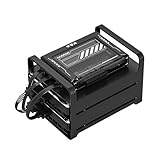
- 【Build Your Own NAS & Homelab — Not Just Storage】 More than a traditional NAS, ZimaBlade 7700 is a flexible x86 mini server for building your own homelab, personal cloud, or Docker host. Perfect for DIY NAS, self-hosting, container apps, and even retro systems — not limited like typical ARM-based NAS devices.
- 【x86 Platform — Broad Compatibility, Real Freedom】 Powered by an Intel quad-core x86 processor, it runs a wide range of operating systems and software with native compatibility. Ideal for Linux, Docker, CasaOS, and more — designed for flexibility and experimentation rather than locked-down appliance use.
- 【16GB RAM for Smooth Multi-Service Workloads】 Handle file sharing, media streaming, backups, and multiple lightweight services at once. Optimized for low-power, always-on operation — a great fit for home labs and personal servers running 24/7.
- 【Smooth 4K Media Streaming — Plex Direct Play Ready】 Stream your personal media library smoothly with Plex and similar media servers. Supports 4K playback on compatible devices via direct play, delivering a reliable home media experience without the need for heavy transcoding.
- 【Complete 2-Bay NAS Kit — Ready to Build】 Includes power supply, 16GB RAM, metal drive cage for 2 HDD/SSD, and dual SATA cables — everything you need to start building your own NAS right out of the box.
How should organizations govern build inputs?
Treat base images, Git sources, and downloaded artifacts as dependencies subject to policy. Define approved sources and use digests, checksums, signatures, and provenance where available and appropriate. Decide which checks are required for production builds instead of assuming that a successful download or build makes an input trustworthy.
Docker Buildx build policies can use Rego to check rules such as digest references, provenance, signed Git tags, HTTPS, and checksums. Docker describes this feature as experimental; its documentation lists Buildx 0.31.0 or later and BuildKit 0.27.0 or later as prerequisites. Verify the versions and behavior in the actual environment before relying on policies as an enforcement control.
Visibility and enforcement are different stages. A scan or report can help teams identify issues; a policy gate can block a build or deployment. The gate needs an owner and a way to handle false positives and exceptions, or teams may route around it. Build policies’ experimental status is a reason to validate their readiness and failure behavior before making them a required control.
The Tool Desk
Outbyte Driver Updater FREEScan for outdated or missing drivers - takes under a minuteDriver Scan →Outbyte PC Repair FREEClear out junk files and repair common Windows errorsFree Scan →What evidence should accompany an image?
Docker’s documentation says: “Build attestations describe how an image was built, and what it contains.” BuildKit can attach two types of evidence: an SBOM describing software components in the image or used to build it, and provenance describing how the image was built. Teams can use this information to review images and inform policy decisions.
Attestations are useful only if the pipeline preserves and exposes them where the organization expects to inspect them. Docker documents that support depends on the Buildx driver and image store. The docker driver requires the containerd image store for attestations; the docker-container, kubernetes, and remote drivers support them. Under Docker’s documented workflow, pushing to a registry preserves attestations, while loading an image into the daemon has image-store requirements. Verify the selected driver, store, and push-or-load route in the deployment pipeline rather than assuming an enabled flag guarantees usable evidence.
How should teams protect images and running containers?
Deliver secrets at runtime
Keep credentials out of image files and provide them dynamically at runtime only to the containers that need them. NIST SP 800-190, the National Institute of Standards and Technology’s 2017 Application Container Security Guide, states: “Secrets should be stored outside of images and provided dynamically at runtime as needed.” This separates secret handling from image distribution and limits which workloads receive a secret.
Use runtime and host controls instead of remote shells in containers
NIST SP 800-190 recommends against enabling SSH and similar remote-shell administration tools inside containers. It says: “A final recommendation for image configuration is that SSH and other remote administration tools designed to provide remote shells to hosts should never be enabled within containers.” Manage containers through runtime or orchestration APIs, or administer the host, rather than adding remote shells to application images.
What’s actually slowing this PC down?
Pick the symptom - the matching free tool is one click away.
NIST also recommends trusted images and registries, frequent base-layer updates, image monitoring, and enforcement that can stop noncompliant images from running. These controls address different parts of the lifecycle: source trust, ongoing visibility, and the decision to allow an image to execute.
Rank #4

- Dell PowerEdge R730xd 24B SFF 2U Server
- 2x Intel Xeon E5-2690 v4 2.6Ghz 14-Core (28-cores Total)
- 128GB DDR4 RAM – 4x 1.2TB 10K SAS 2.5” 12Gb/s
- Dell H730P mini 2GB 12Gb/s RAID
- 2x 750W PSU - 2x 10Gb SFP+ 2x 1Gb (RJ45) NIC
Limit access to the daemon and reduce privilege
Docker’s Engine security guidance warns that daemon and API access is powerful and that exposing the API can create privilege-escalation risk. Restrict access to the Docker socket and API; a network firewall alone is not a sufficient access-control plan. Where the application allows it, run processes as non-privileged users, drop capabilities they do not need, and apply suitable host controls such as AppArmor or SELinux.
Match developer-machine isolation to its boundary
Docker Desktop’s Enhanced Container Isolation adds restrictions involving namespaces, sensitive mounts, and system calls. Its protection and limitations vary by version. Treat it as one layer for supported desktop workflows, not as a replacement for production runtime controls; the two environments have different boundaries and owners.
How do teams administer Docker across an organization?
Organizational administration includes who can sign in, which registries and images developers may access, how settings reach managed devices, and how changes are tested. Docker’s setup guidance recommends testing settings and registry restrictions with a small group first, verifying SSO/SCIM and image-access behavior, and checking that users run supported Docker Desktop versions before broader rollout. Adapt the rollout to the organization’s identity and endpoint-management systems.
Central settings and access rules have operational consequences: a policy that blocks required images or reaches incompatible clients can disrupt development. A staged rollout gives administrators a chance to verify identity, registry access, and client support before enforcing changes more broadly.
Best Value

- Ateco #1357 Dough Docker for use with pastry or pizza dough for best baked results
- Roll over pizza dough, pie dough, pastries before baking, the small depressions help reduce blistering or air pockets from forming while crust bakes
- Measures 5.25-Inches wide, 2.25-Inch diameter, 8.25-Inches long including handle
- Hand wash suggested for best results; made from high impact plastic
- Family owned and operated since 1905, Ateco has produced specialized professional quality baking and decorating tools for professional pastry chefs and discerning home bakers alike
Which approaches should an organization compare?
There is no single best choice for every team. These trade-offs help identify what to standardize, what to leave flexible, and what needs an explicit owner.
| Decision | What it favors | What the organization must handle |
|---|---|---|
| Mutable tag | Following publisher changes without manually editing a pinned digest | Tags can move; pipelines still need controls for identifying and reviewing the content actually built or deployed |
| Digest pinning plus managed updates | Exact, auditable image references | A process to detect upstream changes, assess them, and update digests |
| General-purpose base image | Potentially broader compatibility | Reviewing included components and maintaining them as part of the image lifecycle |
| Minimal or hardened base image | Fewer included components; hardened-image offerings may also provide selected compliance variants or remediation terms | Checking application compatibility, maintenance responsibilities, and any applicable subscription or compliance requirements |
| Local builder | Builds within the team’s existing local or self-managed setup | Build capacity and cache behavior are managed in that environment; shared-cache or throughput needs may remain |
| Remote or shared build service | Docker Build Cloud offers a remote builder and shared cache for teams seeking build-capacity improvements | Evaluating access control, operational cost, and dependence on a managed service; not every team needs one |
| Scan or report | Visibility into image contents and vulnerability information | Deciding who reviews findings and how issues are prioritized and resolved |
| Policy-gated build or deployment | Enforcement at a chosen pipeline stage | Managing false positives and exceptions; Docker Buildx build policies are experimental in the documented feature scope |
| Developer-machine isolation | Additional restrictions for supported Docker Desktop workflows through Enhanced Container Isolation | Checking version-specific protections and limitations; this does not replace production runtime security |
When do Docker’s additional products fit?
Some Docker offerings address particular needs rather than defining enterprise readiness. Docker Scout analyzes image contents using SBOM data and vulnerability information. Docker Build Cloud provides a remote builder and shared cache for teams that need build-capacity improvements. Docker Hardened Images are maintained minimal images; additional compliance variants, remediation terms, and other features are available in selected tiers.
Evaluate each offering against a specific requirement, then confirm current availability, entitlements, limitations, and version support before committing. None is a prerequisite for applying the lifecycle controls described here.
Quick Recap
What does a practical adoption sequence look like?
- Set image rules. Document approved base-image sources, the exception path, what belongs in runtime images, and how repository build context is restricted.
- Define update behavior. Decide when builds refresh bases and dependencies, and whether production references use tags or digests. If pinning, assign ownership for reviewing upstream changes and updating digests.
- Specify input checks. Identify which sources and artifacts require validation, and whether checks use digests, checksums, signatures, or provenance. Confirm that the selected tooling supports the required checks.
- Choose evidence and verify its route. Decide whether builds need SBOMs and provenance, then test that the chosen builder, image store, and registry or daemon path preserve evidence for downstream review.
- Secure runtime and host access. Deliver secrets dynamically, restrict daemon and socket access, avoid unnecessary privilege, and use appropriate host controls. Keep remote-shell tools out of application containers.
- Roll out administration changes in stages. Test sign-in, registry restrictions, image access, settings, and supported client versions with a small group before broad enforcement.
- Assign owners for operation. Establish who reviews image findings, handles exceptions, refreshes dependencies, and maintains policy as tools and product support change.
Product prices and availability are accurate as of the date/time indicated and are subject to change. Any price and availability information displayed on Amazon at the time of purchase will apply.

