
iTechGuides is reader-supported. When you buy through links on our site, we may earn an affiliate commission. As an Amazon Associate I earn from qualifying purchases. Learn more
A protein-only tracker can help lifters keep a running total of what they eat without requiring them to log every calorie. Its job is simple: record protein from meals and snacks, compare the day’s total with a sensible personal target, and make it easier to notice what is missing. It is a way to observe intake—not a guarantee of muscle gain or a substitute for individualized nutrition advice.
Why track protein on its own?
Protein supplies amino acids used in the body’s response to exercise. The International Society of Sports Nutrition (ISSN) says most exercising people seeking to build or maintain muscle can meet their needs with 1.4–2.0 grams of protein per kilogram of body weight per day. That is a general range for healthy exercising individuals, not a universal prescription; exercise, protein quality, and energy and carbohydrate status all affect needs. ISSN position stand, 2017.
A protein-only log focuses on one useful measure while leaving calorie accounting out of the workflow. That can make logging feel more manageable, but it does not establish that the approach improves adherence or training outcomes. A tracker records entries; it does not assess diet quality, diagnose a deficiency, or cause muscle growth.
The Tool Desk
Outbyte PC Repair FREEClear out junk files and repair common Windows errorsFree Scan →Outbyte Driver Updater FREEScan for outdated or missing drivers - takes under a minuteDriver Scan →What a simple protein tracker needs to do
The useful core is a daily total built from foods actually eaten. For each meal or snack, enter a food and a realistic portion, then add its protein to the day’s running sum. Keep the process lightweight enough to use consistently rather than trying to create a perfect record.
#1 Best Overall

- 𝗘𝗳𝗳𝗼𝗿𝘁𝗹𝗲𝘀𝘀 𝗪𝗲𝗶𝗴𝗵𝗶𝗻𝗴: Supports 5 units (oz/lb:oz/fl'oz/g/mL), tare function, and includes 2 AAA batteries for hassle-free operation
- 𝗣𝗿𝗲𝗰𝗶𝘀𝗲 𝗥𝗲𝘀𝘂𝗹𝘁𝘀: Accurately weighs up to 11 lb/5 kg with 1 g increments
- 𝗦𝗶𝗺𝗽𝗹𝗲 & 𝗖𝗼𝗺𝗽𝗮𝗰𝘁: The small and sleek scale is a perfect fit for most kitchens, occupying little space and easily storable in cabinets
- 𝗘𝗮𝘀𝘆 𝘁𝗼 𝗖𝗹𝗲𝗮𝗻: Just wipe down the 304 food-grade stainless steel surfaces to keep clean
- 𝗟𝗖𝗗 𝗗𝗶𝘀𝗽𝗹𝗮𝘆: Backlit LCD screen with large fonts for easy reading
- Log the food and portion: “Greek yogurt, one container” is more useful than “yogurt” if container size affects the entry.
- Use a reliable lookup: For U.S. foods, USDA FoodData Central is a detailed nutrient-information resource identified by the NIH Office of Dietary Supplements. NIH ODS: Nutrient Recommendations and Databases.
- Track the day’s total: Add entries as you go, or record them together later. The total helps you see whether your usual meals cover your intended range.
- Choose a practical level of portion detail: Weighing food is optional. If a serving label or a familiar portion estimate is good enough for your purpose, use it; a kitchen scale is a convenience for more precise entries, not a requirement established by the cited guidance.
Online trackers and smartphone apps can help people keep track of foods eaten, activity, and weight, according to NIDDK. That supports the general usefulness of logging tools; it does not verify the accuracy or effectiveness of any particular tracker. NIDDK: Eating & Physical Activity to Lose or Maintain Weight.
Set a target that fits the evidence
For most healthy people who exercise and aim to build or maintain muscle, ISSN gives a broad daily range of 1.4–2.0 g/kg body weight. To calculate the range, multiply body weight in kilograms by 1.4 and by 2.0. For example, someone weighing 70 kg gets a general range of 98–140 g per day. This is an illustration of the calculation, not a personal recommendation.
Rank #2
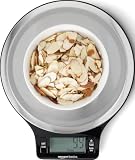
- Digital kitchen scale with food-safe, BPA-free plastic components
- Stainless steel platform with wide LCD screen
- Weighs up to 11 pounds (2 grams minimum, up to about 5000 grams); displays results in pounds, ounces, grams, fluid ounces, and ml
- Tare button for measuring just the food, minus the container weight
- Battery operated; (2) AAA batteries included
The 0.8 g/kg/day figure is the general recommended dietary allowance discussed in the position stand; it is not ISSN’s suggested target for most exercising people pursuing muscle adaptation. At the other end, ISSN says 2.3–3.1 g/kg/day may be needed to maximize lean-mass retention in resistance-trained subjects during hypocaloric periods. That higher range applies to a specific context, not to all lifters. ISSN position stand, 2017.
If a health condition, pregnancy, or a clinical nutrition need affects your diet, don’t treat a general sports-nutrition range as individualized advice. The joint Academy of Nutrition and Dietetics, Dietitians of Canada, and American College of Sports Medicine statement recommends that athletes be referred to a registered dietitian/nutritionist for personalized nutrition plans. Nutrition and Athletic Performance, 2016.
Rank #3

- 𝗠𝗮𝘅 𝗖𝗮𝗽𝗮𝗰𝗶𝘁𝘆: Weigh objects as heavy as 22 lb/10 kg and as light as 2 g in increments of 1 g
- 𝗜𝗣𝗫𝟲 𝗪𝗮𝘁𝗲𝗿𝗽𝗿𝗼𝗼𝗳 𝗗𝗲𝘀𝗶𝗴𝗻: Features an IPX6 waterproof design, allowing you to easily measure liquids and wipe the scale clean
- 𝗧𝘆𝗽𝗲-𝗖 𝗥𝗲𝗰𝗵𝗮𝗿𝗴𝗲𝗮𝗯𝗹𝗲 𝗕𝗮𝘁𝘁𝗲𝗿𝘆: The scale features a rechargeable battery and comes with a USB-C charging cable
- 𝟱 𝗨𝗻𝗶𝘁𝘀: Choose between grams, ounces, pounds and ounces, milliliters (milk and water), and fluid ounces (milk and water)
- 𝗕𝗼𝗻𝘂𝘀 𝗙𝗲𝗮𝘁𝘂𝗿𝗲𝘀: Use the tare feature and hold function for added convenience
Use meal amounts and timing as context, not rules
ISSN describes a general per-serving amount of 20–40 g, or approximately 0.25 g/kg, with recommendations depending on factors including age and recent resistance exercise. The position stand also says doses are ideally distributed every 3–4 hours, while noting that timing recommendations are mixed and the optimal window varies. It says exercise’s anabolic effect lasts at least 24 hours. These figures can inform meal planning, but they do not require a rigid schedule or a narrow post-workout window. ISSN position stand, 2017.
For a low-friction log, prioritize whether the day’s total is broadly on track. If you also want to see how protein is spread across meals, note meal-level amounts as optional context rather than treating the clock as a deadline.
Rank #4

- 【PRECISE WEIGHT】 The digital food scale built-in four high-precision load sensors, quickly and accurately response 1g or 0.1oz increments when adding ingredients, its measuring range: 0.1oz to 22 lbs and 3g to 10kg(Min. weigh at 0.1oz or 3g).
- 【MULTIFUNCTION LARGE SCALE】 9"x6.3" platform and Large lcd display for easy readout in g, kg, lb: oz, fl.oz and ml. This digital weight scale is for better cooking, baking, tracking intake, weight loss and postage.
- 【PRACTICAL DESIGN】 The food scale is designed with tempered glass for strong bearing, sleek stainless steel top surface for anti-fingerprint and easy clean, with a attached hook for convenient storage.
- 【EASY TARE / ZERO OUT】 Convenient tare button for tare calculation allows you to subtract the weight of plate or container, making it easy to achieve accurate readouts of ingredients.
- 【GREAT SUPPORT】2 AAA batteries included. We are always stand behind our kitchen scales, please feel free to reach to us if you have any issues.
Count food first; use supplements only if they help
Whole foods can meet daily protein needs. A supplement is a practical option when it makes adequate protein quality or quantity easier to manage, not a requirement for lifters. ISSN discusses both whole foods and high-quality supplemental protein sources, while NIH ODS notes that most protein powders and drinks contain whey. ISSN position stand, 2017; NIH ODS: Dietary Supplements for Exercise and Athletic Performance.
Quick wins for a faster PC:
Fix the driver behind crashes, sound loss and screen glitchesFind Drivers →Clear out junk files and repair common Windows errorsFree Scan →If you use a supplement, enter its protein amount just as you would for food. If you do not, build the log around the foods you already eat. The tracker should accommodate either approach without implying one is necessary.
Quick Recap
Best Value

- Contemporary Slim Design: Made of Stainless Steel Material; It is easy to use and clean; Provides accurate weight data with a user-friendly control panel and system; With high precision sensors to ensure correct performance and readouts
- Multiple Unit Conversion Setting: You can easily switch to any unit that you need; It can show units in the following: g / kg/lb/oz/ml/milk ml; Yes! It includes milk volume measurement
- Low Energy Consumption with Included Battery: This unit comes with batteries and doesn’t consume too much power; Plus it has an auto shut off feature
- Backlit Display (Easy to See and Read Panel): The unit has a negative white digital display so it is easy to read and see even in not well-lit rooms
- After Sales Support, and Trusted Customer Support Team assist you with any questions that might arise about your kitchen scale. We take pride in our work and want you to have a great experience from beginning to end
Product prices and availability are accurate as of the date/time indicated and are subject to change. Any price and availability information displayed on Amazon at the time of purchase will apply.

