
Quick wins for a faster PC:
Fix the driver behind crashes, sound loss and screen glitchesFind Drivers →Clear out junk files and repair common Windows errorsFree Scan →iTechGuides is reader-supported. When you buy through links on our site, we may earn an affiliate commission. As an Amazon Associate I earn from qualifying purchases. Learn more
Clock synchronization makes it easier to compare events recorded on different systems, but it does not prove that a timestamp is correct or authentic. A sound forensic timeline also needs the time and time-zone context for each source, a record of how evidence was collected, and checks for clock error, timestamp manipulation, and tool-related changes.
Why synchronized clocks help build a forensic timeline
Investigations often combine logs and files from computers, networks, and services. If those systems used inconsistent clocks, events that occurred in sequence can appear simultaneous—or events that were related can appear out of order. Shared time references and well-maintained clocks make cross-system records more comparable.


NIST’s SP 800-86 says that maintaining accurate timestamping is usually beneficial to analysts and that synchronization helps each system maintain a reasonably accurate measurement of time. It identifies Network Time Protocol (NTP) synchronization as one way systems can maintain time. That improves the context available for analysis; it does not certify an individual event’s timestamp.
What’s actually slowing this PC down?
Pick the symptom - the matching free tool is one click away.
What to record for each system
Capture the time context while collecting evidence, rather than assuming a timestamp will explain itself later. For each relevant system or source, record:
#1 Best Overall

- Dual USB-A & USB-C Bootable Drive – compatible with most modern and legacy PCs or laptops. Ideal for digital forensics, cybersecurity, and data-recovery professionals.
- Fully Customizable USB – easily Add, Replace, or Upgrade any compatible bootable ISO app, installer, or utility (clear step-by-step instructions included).
- Professional Digital Forensics Environment – CAINE (Computer Aided Investigative Environment) includes powerful tools for evidence collection, privacy auditing, file recovery, and forensic data analysis. Runs Live Permanently – operate CAINE directly from the USB without changing your current OS.
- User-Friendly Graphical Interface – intuitive desktop workspace lets you perform advanced investigations through a clean GUI — no command line required. No Internet Required.
- Premium Hardware & Reliable Support – built with high-quality flash chips for speed and longevity. TECH STORE ON provides responsive customer support within 24 hours.
- System or service identity, and the date, time, and time zone it displayed.
- Available synchronization configuration or status, including the source and any known offset.
- The artifact’s provenance: whether it came directly from the original source or was normalized or transformed by another system, service, or tool.
- The timestamp’s precision and meaning—for example, which event it records and whether the value represents a creation, access, or modification time.
- The collection method, tools used, and any handling that could have affected the data or its displayed timestamps.
NIST advises analysts to understand how their tools extract, modify, and display modification, access, and creation times. It also cautions that original data sources warrant more confidence than sources that have received normalized data from elsewhere.
How to assess timestamps from different sources
Do not treat a timestamp as a self-validating fact. Compare independent artifacts and assess the context of each record before using it to order events. NIST identifies several reasons a file time can mislead: the computer clock may be wrong or unsynchronized, the timestamp may lack the expected precision, or an attacker may have altered it.
- Clock context: Identify the system, time zone, synchronization status, and any known offset.
- Precision and semantics: Establish the timestamp’s resolution and the event it represents; similarly named timestamps may describe different actions.
- Provenance: Distinguish original records from values that have been normalized, transformed, or passed through another source.
- Integrity and interpretation: Verify acquired data and understand how the tools used read and display timestamps.
When the sources do not align, document the uncertainty rather than forcing a precise sequence unsupported by the evidence.
Windows Errors? Fix Them Before They Spread
Repair common Windows errors and clear accumulated junk for a smoother, more stable PC - no reinstall needed.Free scan · no reinstallOutdated Drivers Are Slowing You Down
One free scan finds every outdated or missing driver and matches the right update for your exact hardware.Free scan · exact hardware matchHow collection can change file times
Copying a file can affect its recorded times. NIST notes that a file’s creation time may reflect when it was copied onto a new system, rather than when it was originally created. If preserving file times is essential, NIST recommends bit-stream imaging.
Rank #3

- Join Spy Labs Incorporated and become a master spy with this interactive detective kit for ages 8 and up.
- Learn important detective skills like how to use forensic science to answer questions, gather evidence, and solve crimes.
- Use the detective tools included to find and lift fingerprints, write secret messages in disappearing ink, and decipher top-secret codes.
- Solve the included practice cases or use the spy tools on your own for creative scientific fun as you hone your observation skills.
- The kit includes several tools such as a UV light, disappearing ink, fingerprint powder, a crime scene notepad, and more!
Examine copies rather than originals, verify acquired data with message digests, and document the tools and methods used. Write blockers can prevent forensic tools from writing to storage media during acquisition, but they do not prevent the operating system from caching changes in memory. They also do not synchronize clocks, correct drift, or establish timestamp authenticity. Analysts still need to understand how their tools access and present timestamp data.
What synchronization cannot establish
Synchronization alone cannot show that a clock was synchronized at the moment an event occurred, that the clock’s reading was correct, or that a timestamp was not manipulated. Nor does it resolve differences in timestamp precision or meaning, the effects of copying, tool behavior, cached metadata, or how a service records and collects events.
Rank #4
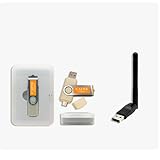
- CAINE Forensics Starter Kit – Includes a bootable CAINE USB flash drive plus a compatible USB WiFi adapter.
- Digital Investigation Toolkit – Use CAINE for computer forensics, data recovery, cybersecurity analysis, and evidence-focused workflows.
- Helps Solve Linux WiFi Issues – Useful when built-in laptop WiFi is missing, unsupported, or not detected in Linux Live Mode.
- Run CAINE Live from USB – Boot into a Linux-based forensic environment without installing it on the computer.
- Simple External WiFi Option – USB WiFi adapter provides an easy way to add wireless connectivity to compatible Linux systems.
Digital investigations may also fail to discover all relevant evidence. NIST’s scientific foundation review cautions that deleted-file recovery can include extraneous material and that software revisions can change the meaning of artifacts. A timeline is therefore an interpretation of available records, not a guarantee that every event has been found or perfectly timed.
Why cloud timelines need source context
Cloud evidence may span multiple providers, services, and distributed infrastructure. NIST’s July 2024 Cloud Computing Forensic Reference Architecture lists cross-provider artifact correlation, event reconstruction, metadata integrity, and log timeline analysis—including timestamp synchronization—among cloud-forensics challenges.
Best Value
Keep provider and service context attached to each record, and account for how each source produced or handled its timestamps. Do not assume that one synchronized clock governs every artifact across a cloud environment.
Quick Recap
Product prices and availability are accurate as of the date/time indicated and are subject to change. Any price and availability information displayed on Amazon at the time of purchase will apply.

