
What’s actually slowing this PC down?
Pick the symptom - the matching free tool is one click away.
iTechGuides is reader-supported. When you buy through links on our site, we may earn an affiliate commission. As an Amazon Associate I earn from qualifying purchases. Learn more
Thermal dye transfer is a printing process that uses a heated printhead to move controlled amounts of dye from a ribbon into a specially coated receiver. The process is commonly called dye-sublimation printing, and its heat-controlled color transfer can produce continuous-tone images. The printer, ribbon, and receiver media must be designed to work together.
What thermal dye transfer means
In thermal dye transfer, a digital image is converted into color signals. A thermal printhead heats selected areas of a dye-bearing donor ribbon while the ribbon touches receiver media. Heat controls how much dye moves into the receiver’s image-forming layer. Cyan, magenta, and yellow dye layers are commonly applied in succession to build the image.
The result is a continuous-tone image rather than a pattern made only from visibly separate dots. Getty’s Art & Architecture Thesaurus calls the process “dye diffusion thermal transfer printing.” It lists “dye sublimation printing,” “dye sublimation,” and “sublimation, dye” as alternate terms. In technical usage, dye diffusion thermal transfer (D2T2) describes the process; in consumer settings, “dye sub” is more common. Getty AAT’s terminology record describes a continuous-tone image applied to receiver materials with thermal transfer of cyan, yellow, and magenta dyes.
Quick wins for a faster PC:
Clear out junk files and repair common Windows errorsFree Scan →Scan for outdated or missing drivers - takes under a minuteDriver Scan →Repair Windows errors before they cause bigger problemsFix Now →How the printing process works
- The image is separated into color signals. The printer determines the amount of each dye needed in different image areas.
- The printhead applies localized heat. The donor ribbon is held against compatible receiver media, and selected printhead elements heat the ribbon.
- Dye transfers into the receiver. The amount of heat controls how much dye moves from the ribbon into the receiver’s dye-receiving layer.
- Color layers build the image. Cyan, magenta, and yellow are typically applied in separate passes or from successive ribbon panels. Some systems apply a clear laminate panel afterward.
The image is formed in the receiver layer, not simply deposited on ordinary paper. The donor ribbon may include a thin PET support, dye layers, adhesive, and slip or heat-resistant layers. Receiver media may combine an image-receiving coating with a paper or film support and other engineered layers. Kodak’s technical paper describes the process as a digital printing method that transfers dyes from a donor ribbon to a receiver in intimate contact. Kodak, “Thermal Printing for Digital Output” (2009); see also the 2008 receiver-layer modeling paper from the Society for Imaging Science and Technology: “The Role of a Thermal Dye Receiver in Thermal Dye Transfer Printing – A Modeling Approach.”
#1 Best Overall

- 【Compatibility Label Notice for M2】: The M2 label printer is designed only for M2 thermal transfer labels — do not use standard thermal labels for NIIMBOT B1/B2/B21, as they are incompatible and will not print correctly. Please ensure you purchase the correct M2-series thermal transfer labels.
- 【NIIMBOT M2 Label Maker】NIIMBOT M2 bluetooth label printer adopts thermal transfer upgrade technology. Different with thermal printers, the labels that print with the M2 label maker machine can be stored longer for 8-10 years, not only waterproof, oil-proof, and scratch-resistant, but also chemical resistance, can withstand high and low temperatures(-4°F-248°F), solving the limitation of short storage time of thermal labels.
- 【Print More Clear】With its 300 dpi upgraded resolution, M2 portable label printer let you create clearer words, images. And you can use it anytime and anywhere. NIIMBOT M2 label maker machine's label width range of is 20mm-50mm(1-2 inch).The effective printable width is 48mm. Come with 1 roll label tape size 2x1.18 inch (50x30 mm), 230pcs/Roll.【Note】M2 label maker is only compatable with thermal transfer label not for normal thermal label.
- 【Support Smartphone & PC】This Bluetooth label printer is compatible with iOS & Android smartphone, it can support 10 mobile phones at the same time (3 IOS+7 Android) via bluetooth connection, in addition, our label maker also compatible with PC via usb cable, need to download the driver from the NIIMBOT official web.
- 【Rich in Features】Support auto recognition for label(only support NIIMBOT Label), automatic paper return, save the first paper.The printing density is adaptive according to different labels,don't need to set it manually.For NIIMBOT APP, it contains multiple templates like texts, Icons, tables, logos, barcodes, QR codes, images, time, excel, scan, voice recg, and more.You can easily create various design labels from the NIIMBOT App. Get the M2 label printer and you can enjoy 6 months of NIIMBOT APP member VIP service.
Thermal dye transfer versus other thermal printing
“Thermal printing” is an umbrella term, not one specific image-making mechanism. The main distinction is what the heat does and where the image-forming material goes.
| Method | What heat does | Typical output or use |
|---|---|---|
| Direct thermal | Changes the color of specially treated paper; no transfer ribbon is needed for image formation. | Thermal-paper output. The cited Kyocera explanation discusses this as a distinct method. |
| Melt thermal-transfer | Heats a ribbon so ink transfers onto receiving paper. | Ribbon-based printing; the cited source distinguishes it from dye diffusion transfer. |
| Dye-diffusion thermal-transfer | Controls the quantity of dye transferred from a ribbon into a dye-receiving layer. | Photo printing, ID cards, and seals are among the applications listed by Kyocera. |
Kyocera explains these three methods in its overview of thermal printheads and printing methods. NIST’s OSAC Lexicon defines thermal transfer printing more broadly as a non-impact method that uses a heated printhead through a coated ribbon; the umbrella includes wax transfer, dye sublimation, and thermal fusion. Its 2026 entries draw on ASB Technical Report 071, published by the AAFS Academy Standards Board in 2025. NIST OSAC Lexicon.
Rank #2
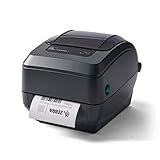
- Thermal Transfer Printing Technology. Produces durable, long-lasting labels using thermal transfer ribbons, ideal for barcode, asset, and inventory labeling.
- 4-Inch Label Printing Capability. Supports shipping labels, product labels, barcode labels, receipts, tags, and wristbands up to 4 inches wide.
- Reliable Business-Class Performance. Built for retail, warehouse, healthcare, manufacturing, and logistics applications requiring dependable daily printing.
- USB, Serial & Parallel Connectivity. Multiple interface options provide easy integration with legacy and modern business systems.
That distinction matters when choosing supplies: a generic thermal-transfer ribbon used for barcode or label printing is not automatically compatible with a dye-sublimation printer or its photo receiver media. The printer and its ribbon and receiver layer need to be a matched system.
What supplies a dye-sublimation printer uses
A typical system has three essential parts:
- Printer and thermal printhead: provide the controlled heat needed to transfer dye.
- Dye donor ribbon: carries the colorant, often in successive cyan, magenta, and yellow panels.
- Receiver media: has a specially designed layer that accepts the transferred dye.
Some systems also use a clear laminate panel to finish the print. The receiver can take different forms—including photographic stock, labels, transparency films, or ID cards—so the required media depends on the printer and the intended output. Kodak’s technical paper discusses these receiver formats and system components. Before buying refills, check the printer’s make and model and the specified media size; the category name alone does not establish compatibility across printers.
Rank #3
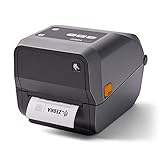
- 〓 Ribbon sold separately 〓 Print methods: Thermal Transfer and Direct Thermal. The ZD620 delivers best-in-class print speeds — 12ips @ 300 dpi for maximum printer throughput and productivity.
- The standard three-button user interface with five LED status icons replaces the typical single button/single light interface common in desktop printers. Users can instantly see what's needed to keep printers up and running, from replenishing media to resolving printer issues.
- The ZD620 comes with Ethernet, Serial, USB and USB Host, as well as Bluetooth Low Energy (BLE), which enables printing from any iOS device.
- Maximum Print Width: 4.27".
- What's in the box: Zebra ZD62043-T01F00EZ Thermal Transfer and Direct Thermal Desktop Printer; AC Power Supply; US Power Cord; USB Cable; Quick Start Guide; Regulatory Guide.
Where the method is used—and what protects the image
Kyocera lists photo printing, seals, and ID cards among dye-diffusion thermal-transfer applications. Kodak describes uses across consumer, home, government, professional, entertainment, and commercial printing, with receiver formats ranging from photographic stock to cards and films.
When a system applies a clear laminate, that layer can help protect the print against ultraviolet radiation, ozone, dirt, moisture, and handling. Kodak notes that prints without a protective laminate are more susceptible to density loss and fading. That does not mean every dye-sublimation print is waterproof or equally durable: protection depends on the particular media and finishing system.
Rank #4
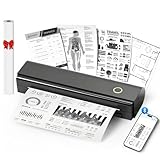
- Wireless Bluetooth Printer: Portable thermal printer compatible with iPhone, Android phones, iPad and tablet computers via Bluetooth. For smartphones, please download the "Nada Print" App. You can also connect to laptops and computers for printing using a USB-C cable. (Note: Laptops and computers can only be connected via USB and require the installation of a driver first. Bluetooth connection is not supported.)
- No-ink printing: Only supports US Letter and A4 size thermal paper.(Doesn't support regular paper) The no-ink portable thermal printer uses direct thermal technology, requiring no ink, toner or ribbons, making it environmentally friendly, cost-effective and time-saving. The thermal printer package comes with a roll of US Letter thermal printing paper. Note: When installing the paper, remember to switch the paper size switch on APP
- Clear Print: NDYIN N80 portable thermal printer adopts high-definition printing technology, with a 203DPI resolution to provide you with clear printing results. This mobile printer is compatible with roll paper, folded paper and tattoo transfer paper, supporting printing from your mobile phone PDF, Word, pictures and web pages anytime and anywhere. It is recommended to use our NDYIN thermal paper to achieve good printing quality
- Portable wireless printer for travel: The thermal printer is equipped with a built-in 1500mAh rechargeable battery, which can print 160 sheets of 8.5" x 11" thermal paper after being fully charged. It weighs only 1.5 pounds and is compact in size. This ink-free portable printer can be easily carried in a backpack or briefcase! It is perfect for business travel, cars, small offices, construction sites, schools and homes. You can print documents, contracts, invoices and boarding passes anytime and anywhere
- The N80 thermal printer has a wide range of uses. The package includes the N80 printer, a roll of US Letter paper(7m/roll), a user manual, a guide card, a type-C soft cable and a type C adapter. Note: The charging adapter is not included. Special thermal paper is required for use; ordinary paper cannot be used. This ink-free portable thermal printer is suitable for various scenarios such as home, school, travel, office, and outdoor, meeting the printing needs of different groups of people. This tattoo template printer is also compatible with tattoo transfer paper, making it an ideal choice for tattoo art
Terminology and a brief history
“Dye sublimation” is the familiar consumer label, while “dye diffusion thermal transfer” names the heat-controlled transfer process more technically. NIST’s OSAC Lexicon lists the terms together in its 2026 entry, while distinguishing the organic dyes used in dye-diffusion ribbons from the pigmented materials used in thermal-transfer wax ribbons. NIST OSAC Lexicon.
Do these 3 things before closing this tab:
1Repair Windows errors before they cause bigger problems2Fix the driver behind crashes, sound loss and screen glitches3Clear out junk files and repair common Windows errorsThe terminology has historical roots: the Image Permanence Institute’s Digital Print Preservation: DP3 Guide reports that Noël de Plasse discovered the dye-sublimation effect in 1957, Sony engineer Nobutoshi Kihara used it for image printing in 1982, and the process became commercially available in 1986. Kodak researcher David G. Foster wrote in 2009 that resistive-head thermal dye transfer printing had been developed and used at Kodak since 1984. These are historical milestones, not current printer-performance claims. Image Permanence Institute, dye-sublimation section; Foster, “Thermal Printing for Digital Output” (2009).
Quick Recap
Best Value

- 【Industrial-Grade Heavy-Duty Body for Harsh Job Sites】Shockproof, wear-resistant, and dustproof reinforced build withstands construction site collisions and heavy dust
- 【Sunlight-Resistant Design for Outdoor Labels】Using thermal transfer technology with better light resistance, labels stay sharp and fade-free under direct sun/lighting
- 【Professional Thermal Transfer for Durable Labels】Scratch-proof, waterproof, and fade-resistant prints endure harsh job site wear and tear
- 【Wide Printing for Versatile Sizes】Supports 0.3"-1.65" label widths, perfect for cables, pipes, equipment, and building materials
- 【30mm/s Stable Speed for Efficient Batch Printing】Fast, lag-free printing boosts productivity for on-site inventory and safety marking
Product prices and availability are accurate as of the date/time indicated and are subject to change. Any price and availability information displayed on Amazon at the time of purchase will apply.

