
iTechGuides is reader-supported. When you buy through links on our site, we may earn an affiliate commission. As an Amazon Associate I earn from qualifying purchases. Learn more
SAE J3016 defines six levels of driving automation, from Level 0, where the human performs the driving task, to Level 5, where the system can drive under all conditions in which people can drive. The practical difference is who steers and controls speed, who monitors the road, and who must respond when the system reaches its limits. The current SAE listing identifies J3016_202609, dated September 20, 2026, as the current edition: SAE J3016.
What the six self-driving car levels mean
These levels classify driving automation features for on-road motor vehicles. SAE’s short labels are useful shorthand, but the operating conditions and the human’s role matter as much as the number.

| SAE level | What the system does | Human role |
|---|---|---|
| Level 0: No driving automation | The system may warn the driver or make momentary interventions, but it does not provide sustained driving support. | The human performs the driving task. Level 0 does not mean the vehicle has no safety technology. |
| Level 1: Driver support | Provides sustained support for either steering or speed control, but not both at once. | The driver supervises the feature and intervenes when needed. |
| Level 2: Partial driving automation | Provides sustained support for both steering and speed control. | The driver continuously supervises the driving environment and remains responsible for driving. |
| Level 3: Conditional driving automation | Performs the driving task while operating within defined conditions. | The human must be available to respond to a request to take over or a relevant vehicle malfunction. |
| Level 4: High driving automation | Performs the driving task within defined conditions and can manage risk without a human taking over. | A human driver is not needed as a fallback while the feature is operating within those conditions. |
| Level 5: Full driving automation | Can drive under all conditions in which humans can drive. | Human driving is not needed. |
SAE’s J3016 listing provides the level descriptors and full standard. NHTSA likewise says drivers remain fully engaged and attentive at Levels 0–2 in its consumer guidance.
What’s actually slowing this PC down?
Pick the symptom - the matching free tool is one click away.
Level 2 vs. Level 3: the key difference is supervision
Both levels can involve steering and speed control, so the key distinction is not simply how much the car appears to do. It is whether the human must continuously monitor the driving environment.
- At Level 2, the driver must continuously supervise the feature and be ready to intervene. The system supports driving; it does not take over responsibility for monitoring.
- At Level 3, the system performs the driving task while its defined operating conditions are met. The human does not have to continuously supervise the driving task as it operates as designed, but must respond when asked to take over or when a relevant failure occurs.
Level 4 changes the fallback expectation: within its operating conditions, the system is designed to manage risk without needing a human to take over. These distinctions are set out in SAE J3016 and reflected in NHTSA’s guidance.
How to identify the level of a driving feature
Do not infer a feature’s level from its name or from one capability such as steering assistance. To compare features, check four things:
- Driving task: Does the feature support steering, speed control, or both? Does it perform the driving task?
- Operating conditions: Where and when is the feature designed to operate?
- Monitoring: Must the driver continuously supervise the driving environment?
- Fallback: If the feature cannot continue safely, must a human take over, or can the system manage risk within its operating conditions?
Those answers are more informative than a marketing label because the level describes the feature’s role and limits, not a general impression of how advanced the vehicle seems.
Recommended Free Tools
A car does not have one fixed automation level
The level applies to the driving automation feature engaged during a particular instance of on-road operation. A vehicle can have multiple features with different capabilities; the feature in use and its operating conditions determine the level at that moment. Avoid assigning a blanket SAE level to a vehicle based only on its model name. SAE also cautions that its simplified level descriptors are not the full definitions: SAE J3016.
Rank #3
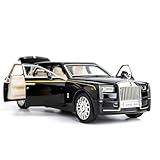
- Product size: 6.69*2.36*1.97 inches Weight: 0.7 pounds Outer packaging: exquisite color translucent packaging box
- Material: Die-cast car model, made of zinc alloy, with plastic parts, rubber tires, detailed interior and exterior decoration.
- Function: Press the two wheels of the front car to trigger the sound of the engine and the lights, with upright car logos,the angel logo is stored in the hood. The details of the body interior are realistic. Place the car on a flat ground, press the body and pull it back, the car will drive forward. (With pull back function)
- This Rolls-Royce Phantom 1/32 car model pull back car is very suitable for children to play with. The paint is exquisite and feels good, and it is heavy to hold. It is also very suitable for car model enthusiasts as a decoration.
- Accessories and collections: This product is very suitable for static accessories and can be used as an accessory next to a computer. For those who are passionate about collecting model car models, this is a great art collection.
What “self-driving” means in the U.S. consumer market
NHTSA says every vehicle currently for sale in the United States requires the driver’s full attention for safe operation. Its consumer guidance also says Levels 3–5 are not available on vehicles for consumer purchase, while limited testing, research, and pilot programs take place on public streets in restricted locations and conditions. These are U.S.-specific statements and market availability can change; check NHTSA’s current guidance for the latest status.
NHTSA cautions against using “self-driving” as a casual label for higher automation levels: “NHTSA follows industry standards in not using the term ‘self-driving’ to describe higher levels of automation, as this describes a vehicle’s state of operation but not necessarily its capabilities and too often is falsely associated with how today’s drivers need to interact with a vehicle.” The agency’s point is that a feature’s actual capabilities, conditions, and driver responsibilities matter more than the phrase: NHTSA consumer guidance.
Quick Recap
Product prices and availability are accurate as of the date/time indicated and are subject to change. Any price and availability information displayed on Amazon at the time of purchase will apply.

