
Do these 3 things before closing this tab:
1Clear out junk files and repair common Windows errors2Scan for outdated or missing drivers - takes under a minute3Repair Windows errors before they cause bigger problemsiTechGuides is reader-supported. When you buy through links on our site, we may earn an affiliate commission. As an Amazon Associate I earn from qualifying purchases. Learn more
Azure IoT Hub is Microsoft’s managed cloud service for connecting Internet of Things (IoT) devices with backend applications. It handles device identities, telemetry and other device-to-cloud communication, cloud-to-device messaging, and routing data to other services. It is one layer in an IoT solution—not the sensors, an analytics platform, or the entirety of Azure’s IoT services.
What Azure IoT Hub does
IoT Hub provides a communication and device-management layer for devices that connect to the cloud. A device can send sensor readings, error messages, or health signals to the service; backend applications can then receive the data or route it onward for processing and analysis. Devices can also upload files.

Devices authenticate with identities registered in the hub. Microsoft describes shared access signature (SAS) tokens as one authentication option, and X.509 certificates as a more secure, scalable choice for devices that can manage certificates. Supported device communication protocols include MQTT, AMQP, and HTTP; MQTT and AMQP are also available over WebSockets. Confirm that a device’s software and SDK support the chosen protocol and endpoint before implementation. Microsoft’s protocol guidance and endpoint reference describe the available options.
The Tool Desk
Outbyte Driver Updater FREEFix the driver behind crashes, sound loss and screen glitchesFind Drivers →Outbyte PC Repair FREERepair Windows errors before they cause bigger problemsFix Now →How device and cloud messages flow
Device-to-cloud telemetry
Devices send events such as measurements, faults, and status signals to IoT Hub. The hub can route those events to other cloud services so an application can store, process, or analyze them. The device-to-cloud path is suited to telemetry and other data a device reports upstream.
#1 Best Overall

- Dual-Core Performance Up to 240 MHz: Run sensor processing, wireless communication, automation logic and connected-device tasks on a 32-bit dual-core ESP32 platform designed for responsive embedded and IoT projects
- Built-in Wi-Fi and Bluetooth 4.2: Connect to 2.4 GHz Wi-Fi networks or use Bluetooth Classic and BLE for wireless sensors, smart devices, remote controls, home automation and other connected projects
- Flexible Power-Saving Modes: ESP32 power-management features support dynamic clock scaling and low-power operating modes, helping developers reduce energy use in compatible sensing, monitoring and connected-device applications, suitable for battery-powered Internet of Things (IoT) devices.
- USB-C Programming with CP2102: Connect through USB-C for power, sketch uploads and serial monitoring, while GPIO, UART, SPI and I2C interfaces support sensors, displays, motor drivers and other modules (USB-C cable not included)
- Over-the-Air Update Support: Configure OTA functionality through a compatible ESP-32 software framework to update deployed firmware over Wi-Fi without reconnecting the board by USB for every revision
Queued cloud-to-device messages
A backend can place a message in a per-device queue for later delivery. The device acknowledges completion, and Microsoft describes this delivery as at least once, so an application should be prepared for a message to arrive more than once. Queued cloud-to-device messaging is a standard-tier feature.
Direct methods
A direct method is a request-and-reply interaction between a backend and a device. It succeeds or fails within a configured timeout, making it different from a queued message that can wait for delivery. Use a direct method when the application needs a timely response from a reachable device; use a queue when the device may receive the instruction later. Microsoft documents these separate interaction patterns in its cloud-to-device communications guidance.
Rank #2

- Certified & Future-Ready: Espressif-certified ESP32-WROOM-32E ensures full hardware compatibility and lifetime firmware support. Upgraded 8MB Flash handles IoT data and OTA updates.
- Dual-Core Speed: 240MHz dual-core processor runs Wi-Fi/BLE and sensors 2x faster. 38 GPIO pins (10 RTC) support SPI/I2C/UART for LCDs, motors, and industrial sensors.
- Plug & Play Dev: USB-C driver pre-installed: upload code instantly on Windows/Mac/Linux. Works with Arduino IDE, MicroPython, and Espressif IDF.
- All-Environment Ready: Run Wi-Fi smart switches (Home Assistant) and BLE tracking on one board. Industrial-grade stability (-40°C~85°C) for outdoor/automated systems.
- Advantages: The ESP32 development board offers high performance, low power consumption, and rich wireless connectivity, making it suitable for developers of all levels, especially beginners.
Device twins
A device twin represents device properties in the cloud. Applications can use twin data as part of device management without treating it as a live request-reply exchange. Device twins and device-management capabilities are standard-tier features.
Crashes, No Sound, or Screen Glitches?
Random freezes, missing sound and display glitches usually trace back to one bad driver. Find and replace yours safely.Free scan · under a minuteWindows Errors? Fix Them Before They Spread
Repair common Windows errors and clear accumulated junk for a smoother, more stable PC - no reinstall needed.Free scan · no reinstallWhen IoT Hub is the right architecture
Choose the cloud-connected pattern for direct connectivity
IoT Hub fits devices that can connect directly to the cloud over supported internet protocols. This pattern suits deployments where cloud communication is acceptable and the device’s protocol, connectivity, and management needs align with the hub’s capabilities. Microsoft identifies IoT Hub as its platform for the cloud-connected device pattern.
Rank #3
Consider an edge-connected pattern for industrial constraints
An edge-connected design puts a nearby environment between devices and the cloud, allowing messages to be processed locally before selected data is sent onward. This can be a better fit when equipment uses industrial protocols such as OPC UA, needs low-latency onsite processing, or cannot connect directly to the internet. Microsoft’s current guidance identifies Azure IoT Operations as its primary recommendation for new edge-connected solutions. That is a distinct offering, not another name for IoT Hub. See Microsoft’s IoT architecture guidance for the distinction.
To choose between patterns, assess the devices’ connectivity restrictions and protocols, the need for local processing and low latency, required device-management capabilities, and how much data must travel to the cloud. These are deployment-specific trade-offs; neither pattern is a universal fit.
Rank #4

- 2.4GHz Dual Mode WiFi + Bluetooth Development Board
- Support LWIP protocol, Freertos
- SupportThree Modes: AP, STA, and AP+STA
- Ultra-Low power consumption, Compatible with Arduino IDE
- ESP32 is a safe, reliable, and scalable to a variety of applications
What the tiers and limits mean
Tier choice depends on the features an application needs as well as its message volume and payload sizes. Microsoft documents these free-tier limits: up to 500 connected devices and 8,000 messages per day, with one free-tier hub per Azure subscription. The free tier is intended for testing and evaluation; those limits are not capacity recommendations. Check Microsoft’s hub-creation documentation for current terms before choosing a tier.
Quick wins for a faster PC:
Clear out junk files and repair common Windows errorsFree Scan →Scan for outdated or missing drivers - takes under a minuteDriver Scan →Features including queued cloud-to-device messaging, device twins, and device management require the standard tier. Basic and standard billable operations are metered in 4-KB blocks; free-tier operations are metered in 0.5-KB chunks, according to Microsoft’s IoT Hub pricing guidance. Actual cost depends on the tier, operations, payload sizes, region, and the other services in the solution. Consult current regional pricing rather than treating message limits or block sizes as a price estimate.
Best Value
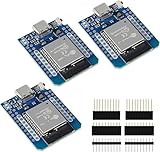
- D1 Mini NodeMCU Type-C ESP32 WLAN WiFi Bluetooth IoT Development Board 5V Compatible for Arduino
- Designed with ultra-low power technology, it offers the full range of performance and features of the ESP32 chip. The pin arrangement provides compatibility with the modules developed for the D1 Mini ESP8266 while also offering fast WLAN, enhanced GPIO, Bluetooth functionality, and with its higher performance, a wider range of applications.
- 100% compatible with Arudino IDE, Lua and Micropython, it shows robustness, versatility, and reliability in a wide variety of applications and power scenarios.
- All I/O pins have interrupt, PWM, I2C and one-wire capability, except the pin DO.
- Designed with ultra-low power technology, it offers the full range of performance and features of the ESP32 chip. The pin arrangement provides compatibility with the modules developed for the D1 Mini ESP8266 while also offering fast WLAN, enhanced GPIO, Bluetooth functionality, and with its higher performance, a wider range of applications.
Security responsibilities to plan for
A managed service does not remove the need to secure devices, identities, network access, and operations. Microsoft recommends restricting network exposure, using Microsoft Entra ID and least-privilege Azure role-based access control (RBAC) for service access, and assigning unique credentials to devices. For production device authentication, consider X.509 certificates where device capabilities and the threat model make them appropriate.
- Protect device secrets and certificate material, and avoid sharing credentials across devices.
- Limit service permissions to the access each user or application needs.
- Enable diagnostic logs and alerts, and review access permissions.
- Apply network controls appropriate to the deployment.
Microsoft states that IoT Hub endpoints use TLS and are not exposed over an unencrypted channel. Its endpoint reference also describes preview endpoints with TLS 1.3 alongside the classic endpoint; the classic endpoint remains supported. Preview status and endpoint choices can change, so check the current endpoint documentation before implementing a specific TLS or endpoint configuration. TLS support does not replace the operational controls above. Microsoft’s broader security recommendations provide additional deployment guidance.
What its scale statement does—and does not—tell you
Microsoft Learn’s “What is Azure IoT Hub?” overview says: “IoT Hub scales to millions of simultaneously connected devices and millions of events per second to support your IoT workloads.” This is Microsoft’s service-capability statement, not an independently measured benchmark or a performance guarantee for a particular system. A deployment’s results depend on its configuration, workload, and architecture.
What’s actually slowing this PC down?
Pick the symptom - the matching free tool is one click away.
Quick Recap
Product prices and availability are accurate as of the date/time indicated and are subject to change. Any price and availability information displayed on Amazon at the time of purchase will apply.

