
What’s actually slowing this PC down?
Pick the symptom - the matching free tool is one click away.
iTechGuides is reader-supported. When you buy through links on our site, we may earn an affiliate commission. As an Amazon Associate I earn from qualifying purchases. Learn more
AI can help NetOps teams sort alert volume, correlate evidence across network and adjacent systems, and recommend or carry out narrowly defined actions. It works best as an operating aid—not a substitute for reliable telemetry, operator judgment, or change controls.
A Cisco-published summary of an independent Omdia survey, announced September 23, 2026, illustrates the pressures: 92% of respondents said performance issues commonly span multiple domains and require correlation across ten or more tools. The survey covered 1,000 IT and network operations leaders at organizations with at least 500 employees in North America, Western Europe, and Asia-Pacific. Its findings describe that sample, not every NetOps team.

How can AI help network operations?
“AI” covers several different capabilities in NetOps. Analytics and machine learning can find patterns in telemetry, correlate related events, flag anomalies, and help prioritize investigations. Generative interfaces can let an operator ask questions about network context, summarize evidence, or draft configuration and documentation. Automation can then apply a defined change—but only when the system has enough context and the organization has set boundaries for it.
The Tool Desk
Outbyte Driver Updater FREEScan for outdated or missing drivers - takes under a minuteDriver Scan →Outbyte PC Repair FREEClear out junk files and repair common Windows errorsFree Scan →These uses address different parts of the work. A pattern detector may surface a likely issue; a language interface may make the evidence easier to inspect; an automation system may act on an approved recommendation. A product may offer one or several of these functions, and the available sources do not establish that all products perform them equally well.
#1 Best Overall

- FAST 15-MINUTE DEPLOYMENT – Provision and configure in just 15 minutes (down from 40+ minutes with previous models). Perfect for field technicians who need to get sites up and running quickly without deep networking expertise.
- UPGRADED PERFORMANCE – Powered by the Allwinner H618 processor with 1GB LPDDR4 RAM (double the previous generation). Enables accurate speed tests on gigabit connections and supports SNMP v3 encryption for enhanced security monitoring.
- PLUG-AND-PLAY SIMPLICITY – No complex configuration required. Simply connect to your network via the Gigabit Ethernet port, power up with the included USB-C cable, and start monitoring. Multi-VLAN support with just a few clicks in the interface.
- RISK MITIGATION FOR MSPs – Domotz maintains the operating system and security updates, transferring liability concerns away from your organization. Eliminates the security risks of deploying monitoring software on customer-managed servers or domain controllers.
- UNIVERSAL CONNECTIVITY – USB-C power port (more durable and universal than previous micro USB), Gigabit Ethernet port, and USB 2.0 port for future expansion. Premium casing designed for rack mounting or standalone deployment in professional environments.
Why cross-domain context matters
A user’s report that an application is slow may appear to be a Wi-Fi problem even when the cause is cloud connectivity, identity policy, application behavior, endpoint posture, security inspection, DNS, or an upstream provider. Looking only at one network domain can obscure the cause. Correlating topology, policy, application, security, and user-experience information can give an operator a better-grounded investigation. This is an illustrative scenario described in a Cisco practitioner article, not a measured case study.
In its September 2026 summary of the Omdia survey, Cisco reported that 92% of respondents commonly encounter performance issues spanning multiple domains and requiring correlation across ten or more tools. That figure helps explain why simply adding another alert feed may not solve the harder problem: teams need a way to relate evidence across systems.
How does AIOps reduce network alert overload?
AIOps—AI applied to IT operations—can reduce the effort of handling alerts by grouping related events, identifying unusual behavior, and directing attention toward signals more likely to matter. It can help turn a large event stream into a shorter list of investigations, but it cannot make noisy or incomplete telemetry trustworthy by itself.
Recommended Free Tools
Rank #2

- Hardware Controller with Professional Network Management-Centralized management for up to 100 Omada devices including Omada access points, Omada Security Gateways and Jetstream switches.
- Premium Hardware Design-Industry-leading flexible Rackmount/Desktop design with a powerful chipset, durable metal casing, 2 fast ethernet ports and 1 USB 2.0 port for auto backup.
- Dual power selection-Support PoE (802.3af/802.3at) and micro USB for flexible installations.
- Easy Network Monitor & Maintenance-The easy-to-use dashboard makes it simple to see your real-time network status and improve network maintenance for peace of mind.
- Cloud Access with No License Fee-Enjoy cloud service with no license fee with the use of OC200. Remote Cloud access and Omada app brings centralized cloud management of the whole network from different sites—all controlled from a single interface anywhere, anytime.
The Cisco summary of Omdia’s 2026 survey reports about 4,100 monitoring alerts and events per organization per day, with more than half network-related. It also cites an estimate that roughly 100 IT specialists would be needed to clear the daily network-alert backlog manually. These are reported survey figures and an estimate, not a universal workload or staffing formula.
Useful alert handling depends on the system connecting events to meaningful context: affected services and users, changes, dependencies, and related signals from other domains. Teams should check whether suggested correlations are supported by visible evidence and whether operators can distinguish a likely root cause from a coincidental event. Alert counts alone are not a sufficient success measure; fewer notifications do not prove faster diagnosis or better service.
Can AI troubleshoot network problems?
AI can assist troubleshooting by assembling relevant telemetry, highlighting patterns, proposing likely causes, and summarizing what supports a hypothesis. That can make an investigation easier to navigate, especially where the symptom and cause sit in different systems. It should not be treated as proof that a proposed cause is correct: operators need access to underlying evidence and a way to verify the finding against the service and environment.
Rank #3
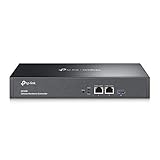
- 【Hardware Controller with Greater Network Management】Latest Omada SDN hardware controller provides centralized management for up to 500 Omada devices including Omada access points, Omada switches and Omada routers.
- 【Premium Hardware Design】Industry-leading flexible Rackmount/Desktop design with a powerful chipset, durable metal casing, 2 * gigabit ports and 1 * USB 3.0 port for auto backup.
- 【Easy Network Monitor & Maintenance】The easy-to-use dashboard makes it simple to see your real-time network status and improve network maintenance for peace of mind.
- 【Cloud Access with No License Fee】Enjoy cloud service with no license fee with the use of OC300. Remote Cloud access and Omada app brings centralized cloud management of the whole network from different sites—all controlled from a single interface anywhere, anytime.
- 【SDN Compatibility】For SDN usage, make sure your devices/controllers are either equipped with or can be upgraded to SDN version. OC300 work only with SDN APs, Switches and Gateways. For devices that are compatible with SDN firmware, please visit TP-Link website.
Some AI-supported workflows may move from diagnosis to action, such as rerouting traffic or changing wireless parameters. The action should be appropriate to the confidence and impact involved. A recommendation that is useful for a low-risk, reversible adjustment may not justify an unattended change to a critical service.
What NetOps tasks are teams applying AI to?
AI applications extend beyond conversational interfaces. Cisco’s 2026 Omdia-survey summary and an older Enterprise Strategy Group (ESG) study reproduced in a Juniper-commissioned infographic identify a range of implementation or consideration areas. The percentages below are not directly comparable: the ESG figures are from research dated August 2024, reproduced in an infographic published December 2024; the Cisco figures describe a survey announced in 2026.
| Use case | Reported figure | Source and qualification |
|---|---|---|
| Network performance optimization | 40% | ESG research, August 2024, as reproduced in a Juniper-commissioned infographic published December 2024; implementation or consideration use case. |
| Security threat detection | 39% | ESG research, August 2024, as reproduced in a Juniper-commissioned infographic published December 2024; implementation or consideration use case. |
| Traffic analysis and optimization | 34% | ESG research, August 2024, as reproduced in a Juniper-commissioned infographic published December 2024; implementation or consideration use case. |
| Capacity planning | 33% | ESG research, August 2024, as reproduced in a Juniper-commissioned infographic published December 2024; implementation or consideration use case. |
| Load balancing | 32% | ESG research, August 2024, as reproduced in a Juniper-commissioned infographic published December 2024; implementation or consideration use case. |
| Anomaly detection and alerting | 31% | ESG research, August 2024, as reproduced in a Juniper-commissioned infographic published December 2024; implementation or consideration use case. |
| Predictive maintenance | 30% | ESG research, August 2024, as reproduced in a Juniper-commissioned infographic published December 2024; implementation or consideration use case. |
| Dynamic network scaling | 28% | ESG research, August 2024, as reproduced in a Juniper-commissioned infographic published December 2024; implementation or consideration use case. |
The Cisco/Omdia summary also reports AI use or consideration for performance optimization, threat detection, traffic analysis, capacity planning, anomaly detection, predictive maintenance, configuration and documentation generation, intent-based networking, and self-healing. The practical value depends on whether the capability fits the team’s systems and workflow, and whether its outputs can be checked.
What is agentic AI in NetOps?
Agentic AI refers here to systems that can pursue a defined operational goal through a sequence of steps, potentially including actions in network tools. That is different from a chat interface that only answers questions or drafts a recommendation. An agent might inspect conditions, select an allowed action, execute it, and check the result, but the organization still determines what it may access and change.
Cisco’s September 2026 summary of an independent Omdia survey reports that 75% of respondents had deployed AI for NetOps, 51% said agentic AI was acting in production, and 84% expected an AI-led operating model within 12 months. Cisco also reported that 80% were comfortable with high or full autonomy, 24% with no human oversight, and 82% with some production changes made without prior approval. These are self-reported views and adoption in the surveyed sample, not audited market-wide deployment counts or evidence that autonomous changes are inherently safe.
The same survey summary says 95% of respondents found significant shortcomings in existing non-agentic AIOps tools. That is a reason some organizations may be exploring agentic approaches; it does not establish that agents resolve those shortcomings or that their benefits outweigh their risks in every environment.
Best Value
How do you safely automate network changes?
Introduce autonomy in stages and make the permitted actions explicit. Begin by observing and recommending, then validate the system’s evidence against known conditions. Set action-specific limits and approval thresholds before allowing changes. Preserve an emergency override and an audit record, and expand what the system can do only when outcome checks show it is operating as intended.
- Start in observation mode. Let the system identify events and propose explanations or actions without changing production. Compare its findings with operator investigation and incident records.
- Define policy boundaries. Specify which devices, services, change types, and operating conditions are in scope. Restrict access by role and set thresholds that require human approval for higher-impact or uncertain actions.
- Require an explainable recommendation. Make the relevant telemetry, rationale, and expected effect available to the operator. Do not rely on an unexplained instruction to change production.
- Enable bounded actions with oversight. Start with changes that are limited and reversible where possible. Keep approval gates for actions whose impact, scope, or uncertainty exceeds policy limits.
- Verify and retain the result. Check post-change service and network signals, record what the system did and why, and provide a way to stop or reverse an action when it does not produce the intended outcome.
- Expand autonomy based on outcomes. Review service impact, investigation workload, policy exceptions, and audit records before widening the agent’s permissions.
Trust controls are not a fringe concern in the Cisco/Omdia survey: Cisco reports that 69% required detailed explainability for agent-driven actions, while 36% required full observability, including detailed tracing, summarized rationale, and post-action audits. Those responses do not prescribe one control framework, but they show why visibility and governance belong alongside the automation itself.
Can AI increase network demand?
AI can help operate a network while also adding traffic that the network must carry. Cisco says its analysis of aggregated direct-to-AI network telemetry placed that traffic on a trajectory to double every six months. Cisco also reported from its own testing that agentic tasks can generate up to 450% more total network traffic when agentic AI traffic is included. These are Cisco analysis and testing results, not independently verified universal benchmarks; they are a reminder to account for AI-related traffic in capacity and performance planning.
What should I look for in an AIOps platform?
Evaluate capabilities against the operational problem you need to solve, rather than treating “AI” as a guarantee of outcomes. A useful assessment includes the following:
- Cross-domain coverage: Can it bring together the network, application, security, cloud, and user-experience context relevant to your services?
- Telemetry integration: Can it use the data and tools already present in your environment, and can it show which sources support a finding?
- Explainability: Are recommendations accompanied by evidence and a rationale an operator can assess?
- Action governance: Can you define policy limits, approval gates, role-based access, and an emergency override?
- Audit and verification: Does it retain action history and support checks of post-action outcomes?
- Implementation fit: What integration effort is required, and does the system fit the existing environment and operating process?
- Outcome measurement: Can you assess investigation workload and service impact, rather than relying on alert reduction or autonomy claims alone?
Set a baseline before rollout and agree on how to judge results. The available survey findings describe adoption, expectations, and use cases; they do not establish general causal savings in cost, staffing, or incident duration from NetOps AI.
Quick Recap
Product prices and availability are accurate as of the date/time indicated and are subject to change. Any price and availability information displayed on Amazon at the time of purchase will apply.

