
What’s actually slowing this PC down?
Pick the symptom - the matching free tool is one click away.
iTechGuides is reader-supported. When you buy through links on our site, we may earn an affiliate commission. As an Amazon Associate I earn from qualifying purchases. Learn more
Borg, restic, Kopia, and Duplicati each document a route to backing up files and directories on a self-hosted system. The right fit depends less on a universal “best” tool than on how you want to configure backups, where you can store them, and how you would restore data if the server disappeared. This is a documentation-based comparison, not a claim that these tools were personally tested.
What these backup tools can—and cannot—cover
The documented features here concern file and directory backups. They do not establish that any of the four is sufficient for application-consistent database backups, virtual-machine images, or bare-metal server recovery. Treat file backups as one part of a recovery plan, and use workload-specific procedures where an application requires a consistent database or full-system image.
“Self-hosted” does not mean “local only.” Depending on the tool, documented destinations include local storage, network storage, SSH-accessible remote hosts, and cloud services. Check support and setup for the exact destination you intend to use rather than assuming a general cloud or NAS claim covers it.
How the four tools differ
| Tool | Documented interface and approach | Destinations and recovery | What to consider |
|---|---|---|---|
| BorgBackup (Borg) | Command-oriented deduplicating backups, with optional compression and authenticated encryption. | Supports remote hosts accessible over SSH. Archives can be mounted as filesystems for browsing and recovery. | A candidate if you are comfortable with a command-line workflow and SSH-based remote storage. Borg documentation |
| restic | Command-oriented file backup. The project describes it as a single executable that does not require a server or complex setup. | Supports self-hosted and online storage options. Its manual documents backup, restore, encrypted repositories, and repository checks. | Review the manual for the repository and backend you plan to use; the project’s description is not a comparative ease or reliability test. restic project · restic manual |
| Kopia | Offers both GUI and CLI workflows, with encrypted snapshots. | Documents local, network, and cloud repositories. You can mount a snapshot to browse it, restore a whole snapshot to a chosen location, or selectively restore files. | Kopia describes user-controlled end-to-end encryption. Its Rclone support is marked experimental, and not all Rclone-supported providers have been tested. Kopia features · Kopia repositories |
| Duplicati | Documents UI-based configuration as well as CLI use. Its setup guide covers source data, destination, schedule, retention, and encryption. | Documents a range of destination backends. Its restore guide describes recovery using destination details and the encryption passphrase even if the original local database is unavailable. | The passphrase is essential: Duplicati warns that losing it makes recovery impossible. Duplicati setup · Duplicati restore · Duplicati destinations |
Choose by the recovery workflow you can maintain
If you want a documented GUI option
Kopia and Duplicati both document graphical workflows. Kopia offers several ways to browse or restore snapshots. Duplicati’s UI setup walks through source, destination, schedule, retention, and encryption. Compare the exact destination support and recovery steps for your setup before choosing; the available documentation does not establish that one is easier for everyone.
#1 Best Overall

- Massive capacity, up to 22TB capacity. (1TB = one trillion bytes. Actual user capacity may be less depending on operating environment.).Specific uses: Personal
- Includes software for device management and backup with password protection (Download and installation required. Terms and conditions apply. User account registration may be required.)
- 256-bit AES hardware encryption
- SuperSpeed USB (5 Gbps); USB 2.0 compatible
- Trusted storage built with WD reliability
If you are comfortable with the command line
Borg and restic are natural candidates to investigate. Borg documents SSH-based remote access and mountable archives. restic documents encrypted repositories, backup and restore commands, and repository checking. Their documentation supports comparing capabilities, not ranking performance or reliability.
If your server backs up to a NAS or remote host
Match the tool to the storage path you actually have. For a remote machine reachable over SSH, Borg explicitly documents that route. For a NAS, network share, or cloud destination, verify the particular backend and its setup in the chosen tool’s documentation. For example, Duplicati documents file destinations that can be fixed disks, removable media, or mounted network storage; restic and Kopia also document local storage options. A removable external hard drive can serve as local backup storage, but a drive kept beside the server is not an off-site copy.
Rank #2

- Slim durable design to help take your important files with you
- Vast capacities up to 6TB[1] to store your photos, videos, music, important documents and more
- Back up smarter with included device management software[2] with defense against ransomware
- Help secure your important files with password protection and hardware encryption
- 3-year limited warranty
Make restore readiness part of setup
A scheduled job completing is not proof that you can recover what matters. Decide how you would access the repository from another machine and retain the required secrets and destination details independently of the server being backed up.
Do these 3 things before closing this tab:
1Clear out junk files and repair common Windows errors2Fix the driver behind crashes, sound loss and screen glitches3Repair Windows errors before they cause bigger problems- Keep credentials separate: store encryption passwords or keys, destination credentials, and repository access information somewhere available if the server is lost.
- Know the restore route: identify whether you will browse a mounted archive or snapshot, select individual files, or restore a larger set of data. Duplicati documents a direct-restore route when its original local database is unavailable, but still requires the destination details and passphrase.
- Check the repository: use the verification or repository-check procedures documented for your chosen tool. restic’s manual includes repository checking; consult the relevant documentation for the other tool’s maintenance tasks.
- Practice recovery: restore a small sample to a separate location and confirm the files are usable. This tests the workflow and access details without treating a successful backup run as a recovery test.
Keep encryption secrets recoverable
Encryption protects backup contents, but it adds a recovery dependency: someone must retain the secret needed to decrypt them. Duplicati explicitly warns that a lost encryption passphrase prevents restore. Kopia describes its repository password as user-controlled and not sent outside the machine. For any tool, keep the necessary password or key somewhere that does not depend on the backed-up server, and make sure the people responsible for recovery can access it.
Rank #3
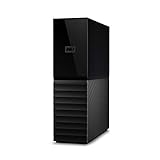
- Massive capacity, up to 18TB capacity (1 1TB = one trillion bytes. Actual user capacity may be less depending on operating environment.).Specific uses: Business, personal
- Includes software for device management and backup with password protection (Download and installation required. Terms and conditions apply. User account registration may be required.)
- 256-bit AES hardware encryption
- SuperSpeed USB (5 Gbps); USB 2.0 compatible
What this comparison does not establish
The official documentation describes features, not a like-for-like test. It does not show which tool is fastest, most reliable, or easiest for a particular home server. Nor does it establish support for every provider behind a broad label such as “cloud storage.” Verify the exact operating system, repository type, destination, and restore process against current documentation before committing important data.
Quick Recap
Best Value
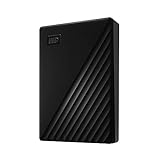
- Slim durable design to help take your important files with you
- Vast capacities up to 6TB[1] to store your photos, videos, music, important documents and more
- Back up smarter with included device management software[2] with defense against ransomware
- Help secure your important files with password protection and hardware encryption
- 3-year limited warranty
Rank #4

- World’s First 6TB 2.5” Portable Hard Drive
- Slim durable design to help take your important files with you
- Vast capacities up to 6TB[1] to store your photos, videos, music, important documents and more
- Back up smarter with included device management software[2] with defense against ransomware
- Help secure your important files with password protection and hardware encryption
Product prices and availability are accurate as of the date/time indicated and are subject to change. Any price and availability information displayed on Amazon at the time of purchase will apply.

