
iTechGuides is reader-supported. When you buy through links on our site, we may earn an affiliate commission. As an Amazon Associate I earn from qualifying purchases. Learn more
Yes: compatible LoRa devices can exchange short text messages without cellular service, Wi-Fi, or an internet connection. An ESP32 can run the messaging software and manage a LoRa radio, but a working node also needs a frequency-matched antenna, power, compatible firmware, and the right regional settings. The “$2” premise describes a low-cost component—not the price of a complete messaging device.
How can I text without cell service or internet?
With a LoRa mesh, a message travels by radio from one compatible node to another. The mesh itself does not need a cellular carrier, Wi-Fi access point, router, or internet connection. Meshtastic is an open-source project that uses supported LoRa hardware for text messaging and other off-grid communication. Its introduction describes use in areas without reliable communications infrastructure.
A phone is often the convenient screen and keyboard: it connects locally to a Meshtastic node, commonly over Bluetooth, while the node sends and receives messages over LoRa. The phone is not routing the message through the internet. To communicate, at least two compatible nodes must be within usable radio range, directly or through other participating mesh nodes.
What’s actually slowing this PC down?
Pick the symptom - the matching free tool is one click away.
Can an ESP32 send messages without Wi-Fi?
Yes, when paired with a compatible LoRa transceiver and suitable firmware. The ESP32 handles computing and device functions; the LoRa radio provides the long-range, low-bandwidth link. Wi-Fi capability on an ESP32 board is separate from its LoRa capability and is not required for node-to-node LoRa messaging.
#1 Best Overall
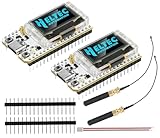
- Large Antenna:This ESP32 LoRa V3 Development Board With the large antenna,more stable, meeting the needs of more scenarios.
- Microprocessor: ESP32-S3FN8 (Xtensa 32-bit LX7 dual core processor, five stage pipeline rack Structure, main frequency up to 240 MHz).SX1262 LoRa node chip
- Type-C USB interface with a complete voltage regulator, ESD protection, short circuit protection, RF shielding, and other protection measures.
- ESP32 lora Module integrated Wi-Fi, LoRa, BT three network connections, onboard Wi-Fi, BT dedicated 2.4GHz metal spring antenna, reserved IPEX (U.FL) interface for LoRa use
- Onboard 0.96-inch 128*64 dot matrix OLED display, which can be used to display debugging information, battery power, and other information.
Documented integrated example: Heltec WiFi LoRa 32 V3/V3.1
Meshtastic’s hardware documentation lists the V3/V3.1 with an ESP32-S3FN8 microcontroller and Semtech SX1262 LoRa transceiver. The documented board also has a 0.96-inch OLED and buttons, and does not include GPS. Its LoRa antenna connection is U.FL/IPEX. The separate 2.4 GHz Wi-Fi/Bluetooth antenna connection is not the LoRa antenna connection, so the LoRa radio needs its own suitable antenna.
Frequency variants listed for the V3/V3.1 include 433 MHz, 470–510 MHz, 863–870 MHz, and 902–928 MHz. Select a board variant and antenna appropriate to the location and local rules; frequency options are not interchangeable merely because the board runs the same firmware.
Rank #2

- V4 Upgraded ESP32-S3 LoRa SX1262:Hardware upgraded to V4.3. For communication issues, download the latest firmware from “Safety documents” > “User Manuel”. This Heltec V4 Development Board features the latest ESP32-S3R2 chip with 2MB PSRAM and 16MB Flash, delivering superior processing for complex IoT applications and Meshtastic projects.This major upgrade from Heltec V4 models provides enhanced performance for Meshtastic devices and LoRa development boards—now in a more compact and cost-effective ESP32 LoRa development board without the integrated display.This is the Standard Version with pin headers unsoldered.
- High Power 27dBm Long-Range LoRa Radio Communication: The ESP32 LoRa Development Board experience exceptional wireless range with 27dBm transmission power and -137dBm sensitivity. Perfect for building reliable Meshtastic nodes, expansive LoRa radio networks, smart home IoT devices, and industrial applications.This powerful LoRa module provides greater communication distance across large properties and urban environments, making it an ideal LoRa Meshtastic solution.
- Compact & Cost-Effective LoRa Meshtastic Solution: This Meshtastic device version removes the OLED display to offer a more compact form factor and better value, ideal for projects where a physical display is not required or for users who prefer custom external interfaces. The board still features a protective casing with FPC antenna for stable Wi-Fi/Bluetooth and an external antenna for enhanced LoRa performance, providing a flexible Meshtastic development board ready for deployment.
- Advanced Power Management with Solar & GPS Connectivity: This LoRa module designed for outdoor use with optimized battery management and ultra-low 20μA sleep current—achieving even better power efficiency without the display. Includes solar panel interface for building Meshtastic solar nodes and GNSS port for Meshtastic GPS applications. The Type-C interface with voltage regulation ensures reliable operation for asset tracking and remote monitoring projects.
- Fully Compatible ESP32 LoRa Development Board: Maintains complete pin compatibility with Heltec LoRa 32 V3 for seamless project migration, offering a perfect LoRa development board alternative for Heltec V3 users. Ready for Arduino and PlatformIO development, this versatile board supports LoRaWAN, Wi-Fi, and Bluetooth protocols for smart agriculture, industrial IoT, and wireless security systems—delivering all the core functionality of the ESP32 Lora V3 in a display-free format.
What the “$2 ESP32” leaves out
A microcontroller alone cannot transmit LoRa messages. A complete node needs a compatible LoRa transceiver, a frequency-matched antenna with the right connector, power, and firmware/configuration. An integrated ESP32-plus-LoRa board reduces wiring and component-matching work; assembling separate components allows more choice but requires checking radio compatibility, wiring, antenna connection, frequency, and software support. The cited documentation supports particular integrated devices; it does not establish that every ESP32 and LoRa-module combination will work with Meshtastic. No complete-build price is established here.
Free tools Windows power users keep installed
One-click scans. No signup required.
What hardware and setup should I check?
- Exact board and revision: Confirm the model and revision in the current Meshtastic device documentation, along with current firmware support. The Heltec V4 is a distinct family, not simply another V3 revision. Heltec’s V4 documentation distinguishes V4 and V4-R8 details and revisions, so check the exact unit rather than assuming all versions share the same specifications or compatibility.
- LoRa antenna: Attach an antenna intended for the board’s frequency band and compatible with its U.FL/IPEX LoRa connector. Do not confuse it with the Wi-Fi/Bluetooth antenna.
- Power and connection: Use an appropriate power source and follow the board’s setup guidance. For the V3/V3.1, Meshtastic notes a possible battery-charging issue with USB-C-to-USB-C cables and recommends USB-A-to-USB-C. It also warns that the USB-C port lacks ESD protection for its CP2102 USB-to-UART bridge; these are model-specific cautions, not general ESP32 rules.
- Phone interface: Pair the phone with the node using the supported connection method and current Meshtastic setup instructions. The phone serves as the interface; LoRa carries mesh messages.
Heltec’s Meshtastic setup instructions cover device setup and region selection. Follow instructions for the exact board revision and firmware.
Rank #3

- Support Arduino Development Environment: Support ESP32 + LoRaWAN protocol Arduino library, this is a standard LoRaWAN protocol that can communicate with any LoRa gateway running the LoRaWAN protocol
- Highly Integrated: Integrated WiFi, LoRa, Bluetooth three network connections, onboard WiFi, Bluetooth dedicated 2.4GHz metal spring antenna, reserved IPEX (U.FL) interface for LoRa use. Integrated CP2102 USB to serial port chip, convenient for program downloading, debugging information printing
- Power Supply Method: Onboard SH1.25 battery interface, integrated lithium battery management system; you can also use the Type-C interface to power the development board
- Highly Interactive: Onboard 0.96-inch 128*64 dot matrix OLED display, which can be used to display debugging information, battery power and other information
- Widely Application: ESP32 LoRa V3 is now widely used in well-known long-range wireless open-source projects such as Meshtastic and Meshcore, serving applications in smart cities, smart farms, industrial control, and security systems
Which settings must match across the mesh?
Every device needs a region setting appropriate to where it is being operated. Meshtastic says an unset region prevents transmission, and its LoRa configuration documentation explains that the region setting is intended to keep operation within applicable limits. Local radio rules still govern; a software setting does not grant permission to use a frequency or power level unlawfully.
For nodes to communicate fully, they need the same region and modem preset, or matching custom modem settings. Check all participating devices rather than troubleshooting only the sender. Also verify that the chosen band is supported by each device’s hardware variant.
Rank #4
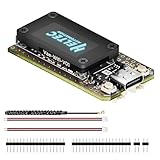
- V4 Upgraded ESP32-S3 & LoRa SX1262 Development Board: This Lora V4 Development Board features the latest ESP32-S3R2 chip with 2MB PSRAM and 16MB Flash, delivering superior processing for complex IoT applications and Meshtastic projects. This major upgrade from V3 models provides enhanced performance for Meshtastic devices, LoRa development boards, and sophisticated user interfaces, ensuring smooth operation of advanced firmware.
- High Power 27dBm Long-Range LoRa Radio Communication: The Meshtastic device experience exceptional wireless range with 27dBm transmission power and -137dBm sensitivity. Perfect for building reliable Meshtastic nodes, LoRa radio networks, smart home IoT devices, and industrial applications. This LoRa module provides greater communication distance across large properties and urban environments.
- Integrated OLED Display & Complete LoRa Meshtastic Kit: This heltec V4 includes a 0.96-inch OLED display for real-time data visualization without additional hardware. The protective casing features FPC antenna for stable Wi-Fi/Bluetooth and external antenna for enhanced LoRa performance. Provides a complete Meshtastic development board experience ready for immediate deployment.
- Advanced Power Management with Solar & GPS Connectivity: The ESP32 LoRa 32 V4 Designed for outdoor use with optimized battery management and 20μA sleep current. Includes solar panel interface for Meshtastic solar nodes and GNSS port for Meshtastic GPS applications. Type-C interface with voltage regulation ensures reliable operation for asset tracking and remote monitoring.
- Fully Compatible ESP32 LoRa Development Board: The ESP32 Lora V4 Development Board Maintains complete pin compatibility with Heltec LoRa 32 V3 for seamless project migration. Ready for Arduino and PlatformIO development, this versatile board supports LoRaWAN, Wi-Fi, and Bluetooth protocols for smart agriculture, industrial IoT, and wireless security systems.
Preset trade-offs: speed, airtime, and link budget
LoRa settings balance how quickly messages can be sent, how much airtime they consume, and how robust the radio link can be. Meshtastic’s radio settings documentation says each step up in spreading factor doubles airtime and adds about 2.5 dB of link budget; doubling bandwidth costs nearly 3 dB of link budget. These are documented configuration relationships, not a range guarantee for a particular build. Increasing airtime can also make a channel less efficient when it is busy.
Regional power figures in the same documentation are examples tied to specific sections, not universal settings or blanket legal authorizations. It lists +30 dBm ERP for its North America 915 MHz section and +27 dBm ERP for its Europe 868 MHz section. Applicable limits depend on location, hardware, antenna, and current rules; Heltec also notes duty-cycle limits for EU_433 and EU_868 settings.
Best Value

- Upgraded ESP32-S3 & SX1262 Core for High-Performance IoT Projects: Powered by the advanced ESP32-S3R2 and SX1262 LoRa chip, this ESP32 development board delivers robust WiFi, Bluetooth LE 5.0, and long-range LoRa communication. Ideal for Meshtastic nodes and Arduino-based wireless projects requiring reliable connectivity and real-time data transmission in smart agriculture, industrial monitoring, or remote sensing.
- Enhanced Power & Memory: Experience superior signal strength with up to 28dBm LoRa transmission power and ultra-low reception sensitivity (-137dBm). Equipped with 2MB PSRAM and 16MB Flash, it excels in running complex firmware, UI interfaces, and multitasking applications—perfect for ESP32 dev boards used in IoT devices, asset tracking, and home automation systems.
- Full Expansion Support: Expand functionality easily with dedicated SH1.25-8Pin GNSS interface and SH1.25-2P solar panel input (4.4-6V). Perfect for outdoor Meshtastic GPS trackers, solar-powered sensor networks, or off-grid environmental monitoring.
- Ultra-Low Power Design with Smart Power Management: Optimized for low-power applications, sleep mode draws less than 20μA. Battery management features support lithium battery charging, overcharge protection, and seamless switching between USB and battery/solar power. It is an ideal solution for portable or remote deployments like wireless alarms, water meter reading, or mobile LoRaWAN nodes.
- Plug-and-Play Design: Backward compatible with ESP32 LoRa V3/V2 pinouts and fully supports Arduino IDE, MicroPython, and ESP-IDF. Features a USB Type-C with ESD protection, dual IP EX antennas (LoRa & 2.4GHz), and expanded header pins. A top-tier choice among ESP32 boards for makers, engineers, and Meshtastic users.
How far will LoRa text messages travel?
There is no dependable universal distance for a low-cost node. Terrain, buildings, antenna placement and height, radio configuration, and local conditions all affect whether nodes can connect. A clear path and well-positioned antenna may help, but the available documentation does not establish a typical distance for this specific build.
Meshtastic’s introduction highlights a 331 km record. That is an exceptional project record, not a normal range expectation for an inexpensive ESP32-and-LoRa setup. Plan around a local test with the actual devices, antennas, settings, and terrain rather than treating a record or advertised maximum as a promise.
Quick Recap
Product prices and availability are accurate as of the date/time indicated and are subject to change. Any price and availability information displayed on Amazon at the time of purchase will apply.
Quick wins for a faster PC:
Repair Windows errors before they cause bigger problemsFix Now →Scan for outdated or missing drivers - takes under a minuteDriver Scan →Clear out junk files and repair common Windows errorsFree Scan →
