
iTechGuides is reader-supported. When you buy through links on our site, we may earn an affiliate commission. As an Amazon Associate I earn from qualifying purchases. Learn more
Managed services are ongoing arrangements in which a provider operates a defined service or part of an organization’s technology environment. The scope may be partial or broad, and the customer usually retains some responsibilities. The service description and responsibility matrix—not the label “managed”—show what the provider actually does.
What are managed services?
A managed service is an operating arrangement: a provider takes responsibility for specified technology operations over time. The arrangement can cover a single area or a wider environment. IBM describes managed cloud services as complete or partial management and control of a client’s cloud resources; AWS describes its Managed Services offering as ongoing management of AWS infrastructure.


That distinction matters: “managed services” does not mean that the provider takes over every IT task, application, or business decision. The service description defines the boundary.
What does a managed services provider do?
There is no universal task list. Depending on the service, a provider may handle work across provisioning, day-to-day operations, support, and improvement. Examples in AWS and IBM service descriptions include:
#1 Best Overall
- Provisioning and operating infrastructure
- Monitoring systems and responding to incidents
- Processing change requests and maintaining configurations
- Applying patches, upgrades, and other maintenance
- Supporting security controls and access
- Managing backups
- Migrating or optimizing cloud resources
These are possible functions, not a checklist that applies to every provider or contract. AWS, for example, describes its own Managed Services work across infrastructure provisioning, operation, and support, while IBM lists cloud migration, optimization, security, configuration, upgrades, and maintenance as possible managed-cloud responsibilities. Review the actual service description for included systems, tasks, and exclusions.
Support hours depend on the specific service
AWS states that its Managed Services business hours are 24 hours a day, 7 days a week, 365 days a year. That is a statement about AWS’s service, not a standard that applies to managed services generally. For other offers, check the stated support hours, channels, escalation process, and any service-level commitments in the proposal or contract.
Who is responsible: the provider or the customer?
Responsibility is divided by activity, environment, and agreed operating process. A responsibility matrix—often presented as a RACI—can identify who is responsible for doing work, who approves it, and where responsibility is shared. AWS’s AMS matrix, for example, assigns application development and deployment to the customer in the described environment, while AWS is responsible for AWS infrastructure deployment. Some incident responses are shared.
What’s actually slowing this PC down?
Pick the symptom - the matching free tool is one click away.
Those examples apply to the AWS Managed Services environment described in its matrix. Another provider or contract may allocate the same work differently. Check the governing matrix and agreement rather than assuming that a task transfers because a service is called managed.
Rank #3
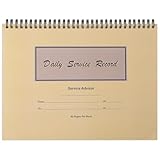
- Record Book: the package includes 1 daily service record book with 80 sheets, offering ample space to meet daily logging needs; It's a practical tool for tracking appointments, managing tasks, and enhancing customer service efficiency
- Ideal Size: measuring 8.5 x 11 inches, this activity log notepad balances portability and capacity; With 80 pages, it's ideal for daily use in the automotive industry, serving as a reliable service record management tool for consistent tracking
- Nice Quality: crafted from quality paper, the activity log book features reliable coil binding for easy page turning and tear-out; Its structured layout provides ample space for detailed entries, supporting effective schedule planning
- Friendly Design: designed for convenience, the daily log book's coil binding allows effortless sheet removal whenever needed; The intuitive layout ensures quick access to logging sections, making daily activity recording simple and efficient
- Versatile Usage: the service log book is a helper for the automotive industry or individuals to record scheduled maintenance, the shop can use it to register the maintenance needs of different customers, individuals can use it to keep track of flat rate hours
Pay particular attention to self-service resources
In AWS’s model, AMS can provide incident management, detective controls and guardrails, reporting, designated resources, security and access support, and technical support through service requests for self-service-provisioned resources. AWS also notes that customers may retain continuity, patching, infrastructure monitoring, and change-management responsibilities for resources provisioned or configured outside its AMS change-management system.
This is an example of why the boundary around resources created or changed directly by the customer needs to be explicit. Confirm which operating processes apply to those resources and who handles each associated task.
Rank #4
Why do organizations use managed services?
One potential reason is to shift some operational work to a provider. AWS’s Well-Architected guidance says this can reduce administrative burden and give a customer’s team more time for innovation. It recommends inventorying a workload and assessing which components are suitable for managed services; examples include managed database and analytics services.
Do these 3 things before closing this tab:
1Repair Windows errors before they cause bigger problems2Scan for outdated or missing drivers - takes under a minute3Clear out junk files and repair common Windows errorsThese are potential benefits, not guaranteed savings or outcomes. The effect depends on which work moves, what responsibilities remain, and how well the service fits the workload. A useful assessment starts with the systems and tasks the organization wants operated, then checks which components and responsibilities the provider will actually accept.
Best Value
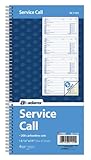
- Record all incoming calls needing service
- 2-part carbonless
- Spiral bound on left
- Part one is perforated to give to service person, part two remains in book for records
- White, canary paper sequence
How are managed services different from ITSM?
Managed services describe a provider arrangement: an outside provider operates an agreed service or environment. IT service management (ITSM) is the broader practice of creating, operating, and maintaining end-to-end IT service delivery. AWS describes ITSM as spanning technology management from procurement and configuration to responding to service interruptions.
A managed-service provider may use ITSM practices, but the terms are not interchangeable. AWS describes ITIL as flexible best-practice guidance for service delivery, not a rigid set of rules. ITSM concerns how service delivery is managed; managed services concerns who operates the defined work under an agreement.
What should you check in a managed services offer?
Compare the written proposal and contract against the environment and outcomes you need. These questions make gaps and assumptions easier to spot:
Quick wins for a faster PC:
Repair Windows errors before they cause bigger problemsFix Now →Scan for outdated or missing drivers - takes under a minuteDriver Scan →- Scope: Which systems, services, and lifecycle tasks are included? What is explicitly excluded?
- Responsibility allocation: Who performs and approves changes, responds to incidents, handles patching, and owns application work versus infrastructure work?
- Operations and support: What monitoring, support channels, escalation arrangements, and service hours are specified?
- Security and change controls: Which controls and processes does the provider operate, and which remain with your organization?
- Customer control: What can your team provision or change directly? How are those resources monitored, supported, and maintained?
Do not infer response times or service-level thresholds from the managed-services label. The applicable proposal and contract need to state those terms.
Quick Recap
Sources
- AWS Managed Services guide
- AWS Well-Architected Framework: Use managed services
- AWS AMS responsibility matrix
- AWS: What Is IT Service Management?
- IBM: What is managed cloud?
Product prices and availability are accurate as of the date/time indicated and are subject to change. Any price and availability information displayed on Amazon at the time of purchase will apply.

