
Free tools Windows power users keep installed
One-click scans. No signup required.
iTechGuides is reader-supported. When you buy through links on our site, we may earn an affiliate commission. As an Amazon Associate I earn from qualifying purchases. Learn more
AI benchmark results can show that a system performs well on a particular test. They do not, by themselves, prove that it can reliably handle broader, longer, or less predictable work. That gap between what a score establishes and what readers infer from it is a capability mirage—not proof that benchmarks are useless or that AI progress is illusory.
What a benchmark score actually tells you
A benchmark score answers a conditional question: how did a particular system perform on a defined task, under specified testing and scoring rules? It is evidence about performance in those conditions. It is not automatically evidence that the system can transfer the same ability to unfamiliar settings, sustain it across a long task, or work reliably amid real-world constraints.
Benchmarks are valuable because they make comparisons repeatable and can reveal changes over time. The inference becomes risky when a narrow result is treated as a general statement about what an AI system can do.
Why benchmark performance can diverge from deployed work
Many benchmarks favor tasks that can be described precisely, graded automatically, run with limited resources, and completed in a short time. Real work may instead require an AI system to interpret ambiguous goals, manage a sequence of steps, respond to setbacks, and produce an outcome that is useful beyond a test score. Microsoft Research discusses these differences and proposes open-world evaluations as a complement to conventional benchmarks: Open-World Evaluations for Measuring Frontier AI Capabilities.
#1 Best Overall
![Arduino® UNO™ Q 4GB [ABX00173]- Hybrid Board, Qualcomm Dragonwing QRB2210 microprocessor (MPU) & STM32U585 Microcontroller(MCU), AI Vision, Voice, IoT, Robotics, Linux Debian OS, Wi-Fi 5, USB-C](https://m.media-amazon.com/images/I/51cl4xygwGL._SL160_.jpg)
- Dual-Brain Hybrid Power: Combines the Qualcomm Dragonwing QRB2210 MPU (Quad-core Arm Cortex-A53 @ 2.0 GHz CPU, Adreno GPU, AI acceleration) and the real-time, low-power STM32U585 MCU for advanced applications like object recognition, voice commands, and motion detection.
- AI & Linux Capabilities: Unlocks AI-powered vision and sound solutions; runs Linux Debian OS for coding in Python and supports the Arduino ecosystem with libraries and Sketches; quick start with Arduino App Lab.
- Advanced Features: Equipped with 4 GB LPDDR4 RAM, 32 GB eMMC built-in storage, ideal for single-board computer (SBC) mode, running multiple simultaneous high-level processes, more complex AI or ML models, extensive logs. Dual-band Wi-Fi 5 (2.4/5 GHz), Bluetooth 5.1, and high-speed headers for vision, audio, and display peripherals.
- Seamless Expansion & Connectivity: Features the classic UNO form factor for shields compatibility, an 8x13 LED matrix, and a Qwiic connector for easy expansion with Modulino nodes; power and connect via the USB-C connector.
- Intended Use & Development: The perfect platform for prototyping robotics or IoT projects, empowering innovators with a unified development experience to mix Arduino Sketches, Python scripts, and containerized AI models in a single interface.
| Evaluation dimension | Controlled benchmark | Open-world task |
|---|---|---|
| Task and duration | Typically tightly specified and bounded | Can involve longer horizons and less predictable conditions |
| Scoring | Often automatic and repeatable | May require qualitative assessment of the completed outcome |
| Optimization and overlap | Task design may be easier to optimize against; possible training overlap needs consideration | Evaluation still needs transparent setup and checks for overlap |
| What success supports | Performance on the defined test and scoring rules | Evidence about performance across the stages and constraints of that task |
Neither format answers every question. A controlled test can isolate a skill, while an open-world task can expose coordination and execution problems that a short test misses. Open-world assessment also brings challenges: judging outcomes qualitatively can be less uniform than automatic scoring, and a single realistic task cannot establish broad competence.
A correct answer is not always evidence of a robust rule
Getting an answer right and using a transferable reasoning strategy are different things. An ICLR 2025 study, MIRAGE: Evaluating and Explaining Inductive Reasoning Process in Language Models, examined inductive reasoning on its tested tasks. It reports that models sometimes answered unseen cases correctly without relying on the correct inferred rule, and could rely on similar examples near the test case in feature space.
Rank #2
- Dual-Brain Hybrid Power: Combines the Qualcomm Dragonwing QRB2210 MPU (Quad-core Arm Cortex-A53 @ 2.0 GHz CPU, Adreno GPU, AI acceleration) and the real-time, low-power STM32U585 MCU for advanced applications like object recognition, voice commands, and motion detection.
- AI & Linux Capabilities: Unlocks AI-powered vision and sound solutions; runs Linux Debian OS for coding in Python and supports the Arduino ecosystem with libraries and Sketches; quick start with Arduino App Lab.
- Advanced Features: Equipped with 2 GB LPDDR4 RAM, 16 GB eMMC built-in storage, ideal to develop in PC-connected mode, running the OS, Python scripts, and basic network services (SSH) without a demanding GUI or heavy multitasking; great for lightweight AI and memory-optimized TinyML applications, needing local storage for basic OS and core libraries. Dual-band Wi-Fi 5 (2.4/5 GHz), Bluetooth 5.1, and high-speed headers for vision, audio, and display peripherals.
- Seamless Expansion & Connectivity: Features the classic UNO form factor for shields compatibility, an 8x13 LED matrix, and a Qwiic connector for easy expansion with Modulino nodes; power and connect via the USB-C connector.
- Intended Use & Development: The perfect platform for prototyping robotics or IoT projects, empowering innovators with a unified development experience to mix Arduino Sketches, Python scripts, and containerized AI models in a single interface.
This finding is specific to the study’s tasks; it does not establish that every model uses this strategy everywhere. It does show why a correct output alone may be insufficient evidence that a system has learned a rule robustly enough to apply it in a different context.
What a real-world task can add
In the Microsoft Research paper, an agent was asked to develop and publish a simple iOS application. It completed the task with one avoidable manual intervention. This is an illustrative example of evaluating work that extends beyond a short, automatically graded prompt—not a success rate, a general measure of agent reliability, or proof of competence across other kinds of work.
Rank #3
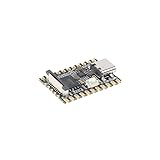
- Single core ARM Cortex-A7 32-bit core, integrated with NEON and FPU
- Built in Micro's self-developed 4th generation NPU, with high computational accuracy and support for mixed quantization of int4, int8, and int16. Among them, int8 has a computing power of 0.5 TOPS and int4 has a computing power of up to 1.0 TOPS
- Built in self-developed 3rd generation ISP3.2, supports 4 million pixels, and supports various image enhancement and correction algorithms such as HDR, WDR, and multi-level denoisin
- It has powerful encoding performance, supports intelligent encoding, adapts to save bit rates according to the scene, and saves more than 50% of the bit rate compared to conventional CBR mode, making the captured images high-definition, smaller in size, and doubling the storage space
- The design with built-in RISC-V MCU supports low-power fast startup, 250ms fast capture, and simultaneous loading of AI model library, enabling facial recognition to be completed within 1 second
For a longer task, useful questions include whether the system completed every required stage, whether a person had to intervene, and whether the final result met the task’s practical requirements. Those details help interpret a demonstration without turning it into a sweeping capability claim.
Why claims of “emergent” or general capability need care
Whether an observed ability should be called emergent, and whether benchmark gains establish a general capability, remain subjects of debate. The International AI Safety Report 2025 describes this disagreement. A benchmark improvement can be real and useful without settling what caused it or showing that the skill transfers broadly.
Rank #4

- 【POWERFUL ESP32‑S3 CONTROLLER】Built‑in Xtensa 32‑bit LX7 dual‑core processor, 512KB SRAM, 8MB PSRAM, 16MB Flash for stable AI voice computing and multitask processing.
- 【Preloaded Dual AI Platforms】Comespre-installed with complete Deepseek and OpenAI voice dialogue projects.Experience intelligent voice interaction instantly. (Note: OpenAI functionality requires your own API key.)
- 【STABLE WIRELESS & CLEAR AUDIO】Integrated 2.4GHz Wi‑Fi + Bluetooth 5 (LE); dedicated audio decoding module for natural, responsive voice interaction.
- 【USER‑FRIENDLY VISUAL & PLUG‑AND‑PLAY】2” TFT‑SPI color screen shows real‑time chat; modular design, no extra wiring, ready to use after setup.
- 【FULL LEARNING SUPPORT】45 programmable GPIOs, rich interfaces, online web tutorials, free technical support for beginners & developers.
To assess a claim, look for a clear definition of the capability and evidence beyond one score: performance on different tasks, unfamiliar cases, or longer sequences of work. Without those, “general” or “emergent” may describe an interpretation rather than a conclusion demonstrated by the test.
PC Slower Than It Used to Be?
A free scan shows the junk files, broken settings and background clutter dragging Windows down - then fixes them in one click.Free scan · Windows 10 & 11Outdated Drivers Are Slowing You Down
One free scan finds every outdated or missing driver and matches the right update for your exact hardware.Free scan · exact hardware matchHow to read an AI capability claim
- Identify the exact test. Find out what task the system performed and what counted as a correct result.
- Check the conditions. Note the system version, access mode, tools, prompt, and evaluation date. Results can depend on these details, so a score should not be detached from its setup.
- Look at the task horizon. A short question and a multi-stage task test different things. Ask whether the evaluation includes ambiguity, iteration, and practical constraints relevant to the claimed use.
- Separate outcome from method. Consider whether the test can distinguish a robust approach from a correct answer reached through a strategy that may not transfer.
- Inspect evaluation transparency. Check how tasks were constructed and scored, and whether possible overlap with training data was considered. An interdisciplinary review of benchmark evaluation discusses these validity and transparency concerns: Can We Trust AI Benchmarks? An Interdisciplinary Review of Current Issues in AI Evaluation.
- Match the conclusion to the evidence. A defined benchmark supports a claim about performance on that benchmark. Broader claims need evidence that reaches beyond its particular tasks and conditions.
Use benchmarks as evidence, not as a verdict
The practical response to a capability mirage is not to discard benchmarks. Use them for what they measure, then pair them with evaluations that reflect the duration, uncertainty, and constraints of the work at issue. Treat a benchmark score as one piece of evidence, and keep the claim no broader than the evaluation that supports it.
Quick Recap
Product prices and availability are accurate as of the date/time indicated and are subject to change. Any price and availability information displayed on Amazon at the time of purchase will apply.

