
iTechGuides is reader-supported. When you buy through links on our site, we may earn an affiliate commission. As an Amazon Associate I earn from qualifying purchases. Learn more
A CLI can report that you are not logged in on a headless Linux server because its browser-based sign-in cannot finish there—or because the command that fails is running with a different account, home directory, profile, or environment than the one where you signed in. First identify the CLI and exact failing command, then choose a supported remote sign-in flow for a human session or a workload identity for automation.
Why does my CLI say I’m not logged in over SSH?
A website login and a CLI login are separate credentials. Each CLI keeps or discovers credentials according to its provider, profile, Unix user, and environment. A sign-in that worked on your workstation does not necessarily authenticate a CLI on the server.
Headless does not always mean login is impossible. Some CLIs offer device authorization or a remote-browser handoff; others accept an environment token or a workload identity. The correct method depends on the CLI and its version. A browser flow that expects to open on the server may fail simply because there is no local browser.
Check the context before changing credentials
- Record the CLI name and version, the exact command, and the complete error text.
- Identify what runs the command: your interactive SSH user, a systemd service, a container, or a CI job.
- In the failing context, check the Unix account,
HOME, selected profile, and relevant credential environment variables. Compare them with the shell where sign-in appeared to succeed. - Determine whether this is a human session or an unattended workload. Choose the provider’s matching authentication method rather than repeatedly retrying a browser flow that cannot complete.
- After authenticating, verify the selected account or host, token validity, and required permissions. A permission or scope failure can resemble a login failure, but needs a different fix.
Why a CLI works in my shell but fails under systemd
A system service may run as a different Unix user and therefore have a different home directory and credential files. It may also start with a different HOME, profile selection, or set of environment variables. Authenticate or configure credentials for the identity and execution context the service actually uses; do not assume your SSH shell’s login is inherited by the service.
#1 Best Overall

- HPE ProLiant DL380 Gen10 2U Rack Server with Rail kit for Enterprise
- Dual (2) Xeon Gold 6130 16-Core 2.10 GHz, 22MB, Up To 3.70 GHz Turbo
- Memory: 256GB (8 x 32GB) DDR4 PC4-25600 3200MHz Unbuffered Memory
- Storage: 7.68TB (4 x 1.92TB) Enterprise 2.5” SATA III 6Gb/s SSDs for Ultra Fast Storage
- Hard drives and memory upgrades included separately, not installed, installation required.
How do I log in to GitHub CLI on a headless server?
The default gh auth login flow is web-based. For headless use, GitHub documents an environment-token method: set GH_TOKEN for the process that runs gh. GitHub specifically recommends this route for fine-grained personal access tokens, whose resource scoping can behave confusingly with --with-token. See the GitHub CLI authentication manual.
For a classic personal access token, the manual also supports piping the token to gh auth login --with-token. It lists repo, read:org, and gist as the minimum scopes for that method. Use only the access the task requires, and protect the token wherever it is stored or supplied.
Rank #2

- [CPU] AMD Ryzen 7 5700G Processor (8 Cores, 16 Threads, 3.8 GHz Base Clock Speed up to 4.6 GHz Max Boost Clock Speed) for Gaming and Content Creation with 7nm Leading Edge Technology | [STORAGE] 1TB PCIe NVMe M.2 SSD - Experience Hyper-Fast Bootup and Data Transfer thats up to 30x Faster Performance than a Traditional Hard Drive.
- Graphics: Integrated AMD Radeon Graphics | [RAM] 32GB DDR4 RAM 3200 Gaming Memory for Seamless Multitasking from Multiple Web Pages to Playing Games Online Simultaneously | [OS] Windows 11 Pro x64
- 2x 3.5" Drive Bays | 4x Expansion Slots | mATX Motherboard | ATX PSU
- [BUY WITH CONFIDENCE] Empowered PCs are Assembled in the USA, Rigorously Stress-Tested Before Shipping, and Supported with Lifetime Technical and Diagnostic Support and 3-Year Limited Hardware Warranty.
After login, run gh auth status to check the active account and credential location. GitHub CLI uses a secure system credential store when available, but may fall back to a plain-text file if no store is available or there is a problem with it. Restrict access to any credential file and avoid exposing tokens in command history, logs, or process output.
What’s actually slowing this PC down?
Pick the symptom - the matching free tool is one click away.
How do I authenticate without opening a browser on Linux?
Use the CLI’s documented remote or device authorization option. The flow may still require a browser on another trusted device; it avoids requiring one on the server. Follow the instructions for the specific CLI and version, and return any requested code or URL to the original terminal only after authorizing on a device you trust.
Rank #3

- HPE ProLiant DL360 Gen10 1U Rack Server with Rail kit for small business or Enterprise
- Dual (2) Xeon Gold 6130 16-Core 2.10 GHz, 22MB, Up To 3.70 GHz Turbo
- Memory: 256GB (8 x 32GB) DDR4 PC4-25600 3200MHz Unbuffered Memory
- Storage: 7.68TB (4 x 1.92TB) Enterprise 2.5” SATA III 6Gb/s SSDs for Ultra Fast Storage
- Hard drives and memory upgrades included separately, not installed, installation required.
AWS IAM Identity Center: use device authorization for a headless server
- Configure the AWS CLI SSO session and profile as described in AWS’s IAM Identity Center configuration guide.
- Run
aws sso login --profile PROFILE --use-device-code, replacingPROFILEwith the configured profile name. - Complete the device authorization in a browser on another device, following the instructions printed by the CLI.
- Run AWS commands with the intended profile. IAM Identity Center credentials are cached under
~/.aws/sso/cache; expired credentials require another login.
AWS CLI 2.22.0 and later uses PKCE authorization by default for IAM Identity Center. AWS says that PKCE’s URL must be opened on the same device and requires a browser, so add --use-device-code when you need to complete authorization on another device.
AWS console credentials: a different remote flow
AWS also documents aws login --remote for its console-credentials local-development flow. It prints a URL to open on another device and asks you to paste the resulting authorization code into the CLI. This is distinct from aws sso login, which is the IAM Identity Center flow; choose based on the credentials and sign-in method your task requires. See the AWS CLI login reference.
Rank #4
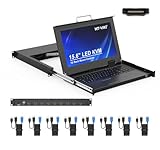
- MT-VIKI 1568HL is all-in-one console to manage up to 8 computers. Features a 15.6" LCD monitor with 1920x1080@60Hz resolution. Combines monitor, keyboard, and touchpad into a single 1U rackmount drawer to save up to 85% of valuable cabinet space.
- Adjustable Depth & 2 set Rack Rails: Includes two sets of Rack Rails. Short Rack Rails: Fit 18.9"–23.6" (480-600mm) deep network racks (Note: check cable clearance for depths under 600mm). Long Rack Rails: Fit 23.6"–31.5" (600-800mm) deep standard racks. Measure your rack depth before purchase to ensure a perfect fit.
- External Monitor Support & Flexible Operation--Features an HDMI console output for connecting an external monitor, allowing convenient server access without opening the rack. Three Ways Switching: Support OSD menu, Hot-key or push button switching.This 8 port lcd kvm console provides 2-level password security (administrator and user), up to 8 authorized users and an administrator view and control the computers
- Lightweight Aluminum & Steel Build: Upgraded with an aluminum interior for less weight and a rugged steel drawer shell for industrial durability. Features a built-in handle and lock for secure operation. Physical Dimensions: 18.9" x 23.6" x 1.77" (480mm x 600mm x 45mm).
- Built for Professional Environments – Ideal for server rooms, data centers, industrial control systems, and security monitoring centers where multiple computers need centralized management or when technicians need direct access to connected systems without an external monitor.
Google Cloud CLI: choose the remote flow that fits your second device
Google documents two alternate-device approaches for a human user account. In both, start the flow on the server and complete the handoff using a trusted second device.
- Second device has a browser and gcloud CLI 372.0.0 or later: On the server, run
gcloud auth login --no-browser. Complete the remote-bootstrap command it emits on the second device, then paste the returned localhost URL into the original server terminal. - Second device has a browser but not gcloud: On the server, run
gcloud auth login --no-launch-browser. Open the URL it prints on the second device and return the verification code to the server terminal.
These are human-user login flows, not recommended credentials for unattended services. Google’s instructions are in its gcloud CLI authentication guide.
Best Value
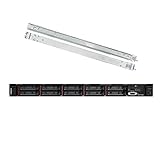
- Lenovo ThinkSystem SR630 is your reliable, easy to manage, and scalable 1U rack server, designed to excel at running a wide range of applications for small businesses up to large enterprises; rail kit is included for easy server installation
- Get professional-grade performance with Dual (2) Intel Xeon Silver 4110 8-Core 2.10GHz 11MB processors, with up to 3.2GHz turbo
- Speed, quality and reliability with 128GB DDR4 memory; Keep your data safe with software RAID
- Increase application performance, manage information more efficiently and store plenty of data with 8TB (4 x 2TB) 6Gb/s SATA III Solid State Drives
- Connectivity: VGA; 3 x USB 3.0; 1 x USB 2.0; Network: 4 x 1GbE ports standard; 1 x 1GbE dedicated management port; Hard drives and memory upgrades included separately NOT installed, installation required.
Should I use a personal login or a service account on a server?
For a person actively operating a CLI, use the provider’s supported human sign-in flow and the minimum permissions needed. For a long-running service, scheduled job, or other unattended workload, use an identity mechanism intended for workloads rather than leaving a personal login on the server.
Google says gcloud auth login stores credentials in the user’s home directory, where anyone with filesystem access can use them. Its guidance is: “To reduce the consequences of a system being compromised, strictly separate human and workload use, and don’t use gcloud auth login for automated workloads on remote systems with persistent storage.” For workloads, Google documents service accounts and workload identity federation; where possible, its guidance also points to using a secret manager with environment variables. See Google Cloud’s authentication guidance.
AWS credential resolution can also differ from what you expect: command-line options and environment variables take precedence over IAM Identity Center and credential files. AWS supports other sources, including roles, external processes, containers, and EC2 instance profiles. Check the active profile and process environment before replacing credentials. See AWS’s credential and authentication guide.
Windows Errors? Fix Them Before They Spread
Repair common Windows errors and clear accumulated junk for a smoother, more stable PC - no reinstall needed.Free scan · no reinstallOutdated Drivers Are Slowing You Down
One free scan finds every outdated or missing driver and matches the right update for your exact hardware.Free scan · exact hardware matchQuick Recap
What to do when the login flow succeeds but the command still fails
- Confirm the failing process uses the same Unix user and
HOMEthat hold the credentials. - Confirm the intended profile, account, or host is selected; explicit command options and environment variables may override stored configuration.
- Check whether credentials expired and whether the provider requires a fresh login or renewal.
- Check that the identity has the necessary scope and permissions. Authentication proves who you are; it does not guarantee authorization to perform every action.
- For a service, container, or CI job, configure credentials in that runtime’s supported workload mechanism instead of relying on an interactive shell’s state.
Product prices and availability are accurate as of the date/time indicated and are subject to change. Any price and availability information displayed on Amazon at the time of purchase will apply.

