
Quick wins for a faster PC:
Scan for outdated or missing drivers - takes under a minuteDriver Scan →Repair Windows errors before they cause bigger problemsFix Now →Fix the driver behind crashes, sound loss and screen glitchesFind Drivers →iTechGuides is reader-supported. When you buy through links on our site, we may earn an affiliate commission. As an Amazon Associate I earn from qualifying purchases. Learn more
You do not need a telescope to begin stargazing. Start with your eyes, a safe place with a clear view, and a current chart or sky app; add binoculars only if they make observing more enjoyable. These ten tips will help you plan a first session and know what to expect.
1. Start with the unaided eye
Give yourself time to notice the Moon, bright stars and patterns before reaching for equipment. Optical aids reveal more detail, but they are optional; NASA says they can enhance the experience without being necessary to get started. A local astronomy club’s public observing night can also let you look through different instruments before deciding whether to buy one. NASA’s skywatching FAQ
2. Find a dark, safe place
Fewer nearby lights generally make faint stars easier to see. Choose the darkest place you can reach safely, while also considering an open horizon, a reliable route back, and whether the site is accessible after dark. NASA describes the Bortle scale as one way amateur observers characterize sky darkness; it can help you compare observing locations. NASA’s guide to choosing a stargazing location
3. Check the sky and weather for your location
Before heading out, check cloud cover, wind, temperature and smoke, as well as the Moon’s phase and local rise and set times. A bright Moon can make faint stars and deep-sky objects harder to see, while the Moon itself remains a rewarding target. Conditions and visibility vary by location and date, so use a forecast and current local sky chart rather than assuming a target will be visible everywhere. Canadian Space Agency beginner tips
#1 Best Overall

- Superior Optics: 400mm(f/5.7) focal length and 70mm aperture, fully coated optics glass lens with high transmission coatings creates stunning images and protect your eyes. Perfect full positive telescope for astronomers to explore stars and moon.
- Magnification: Come with two replaceable eyepieces and one 3x Barlow lens.3x Barlow lens trebles the magnifying power of each eyepiece. 5x24 finder scope with mounting bracket and cross-hair lines inside make locating objects easily.
- Wireless Remote: This refractor telescope includes one smart phone adapter and one Wireless camera remote to explore the nature of the world easily through the screen and take amazing celestial images.
- Adjustable Tripod: This telescope allows for many different viewing positions with a adjustable aluminum alloy tripod and a carry bag, the telescope and tripod can fit inside the bag for easy traveling and storage.
- Satisfaction: Buy with confidence from a leading manufacturer.
4. Let your eyes adapt to darkness
After moving away from bright lights, give your eyes time to adjust. NASA says full sensitivity to low light can take half an hour or more. Avoid bright phone screens and white flashlights when possible; checking a bright screen can make faint stars harder to see again.
5. Use a dim red light when you need one
A red LED headlamp can help you move safely or read a chart while limiting disruption to night vision. Keep it as dim as practical, and still watch your footing: red light does not make roads, uneven ground, steep edges or other hazards safe. NASA identifies red lamps and LEDs as useful for stargazing. NASA’s location guidance
Rank #2

- 【Excellent Optics】Astronomical telescope features 80mm aperture 600mm(f/6.7) focal length-The big aperture can capture more light; high transmission multi-fully coated optical lens can improve light transmittance, reduce the reflection of light. It will bring you more bright and clear images.
- 【Portable & Stable】Our refractor telescope has a backbag, an adjustable aluminum tripod and an upgraded phone adapter. All accessories can be packed into the bag, which is convenient for you to carry and storage for traveling. The tripod is stable and the height can adjust from 17.7" to 52", which is suitable for adults and kids. With the phone adapter, you can take amazing photos through your phone.
- 【Easy to Operate】 This telescope is easy to assemble even for astronomy beginners and kids. You can set up easily with the detail installation manual and video. No tools are required. It’s a great astronomy gift telescope for adults, astronomy enthusiasts, beginners and kids 8-12.
- 【Optimum Magnification】Our telescope for kids and adults is equipped with two replaceable excellent-quality eyepiecesa (20mm and 9mm) for 30X and 66X magnification. A moon filter transmits only 13 percent of the incoming light and improving contrast. Also with 5x24 finderscope, you can locate objects easily. A great option for astronomy lovers to explore the moon, Saturn and Jupiter.
- 【Satisfaction Service】We provide 3 years satisfaction service. If you have any questions about the product and service, please feel free to contact us to get 24-hour technical support from our expert team. Whether observing moon or viewing planets, our telescope can meet your all needs. It’s a great telescope for adults & 8-12 kids & astronomy beginners.
6. Identify what is above you
A current sky chart or astronomy app can help you match bright points to constellations, stars and planets for your location and time. If you prefer not to use a screen, a planisphere is a compact, screen-free way to see which constellations are expected at a given date and hour. An app is convenient for location- and time-specific updates, but its screen can interfere with dark adaptation; a planisphere avoids that trade-off but requires you to set it for the right date and time. The Planetary Society’s beginner guide and the Canadian Space Agency’s tips explain these starter tools.
Recommended Free Tools
7. Choose a few easy targets
For a first outing, pick one or two things to find rather than trying to learn the whole sky. The Moon is an obvious starting point; a bright planet, when one is visible, or a recognizable star pattern can make a good next target. NASA notes that on most nights, weather permitting, at least one bright planet can be spotted, but which planet is visible and where it appears change over time. Check an up-to-date chart for your location and date. NASA Skywatching
Rank #3

- The children's telescope adopts a 70mm objective lens, 400mm focal length, and high transmittance fully coated glass optical element, which can produce clear and sharp images. It is very suitable for viewing celestial and terrestrial objects.
- The astronomical telescope is equipped with two interchangeable eyepieces (12.5mm and 20mm) for powerful eyepiece and magnification. Children can enjoy magnifications ranging from 20x to 32x. The 5x24 viewfinder with crosshairs makes it easy to locate targets.
- The telescope is equipped with a custom phone adapter that allows for free adjustment of the phone's camera focus, capturing stunning images and sharing them with friends.
- The beginner telescope adopts an adjustable aluminum alloy tripod, which can be freely adjusted from 12 inches to 38 inches to achieve different observation positions. Installation is very simple and does not require additional tools.
- The perfect gift for astronomy beginners and children. Put it at home to see the moon, or take this travel telescope on the road to see the scenery. Enjoy various family happy moments around this cool technology gift. And provide timely service to customers, answering any questions about telescopes.
8. Consider binoculars before a telescope
If you want more detail, ordinary binoculars may be a useful next step. NASA gives 7×35 to 10×50 as a practical beginner range. They can show lunar features and broad star clusters such as the Pleiades; under dark skies, they may also reveal larger, brighter galaxies and nebulae. They will not normally show Saturn’s rings as a telescope does. NASA’s binocular guide
When choosing binoculars, consider magnification and aperture along with weight, portability and how steadily you can hold them. NASA notes that roof-prism designs tend to be lighter and more compact, while porro-prism designs tend to be heavier and often provide wider views and greater magnification. No design is best for everyone: comfort and ease of use matter for a session under the sky.
Rank #4
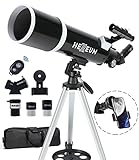
- Optimum Magnification: Our telescope for kids and adults is quipped with two replaceable excellent-quality eyepieces (25mm and 10mm) for 24X and 60X magnification. 3x Barlow lens trebles the magnifying power of each eyepiece. magnificate moon up to 72 or 180 times. Also with 5x24 finder scope makes locating objects easy.
- Excellent Quality Optics: This telescope is 600mm(f/6.7) focal length and 80mm aperture, 80mm aperture to capture more light picture and multi-fully high transmission coated all-optical lens enhance image brightness and clarity.
- Portable And Convenient: Comes with a phone adapter and an adjustable aluminum tripod. Wireless remote control and carrying bag make it easier for you portable and capture amazing images.
- Easy To Set Up: In order to save your time. Even for novices, no tools are required to set up the telescope. quick and easy to focus. Truly realize a no-tool-set telescope
- Satisfaction Quality: Lifetime maintenance. If you have any questions about the product and service, please feel free to contact us, we will do our best to help you in 24 hours. c
9. Plan for comfort and safety
Dress for the temperature you will actually face outdoors, which can feel colder when you are standing still. If you do not know an observing site, visit it in daylight first. At night, stay clear of roads and steep edges, and pay attention to wildlife, trip hazards and your route back. NASA recommends checking local conditions and hazards when choosing a place to observe. NASA’s stargazing-location guidance
What’s actually slowing this PC down?
Pick the symptom - the matching free tool is one click away.
10. Keep the first session simple and patient
Clouds, light pollution, Moon brightness and your growing familiarity with the sky all affect what you can see on a particular night. Return to a recognizable pattern, compare it with your chart, and build from there. If you want help learning the sky or using equipment, a local astronomy club’s public observing event can offer a practical introduction.
Quick Recap
Best Value
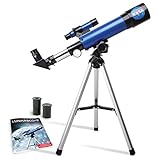
- INSPIRE CURIOSITY – The NASA Lunar Telescope allows your child to see the moon in incredible detail; the perfect gift for girls and boys interested in space, the moon, and astronomy!
- HIGH-QUALITY OPTICAL GLASS AND FINDER SCOPE – This easy-to-use telescope comes with a finder scope, low power, and high-power eyepieces; when used correctly, this combination will allow your child to easily locate the moon then zoom in for a close-up view.
- TABLETOP TRIPOD & SMOOTH MOUNT SYSTEM – Use the included tripod to steady your Lunar Telescope for optimal viewing, with a smooth mounting system that allows easy scanning of the entire lunar surface.
- PERFECT FOR BEGINNERS – This telescope is easy to assemble and use, making it ideal for young scientists and parents to enjoy together.
- AMAZON EXCLUSIVE - Blue Marble has developed this product exclusively for Amazon.
Product prices and availability are accurate as of the date/time indicated and are subject to change. Any price and availability information displayed on Amazon at the time of purchase will apply.

