
The Tool Desk
Outbyte Driver Updater FREEScan for outdated or missing drivers - takes under a minuteDriver Scan →Outbyte PC Repair FREERepair Windows errors before they cause bigger problemsFix Now →iTechGuides is reader-supported. When you buy through links on our site, we may earn an affiliate commission. As an Amazon Associate I earn from qualifying purchases. Learn more
Reusable general-purpose components can give embedded engineers a proven starting point for power, sensing, signal conditioning, control and timing circuits instead of forcing a redesign of every function for each product generation. That is the central argument in a sponsored Electronic Design interview published September 25, 2026, with Mayrim Verdejo, a product line manager at Texas Instruments. It is a design rationale, not a measured claim that a particular component or supplier will shorten a project schedule.
Why reuse matters in embedded-system design
Embedded products gain features and complexity, while teams face pressure to bring new generations to market sooner. Reusing a well-understood circuit can preserve engineering work and provide a known foundation for the next design. In the interview, Verdejo describes designers carrying circuits and parts forward between generations, citing voltage sensing as one example.
That approach does not mean copying an entire design without review. A reused circuit still needs to be checked against the new product’s electrical requirements, operating conditions, constraints and lifecycle needs. The practical benefit is a familiar starting point—not proof that the new design needs no engineering work.
What’s actually slowing this PC down?
Pick the symptom - the matching free tool is one click away.

Which general-purpose functions form the foundation?
Verdejo identifies five functions as essential building blocks:
- Power: supplies and manages the energy required by the system.
- Sensing: detects conditions such as voltage for monitoring or control.
- Signal conditioning: prepares sensor or other signals for reliable use by the rest of the circuit.
- Control: supports the system’s responses and operation.
- Timing: provides timing functions needed for coordinated operation.
Her point is that designers should be able to build around dependable components for these functions “without having to start from scratch every time.” The interview does not identify specific parts or circuits, so these categories are a framework for design planning rather than a component recommendation.
#1 Best Overall

- ✅【High-Performance ESP32-S3 Processor】Powered by the ESP32-S3 dual-core Xtensa LX7 processor with up to 240MHz clock speed, this development board features 16MB Flash and 8MB PSRAM. It provides powerful performance for IoT devices, embedded systems, AI applications and advanced DIY projects.
- ✅【Pre-Soldered GPIO Headers for Easy Use】The board comes with pre-soldered GPIO headers, eliminating the need for manual soldering. It can be directly connected to breadboards, sensors and expansion modules, making project setup faster and more convenient for makers and developers.
- ✅【WiFi & Bluetooth 5.0 Wireless Connectivity】Built-in 2.4GHz WiFi and Bluetooth 5.0 enable stable wireless communication for smart home, automation and IoT applications. The reserved IPEX antenna connector allows optional external antenna installation for different project requirements.
- ✅【Large Memory & Flexible Development】With 16MB Flash and 8MB PSRAM, this ESP32-S3 board provides more storage and memory resources for complex firmware, graphical interfaces, OTA updates and data-intensive applications.
- ✅【Arduino IDE, ESP-IDF & MicroPython Support】Compatible with Arduino IDE, ESP-IDF and MicroPython development environments. With dual USB-C interfaces and rich expansion options, it is suitable for robotics, sensors, automation and embedded system development.
How to evaluate a component for reuse or second sourcing
Start with the circuit’s requirements, then assess the trade-offs that determine whether a part is suitable for the current design and any planned reuse. Verdejo describes designers as balancing performance, cost, design time and product availability, including confidence in supply over the long term.
- Match the required function and electrical specifications. Check the candidate against the circuit’s actual requirements before considering convenience or reuse.
- Compare performance and total component cost. Consider the effect on the design as a whole, not just a headline part price; the interview supplies no prices or part-level comparison.
- Assess engineering effort. A familiar component or circuit may reduce the work needed to establish a design foundation, but the interview gives no measured time savings.
- Check reuse and package compatibility. If a replacement is described as pin-to-pin, verify the specific part’s electrical specifications and the circuit’s constraints. Matching pins alone does not establish functional interchangeability.
- Review lifecycle and supply evidence. Confirm current availability and the evidence supporting long-term supply for the exact part and purchasing context.
- Use design support as an input, not a substitute for verification. Application notes and design tools can inform evaluation, but the chosen part still has to meet the design requirements.
What support can contribute
Verdejo says TI offers application support, application notes, design tools and pin-to-pin alternatives to help with selection and second sourcing. Those are claims from a TI representative in a sponsored interview, not an independent comparison establishing that TI’s support or portfolio is better than a competitor’s. Engineers evaluating a real design should consult current documentation for the candidate parts and verify compatibility themselves.
Quick wins for a faster PC:
Clear out junk files and repair common Windows errorsFree Scan →Scan for outdated or missing drivers - takes under a minuteDriver Scan →Repair Windows errors before they cause bigger problemsFix Now →What the interview establishes—and what it does not
The interview makes a case for dependable general-purpose building blocks as a way to preserve proven circuits amid increasing system demands. It cites autonomous vehicles, AI, next-generation medical equipment and data centers as examples of those demands. It does not provide market measurements, a named component, current stock information, a competitive part test or quantified time-to-market results.
Verdejo also characterizes TI’s portfolio as having “thousands of products, maybe more than 100 categories.” That is her qualified description of her company’s portfolio, not an audited count or evidence of comparative superiority. The interview’s strongest practical takeaway is therefore a selection principle: use reusable components as a design foundation, then validate each choice against the circuit, required performance, development effort and supply needs.
Quick Recap
Rank #4
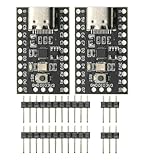
- CH32V003 Development Minimum System Board for Nano RISC-V CH32V003F4U6 Chip TYPE-C USB 22Pin
- on-board 24MHz Crystal oscillator
- Power by TYPE-C USB
Rank #3

- Powerful Processor for Embedded Systems: The Luckfox Lyra Zero W is powered by the Rockchip RK3506B SoC, featuring a 1.2GHz ARM Cortex-A7 processor, delivering smooth performance for running Linux-based applications and making it suitable for embedded and IoT projects.
- High-Quality Display Interface: The board supports MIPI DSI 2-lane, allowing easy connection to high-resolution displays, ideal for applications like digital signage, HMI systems, and embedded interfaces.
- Extensive Connectivity Options: With USB 2.0 OTG, USB Host 2.0, and GPIO pins, the Lyra Zero W allows connectivity to various peripherals, making it versatile for sensors, devices, and other embedded systems.
- Onboard Wireless Capabilities: Equipped with Wi-Fi 6 and Bluetooth 5.2, the board supports seamless wireless communication, perfect for IoT, networking, and remote control applications.
- Cost-Effective Solution for Development: Offering a budget-friendly price, the Lyra Zero W provides a feature-rich platform for developers to prototype and create advanced embedded systems without exceeding their budget.
Product prices and availability are accurate as of the date/time indicated and are subject to change. Any price and availability information displayed on Amazon at the time of purchase will apply.

