
The Tool Desk
Outbyte PC Repair FREERepair Windows errors before they cause bigger problemsFix Now →Outbyte Driver Updater FREEScan for outdated or missing drivers - takes under a minuteDriver Scan →iTechGuides is reader-supported. When you buy through links on our site, we may earn an affiliate commission. As an Amazon Associate I earn from qualifying purchases. Learn more
RAM labels combine several different specifications: memory generation, data rate, capacity, timings, and operating profile. For example, DDR5-4800 16GB CL40 identifies a generation, transfer rate, capacity, and timing—not one single measure of speed. Read each part separately, then check that the module’s generation and physical format match your computer.
What the main numbers on a RAM label mean
| Label example | What it tells you |
|---|---|
| DDR4 or DDR5 | Memory generation. The generation must be supported by the motherboard; DDR generations are not interchangeable. |
| DDR5-4800 or 4800 MT/s | Data rate: 4,800 million transfers per second. It is not the same unit as clock frequency in MHz. |
| PC5-38400 | A peak bandwidth class. Kingston’s conversion multiplies the data rate by eight: 4,800 MT/s × 8 = 38,400 MB/s, or 38.4 GB/s. This is a theoretical peak, not a promise of application performance. |
| 16GB or 32GB | Capacity. A kit’s advertised capacity may be the total across multiple sticks, so check both the number of modules and capacity per module. |
| CL40 or 40-40-40 | Timing values measured in clock cycles. CL is CAS latency; values after it commonly include tRCD and tRP. A fourth value is often tRAS. |
| 1.1V / 1.25V; JEDEC / XMP | Voltage and memory operating profiles. A module may have a standard JEDEC setting and a faster XMP profile with different speed, timings, or voltage. |
Why 4800 MT/s may appear as 2400 MHz
DDR memory transfers data twice per clock cycle. As a result, a module rated at 4800 MT/s can show a memory clock near 2400 MHz in monitoring software. MT/s counts transfers per second; MHz counts clock cycles per second. The two figures describe related but different things, so a software reading of 2400 MHz does not by itself mean the memory is running at half its rated data rate.
Kingston’s live glossary, accessed in 2026, gives a DDR5 speed range of 3200 to 7200 MT/s and a nominal voltage of 1.1V. That range describes the glossary’s stated scope, not every DDR5 product available today. Kingston’s memory glossary and terminology explains data-rate and bandwidth conventions.
Free tools Windows power users keep installed
One-click scans. No signup required.
How to read RAM timings
What CL means
CL, or CAS latency, is the number of clock cycles between a memory controller’s request for a column of data and the memory returning it. A label such as CL40 reports cycles, not a duration in nanoseconds.
#1 Best Overall

- Boosts System Performance: 32GB DDR5 RAM laptop memory kit (2x16GB) that operates at 5600MHz, 5200MHz, or 4800MHz to improve multitasking and system responsiveness for smoother performance
- Accelerated gaming performance: Every millisecond gained in fast-paced gameplay counts—power through heavy workloads and benefit from versatile downclocking and higher frame rates
- Optimized DDR5 compatibility: Best for 12th Gen Intel Core and AMD Ryzen 7000 Series processors — Intel XMP 3.0 and AMD EXPO also supported on the same RAM module
- Trusted Micron Quality: Backed by 42 years of memory expertise, this DDR5 RAM is rigorously tested at both component and module levels, ensuring top performance and reliability
- ECC Type = Non-ECC, Form Factor = SODIMM, Pin Count = 262-Pin, PC Speed = PC5-44800, Voltage = 1.1V, Rank And Configuration = 1Rx8
What a string such as 40-40-40 means
The first number is CL. The next commonly shown primary timings are tRCD and tRP; if a fourth number appears, it is often tRAS. These describe different delays in memory operations. Lower cycle counts can mean fewer cycles for a particular operation, but they do not establish that one module is faster overall. Compare timings alongside data rate and the rest of the timing string.
JEDEC settings, XMP, and voltage
JEDEC settings are standard operating configurations programmed into memory. XMP is an additional profile that can let supported systems run a module at a faster advertised configuration. The advertised profile may not be the default setting: check whether your CPU and motherboard support the profile and rate, and whether XMP needs to be enabled in firmware setup.
Rank #2
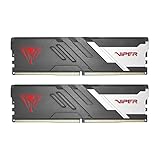
- Capacity: 32GB (2 x 16GB) 6000MHz
- Tested Timings: 30-40-40-76
- Feature Overclock: XMP 3.0 / EXPO overclocking supported
- Compatibility: Tested across latest DDR5 platforms for reliability on high performance
- Limited lifetime warranty
For a concrete example, Kingston’s 2022 datasheet for the KF556C40BB-32 specifies a 32GB desktop DIMM with an XMP profile of DDR5-5600, CL40-40-40 at 1.25V, and a default JEDEC configuration of DDR5-4800, CL40-39-39 at 1.1V. These figures describe that particular module, not a universal DDR5 configuration. Kingston KF556C40BB-32 datasheet.
How to decode a full RAM product label
On a listing or stick, separate the fields instead of treating the model code as a universal language. A Kingston part number such as KF560C36BBE2AK2-32 uses the manufacturer’s own conventions for product line, DDR5 technology, speed, timing, module details, kit configuration, and capacity. Other manufacturers may encode their model numbers differently; use that brand’s decoder or product datasheet rather than assuming each substring means the same thing everywhere. Kingston FURY DDR5 part-number decoder.
Rank #3

- Boosts System Performance: 32GB DDR5 overclocking desktop memory RAM kit (2x16GB) that operates at 6000MHz to improve gaming, multitasking and system responsiveness for smoother performance
- Accelerated gaming performance: Every millisecond gained in fast-paced gameplay counts—benefit from lower latency for higher frame rates, perfect for AAA games
- Optimized DDR5 compatibility: Compatible 13th gen intel core CPUs or newer AMD Ryzen 9000 series CPus
- Trusted Micron Quality: Backed by 42 years of memory expertise, this DDR5 RAM is rigorously tested at both component and module levels, ensuring top performance and reliability
- Top-Tier Overclocking: 32GB of DDR5 RAM 32GB, 6000MHz at extended timings of 36-38-38-80 provide stable overclocking performance and lower latency compared to usual Crucial Pro Series DRAM modules
What to check before choosing a RAM module
- Identify the required generation and form factor. Confirm whether the computer takes DDR4 or DDR5 and whether it needs a desktop DIMM or laptop SO-DIMM. The form factors are physically different; a label alone does not guarantee fit.
- Check capacity and stick count. Determine the total capacity you want and whether a listing describes one module or a multi-stick kit.
- Verify supported data rate. Check the computer or motherboard specifications and CPU support rather than assuming the advertised MT/s will work in every configuration.
- Compare timings with the data rate. Read the complete primary timing string; do not rank modules by CL alone.
- Check profile and voltage requirements. Confirm system support for XMP and whether the advertised speed requires enabling that profile.
Kingston cautions that some systems or board configurations may not operate at its published memory speeds and timings; its support guidance recommends checking qualified configurations for high-speed memory. Kingston memory support and configuration information.
Quick Recap
Rank #4

- Elevated performance for gamers & creators: 128GB kit DDR5 for enhanced productivity—accelerate demanding tasks and enjoy higher frame rates with this high-speed RAM
- Enhanced PC performance: Crucial Pro RAM 128GB kit with 2x64GB DDR5 operating at the speed of 5600MHz with 5200MHz or 4800MHz downclock support
- Top-tier RAM capacity: 128GB DDR5 RAM kit (2x64GB) compatible with latest Intel Core Ultra Series 2 & 14th Gen Core CPUs and AMD Ryzen 9000 Series desktop CPUs and above
- Low-profile, matte black heat spreader: Enhance your gaming rig with a sleek, modern look. With our integrated low-profile heat spreader, Crucial DDR5 Pro can even fit in smaller PCs
- Supports Intel XMP 3.0 and AMD EXPO on the same module: Achieve easy performance recovery on CPUs that suppress rated memory speeds with Intel XMP 3.0 or AMD EXPO turned on in the UEFI/BIOS settings. Get the full value of your investment without overpaying for performance
Common mistakes when reading RAM numbers
- Calling a data rate in MT/s a clock frequency in MHz without noting the unit difference.
- Assuming a lower CL number alone means a faster module when data rates or other timings differ.
- Assuming an XMP speed is the default JEDEC speed.
- Assuming a desktop DIMM fits a laptop, or that every motherboard supports every advertised rate.
- Applying one manufacturer’s part-number decoder to another manufacturer’s model codes.
Product prices and availability are accurate as of the date/time indicated and are subject to change. Any price and availability information displayed on Amazon at the time of purchase will apply.

