
Do these 3 things before closing this tab:
1Fix the driver behind crashes, sound loss and screen glitches2Clear out junk files and repair common Windows errors3Scan for outdated or missing drivers - takes under a minuteiTechGuides is reader-supported. When you buy through links on our site, we may earn an affiliate commission. As an Amazon Associate I earn from qualifying purchases. Learn more
A dual-mouse setup can make it easier to alternate hands or switch between pointing-device styles during computer work. That is a practical way to vary repetitive mouse use—not a proven way to prevent or treat an injury, and not the right choice for everyone. OSHA advises leaving enough workspace to use either hand for mouse tasks, while also emphasizing device fit and comfortable placement.
The headline reflects the author’s personal experience; it should not be read as a claim that two mice are universally better. Here’s how to decide whether the arrangement suits your work and how to set it up without creating new reach or posture problems.
What a dual-mouse setup does—and does not do
In a dual-mouse setup, you keep two pointing devices available and alternate between them, often using one with each hand. The devices may be similar, or they may have different shapes, such as a conventional mouse on one side and a vertical mouse or trackball on the other. The point is to change how you perform mouse tasks, not simply to own two devices.
OSHA’s Computer Workstations eTool says, “Ensure that there is enough work space so you can use each hand alternately to perform mouse tasks.” OSHA also recommends alternating hands when practical, keeping the pointer near the keyboard, and choosing a device designed to fit the hand that operates it. This is practical workstation guidance; it is not a clinical finding that two mice prevent injury.
#1 Best Overall

- Compact Mouse: With a comfortable and contoured shape, this Logitech ambidextrous wireless mouse feels great in either right or left hand and is far superior to a touchpad
- Durable and Reliable: This USB wireless mouse features a line-by-line scroll wheel, up to 1 year of battery life (2) thanks to a smart sleep mode function, and comes with the included AA battery
- Universal Compatibility: Your Logitech mouse works with your Windows PC, Mac, or laptop, so no matter what type of computer you own today or buy tomorrow your mouse will be compatible
- Plug and Play Simplicity: Just plug in the tiny nano USB receiver and start working in seconds with a strong, reliable connection to your wireless computer mouse up to 33 feet / 10 m (5)
- Better than touchpad: Get more done by adding M185 to your laptop; according to a recent study, laptop users who chose this mouse over a touchpad were 50% more productive (3) and worked 30% faster (4)
Alternating hands can vary repeated use, but the available evidence does not establish that it prevents, cures, or treats repetitive strain injury (RSI) or another condition. If you have persistent pain, numbness, weakness, or other symptoms, a desk change is not a substitute for appropriate medical advice.
Choose devices that fit both hands and your work
Fit and placement matter at least as much as the number of devices. OSHA cautions that a right-hand-shaped mouse used with the left hand can create force and posture problems. If you plan to alternate hands, look for a device designed for the hand using it or a shape that is comfortable for either hand. Keep both devices close enough to reach without stretching.
Rank #2

- The next-generation optical HERO sensor delivers incredible performance and up to 10x the power efficiency over previous generations, with 400 IPS precision and up to 12,000 DPI sensitivity
- Ultra-fast LIGHTSPEED wireless technology gives you a lag-free gaming experience, delivering incredible responsiveness and reliability with 1 ms report rate for competition-level performance
- G305 wireless mouse boasts an incredible 250 hours of continuous gameplay on just 1 AA battery; switch to Endurance mode via Logitech G HUB software and extend battery life up to 9 months
- Wireless does not have to mean heavy, G305 lightweight mouse provides high maneuverability coming in at only 3.4 oz thanks to efficient lightweight mechanical design and ultra-efficient battery usage
- The durable, compact design with built-in nano receiver storage makes G305 not just a great portable desktop mouse, but also a great laptop travel companion, use with a gaming laptop and play anywhere
| Option | What to consider | Evidence-based qualification |
|---|---|---|
| Hand-compatible conventional mouse | Check that its shape suits the hand you intend to use, and place it near the keyboard. | OSHA recommends a device designed to fit the operating hand; it warns against using a right-hand-shaped mouse with the left hand. OSHA pointer and mouse guidance. |
| Vertical or slanted mouse | Compare grip, hand comfort, cursor control, and how easily it fits into your normal work. | CCOHS describes a vertical mouse as keeping the hand and wrist in a handshake-like position, but says there is no one-size-fits-all mouse. In an INRS summary of a 2016 comparison, the 35-degree slanted design was the best compromise among the tested conditions—not a universal winner. CCOHS mouse selection guide; INRS research summary. |
| Trackball | Assess whether its control method, reach, and accuracy suit your tasks; switching devices may require adjustment. | The cited sources do not establish that a trackball is better than a mouse or that it prevents injury. |
The INRS summary describes a 2016 study that compared a conventional mouse with vertical designs at 35 and 65 degrees, tested at three desk positions across seven tasks. Its findings concern those particular devices and conditions. Mouse position affected measured demands, so avoid treating a device angle as a universal ergonomic threshold.
The Tool Desk
Outbyte Driver Updater FREEScan for outdated or missing drivers - takes under a minuteDriver Scan →Outbyte PC Repair FREEClear out junk files and repair common Windows errorsFree Scan →How long does it take to learn the other hand?
Expect non-preferred-hand control to feel unfamiliar at first. A study titled Training the non-preferred hand for fine motor control using a computer mouse suggests that minimal training may not substantially reduce productivity, but it does not establish how much training is needed to become proficient. That is limited task research, not a guarantee that every person will reach the same speed or accuracy with either hand.
Rank #3

- Your hand can relax in comfort hour after hour with this ergonomically designed mouse. Its contoured shape with soft rubber grips, gently curved sides and broad palm area give you the support you need for effortless control all day long.
- You’ve got the control to do more, faster. Flipping through photo albums and Web pages is a breeze, especially for right-handers—with three standard buttons plus Back/Forward buttons that you can also program to switch applications, go full screen and more. And side-to-side scrolling plus zoom gives you the power to scroll horizontally and vertically through your music library, maps and Facebook feeds, and zoom in and out of photos and budget spreadsheets with a click.* * Requires Logitech SetPoint software (Windows) or Logitech Control Center software (Mac OS X)
- Two years of battery life practically eliminates the need to replace batteries. ** The On/Off switch helps conserve power, smart sleep mode extends battery life and an indicator light eliminates surprises. ** Battery life may vary based on user and computing conditions.
- The tiny Logitech Unifying receiver stays in your laptop. There’s no need to unplug it when you move around, so there’s less worry of it being lost. And you can easily add compatible wireless mice and keyboards to the same wireless receiver.
Start with low-stakes work—such as scrolling or routine navigation—before using the other hand for tasks where precision or speed matters. Switch back when the task requires it; alternating is useful only if it remains comfortable and workable for you.
Set up and test the arrangement
- Clear space beside the keyboard. Leave enough room to use either hand, as OSHA recommends, without placing either device so far away that you have to reach.
- Match each device to its operating hand. Avoid forcing the left hand to use a right-hand-shaped mouse. Check that the shape and grip feel manageable on both sides.
- Keep the pointer close. Position the active mouse near the keyboard and within comfortable reach. Reconsider the placement if switching sides means twisting or extending your arm.
- Try one change at a time. Alternate hands with a familiar device first, or test a different mouse shape separately. This makes it easier to notice whether comfort, accuracy, or reach is the issue.
- Evaluate your actual tasks. Notice whether you can control the pointer comfortably and accurately for the work you do. There is no evidence here establishing a universal training period or a particular model that works best.
Use other ways to reduce repetitive work
Two mice do not replace broader workstation habits. OSHA advises keeping the pointer close, reducing unnecessary mousing with keyboard shortcuts, taking short breaks during high-repetition or static work, and changing tasks where possible. These practices address the wider work pattern rather than relying on a second device alone. OSHA work-process guidance.
Rank #4
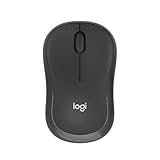
- Pair and Play: With fast, easy Bluetooth wireless technology, you’re connected in seconds to this quiet cordless mouse —no dongle or port required
- Less Noise, More Focus: Silent mouse with 90% reduced click sound and the same click feel, eliminating noise and distractions for you and others around you (1)
- Long-Lasting Battery Life: Up to 18-month battery life with an energy-efficient auto sleep feature, so you can go longer between battery changes (2)
- Comfortable, Travel-Friendly Design: Small enough to toss in a bag; this slim and ambidextrous portable compact mouse guides either your right or left hand into a natural position
- Long-Range: Reliable, long-range Bluetooth wireless mouse works up to 10m/33 feet away from your computer (3)
A small 2003 Applied Ergonomics study with 19 experienced video display terminal workers compared neutral and pronated hand positions during a standardized text-editing task. It reported decreased activity in forearm extensors and the first dorsal interossei in the neutral condition, along with a trend toward fewer wrist-deviation movements. Those are results from a specific hand-position experiment, not evidence about owning two mice, long-term injury rates, or all computer users. Study source.
Quick Recap
Best Value

- Smooth, precise and affordable wireless optical 3-button mouse with USB nano receiver for laptop, desktop and netbook PCs
- 2.4 GHz wireless (not Bluetooth) provides a powerful, reliable connection
- Nano-receiver stays in the PC USB port or stows conveniently inside the wireless mouse when not in use (note: Receiver is stored within the mouse from production and needs to be removed upon setup)
- Compatible with Windows 2000, XP, Vista, 7, 8, and 10
- Easy installation - refer to user manual for instructions
Product prices and availability are accurate as of the date/time indicated and are subject to change. Any price and availability information displayed on Amazon at the time of purchase will apply.

