
Do these 3 things before closing this tab:
1Repair Windows errors before they cause bigger problems2Scan for outdated or missing drivers - takes under a minute3Clear out junk files and repair common Windows errorsiTechGuides is reader-supported. When you buy through links on our site, we may earn an affiliate commission. As an Amazon Associate I earn from qualifying purchases. Learn more
localStorage is synchronous: JavaScript on the same execution thread must wait for each storage operation to finish before continuing. That can delay other work, including interface updates, but the size of any slowdown depends on the data, operation, browser, and app. For small preferences it can be a reasonable choice; for larger or performance-sensitive data, consider an asynchronous API such as IndexedDB.
How localStorage can affect responsiveness
MDN describes both localStorage and sessionStorage as synchronous Web Storage APIs. As MDN puts it, “Both sessionStorage and localStorage in Web Storage are synchronous in nature.” While a call is running, JavaScript on that execution thread cannot move on to other work. If an operation takes place during an interaction or rendering work, that wait can contribute to a page feeling unresponsive. MDN’s Web Storage API documentation cautions that substantial data operations can affect application performance and responsiveness.
This mechanism does not mean every call causes a noticeable pause. The available documentation gives no universal latency figure, and the effect varies with the workload and browser. A small read of a preference is not equivalent to repeatedly writing a large value. Measure your own app rather than assuming a fixed delay.
PC Slower Than It Used to Be?
A free scan shows the junk files, broken settings and background clutter dragging Windows down - then fixes them in one click.Free scan · Windows 10 & 11Crashes, No Sound, or Screen Glitches?
Random freezes, missing sound and display glitches usually trace back to one bad driver. Find and replace yours safely.Free scan · under a minuteWhen localStorage is a sensible fit
localStorage is associated with an origin and persists across browser sessions. It is most straightforward for small, simple key/value data, such as a display preference that the app can read and write synchronously. See MDN’s localStorage property reference for its origin and persistence behavior.
#1 Best Overall

- [Color] PCB color may vary (black or green) depending on production batch. Quality and performance remain consistent across all Timetec products.
- DDR3L / DDR3 1600MHz PC3L-12800 / PC3-12800 240-Pin Unbuffered Non-ECC 1.35V / 1.5V CL11 Dual Rank 2Rx8 based 512x8
- Module Size: 16GB KIT(2x8GB Modules) Package: 2x8GB ; JEDEC standard 1.35V, this is a dual voltage piece and can operate at 1.35V or 1.5V
- For DDR3 Desktop Compatible with Intel and AMD CPU, Not for Laptop
- Guaranteed Lifetime warranty from Purchase Date and Free technical support based on United States
It becomes a less attractive choice as stored values or storage work grow, particularly when operations happen on an interaction-sensitive path. The central trade-off is convenience and a simple key/value interface versus synchronous execution. Do not infer that a specific size threshold is safe: the cited documentation establishes the performance concern, not a universal cutoff.
When to consider IndexedDB
MDN identifies IndexedDB as an asynchronous option for larger or performance-sensitive data. It stores structured-clone-compatible values and supports indexes, making it better suited than Web Storage to structured application records and queries. Its asynchronous nature avoids making the calling JavaScript wait synchronously for each storage operation to complete, though it does not guarantee that the entire application will become faster. See the MDN IndexedDB API documentation.
Rank #2
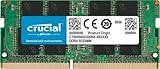
- Boosts System Performance:16GB DDR4 laptop memory that operates at 3200MHz to improve multitasking and system responsiveness for smoother performance
- Easy Installation: Upgrade your laptop RAM with ease—no computer skills required Follow step-by-step how-to guides available at Crucial for a smooth, worry-free installation
- Compatibility Guaranteed: Ensure seamless compatibility with your laptop by using the Crucial System Scanner or Crucial Upgrade Selector—get accurate recommendations for your specific device
- Trusted Micron Quality: Backed by 42 years of memory expertise, this DDR4 RAM is rigorously tested at both component and module levels, ensuring top performance and reliability for your Mac system
- ECC Type = Non-ECC, Form Factor = SODIMM, Pin Count = 260-pin, PC Speed = PC4-25600, Voltage = 1.2V, Rank and Configuration = 1Rx8 or 2Rx8
IndexedDB adds more API and data-lifecycle complexity than a simple key/value store. Choose it when the data model or responsiveness requirements justify that complexity, rather than migrating solely because a page has a performance problem.
Choose storage by the job
| Need | Candidate | Why it may fit |
|---|---|---|
| Small, simple preferences | localStorage |
Origin-associated key/value storage that persists across browser sessions; operations are synchronous. |
| Larger or performance-sensitive structured application data | IndexedDB | MDN describes it as asynchronous, with support for structured-clone-compatible values and indexes. |
| HTTP request and response caching | Cache Storage | Listed by web.dev as a browser storage option; it serves a different purpose from application-record storage. |
| File-like data | OPFS | Listed by web.dev among modern storage options; select it only when its file-oriented purpose fits the data. |
web.dev discusses IndexedDB, OPFS, and Cache Storage as browser storage options in its Storage for the web guide. The specific compatibility details are not established here, so check current browser support for your target audience before choosing an API.
Rank #3

- A-Tech 8GB RAM Module, DDR4 SO-DIMM 260-Pin, 2666MHz / 2667MHz PC4-21300 (PC4-2666V)
- Non-ECC Unbuffered, JEDEC DDR4 Standard 1.2V Operating Voltage
- Compatible with select DDR4 SODIMM capable Laptop, Notebook, Mini PC, and All-in-One (AIO) computer systems. Please verify your system's memory type, form factor, and maximum supported capacity before purchasing
- Not compatible with desktop (DIMM), DDR2, DDR3, DDR5, ECC Registered (RDIMM), ECC Load Reduced (LRDIMM), or ECC Unbuffered (ECC UDIMM) memory types
- Increases available memory capacity to enhance system responsiveness, application performance, and multitasking capabilities.
How to diagnose a slow interaction
- Profile the interaction in the browsers you support. Reproduce the sluggish path and inspect its main-thread work. Do not substitute a general benchmark for your own workload.
- Identify what is actually taking time. Check storage calls alongside serialization, parsing, rendering, and application logic; changing the storage API will not fix unrelated work.
- Assess the data and access pattern. If the need is a small preference, synchronous key/value storage may remain appropriate. If the app handles larger structured data or needs performance-sensitive storage, evaluate IndexedDB.
- Measure again after a change. Compare the same user interaction under the same conditions in your target browsers. Report only measurements you actually made, with their conditions.
What the evidence does—and does not—establish
MDN’s Web Storage documentation, last modified February 22, 2025, establishes the synchronous behavior and warns that substantial operations can affect responsiveness. The cited sources do not provide a named benchmark or a universal delay for a given call, nor do they establish that switching APIs automatically improves end-to-end performance. The practical decision is therefore workload-specific: use simple synchronous storage only where its behavior suits the task, and profile before making a performance claim.
Quick Recap
Best Value
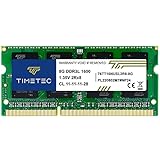
- [Specs] DDR3L / DDR3 1600MHz PC3L-12800 / PC3-12800 204-Pin Unbuffered Non ECC 1.35V CL11 Dual Rank 2Rx8 based 512x8
- [Size] Module Size: 8GB Package: 1x8GB
- [Voltage] JEDEC standard 1.35V, this is a dual voltage piece and can operate at 1.35V or 1.5V
- [Compatibility] Compatible with DDR3 Laptop / Notebook PC, Mini PC, All in one Device
- [Color] PCB Color is Green
Rank #4

- Boosts System Performance: 8GB DDR4 laptop memory that operates at 3200MHz, 2933MHz, or 2666MHz to improve multitasking and system responsiveness for smoother performance
- Easy Installation: Upgrade your laptop RAM with ease—no computer skills required Follow step-by-step how-to guides available at Crucial for a smooth, worry-free installation
- Compatibility Guaranteed: Ensure seamless compatibility with your laptop by using the Crucial System Scanner or Crucial Upgrade Selector—get accurate recommendations for your specific device
- Trusted Micron Quality: Backed by 42 years of memory expertise, this DDR4 RAM is rigorously tested at both component and module levels, ensuring top performance and reliability
- ECC Type Non-ECC, Form Factor SODIMM, Pin Count 260-pin, PC Speed PC4-25600, Voltage 12V, Rank and Configuration 1Rx16, 1Rx8 or 2Rx8
Product prices and availability are accurate as of the date/time indicated and are subject to change. Any price and availability information displayed on Amazon at the time of purchase will apply.

