
iTechGuides is reader-supported. When you buy through links on our site, we may earn an affiliate commission. As an Amazon Associate I earn from qualifying purchases. Learn more
If Realtek Digital Output is silent, first check that Windows is sending sound to the endpoint connected to your speakers, receiver, or decoder. Then verify the receiving device and connection, inspect Windows’ audio device and driver state, and use update-specific recovery steps if the problem began after Windows Update. A listed Realtek endpoint does not prove it is selected or physically connected.
Check the selected output and volume first
In Windows 11, select the sound icon on the taskbar, then use the output-device selector to choose the playback device connected to your audio system. You can also open Settings > System > Sound and choose the intended device under Output. In Windows 10, select the taskbar speaker icon and choose the output device from the menu, or open Settings > System > Sound.
- Choose the endpoint that actually leads to the speakers, headphones, receiver, or decoder you want to hear.
- Check that Windows is not muted and that system volume is up. Also check the volume and mute state in the app playing audio.
- If the output is selected but there is still no sound, continue by tracing the physical signal path rather than assuming the Realtek driver is at fault.
Microsoft lists output selection, connections, and volume among the initial checks for sound problems: Fix sound or audio problems in Windows.
Trace the connection from the PC to the speakers
Identify how your setup carries audio: optical S/PDIF to a receiver or decoder, another digital connection, or an analog speaker or headphone jack. Confirm that the receiving device is powered on and set to the input connected to the PC. A working Windows endpoint cannot produce sound through a receiver that is off or listening to a different input.
#1 Best Overall

- 【USB external sound card audio adapter】This USB to aux adapter supports listening and speaking,Easily adds a 3.5mm TRRS aux port integrated microphone-in and audio out interface to your devices
- 【High Quality Sound】 Equipped with an advanced built-in DAC chip, this USB sound card supports both CTIA and OMIP standard headphones. This USB to Aux adapter delivers stable 16-bit/48kHz audio output and effective noise reduction, faithfully reproducing and enhancing the original sound quality. Note: The 3.5mm male microphone jack does not support TS or TRS connectors
- 【Wide Compatibility】USB to 3.5mm Jack Audio Adapter support TRRS headsets and microphones.USB male wide compatibility with Windows 10/9/8/7/Vista/XP,Linux,Mac OS X google Chromebook,Raspberry Pi, PS4,PS5 and Windows Surface 3 etc
- 【Plug and Play】USB Sound Adapter no driver required,USB headset adapter plug and play;the durable nylon braided cable of the USB audio adapter ensures stable transmission and allows you to use your 3.5mm headphones more conveniently.USB to 3.5 mm port will be automatically recognized by system in seconds
- 【Portable and Durable】USB to audio jack adapter is equipped with an aluminum shell.The nylon braided of the USB to 3.5mm jack audio adapter is more durable,smaller and lighter than other plastic shells and PVC cable USB audio adapter,ensuring a much longer lasting life
If you use optical S/PDIF
Check that the PC or motherboard has an optical output and the receiver or decoder has a matching optical input. Make sure the optical cable is seated at both ends and inspect it for damage. An optical S/PDIF (TOSLINK) cable is relevant only if both devices have compatible optical ports and the existing cable is missing or suspect; replacing a cable will not correct a wrong Windows output selection or driver problem.
GIGABYTE documents connecting a motherboard’s S/PDIF optical output to an external decoder in its Realtek HD Audio/S/PDIF configuration guide. The guide also describes setting the Default Format for Realtek Digital Output. Available sample rates and bit depths depend on the motherboard, driver, and receiving device, so try a format supported by both ends rather than assuming one setting works for every setup.
Rank #2

- USB Stereo Sound Card: This biaze USB audio adapter is ideal to replace your faulty sound card or audio port. It extends the 3.5mm mono microphone input and speaker-headphone output via the USB port, allowing you to connect small speakers, headphones, microphones, dual-plug headphones and more
- Dual functions Audio Interface: Support listening + speaking. Support CTIA standards jack. Support Android earphones. Support Windows 10/8.1/8/7/Vista/XP, Mac OS X, Linux, Google Chromebook, Windows Surface 3 pro, Raspberry Pi and PS4 PS5 etc
- Crystal-Clear Sound: Experience high-fidelity audio like never before! With a built-in DAC chip, this USB audio adapter delivers rich and immersive audio. The USB Aux adapter facilitates high-resolution audio output and noise reduction up to 16bit/48kHz to enhance the original sound quality of your devices
- Plug and Play: Simply connect this sound card to your device and you're ready to go - no drivers or external power sources required. Whether you're using it for gaming, recording music, or watching movies, this adapter is sure to impress
- Compact and Portable: Aux to USB adapter is constructed with durable ABS material that makes it easy to take on the go. Don't miss out on this opportunity to elevate your audio experience - get your hands on the Aux to USB adapter today
If you use analog or another digital connection
Check that the cable is connected to the intended PC output and the matching input on the speakers or receiver. Confirm the receiver’s selected input and test the speakers with another source, if possible. If your PC and audio system use an analog connection, Realtek Digital Output may not be the endpoint you need to select.
Set Realtek Digital Output as the default device
Use Windows Sound settings to select the endpoint connected to your audio equipment. If you need to make it the default playback device, open the classic playback-device controls:
Rank #3

- PLUG IN AND HEAR SOUND IN SECONDS - USB Type-A connector with a 3.5mm stereo headphone output and a separate 3.5mm mono microphone input. No drivers, no software, no external power - the adapter is USB bus-powered and is recognized as a standard USB audio device.
- WORKS ON WINDOWS, MAC AND LINUX - Driverless on Windows 98SE/ME/2000/XP/Server 2003/Vista/7/8, Linux and Mac OSX, and compliant with the USB Audio Device Class 1.0 specification, so any system that supports class-compliant USB audio will see it. Select it as the sound output and input device after plugging it in.
- TWO JACKS, TWO JOBS - The green jack is stereo OUT for headphones or powered speakers; the pink jack is mono microphone IN for a 3.5mm mic. It does NOT support 4-pole headsets on a single combo plug, it does NOT power passive speakers, and it does NOT add surround sound - it is a stereo 2-channel adapter.
- FOR LAPTOPS AND DESKTOPS THAT NEED AN AUDIO PORT BACK - Adds a headphone and mic port to a laptop, desktop, or mini PC whose onboard jack has failed or was never there. Managed and work-issued computers can block new USB audio devices by policy - check with your IT department before ordering for a company machine.
- SABRENT SUPPORT AND WARRANTY - What is in the box: one USB audio sound adapter. Backed by a 1-year limited warranty, extended to 2 years when you register within 90 days on the manufacturer's website.
- Open Settings > System > Sound.
- Open the additional or advanced sound-device controls. In Windows 11, look for More sound settings; in Windows 10, look for Sound Control Panel or Sound under related settings. The wording can differ by Windows version.
- In the Playback tab, select Realtek Digital Output if it is the endpoint connected to your equipment, then choose Set Default or the equivalent default-device option.
- Select OK or Apply, then play audio and confirm that the receiver is set to the corresponding input.
If Realtek Digital Output is absent from the playback list, or appears unavailable, check whether Windows detects and enables the audio device before trying to set it as default.
Check whether Windows detects the Realtek device
- Right-click Start and open Device Manager.
- Expand Sound, video and game controllers. Look for the Realtek audio device or the relevant audio controller.
- If the device is disabled, right-click it and choose Enable device, if that option is available. If it has a warning icon or error, open Properties and note the status before changing drivers.
- If the device is not listed, select View > Show hidden devices, then use Action > Scan for hardware changes.
Microsoft identifies a missing, outdated, disabled, or incorrectly loading driver as a possible reason Windows does not detect an audio output. Its instructions cover checking Device Manager and obtaining the appropriate driver from the PC or sound-card manufacturer: Fix missing or undetected audio output device in Windows.
Rank #4
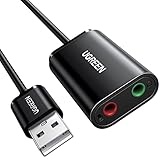
- Upgrade the Sound Quality: UGREEN Aux to USB adapter is the perfect solution for upgrading the sound quality of your laptop or desktop computer. With its high-resolution DAC chip, this adapter offers stunning audio quality that will completely transform your listening experience
- Crystal-Clear Sound: Experience high-fidelity audio like never before! With a built-in DAC chip, this USB audio adapter delivers rich and immersive audio. The USB Aux adapter facilitates high-resolution audio output and noise reduction up to 16bit/48kHz to enhance the original sound quality of your devices
- Plug and Play: Simply connect this sound card to your device and you're ready to go - no drivers or external power sources required. Whether you're using it for gaming, recording music, or watching movies, this adapter is sure to impress
- Wide Compatibility: The USB to audio jack is Compatible with Windows 11/10/98SE/ME/2000/XP/Server 2003/Vista/7/8/Linux/Mac OSX/PS5/PS4/Google Chromebook/Windows Surface Pro 3/Raspberry Pi. So no matter what you're using, this adapter is sure to work seamlessly with your setup. (*Note: NOT compatible with PS3.)
- Compact and Portable: UGREEN Aux to USB adapter is constructed with durable ABS material that makes it easy to take on the go. Don't miss out on this opportunity to elevate your audio experience - get your hands on the UGREEN Aux to USB adapter today
Install the driver for your exact PC or motherboard
Before downloading a driver, identify your exact PC model or motherboard model and Windows version. Use the manufacturer’s support page for that model and select the audio driver listed for your Windows edition. A generic Realtek package is not guaranteed to match the system’s hardware or the manufacturer’s driver configuration.
Recommended Free Tools
- Find the PC model in the manufacturer’s system information or support utility. For a custom-built PC, identify the motherboard model from its documentation or system information.
- Open that manufacturer’s official support page and locate the audio driver for the exact model and Windows version.
- Install the driver according to the manufacturer’s instructions, then restart Windows.
- After restart, check Sound settings and Device Manager again, and select the connected endpoint if necessary.
Driver names, installation tools, and audio-control apps vary by manufacturer and model. MSI’s instructions for one specific system, the MEG Z590 ACE, include checking Realtek device status, Realtek Audio Console and port detection, playback-device selection, and testing the connected audio equipment. Its example is not a universal BIOS or software menu path: MSI: There is no sound from the external audio device.
Best Value

- 🎵【Compatible Device】This product allows your U disk to play music in the car audio system or 3.5mm speaker.
- 🎵【WARM TIP】 Please CONFIRM your car 3.5mm(1/8 inch) aux port has Music Audio Decoding Function before purchasing!
- 🎵【PLUG AND PLAY】 Only support the U-DISK/USB Flash Drive with MP3 decoder. (Please make sure Aux port of your car has Mp3 decode function that can read the mp3 file from U-disk. If not, it will can't work ).
- 🎵【Please note】 The 3.5MM AUX interface of ordinary car audio does not have the MP3 audio decoding and playback function, so this data cable cannot be used. Only car GPS, CD, DVD speakers with MP3 audio decoding and playback function can use this data cable.
- 🎵【high quality】 Use durable & flexible high quality cable to ensure high-quality sound. Length:20cm/7.9inch
Realtek Digital Output stopped working after a Windows update
If the problem began immediately after a Windows update, a driver may be incompatible or only partially installed, or an audio service may not have started correctly. Start with the exact PC or motherboard manufacturer’s current audio driver, then consider rollback and service recovery.
Update or roll back the audio driver
- In Device Manager, expand Sound, video and game controllers, right-click the relevant audio device, and select Update driver. You can also install the compatible driver provided on the PC or motherboard maker’s support page.
- If the problem persists and a prior driver is available, open the device’s Properties, choose the Driver tab, and select Roll Back Driver if Windows makes that option available.
- Restart Windows and test the connected output again.
Restart Windows audio services
- Press Windows key + R, enter
services.msc, and press Enter. - Find Windows Audio, right-click it, and choose Restart.
- Find Windows Audio Endpoint Builder and restart it as well.
- Close Services and test playback.
Microsoft recommends updating or rolling back the driver and restarting Windows Audio and Windows Audio Endpoint Builder when sound stops working after an update: Fix audio stops working after a Windows update in Windows.
Check BIOS or isolate a possible hardware fault
Consider BIOS settings only if the PC or motherboard maker’s instructions for your exact model call for checking the onboard audio controller. Menu names and paths differ across systems, so do not apply another board’s BIOS instructions to yours. MSI’s example includes checking an HD Audio Controller setting for its MEG Z590 ACE; that does not establish the path or setting name on other PCs.
What’s actually slowing this PC down?
Pick the symptom - the matching free tool is one click away.
To distinguish a PC-side issue from a receiver or speaker issue, test the speakers or receiver with another source, or test the PC output with another compatible audio device. If Windows detects the device, the correct endpoint is selected, the connection and receiving input are confirmed, and the manufacturer’s driver and recovery steps do not restore sound, contact the PC or motherboard maker for model-specific service guidance.
Microsoft states that Windows 10 support ended on October 14, 2025. Its audio troubleshooting guidance covers Windows 10 and Windows 11, but users should also account for the support status of their Windows version when choosing a longer-term system plan.

