
Do these 3 things before closing this tab:
1Repair Windows errors before they cause bigger problems2Scan for outdated or missing drivers - takes under a minute3Clear out junk files and repair common Windows errorsiTechGuides is reader-supported. When you buy through links on our site, we may earn an affiliate commission. As an Amazon Associate I earn from qualifying purchases. Learn more
A safety integrity level (SIL) is one of four levels used to specify how much risk reduction a particular safety function must provide. SIL 1 is the lowest level and SIL 4 the highest in the IEC framework. The level applies to a defined function addressing a particular hazardous scenario—not automatically to an entire plant, product, or safety instrumented system (SIS).
What a safety integrity level means
A SIL states a safety integrity requirement for a safety function: the function’s required capacity to achieve or maintain a safe state when called on. Higher SILs correspond to greater required risk-reduction properties. The International Electrotechnical Commission (IEC) overview of IEC 61508 describes four levels, SIL 1 through SIL 4; ISO’s terminology entry likewise identifies SIL as a requirement about a safety instrumented function.


The level is meaningful only in relation to the function and hazard being considered. For example, the relevant question is not simply whether a facility is “SIL 2,” but what hazardous scenario a defined function is intended to address and what integrity that function requires. A single SIS may contain several safety instrumented functions (SIFs), with different SIL requirements for different scenarios. The 61508 Association’s guide to the IEC 61511 SIS design file explains this function-specific framing.
How SIL 1 through SIL 4 differ
The levels express an increasing requirement for risk reduction, but the label alone does not specify a universal amount of risk reduction or guarantee identical performance across applications. The required level depends on the particular function, hazard analysis, operating context, and applicable standard requirements.
#1 Best Overall
| Level | Relative meaning | What the label does not establish by itself |
|---|---|---|
| SIL 1 | Lowest of the four IEC SILs; lowest relative risk-reduction requirement within this scale. | The required level for a particular application, or whether a design meets the relevant requirements. |
| SIL 2 | Higher relative risk-reduction requirement than SIL 1. | A universal performance figure or a rating for the whole SIS. |
| SIL 3 | Higher relative risk-reduction requirement than SIL 2. | Whether the function is suitable without considering its hazard scenario and design. |
| SIL 4 | Highest of the four IEC SILs; highest relative risk-reduction requirement. | A guarantee that accidents cannot occur or a substitute for application-specific assessment. |
The ordering is supported by the IEC’s functional-safety overview. It should not be used as a shortcut to compare systems in isolation: the function, scenario, operating mode, and applicable requirements matter.
Does SIL apply to a system or a function?
SIL is assigned to a safety function, not used as a blanket rating for an entire facility or SIS. An SIS is the system that implements one or more safety instrumented functions. Each function is associated with a hazard scenario and has its own required integrity; functions in the same SIS need not share one SIL. This distinction is set out in the 61508 Association’s SIS design-file guide.
How is a required SIL determined?
A required SIL comes from risk assessment, not from choosing the highest number by default. The assessment considers the hazardous scenario, tolerable risk, and other protective measures, then determines what integrity the selected safety function must provide. IEC TR 63161:2022 describes a generic rationale for assigning a safety integrity requirement to a selected function; the requirement may be expressed as a SIL or performance level. Its IEC listing makes clear that it is not tied to one assignment tool.
What’s actually slowing this PC down?
Pick the symptom - the matching free tool is one click away.
IEC 61511-3 provides a framework and methods for determining SIL in the process-industry context, but it does not prescribe the SIL required for each specific application. See the NEN listing for NEN-EN-IEC 61511-3:2017. A real installation’s required level therefore cannot be inferred from the SIL definition alone; it depends on its own risk assessment and applicable requirements.
Rank #3
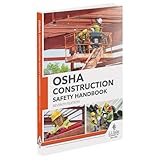
- 2024 OSHA Construction Safety Book is the seventh edition with the new OSHA HazCom final rule on 5/20/24. While the rule takes effect 7/19/24, the compliance dates don’t begin until 1/19/26 per 29 CFR 1910.1200(j).
- Construction Site Book offers quick access to essential OSHA regulations, jobsite hazards, and practical safety tips. It also helps employees identify hazards and prevent injuries and illnesses.
- Features easy-to-read format, full-color images, chapter quizzes with answer key, and comes in a compact size making it a convenient reference for employees.
- Critical topics include Confined Space Entry; Cranes & Derricks; Electrical Safety; Emergency Response; Ergonomics & Back Safety; Excavations; Fall Protection; First Aid & Bloodborne Pathogens; HazCom; Health & Wellness; Jobsite Exposures; Lockout/Tagout; Ladders & Stairways; Materials Handling/Storage; Motor Vehicles; PPE; Scaffolds; Site Safety & Security; Slips, Trips & Falls; Tool Safety; Welding, Cutting & Brazing; and Work Zone Safety.
- Specifications: 5 1/4” x 7 1/4", English, Soft bound. 7th Edition. Copyright 2024.
What it takes to achieve a SIL
A SIL is not merely a label on a component. Meeting a safety integrity requirement involves engineering and lifecycle measures for the defined function. The UK Health and Safety Executive (HSE) describes standards guidance covering system configuration, hardware architecture and fault tolerance, diagnostics, software, and lifecycle measures. HSE also describes qualitative and quantitative approaches to establishing required integrity in its guidance on control systems.
The broader standards context matters: IEC 61508 is the general functional-safety framework for electrical, electronic, and programmable electronic safety-related systems. IEC 61511 applies functional-safety principles to safety instrumented systems in the process industries. HSE identifies BS EN 61508 as a general benchmark of good practice and BS EN 61511 as the benchmark for process-industry functional-safety management in its functional safety guidance. Practitioners should confirm the applicable national adoption and edition for their jurisdiction and application.
Rank #4
What SIL does not mean
- It is not a facility-wide safety score. It describes the requirement for a defined safety function.
- It is not a guarantee of zero accidents. It specifies an integrity requirement; it does not eliminate every hazard or failure mode.
- It is not a generic product certification detached from context. A component’s capabilities do not, by themselves, establish that a complete function satisfies its required SIL.
- It is not a universal assignment for a type of equipment or industry. The required level must be determined for the application and its hazards.
Further reading
For a deeper study of functional-safety practice, The Safety Critical Systems Handbook, Fifth Edition, covers IEC 61508 and IEC 61511. It can support further learning but does not replace the applicable standards.
Quick Recap
Product prices and availability are accurate as of the date/time indicated and are subject to change. Any price and availability information displayed on Amazon at the time of purchase will apply.

