
Do these 3 things before closing this tab:
1Scan for outdated or missing drivers - takes under a minute2Clear out junk files and repair common Windows errors3Fix the driver behind crashes, sound loss and screen glitchesiTechGuides is reader-supported. When you buy through links on our site, we may earn an affiliate commission. As an Amazon Associate I earn from qualifying purchases. Learn more
MX Linux makes several routine setup jobs easier to discover and carry out: finding common software, creating a bootable live USB, and reusing a configured system. Other distributions should borrow the design ideas—not assume MX’s tools will work unchanged elsewhere. The best lesson is to make the straightforward path clear while showing users the choices and limits that matter.
1. Put common software choices in one curated installer
MX Package Installer brings one-click installation and removal of popular applications together with access to several software sources: Debian Stable, MX Test Repo, Debian Backports, and Flatpaks. Which sources are available or enabled can depend on the installation; they are not all guaranteed to be active on every system. MX’s Package Installer help describes the tool and its sources.
The feature worth borrowing is the combination of discovery and context. A distro can put frequently requested applications in one approachable interface and identify where each package comes from, rather than leaving a new user to piece together unfamiliar repositories and package formats. That makes the choice easier to understand without pretending the underlying choices have disappeared: package sources can differ in freshness and compatibility, and the installer does not remove those trade-offs.
The Tool Desk
Outbyte PC Repair FREERepair Windows errors before they cause bigger problemsFix Now →Outbyte Driver Updater FREEFix the driver behind crashes, sound loss and screen glitchesFind Drivers →MX also points users to Synaptic for a wider range of Debian package actions. The distinction is useful: a curated front door can make common tasks approachable without trying to replace a more comprehensive package manager.
#1 Best Overall

- Tracks Anywhere, Goes Everywhere: Work on any surface, even glass (1), with MX Anywhere 3S Bluetooth Mouse – now with an 8K DPI sensor so you can cover more ground with subtle movement
- Deeper Flow with Quiet Clicks: MX Anywhere 3S Wireless Mouse introduces Quiet Clicks – the same satisfying feel but with less click noise (than MX Anywhere 3) for less distraction and more focus
- Scroll 1000 Lines Per Second: With MagSpeed, Logitech’s fastest (5) and most precise scroll wheel (4)
- Multi-Device, Multi-OS: Connect with up to 3 devices via Bluetooth on Windows, macOS, Chrome OS or Linux. Compatible with Logi Bolt USB receiver only (receiver not included) (6)
- Seamless Connectivity: MX Anywhere 3S portable mouse is Engineered for Intel Evo which verifies it meets technical specifications for optimal Bluetooth connection: no dongles, no wires, no hassle
2. Make Live USB creation a guided task, not a command-line puzzle
MX Live USB Maker can create live media from an ISO, another live USB, a live CD/DVD, or a running live system. Its help walks users through choosing a USB device and an ISO, and documents both a dry-run mode and an option for a fully encrypted live USB. See the MX Live USB Maker help for the documented workflow and options.
The reusable design pattern is a safe, visible basic path with less common controls available when needed. New users should be able to identify the source image and destination device before writing anything; experienced users should not have to give up useful options such as a dry run or encryption. Clear guidance around selecting the destination matters because creating bootable media involves writing to a USB drive.
Rank #2
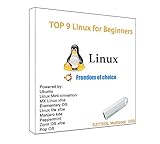
- 1. 9-in-1 Linux:32GB Bootable Linux USB Flash Drive for Ubuntu 24.04 LTS, Linux Mint cinnamon 22, MX Linux xfce 23, Elementary OS 8.0, Linux Lite xfce 7.0, Manjaro kde 24(Replaced by Fedora Workstation 43), Peppermint Debian 32bit (being replaced by MX Linux 32bit) for older PC, Pop OS 22, Zorin OS core xfce 17. The versions you received might be latest than above as we update them to latest/LTS when we think necessary.
- 2. Try or install:Before installing on your PC, you can try them one by one without touching your hard disks.
- 3. Easy to use: These distros are easy to use and built with beginners in mind. Most of them Come with a wide range of pre-bundled software that includes office productivity suite, Web browser, instant messaging, image editing, multimedia, and email. Ensure transition to Linux World without regrets for Windows users.
- 4. Support: Printed user guide on how to boot up and try or install Linux; please contact us for help if you have an issue. Please press "Enter" a couple of times if you see a black screen after selecting a Linux.
- 5. Compatibility: Except for MACs,Chromebooks and ARM-based devices, works with any brand's laptop and desktop PC, legacy BIOS or UEFI booting, Requires enabling USB boot in BIOS/UEFI configuration and disabling Secure Boot is necessary for UEFI boot mode. Packing: The bootable USB drive comes in a colored PET/CPP zipper bag with instructions on how to get started. The box pictured is not included.
A USB flash drive is the practical hardware this workflow requires. The right capacity depends on the ISO and whether persistence is planned; the available documentation does not establish a particular size, speed, or model as suitable for every use.
3. Let users preserve, reuse, or deliberately reset a configured system
Snapshot an installed system into reusable media
MX Snapshot can create a functional ISO from a running MX Linux or antiX system. The project documentation describes different account-handling choices: preserving accounts for backup or reinstallation, or resetting accounts for an ISO intended for distribution. The resulting image can be written to USB with MX Live USB Maker or its command-line counterpart. Details are in the MX Snapshot help.
Rank #3

- Compatible with Nintendo Switch 2’s new GameChat mode
- Ultra HD 4K webcam: meet or stream in 4K resolution at 30fps or 1080p at 60fps, with our most advanced webcam sensor yet, with 70% larger pixels (1) for sharp image quality
- AI-enhanced image quality: Experience 2x better face visibility with finer image details in difficult light (2), with auto-exposure, auto white balance, noise reduction, and autofocus
- Curate Your Image: Fine controls (3) on this Ultra HD webcam let you adjust lighting and white balance, such as ISO, Shutter Speed, Tint, and Vibrance, or let Auto mode take care of it
- Let Them Hear Your Every Word: Integrated dual beamforming noise-reducing microphones minimize background noise with the aid of AI to make sure you are clearly heard
This gives users a way to turn a configured system into recovery or installation media instead of treating setup as something that must always be repeated from scratch. But Snapshot is not a generic Linux imaging utility: the project says it relies on MX/antiX infrastructure and will not work on another system without considerable modification. Other distributions should borrow the capability and the account-preservation choices, while building around their own system components.
Explain what persistence keeps
Persistence is related to reusable live media, but it is not a single all-or-nothing setting. MX’s Remaster Control Center help distinguishes:
Rank #4

- Live Boot: Simply plug the USB drive into your computer, select the USB drive as your boot device, and experience Linux Mint without installation. This allows you to test the OS and its features before making any changes to your system.
- Install Option: Once you've tested and decided to keep Linux Mint, you can easily install it on your computer directly from the USB drive.
- Pre-installed software like LibreOffice for office tasks, a capable web browser (Firefox), email client (Thunderbird), and multimedia tools. This minimizes the need for additional downloads, saving you time and effort.
- Resource Efficiency: Designed to run efficiently on a variety of hardware configurations. It demands fewer system resources compared to some other operating systems, making it an excellent choice for older computers or devices with limited hardware specifications.
- Compatible with PC/Laptop/Desktop brands - Dell, HP, Sony, Lenovo, Samsung, Acer, Toshiba & more. Minimum system requirements 4 GB RAM Dual-Core Processor (2 GHz) 20 GB of free disk space
- Home persistence: saves changes under
/home, but does not preserve system changes such as installed packages. - System persistence: covers changes outside
/home. - Remastering: can roll changes into a new
linuxfsfile.
The same help page notes that automatic persistence configuration does not currently work in the workflow it documents. Controls and procedures can vary by release, so consult instructions for the version in use before following specific remaster or persistence steps. The design lesson for other distros is to label exactly which changes persist, rather than leaving users to discover after reboot that their files or system changes were handled differently than expected.
What other distributions can take from MX Linux
These examples point to practical design goals, not a claim that every distro needs the same utilities or that MX’s programs can be transplanted directly:
Best Value

- Just plug Panda PAU0F into your laptop or desktop to unlock the dedicated WiFi 6E (6GHz) frequency band for low latency and high data throughput with any WiFi 6E router.
- Locate the most robust WiFi connection and optimal signal range using the dual adjustable antennas.
- Use Panda PAU0F on Windows 11 (not Windows 10) or Linux to connect to any WiFi 6E router in 6GHz frequency band.
- Supports the WEP, WPA, WPA2, WPA3 WiFi security standards.
- If you want to use Panda Wireless PAU0F with a guest OS VM in a Virtual Machine, please contact Panda Wireless for more info.
- Make common software easy to find, and show users which source supplies it.
- Give live-media creation a guided default route, with advanced options such as dry runs and encryption clearly explained.
- Distinguish saved home data from system-level changes when offering persistence.
- Offer a supported way to turn a working setup into recovery or installation media, while stating what the process preserves and which systems it supports.
The strength of these features is not that they eliminate complexity. It is that they put useful choices in front of users and make the boundaries of those choices more visible.
Quick Recap
Product prices and availability are accurate as of the date/time indicated and are subject to change. Any price and availability information displayed on Amazon at the time of purchase will apply.

