
What’s actually slowing this PC down?
Pick the symptom - the matching free tool is one click away.
iTechGuides is reader-supported. When you buy through links on our site, we may earn an affiliate commission. As an Amazon Associate I earn from qualifying purchases. Learn more
A game studio is not just the team making its current game. It is the continuing organisation behind that work: the people, production decisions, business activity, intellectual property, audience relationships and risks that make it possible to create and release games over time. There is no universal headcount or legal definition that makes a team a studio; what matters is the ongoing work of organising and sustaining game development.
What makes a game team a studio?
A project team can focus on delivering one game. A studio has to organise the conditions that let game development continue: who does the work, how decisions are made, how the project is funded, and what happens to the team and its work after release. A studio may be a small group or a larger company; size alone does not answer the question.
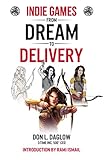


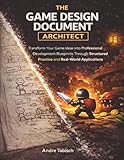

This distinction matters because making a game is only part of running a studio. Founders may also be responsible for production, marketing and business development, especially when the team cannot afford dedicated specialists. In the GDC Vault description for Amy Dallas’s 2018 session on indie business, she notes that founders may have started because they wanted to make games, not because they wanted to manage people or run a business. That mismatch is one of the first realities to plan for. Read the GDC Vault session description.
Free tools Windows power users keep installed
One-click scans. No signup required.
What work does a studio have to organise?
People and production
Someone has to shape the work into a sequence the team can attempt, track progress and adjust when estimates prove wrong. Roles may overlap: a founder might handle creative direction while also coordinating schedules or hiring contractors. The studio’s structure should reflect the skills actually available, including both creative and technical competence, rather than an idealised org chart.
#1 Best Overall
Business and funding
Studios need a way to pay for development and sustain the people doing it. Possible approaches include client work, funding an original game, or combining different sources of income. Each choice affects how much time the team can devote to its own projects and what risks it carries. A plan based entirely on an unproven game, for example, exposes the studio to a different kind of uncertainty than work paid for by clients.
Intellectual property and audience
A studio’s work can include ownership and stewardship of the games and other intellectual property it creates, as well as relationships with players and communities. Those relationships may help a team understand interest in a project, but they do not guarantee sales or funding. The studio must decide what it is building beyond the next milestone, and how it wants to engage the people who care about its work.
Risk, growth and continuity
Studio decisions are connected over time: team composition, creative direction, funding, growth and possible exit paths all affect one another. Michael Sellers’s GDC Vault description for his 2006 talk on the life cycle of a small game-development studio frames these as choices involving both risks and benefits, not as a formula that every founder should follow. See the GDC Vault session description.
The Tool Desk
Outbyte PC Repair FREEClear out junk files and repair common Windows errorsFree Scan →Outbyte Driver Updater FREEFix the driver behind crashes, sound loss and screen glitchesFind Drivers →Which studio model fits the work?
There is no universally best operating model. A useful starting point is to compare the trade-offs a model creates for the team, its income and its creative control.
| Approach | What it can offer | What to weigh |
|---|---|---|
| Client work alongside original games | Client projects can provide work apart from the studio’s own game, while original IP preserves room for the team’s creative projects. | Client commitments compete for time and attention with the studio’s own development schedule. |
| Partnerships involving hardware or IP | A partnership can connect a studio’s work to another organisation’s hardware or intellectual property. | The studio needs to assess the terms, creative fit and associated risks; a partnership is not a guaranteed route to success. |
| Fanbase growth and crowdfunding | A community can support visibility, and Kickstarter funding is one approach discussed by practitioners. | Community interest does not ensure a funded campaign or a sustainable business. |
These examples come from GDC’s 2019 session description for “How to Run a Studio Without a Surprise Hit.” It describes featured studios as having been in business for “about 5 years” and employing “between 4-10 people.” Those figures describe the examples in that session, not the indie sector as a whole. Read the GDC Vault session description.
What makes small-studio management difficult?
Small teams have fewer people to absorb uncertainty or take over when a plan changes. A GDC Vault producer-panel description from 2015 puts it plainly: “Producing games in the indie world can be complicated.” It raises practical questions that remain relevant whether a team shares an office or works remotely: how to schedule around unknowns, keep collaborators aligned, and sustain effort through a long project without burning out. See the GDC Vault session description.
- Uncertainty: Treat schedules as plans to revisit, not promises that every task can be estimated precisely in advance.
- Remote coordination: Make responsibilities, decisions and updates visible so collaborators can stay aligned without relying on informal office conversations.
- Long project duration: Pay attention to workload and recovery over time; a team cannot rely on short bursts of effort indefinitely.
- Founder capacity: Account for management and business duties alongside creative work, rather than assuming they will happen without time or ownership.
How should you think about starting a studio?
Start by defining the work the organisation must sustain, not by deciding what a studio is supposed to look like. Before committing to a model, make the following decisions explicit:
- Choose the creative and technical focus. Identify what the team wants to make and which skills it needs to do that credibly.
- Assign operational responsibilities. Decide who handles production, people management, marketing and business development, even if some roles are shared.
- Choose an income and funding approach. Consider how client work, original IP, partnerships or crowdfunding would affect creative time and financial risk.
- Set expectations for the team. Decide how people will collaborate, handle changing plans and manage workload over a long development cycle.
- Consider continuity. Discuss what growth would mean, what the studio wants to own, and what future outcomes or exit paths it might pursue.
These are decisions to make in context, not prerequisites or a universal checklist. GDC’s sessions present studio-building as a set of lifecycle and operating choices; they do not establish one structure or strategy that works for every team.
Quick Recap
Best Value
Product prices and availability are accurate as of the date/time indicated and are subject to change. Any price and availability information displayed on Amazon at the time of purchase will apply.

