
iTechGuides is reader-supported. When you buy through links on our site, we may earn an affiliate commission. As an Amazon Associate I earn from qualifying purchases. Learn more
GPS fleet tracking uses GPS-equipped devices in fleet vehicles to determine where they are and send that information to software, where managers can view vehicle locations, trips, and alerts. It is part of fleet telematics: a broader system may also collect vehicle diagnostics and other operating data.
What does GPS fleet tracking mean?
GPS fleet tracking combines an in-vehicle device with a communications link and a software platform. The device determines a vehicle’s position; the platform presents that data so a fleet manager can monitor vehicles and review their movement. Depending on the system, it may also collect information beyond location.
GPS is the positioning component, not the whole tracking service. The U.S. government describes GPS as a positioning, navigation, and timing utility. A fleet tracking system uses GPS-derived position data and a separate communications method to deliver it to fleet software.
How does GPS fleet tracking work?
- Positioning: A receiver uses signals from GPS satellites to calculate its position and time. The GPS.gov overview explains the satellite-based system at GPS.gov.
- Collection: An onboard tracker or telematics unit gathers location data. Depending on its hardware and connection to the vehicle, it may also collect diagnostics or sensor readings.
- Transmission: The device sends information to a server or cloud platform, usually over a cellular network. Some systems may use another supported network, such as satellite.
- Review and action: Fleet software turns incoming data into maps, trip history, dashboards, reports, and alerts for authorized users.
The U.S. Department of Energy’s Federal Energy Management Program describes telematics as transmitting near-real-time vehicle data, including GPS location and diagnostics from onboard diagnostic ports, over a cellular network to a cloud platform. “Near-real-time” is not a universal refresh interval: reporting cadence depends on the device, service, connectivity, and settings. See the DOE fleet telematics guide.
#1 Best Overall
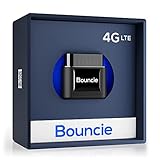
- Real-Time GPS Tracker Device for Vehicles — Ideal for personal use or fleet management, this car GPS tracker provides up-to-the-minute location updates. Our car tracking device also provides unlimited trip history, including a detailed route history
- Driving Insights — Our OBD tracker for cars monitors speed, acceleration, hard braking, idle time, and more. This versatile family and fleet GPS tracker for cars also helps improve road safety by sending alerts in response to unsafe driving practices
- Vehicle Health — Unlike other vehicle tracking devices, our car tracker device continuously monitors diagnostic engine data, alerting you to potential maintenance issues, so you can avoid downtime and keep fleet and family vehicles in peak condition
- Geo-Fencing & Accident Detection — Set up geo-fences to receive notifications when your vehicle enters or exits designated areas; Equipped with advanced sensors and software, this vehicle tracker device instantly detects impacts and sends SMS alerts
- Easy To Install & Low Monthly Subscription — Our OBD GPS tracker for vehicles plugs directly into OBD2 ports and works on most vehicles 1996 and newer; $9.65 monthly subscription required - no hidden activation or return fees - cancel anytime
What can a fleet tracking system do?
Features vary by device, vehicle, and service configuration. A platform may support:
- Viewing vehicle locations and trip history.
- Setting geofences and receiving alerts when a vehicle enters or exits a defined area.
- Reviewing mileage, trips, and vehicle utilization to inform dispatch or fleet planning.
- Accessing available vehicle fault, engine, or other diagnostic data.
- Supporting driver coaching or maintenance reminders when the system includes those features.
These are possible uses, not guaranteed results. Having tracking software does not by itself establish that a fleet will reduce costs, improve safety, or prevent incidents; outcomes depend on how the system is configured and used.
Rank #2

- [NO MONTHLY FEE — 4G SIM & DATA INCLUDED] Pay once and track without a recurring subscription or activation fee. The built-in 4G SIM and data are included, so you can view vehicle location and activity in the TrackEase app or web dashboard. Coverage depends on local cellular availability.
- [PLUG-AND-PLAY OBD POWER — NO CHARGING] Plug the tracker into a compatible vehicle’s OBD-II port—no wiring, tools, or battery charging required. It draws power from the vehicle and enters sleep mode after the engine is turned off for simple, set-it-and-forget-it tracking.
- [REAL-TIME LOCATION & 180-DAY TRIP HISTORY] See live vehicle location with updates every 5 seconds while moving, then review up to 180 days of routes, stops, mileage, and driving activity in the iOS, Android, or web app.
- [CUSTOM SAFETY & SECURITY ALERTS] Receive push notifications for speeding, vehicle movement, geofence entry or exit, and device disconnection. Use configurable alerts to monitor teen drivers, family vehicles, company cars, or potential theft.
- [MULTI-VEHICLE MANAGEMENT & GLOBAL COVERAGE] Manage multiple VITALGLOW trackers from one account and keep each vehicle’s map, alerts, and trip history organized in one dashboard. Supported 4G service is available in 170+ countries and regions, including the U.S., Canada, and Mexico.
What types of GPS fleet tracking devices are there?
Factory-installed OEM telematics
Some vehicles have telematics hardware installed by the manufacturer. OEM systems may integrate with vehicle systems, but features and access can differ across manufacturers and models, which can complicate a mixed-make fleet.
The Tool Desk
Outbyte PC Repair FREERepair Windows errors before they cause bigger problemsFix Now →Outbyte Driver Updater FREEScan for outdated or missing drivers - takes under a minuteDriver Scan →OBD-II plug-in devices
These devices connect to a vehicle’s onboard diagnostics port. They can be easier to install or move than hardwired units, subject to vehicle compatibility and the fleet service’s requirements. A standalone consumer tracker may provide a location device without the managed fleet platform or service used for commercial monitoring.
Rank #3

- [No Subscriptions] – Avoid adding another subscription you might forget about. We are the only company that offers a car GPS tracker with with no subscriptions, activation or hidden fees ever.
- [Effortless Setup] – Plug and Play 4G GPS OBD tracker that installs in 3 minutes or less. Start tracking fast with our user-friendly mobile app. Track a fleet of multiple devices using a single screen.
- [Ultimate Tracking Precision] – Real-time location tracking with instant alerts, customizable geofencing, and incredibly long battery life. For vehicles, personal items, and loved ones.
- [Unbounded Tracking] - Works in 170+ countries including US, Canada and Mexico. Our car trackers for your vehicle can be moved to another vehicle without incurring a fee.
- [Car Theft Prevention Device] - Our hidden car tracker device serves as the ultimate deterrent
Hardwired aftermarket units
Aftermarket telematics devices can be installed directly in a vehicle. They may suit a fleet that needs a more fixed installation or features beyond a basic location device; the specific data collected depends on the unit, vehicle interfaces, and service.
Temporary plug-in systems
A temporary device can be useful for a limited study or pilot when permanent installation is not needed. Check how it is powered, which vehicles it supports, and whether its reporting and platform capabilities meet the pilot’s goals.
Rank #4
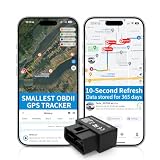
- 【5-day Free Trial】After the trial, continue subscription for $6.49/month with a 1-year plan ($77.88 total) or $8.99 month-to-month. SIM & data included.
- 【Plug & Play OBD2 GPS Tracker】Installs in seconds by plugging into your car’s OBDII port. Compact and lightweight (1.53" x 1.77" x 0.87", 1.2 oz), it’s a discreet hidden GPS tracker that won’t interfere with legroom or drain your car battery.
- 【Track Speed and Driver Behavior】Receive instant alerts for speeding, geo-fence breach, vehicle crashes, hard braking or rapid acceleration. Speeding threshold is customizable. Ideal teen driver GPS or elderly vehicle tracker.
- 【10-Second Real time, No Extra Charge】The fast refresh provides fleet manager or parents with accurate and real time location. Color-coded routes show speed changes visually.
- 【12-month Data History】All tracking data is securely stored with full confidentiality, allowing you to review up to 1 year of trip history.
Asset and trailer trackers
Equipment and trailers may use separate tracking devices designed for powered or unpowered assets. Depending on the unit, power may come from a vehicle or an internal battery. Battery-powered devices may report less often to conserve power, so they may not suit the same monitoring cadence as a vehicle-connected system.
Do these 3 things before closing this tab:
1Clear out junk files and repair common Windows errors2Scan for outdated or missing drivers - takes under a minute3Repair Windows errors before they cause bigger problemsHow do active and passive tracking differ?
An active tracker transmits data to a central system for ongoing monitoring. A passive tracker stores information on the device for later download, rather than continuously sending it for live viewing. Geotab outlines this distinction in its GPS tracking overview. The choice depends on whether the operation needs ongoing remote visibility or can work with data retrieved later.
Best Value

- Idling Reporting and Speeding Alerts: Know when your vehicles are idling and wasting fuel, and get real-time alerts when the vehicle exceeds the posted speed limit.
- Accurate Location Tracking for All Vehicles: See your fleet at a glance on the live map, and view past trips with trip history reports with our real time GPS tracker for vehicles made after 1996. Compatible with Electric, Hybrid, and Diesel.
- Simple Transparent Pricing: Low monthly subscription required at only $15 per month per car tracking device, which includes cell service, secure data, mobile app, and the complete feature set with no hidden activation fees or contracts.
- Fleet Health and Vehicle Maintenance: The OBD GPS tracker device pulls engine diagnostic codes and reports fuel consumption data directly in the app. Get alerted when a fleet tracker detects low fuel or engine codes and view them in-app with ease.
- Real-time Alerts Built for You: Our vehicle GPS tracker sends real-time driving alerts for speeding, harsh braking, and sudden acceleration. Create geo-fences and know exactly when a vehicle enters or exits a given location, city, or service area.
What should you check when choosing a fleet tracking setup?
- Vehicle and asset compatibility: Confirm support for the fleet’s makes, models, diagnostic interfaces, trailers, or equipment. Establish whether the asset has a reliable power source.
- Installation: Decide whether factory equipment, an OBD-II plug-in, a hardwired installation, or a temporary unit best fits the vehicles and deployment period.
- Connectivity and reporting cadence: Check which networks the service supports in the areas where vehicles operate, and whether its reporting frequency meets the operational need.
- Data and software: Distinguish location-only tracking from systems that can also provide diagnostics or other telematics. Confirm that the platform offers the maps, alerts, reports, and integrations the team needs.
- Operational purpose: Clarify whether the priority is vehicle visibility, dispatch, asset tracking, driver identification, coaching, or maintenance monitoring; not every system includes every feature.
Who can see fleet tracking data?
Access depends on the employer’s policies, the provider’s system, and applicable law. A tracking device’s capabilities do not tell you who actually receives or can view its data. For example, GSA’s federal fleet page, last updated September 22, 2025, lists GPS location and other data elements but says GSA Fleet does not receive GPS data; the Department of Energy guide likewise says GPS data are not received by GSA unless an agency explicitly shares them. That example illustrates why data access should be checked for the specific program rather than assumed from the presence of a tracker. See the GSA Fleet telematics page.
Quick Recap
Product prices and availability are accurate as of the date/time indicated and are subject to change. Any price and availability information displayed on Amazon at the time of purchase will apply.

