
Quick wins for a faster PC:
Scan for outdated or missing drivers - takes under a minuteDriver Scan →Repair Windows errors before they cause bigger problemsFix Now →Fix the driver behind crashes, sound loss and screen glitchesFind Drivers →iTechGuides is reader-supported. When you buy through links on our site, we may earn an affiliate commission. As an Amazon Associate I earn from qualifying purchases. Learn more
For physical AI, the faster system is the one that completes the task reliably—not necessarily the one with the most powerful GPU. On-robot inference avoids a remote network round trip and can keep essential behavior available offline; nearby or cloud compute can ease onboard compute and power limits, but adds communication time, bandwidth needs, and dependence on connectivity. Many robots need a hybrid design, with placement decided workload by workload and validated on the actual system.
What “edge” and “cloud” mean for a robot
In this comparison, on-robot edge means compute mounted on the robot, close to its sensors and actuators. Nearby edge means a server or GPU in the same facility or local network. Cloud means remote compute accessed over a network. These locations have different communication paths and failure modes; “edge” is not one fixed latency category.
A physical-AI workload can include sensor capture and transfer, model inference, planning or decision-making, and delivery of an action to the robot. Comparing only accelerator throughput skips much of that path. A remote GPU may finish inference quickly yet still return an action too late for the task, while a local device may not have enough compute, power, or thermal headroom for the desired model.
The Tool Desk
Outbyte Driver Updater FREEScan for outdated or missing drivers - takes under a minuteDriver Scan →Outbyte PC Repair FREEClear out junk files and repair common Windows errorsFree Scan →| Placement | Where the work runs | Performance advantage | Main constraint |
|---|---|---|---|
| On-robot edge | Compute attached to or installed in the robot | Avoids the remote round trip and can support local operation when the internet is unavailable. | Available compute, electrical power, heat dissipation, weight, and cost constrain the design. NVIDIA’s edge-computing overview describes the broad category; specific limits depend on the robot. |
| Nearby edge | A local facility server or GPU reached over a local network | Can add compute without sending every workload to a distant cloud service. | Still relies on a network path whose latency, capacity, and failure behavior must be measured. The cited sources establish no universal nearby-edge latency figure. |
| Cloud | Remote infrastructure reached over a network | Can supply compute for larger workloads and scalable development activities. | Live inference depends on network performance and bandwidth; added latency can harm task accuracy, and data transfer can make simple offloading impractical. Microsoft Research’s March 2026 measurement-study summary reports these tradeoffs for the workloads it evaluated. |
What the available measurements show—and what they do not
Microsoft Research’s March 2026 report, MSR-TR-2026-14, says the full mobile robotic manipulation workload stack studied was infeasible on smaller onboard GPUs. That is evidence about the report’s workloads and configurations, not proof that every small robot computer is inadequate. The summary also says larger onboard GPUs drained robot batteries several hours faster in its evaluated configurations, while offloading introduced latency and bandwidth costs.
#1 Best Overall
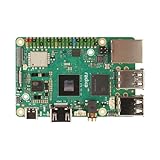
- POWERFUL COMPUTING: Advanced single board computer featuring high-speed LPDDR5 memory for superior processing capabilities and edge AI computing performance
- CONNECTIVITY: Multiple USB ports, HDMI output, and Ethernet connectivity provide versatile interface options for various applications
- COMPACT DESIGN: Space-efficient circuit board layout integrates powerful computing components in a single compact form factor
- DEVELOPMENT READY: Ideal platform for edge AI development, programming, and prototyping with comprehensive hardware interfaces
- EXPANDABILITY: Features multiple GPIO pins and standard connectors enabling extensive hardware expansion possibilities
A later Microsoft Research article published September 23, 2026 illustrates the tradeoff with a Stretch-3 robot: in the described comparison, replacing onboard GPU inference with a Raspberry Pi 5 and offloading inference increased battery lifetime by up to 160%. This is a result for that illustrated setup, not a general runtime guarantee or a prediction for other robots, models, or networks.
Hardware specifications are not end-to-end task results. For example, NVIDIA lists up to 5,581 FP4 TFLOPS for IGX Thor on its IGX industrial edge platform page. That is a manufacturer specification; it does not establish how quickly a particular robot will sense, infer, decide, and act, nor does it demonstrate a safety certification for a particular deployment.
Rank #2

- [High performance] Quad-core ARM SoC up to 1. 8GHz with 3GB RAM- The Tinker Edge R features the Rockchip RK3399Pro SoC and Mali - T764 GPU along with 2GB of Dual Channel LPDDR4 memory for system, 1 GB LPDDR3 memory for NPU and 16GB eMMC flash
- [Gigabit Class networking]Tinker Edge R features a high speed GB LAN port for true Gigabit Class networking throughput along with 3x USB3.2 Gen1 Type-A. It also features onboard Wi-Fi & Bluetooth for robust IoT & Network connectivity
- [Open-source]The board will come with fully open-source kernel and support for multiple APIs, including OpenGL, Vulkan, OpenCL, OpenVX, TensorFlow Lite, Android NN, and Caffe
- [HD Audio & UHD video support] It supports 192/24bit HD Audio playback with automatic Audio jack detection as well as accelerated HD & UHD ( 4K ) video playback and supports HDMI CEC for seamless power on & off configurations
- [WiKi]For more information please refer to the product description, any technical issues after purchase please contact with our tech-support team: click "WayPonDEV" and ask a question. Package Content: 1x Tinker Edge R (3GB+16G eMMC); 2x Wi-FiVBT antenna cable; 1x Stand offset(4xScrew+4xHex); 2x Camera MIPI Convert cable (22P to 15P); 1 x Shielding bag; 1 x Quick start guide
The reviewed sources provide no independent apples-to-apples latency benchmark across on-robot, nearby-edge, and cloud systems, and no general “edge is X times faster” figure. Treat performance figures as tied to their named hardware, workload, and test conditions.
When should inference stay on the robot?
Keep a function onboard when its timing or availability cannot safely depend on an external network, or when the data-transfer cost outweighs the compute benefit. This commonly makes local execution a strong candidate for time-critical actions and the minimum behavior needed to respond safely to a lost connection. Which functions meet that bar depends on the robot and application; it cannot be inferred from a GPU specification alone.
Rank #3

- Supports access to online large model platforms and includes Edge Impulse object detection demo for real-time multi-object recognition
- Equipped with Xtensa dual-core LX7 processor (up to 240MHz), 8MB PSRAM, 16MB Flash, and dual-mode WF + BT LE
- Dual-microphone array with noise reduction and echo cancellation for high-quality voice processing
- Integrated audio input and output module, supporting AI speech interaction and voice recognition applications
- Onboard camera interface (DVP) and SPI / QSPI display interface for image capture, recognition, and external display connection
- Network-independent behavior: The robot should retain the functions required for its intended offline or degraded mode. Decide explicitly what it does if an edge server or cloud connection disappears.
- Timing-sensitive tasks: Evaluate the complete sensor-to-action path, including communication delay and variation, rather than model inference time alone.
- Constrained networks: Large or frequent sensor transfers may make offloading impractical even when remote compute is available.
- Physical limits: Local compute must fit the robot’s power, thermal, space, and weight budgets. A more capable module is useful only if the platform can support it.
When can nearby edge or cloud compute help?
Offloading is worth evaluating when local hardware cannot run the required workload within the robot’s physical limits, or when reducing onboard compute demand materially improves the deployment. A nearby facility GPU may shorten the network path compared with a distant cloud, but that advantage is deployment-specific and does not remove network dependence. Cloud can provide remote compute capacity, but the added communication path must still meet the task’s requirements.
Cloud also has a separate development-time role. NVIDIA’s March 16, 2026 Physical AI Data Factory announcement describes cloud infrastructure for large-scale data curation, synthetic data, and model evaluation, and names Azure and Nebius as collaborators. Those development workflows do not establish that cloud-hosted inference is suitable for live robot control.
Rank #4
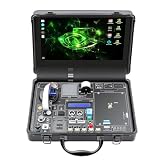
- 30-in-1 No-Solder Sensor Board, Plug and Play: Integrates 30 functional sensors including temperature & humidity, ultrasonic ranging, gas and motion sensors. Innovative common board design requires no soldering or complex wiring, and comes with a full set of accessories like 128G SD card, adapter board and acrylic mounting plates for zero-threshold experiments
- 8MP Gimbal Camera & Dual Servos for Professional Visual AI: The Starter Kit is equipped with an IMX219 8MP monocular camera and a dual-servo gimbal, supporting face and target tracking, and is ideal for AI edge computing scenarios such as intelligent monitoring, robot navigation, and automated recognition
- 38 Step-by-Step Python Tutorials, From Beginner to Practical Application: The Jetson Orin Nano Starter Kit comes with 38 well-designed Python tutorials progressing from basic programming to vision practice, covering all key knowledge of sensor control, embedded development and AI visual recognition for both beginners and advanced learners
- 11.6-inch IPS HD Screen & AI Voice Interaction System: Built-in 1366*768 resolution IPS screen eliminates the need for an external monitor, enabling one-device experimentation and visual feedback. The exclusive AI voice interaction system supports intelligent Q&A and voice command control for natural human-computer dialogue
- Rich Expansion Interfaces & Portable All-in-One Design: Features 2x I2C, 1x UART and 2 IO expansion interfaces to meet personalized experiment expansion needs; a custom carrying case integrates all components (11.81×7.87×3.94 inch), allowing AI experiments and demonstrations anytime and anywhere
As a product example rather than a performance recommendation, NVIDIA positions IGX Thor as industrial edge hardware for robotics and safety-sensitive settings and lists developer kits on its IGX page. Vendor positioning and specifications should not be treated as independent benchmarks or as a substitute for application-specific safety review.
How to decide: benchmark the complete workload
There is no single latency cutoff that applies to every robot. Set requirements from the task, then compare placements using representative hardware, models, sensor traffic, and network conditions. A useful evaluation sequence is:
- Define the task and failure behavior. Record the actions the robot must complete, the timing requirements for those actions, and what it should do when a network path is slow or unavailable.
- Measure the full response path. Include sensor data transfer, queueing, inference, return communication, and action delivery. Report latency distributions and variation, not just an average or peak accelerator throughput.
- Test realistic network conditions. Repeat under representative network load and interruptions. Measure the data volume and bandwidth required, then assess task success under the observed delays.
- Measure robot-side costs. Track onboard power and battery runtime as well as thermal and physical constraints for each configuration. Keep the workload and operating conditions comparable.
- Compare task outcomes, not only timing. Check whether delayed or missing responses change accuracy or task completion, and verify that the robot follows its intended degraded or offline behavior.
- Review deployment constraints. Assess privacy, security, safety, and lifecycle or operating cost for the actual system. These require application-specific validation; the cited performance studies do not resolve them for every deployment.
Why a hybrid architecture is often practical
A hybrid design assigns work according to its timing and availability needs: keep essential, time-critical, or network-independent behavior on the robot, and selectively send other workloads to nearby or cloud compute when the extra capacity or battery savings justify the communication cost. Microsoft’s September 2026 article describes distributing robotics inference across robot compute, an edge GPU, and cloud with a Kubernetes-based toolset, including an example involving inference on Jetson Thor. That example shows an architectural approach, not a guarantee that the same split will improve another robot’s performance.
Make the boundary between local and remote work explicit. The robot needs a defined response when remote results arrive late, are unavailable, or cannot be trusted for the current action. Validate that behavior with the same workload and network conditions used for performance testing; a hybrid diagram by itself does not establish safety or reliability.
Quick Recap
Product prices and availability are accurate as of the date/time indicated and are subject to change. Any price and availability information displayed on Amazon at the time of purchase will apply.

