
Recommended Free Tools
iTechGuides is reader-supported. When you buy through links on our site, we may earn an affiliate commission. As an Amazon Associate I earn from qualifying purchases. Learn more
Yes—some tardigrades have survived short, controlled exposure to open space. In the best-known experiment, desiccated animals endured ten days in low Earth orbit and revived after rehydration when exposed to vacuum alone. Adding solar ultraviolet radiation sharply reduced survival. That result does not mean tardigrades can live indefinitely in space or withstand every space hazard.
What does “survive in space” mean?
In the experiments, researchers exposed tardigrades to specified conditions and then assessed them after the flight. Survival was determined after rehydration on Earth; the findings do not show animals actively living and thriving in open space.


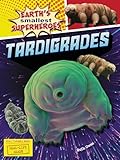

The distinction matters because “space” is not one uniform stress. Vacuum, ultraviolet light, radiation, exposure duration, and whether an animal is hydrated can all affect what a test demonstrates.
Quick wins for a faster PC:
Scan for outdated or missing drivers - takes under a minuteDriver Scan →Repair Windows errors before they cause bigger problemsFix Now →What the TARDIS experiment tested
The TARDIS (Tardigrada In Space) experiment flew on the FOTON-M3 mission in September 2007, on the European Space Agency’s Biopan-6 platform. Researchers exposed desiccated adults of two species—Richtersius coronifer and Milnesium tardigradum—for ten days in low Earth orbit, at approximately 258–281 km above Earth. The study compared different exposure groups with desiccated laboratory controls. Jönsson and colleagues’ 2008 paper in Current Biology reports the detailed results.
#1 Best Overall
| Exposure group | What the animals encountered | Reported outcome after return |
|---|---|---|
| Vacuum only | Space vacuum, with solar and galactic cosmic radiation also present during the flight; no added direct solar-UV treatment. | Both tested species survived well, with no significant difference in survival pattern from desiccated controls. |
| Vacuum plus UV-A/UV-B | Vacuum and ultraviolet wavelengths of 280–400 nm. | UV exposure sharply reduced survival. 68% of M. tardigradum initially revived within 30 minutes, but subsequent mortality was high; only one R. coronifer revived. |
| Vacuum plus broader UV | Vacuum and a broader ultraviolet range, from vacuum-UV to UV-A (116.5–400 nm). | Three M. tardigradum survived; no R. coronifer survived. |
The percentages and counts are outcomes from these particular experimental groups, not general survival rates for either species. The study also assessed reproduction after rehydration; its central comparison shows why the vacuum-only and UV-exposed groups should not be collapsed into one claim about “space exposure.”
Why did vacuum and ultraviolet light have different effects?
In the vacuum-only group, survival was similar to that of controls. But the experiment’s UV-exposed groups had much lower survival, showing that resistance to vacuum is not the same as resistance to unshielded solar ultraviolet radiation. The outcome depended on the exposure treatment as well as the species and the animals’ desiccated state.
TARDIS project leader Ingemar Jönsson summarized the vacuum result to ESA by saying: “Our principle finding is that the space vacuum, which entails extreme dehydration and cosmic radiation, were not a problem for water bears.” That statement refers to the experiment’s vacuum finding; it should be read alongside the primary paper’s report that added solar UV strongly reduced survival. ESA’s account of the result provides the quotation and context.
How does the separate TARSE experiment fit?
TARSE was a distinct FOTON-M3 experiment, not another treatment group in TARDIS. It tested the species Macrobiotus richtersi in both hydrated and desiccated states during a 12-day flight in September 2007. Its report described no effect of microgravity and radiation on survival or DNA integrity of active animals in the reported comparison. Rebecchi and colleagues’ 2009 report presents those findings.
Rank #3
TARSE and TARDIS therefore answer different experimental questions: they studied different species and states, and reported different outcomes. TARSE’s findings about active M. richtersi should not be substituted for TARDIS’s tests of desiccated animals exposed to vacuum and UV.
Independent reader supportYour contribution helps us test, update, and keep practical guides available for everyone.What can we conclude—and what remains unproven?
- Established: Some desiccated tardigrades survived defined exposures in low Earth orbit and revived after rehydration.
- Established: In TARDIS, survival after vacuum-only exposure differed markedly from survival after added solar UV.
- Not established by these results: That every tardigrade species survives space, that active tardigrades generally withstand the same conditions, or that tardigrades can survive indefinitely in open space.
- Not established: Immunity to space radiation or all other hazards of space. The outcomes were conditional on species, animal state, exposure treatment, duration, and post-flight assessment.
ESA also reports that tardigrades and lichens spent months attached to the outside of the International Space Station and returned alive. Its overview does not provide a detailed tardigrade protocol or species-level result for that statement, so it is broad context rather than a replacement for the more specific TARDIS evidence. See ESA’s exobiology overview.
Quick Recap
Best Value
Product prices and availability are accurate as of the date/time indicated and are subject to change. Any price and availability information displayed on Amazon at the time of purchase will apply.
Do these 3 things before closing this tab:
1Clear out junk files and repair common Windows errors2Scan for outdated or missing drivers - takes under a minute3Repair Windows errors before they cause bigger problems
