
Free tools Windows power users keep installed
One-click scans. No signup required.
iTechGuides is reader-supported. When you buy through links on our site, we may earn an affiliate commission. As an Amazon Associate I earn from qualifying purchases. Learn more
First find out whether the slowdown is in your home’s Wi-Fi or in the broadband connection coming into it. Test near the router and in the room with the problem, then try no-cost changes—reducing heavy network use, improving router placement, and choosing a suitable Wi-Fi band. If nearby tests are fast but a distant room is slow, address coverage; if speeds are poor even near the router, Wi-Fi tweaks may not solve the underlying problem.
1. Find out whether it is Wi-Fi or broadband
Run speed tests in several places: close to the router or access point, then in the room where Wi-Fi is slow. Record download speed, upload speed, and latency if the test provides it. Repeat the same tests after each change so you can tell whether it helped. Microsoft recommends measuring in different places before and after adjustments (Microsoft’s guide to Wi-Fi and home layout).
Keep the conditions as similar as possible between tests. Use the same device and test service, and avoid comparing a busy household evening with a quiet morning as if the difference came from a router change. If practical, test with a wired connection to the router as well: that helps separate Wi-Fi performance from the broadband connection, although the result still depends on the device, cable, router, and test service.
Recommended Free Tools
- Fast near the router, slow in one room: A coverage, obstruction, or local interference problem is more likely.
- Slow both near the router and farther away: Check network load, equipment capability, and the incoming connection before buying coverage gear.
- Service has stopped altogether: A Wi-Fi setting cannot fix an outage. Check the provider’s outage information if available; provider support may be needed.
Ofcom frames the issue as whether “your broadband or Wi-Fi [is] slow, unreliable or has stopped altogether” in its consumer guide to broadband and Wi-Fi problems.
#1 Best Overall

- Wi-Fi 6 Mesh Wi-Fi - Next-gen Wi-Fi 6 AX3000 whole home mesh system to eliminate weak Wi-Fi for good(2×2/HE160 2402 Mbps plus 2×2 574 Mbps)
- Whole Home WiFi Coverage - Covers up to 6500 square feet with seamless high-performance Wi-Fi 6 and eliminate dead zones and buffering. Better than traditional WiFi booster and Range Extenders
- Connect More Devices - Deco X55(3-pack) is strong enough to connect up to 150 devices with strong and reliable Wi-Fi
- Our Cybersecurity Commitment - TP-Link is a signatory of the U.S. Cybersecurity and Infrastructure Security Agency’s (CISA) Secure-by-Design pledge. This device is designed, built, and maintained, with advanced security as a core requirement
- More Gigabit Ports - Each Deco X55 has 3 Gigabit Ethernet ports(6 in total for a 2-pack) and supports Wired Ethernet Backhaul for better speeds. Any of them can work as a Wi-Fi Router
2. Reduce load and test close to the router
Take the device having trouble closer to the router and test again. Temporarily pause large downloads, cloud backups, or other demanding activity, then see whether performance changes. You can also temporarily disconnect or turn off devices that are not in use to check whether simultaneous use is contributing. These are diagnostic steps: if the problem improves, the network may be under load rather than suffering from a weak signal alone. Ofcom and Google Home support both recommend checking device use and restarting as early troubleshooting steps (Ofcom; Google Home and Nest Help).
3. Move the router to a better position
Put the router in a central, open location where possible—not tucked into a cabinet, hidden behind a large object, or placed at the far edge of the home. Distance, walls, building materials, and objects can weaken Wi-Fi. Reducing barriers between the router, any mesh points, and the devices you use can improve the signal in problem areas. Microsoft’s home-layout guidance explains how room layout and obstacles affect Wi-Fi; Google also recommends considering router placement when troubleshooting performance (Google Home and Nest Help).
Rank #2

- A New Way to WiFi: Deco Mesh technology gives you a better WiFi experience in all directions with faster WiFi speeds and strong WiFi signal to cover your whole home.
- Better Coverage than traditional WiFi routers: Deco S4 three units work seamlessly to create a WiFi mesh network that can cover homes up to 5, 500 square feet. No dead zone anymore.
- Seamless and Stable WiFi Mesh: Rather than wifi range extender that need multiple network names and passwords, Deco S4 allows you to enjoy seamless roaming throughout the house, with a single network name and password.
- Incredibly fast 3× 3 6 Stream AC1900 speeds makes the deco capable of providing connectivity for up to 100 devices.
- With advanced Deco Mesh Technology, units work together to form a unified network with a single network name. Devices automatically switch between Decos as you move through your home for the fastest possible speeds.
After moving the router, repeat the tests near it and in the affected room. A change that improves one location may not improve every room, so use the measurements to judge the result rather than relying on a single test.
Do these 3 things before closing this tab:
1Scan for outdated or missing drivers - takes under a minute2Clear out junk files and repair common Windows errors3Fix the driver behind crashes, sound loss and screen glitches4. Choose the band that suits the room and device
If your router offers separate Wi-Fi bands, test the device on a suitable one. The best option depends on distance, obstacles, congestion, and whether the device supports the band.
Rank #3
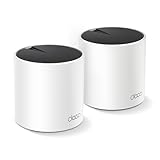
- Wi-Fi 6 Mesh Wi-Fi - Next-gen Wi-Fi 6 AX3000 whole home mesh system to eliminate weak Wi-Fi for good(2×2/HE160 2402 Mbps plus 2×2 574 Mbps)¹²
- Whole Home WiFi Coverage - Covers up to 4500 square feet with seamless high-performance Wi-Fi 6 and eliminate dead zones and buffering. Better than traditional WiFi booster and Range Extenders¹
- Connect More Devices - Deco X55(2-pack) is strong enough to connect up to 150 devices with strong and reliable Wi-Fi¹
- Our Cybersecurity Commitment - TP-Link is a signatory of the U.S. Cybersecurity and Infrastructure Security Agency’s (CISA) Secure-by-Design pledge. This device is designed, built, and maintained, with advanced security as a core requirement
- More Gigabit Ports - Each Deco X55 has 3 Gigabit Ethernet ports(6 in total for a 2-pack) and supports Wired Ethernet Backhaul for better speeds. Any of them can work as a Wi-Fi Router
| Band | When to try it | Trade-off |
|---|---|---|
| 2.4 GHz | Farther rooms or devices separated from the router by obstacles. | Generally reaches farther and passes through obstacles better, but may offer lower throughput and face more congestion. |
| 5 GHz | Devices nearer the router when you want higher throughput. | Generally offers faster throughput over a shorter range than 2.4 GHz. |
| 6 GHz | A relatively nearby device when both it and the router support Wi-Fi 6E. | Requires compatible equipment and reaches less far; it is not an option for devices without Wi-Fi 6E support. |
These are general band characteristics, not a guarantee that one band will be faster in every home. Test the connection where you actually use the device. Microsoft describes the range and throughput trade-offs in its Wi-Fi and home layout guide; Google likewise advises considering the device and Wi-Fi connection when troubleshooting (Google Home and Nest Help).
5. Check congestion and channel selection
Nearby wireless networks can compete for airtime, and household sources can contribute to interference. If your router has automatic channel selection, it may be simplest to leave that enabled. If you are considering a manual change, check the router’s documentation and local conditions first; available channels and settings vary by router and country.
Rank #4

- WiFi 6E Tri-Band Mesh WiFi – Cover up to 7,200 Sq.Ft with next-gen seamless WiFi and make dead zones and buffering a thing of the past¹ ²
- Brand-New 6 GHz Band – Experience the latest frequency of WiFi, eliminating interference from all legacy devices. The 6 GHz band can work as a backhaul to ensure stable connections between nodes by default. You can switch it to Wi-Fi Network mode and connect your WiFi 6E-compatible devices to 6GHz Network³
- True Tri-Band Speed – All three WiFi bands work together to unleash your network’s total speeds up to 5,400 Mbps for 200 devices(6 GHz: 2402 Mbps (HE160);5 GHz: 2402 Mbps (HE160);2.4 GHz: 574 Mbps)¹ ³
- Our Cybersecurity Commitment - TP-Link is a signatory of the U.S. Cybersecurity and Infrastructure Security Agency’s (CISA) Secure-by-Design pledge. This device is designed, built, and maintained, with advanced security as a core requirement.
- Unlock the Full Potential of WiFi 6 - Opening the 6 GHz band will change the game for WiFi 6. WiFi 6 brings about upgraded performance in network efficiency and capacity. Whereas the advantages of WiFi 6 are not fully realized while competing with transmissions from WiFi 5 (or other radios). The 6 GHz band is available only for WiFi 6 traffic, allowing WiFi 6 to meet its intended potential
Microsoft recommends comparing nearby network activity when selecting a channel: on 2.4 GHz, compare channels 1, 6, and 11 against local signal strength and crowding; on 5 GHz, consider how many access points are present at similar signal strength. Apple recommends choosing the locally best-performing channel if automatic selection is unavailable (Microsoft; Apple’s recommended Wi-Fi router settings). There is no single manual channel change that is best for every home.
The Tool Desk
Outbyte Driver Updater FREEFix the driver behind crashes, sound loss and screen glitchesFind Drivers →Outbyte PC Repair FREERepair Windows errors before they cause bigger problemsFix Now →6. Restart the network and check for updates
Restarting the router can clear a temporary glitch. The Federal Communications Commission’s Consumer and Governmental Affairs Bureau says, “Sometimes a simple router reboot—by powering it off and then back on again—can resolve a problem” (FCC Consumer Guide). Use the restart procedure in your router’s documentation, especially if you have a separate modem and router.
Best Value

- 𝐃𝐞𝐜𝐨 𝟕 𝐒𝐮𝐩𝐞𝐫𝐜𝐡𝐚𝐫𝐠𝐞𝐝 𝐰𝐢𝐭𝐡 𝟒-𝐒𝐭𝐫𝐞𝐚𝐦 𝐁𝐄𝟓𝟎𝟎𝟎 𝐃𝐮𝐚𝐥-𝐁𝐚𝐧𝐝 𝐖𝐢𝐅𝐢 𝟕: Delivers up to 4324 Mbps (5 GHz) and 688 Mbps (2.4 GHz) speeds for 4K/8K streaming, AR/VR gaming, and more◇. Performance varies by conditions, distance to devices, & obstacles such as walls.
- 𝐒𝐞𝐚𝐦𝐥𝐞𝐬𝐬 𝐖𝐡𝐨𝐥𝐞-𝐇𝐨𝐦𝐞 𝐂𝐨𝐯𝐞𝐫𝐚𝐠𝐞: Covers up to 6,600 sq. ft. for over 150 devices with the option to expand anytime by adding another Deco router. All Deco routers work together.
- 𝐒𝐢𝐦𝐮𝐥𝐭𝐚𝐧𝐞𝐨𝐮𝐬 𝐖𝐢𝐫𝐞𝐝 & 𝐖𝐢𝐫𝐞𝐥𝐞𝐬𝐬 𝐁𝐚𝐜𝐤𝐡𝐚𝐮𝐥: Wi-Fi 7 and 2.5G Ethernet work together to balance traffic between Deco units for faster, more stable whole-home coverage. Backhaul requires at least two Deco units.§
- 𝐄𝐚𝐬𝐲 𝐒𝐞𝐭𝐮𝐩 & 𝐌𝐚𝐧𝐚𝐠𝐞𝐦𝐞𝐧𝐭: Set up and control your network in minutes with the Deco App. Keep your WiFi performing at its best by keeping the firmware updated through the App. All Wi-Fi routers require a separate modem. ⌂
- 𝐎𝐮𝐫 𝐂𝐲𝐛𝐞𝐫𝐬𝐞𝐜𝐮𝐫𝐢𝐭𝐲 𝐂𝐨𝐦𝐦𝐢𝐭𝐦𝐞𝐧𝐭 - TP-Link is a signatory of the U.S. Cybersecurity and Infrastructure Security Agency’s (CISA) Secure-by-Design pledge. This device is designed, built, and maintained, with advanced security as a core requirement.
Check the manufacturer’s support instructions for router firmware updates, and enable automatic updates if your equipment supports them. Avoid changing advanced settings just because they are available: menu labels and effects vary between models and firmware. Google, Ofcom, and Apple provide device-specific troubleshooting guidance (Google Home and Nest Help; Ofcom; Apple).
7. Add coverage equipment only if the tests point to a coverage gap
If tests are good near the main router but weak in one or more distant areas, try placement changes first. If the router cannot be moved and a single area remains hard to reach, an extender may help carry coverage there. If several rooms or floors have dead zones, a mesh system may be a better fit for distributing coverage. Neither option guarantees faster broadband: both address Wi-Fi reach inside the home, and performance depends on placement and the connection between equipment.
| Option | Most relevant when | What to check |
|---|---|---|
| Keep the current router and improve placement | The problem is limited or may be caused by a poor router location. | Whether a more central, open position improves the tests in affected rooms. |
| Wi-Fi extender | A particular room or area needs more reach and moving the router is impractical. | Compatibility, a suitable location between router and weak area, and setup cost. |
| Mesh system | Several rooms or floors need better coverage. | Placement flexibility, compatibility, wired-backhaul availability, connection quality between mesh points, and total cost. |
| Replacement router | The existing router cannot support the subscribed plan or the devices’ requirements. | Router capability, modem compatibility where relevant, support for client devices, and total cost. |
Extenders and mesh points need a usable connection back to the main router; placing a node in a location that already has a very weak signal can limit the benefit. Google’s guidance covers placement and performance for its Nest Wifi and Google Wifi products, while Ofcom also discusses options for improving home Wi-Fi (Google Home and Nest Help; Ofcom).
PC Slower Than It Used to Be?
A free scan shows the junk files, broken settings and background clutter dragging Windows down - then fixes them in one click.Free scan · Windows 10 & 11Outdated Drivers Are Slowing You Down
One free scan finds every outdated or missing driver and matches the right update for your exact hardware.Free scan · exact hardware match8. Check the equipment and decide when provider help is needed
If performance remains poor even close to the router, compare the router and modem capabilities with the speed included in your broadband plan. If possible, test a wired connection to help determine whether the issue persists without the Wi-Fi link. The FCC advises checking whether the router model can provide the subscribed speeds and notes that outdated equipment may need an update or replacement (FCC Consumer Guide).
If a wired test and tests close to the router remain below what your service should provide, or there may be an outage, Wi-Fi placement and channel changes are unlikely to resolve the incoming-service problem. At that point, check the provider’s service status and contact support if needed. That is not a failure of the troubleshooting: it means the evidence points beyond the wireless coverage inside your home.
Quick Recap
Product prices and availability are accurate as of the date/time indicated and are subject to change. Any price and availability information displayed on Amazon at the time of purchase will apply.

