
The Tool Desk
Outbyte Driver Updater FREEScan for outdated or missing drivers - takes under a minuteDriver Scan →Outbyte PC Repair FREEClear out junk files and repair common Windows errorsFree Scan →iTechGuides is reader-supported. When you buy through links on our site, we may earn an affiliate commission. As an Amazon Associate I earn from qualifying purchases. Learn more
No—an external host MCU is optional, not mandatory. Both Ezurio Veda modules can run an application on their own MCU in system-on-chip (SoC) mode, or operate as network-coprocessor (NCP) modules alongside a separate host. The main difference between them is Wi-Fi band support: IF912 is dual-band Wi-Fi 6, while IF913 adds 6 GHz with Wi-Fi 6E.
How can the modules work without an external host MCU?
Each Veda module combines a Wi-Fi/Bluetooth radio with an application MCU subsystem and memory in a compact surface-mount package. In SoC mode, the module’s ARM Cortex-M33 subsystem runs the application, so a separate host processor is not required for that role. Ezurio lists the Cortex-M33 subsystem at 192 MHz for both models.
In NCP mode, the Veda module handles wireless connectivity while an external processor runs the main application. That can suit a design that already has a host MCU or whose software architecture calls for one. The choice is architectural: the modules support both approaches, rather than requiring every product to be hostless. Ezurio’s family overview describes the two modes.
PC Slower Than It Used to Be?
A free scan shows the junk files, broken settings and background clutter dragging Windows down - then fixes them in one click.Free scan · Windows 10 & 11Crashes, No Sound, or Screen Glitches?
Random freezes, missing sound and display glitches usually trace back to one bad driver. Find and replace yours safely.Free scan · under a minuteWhat is the difference between IF912 and IF913?
The decisive distinction is whether the product needs access to the 6 GHz Wi-Fi band. The IF913 adds that band; otherwise the two share a closely related module platform. Both product pages list Bluetooth LE 5.4.
#1 Best Overall

- Experience seamless connectivity with our ESP32 Development Board, equipped with CH340 for stable wireless WIFI and Bluetooth communication, perfect for IoT projects in your smart home
- Benefit from the ultra-low power consumption of the ESP32 Dual Core Module, ensuring efficient performance for your smart home automation tasks, powered by the versatile TYPE-C interface
- Enhance your DIY projects with the ESP32-DevKitC-32, featuring soldering pin compatibility for easy integration into your creations, ideal for IoT enthusiasts and smart home innovators
- Unlock endless possibilities with the ESP-WROOM-32 Module Board, offering 4MB of external storage for ample data capacity, empowering your IoT devices with reliable and secure operation
- Elevate your programming experience using popular software for ArduinoIDE, mixly, and Python with our ESP32 Development Board, delivering a seamless development process for your smart home IoT endeavors
| Feature | Veda IF912 | Veda IF913 |
|---|---|---|
| Radio chipset | Infineon AIROC CYW55912 | Infineon AIROC CYW55913 |
| Wi-Fi | Wi-Fi 6; 2.4 and 5 GHz | Wi-Fi 6E; 2.4, 5, and 6 GHz |
| Bluetooth | Bluetooth LE 5.4 | Bluetooth LE 5.4 |
| Application compute | ARM Cortex-M33 subsystem, listed at 192 MHz | ARM Cortex-M33 subsystem, listed at 192 MHz |
| Operating modes | SoC/hostless or NCP/hosted | SoC/hostless or NCP/hosted |
| Package | 7 × 11 × 1.4 mm SMT | 7 × 11 × 1.4 mm SMT |
| Memory | Integrated-memory and customer-added-memory variants; verify the exact ordering code | Integrated-memory and customer-added-memory variants; verify the exact ordering code |
Specifications are from the IF912 product page and IF913 product page. The pages list variants with 8 MB Flash and 8 MB PSRAM integrated, as well as variants where those memories are customer-added. Confirm which configuration applies to the exact part number you intend to use.
Which module should you choose?
Choose IF912 if 2.4 and 5 GHz meet the requirement
IF912 is the dual-band option. It may be the relevant family to evaluate when the design needs Wi-Fi 6 on 2.4/5 GHz and does not require 6 GHz support. Decide separately whether your software should run on the module in SoC mode or on an existing host with the module in NCP mode.
Rank #2

- All I/O to the pin headers on both sides, on board RGB light, buyers can also connect peripherals according to their own needs.Standard pin headers on both sides make operation easier when using bread boards for development and commissioning
- BW16 is a dual-frequency Wi-Fi + Bluetooth SoC module developed based on RTL8720DN.It supports dual-frequency (2.4GHz or 5GHz) WLAN and low power Bluetooth 5.0
- Integrates ARMV8 (Cortex-M4F) high performance MCU, ARM V8M (Cortex-M0) low power MCU, WLAN (802.11 a / b / g / n), MAC, Bluetooth and RF baseband, and provides a set of configurable GPIO ports for the control of different peripherals.
- BW16 also integrates internal storage and supports simple application development for full Wi-Fi and BT5.0 protocol capabilities
- Applicable to industrial manufacturing, smart home, smart countryside and hotel management
Choose IF913 when 6 GHz support is a requirement
IF913 is the tri-band Wi-Fi 6E option, adding 6 GHz to 2.4 and 5 GHz. Whether that capability is useful in a particular product depends on its target markets and the applicable regional requirements; check current product documentation and regulatory conditions for the intended deployment.
Free tools Windows power users keep installed
One-click scans. No signup required.
Compare the design around the radio, too
Band support alone does not settle a design choice. Confirm that the selected variant’s memory, antenna and RF implementation, interfaces, pin assignments, electrical limits, operating conditions, and regional approvals fit the product. Ezurio lists interfaces including SDIO 3.0, UART, gSPI, I2C, I2S, PWM, PDM, PCM, GPIO, and SMIF, but that list should not be read as a promise that every interface is simultaneously available on every configuration. Use the current datasheet for the exact part.
Rank #3
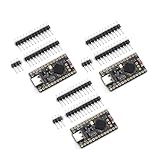
- The NRF5280 development board has a 3.7V lithium battery interface and a software switch that can cut off the power of the LED. When turned off, the standby power consumption can reach 1mA.
- NRF52840 is a high-performance, low-power wireless SoC chip launched
- The NRF52840 chip uses an ARM Cortex-M4F processor, clocked at 64MHz, with built-in 1MB of flash memory and 256KB of RAM
- It also has a variety of peripherals, including ADC, PWM, SPI, I2C, UART, USB and GPIO, etc.
- NRF52840 also supports a variety of security functions, such as AES encryption, SHA-256 hashing and True Random Number Generator (TRNG)
What does integration require?
These are embedded SMT components, not plug-and-play USB Wi-Fi adapters. The 7 × 11 × 1.4 mm package is intended for integration into a product, which means the surrounding board, RF design, software, and approvals still matter. Ezurio’s product and support pages provide datasheets and design resources, including footprint and drawing material, a host-platform integration matrix, a development-kit guide, and application notes covering provisioning, Wi-Fi scanning, testing, and the AT command interface.
- Review the current datasheet and confirm the precise module and memory ordering code.
- Check the footprint, pin assignments, electrical limits, RF/layout guidance, and antenna approach against the product design.
- Choose SoC or NCP mode and verify that the available software and interfaces fit the intended architecture.
- Assess regulatory requirements for the target regions and final antenna configuration. Ezurio names FlexMIMO, FlexPIFA, and Mini NanoBlade Flex as pre-certified antenna options, but that does not automatically certify every end product or regional configuration.
Ezurio lists WPA2/3, secure boot, and related security mechanisms as capabilities. They are not a guarantee that a finished product is secure without correct implementation, configuration, and updates. Review the applicable documentation and plan how the product will maintain its security over time.
Rank #4

- High-Performance Low-Power Wireless SoC with ARM Cortex-M4F processor running at 64MHz for demanding IoT applications
- Features 1MB flash and 256KB RAM, plus rich peripherals including ADC, PWM, SPI, I2C, UART, USB, and GPIO for versatile connectivity
- Integrated advanced security features like AES encryption and SHA-256 hashing to protect your data and communications
- Development board includes a 3.7V Li-ion battery interface and software-controlled LED power switch for efficient power management
- Ultra-low standby power consumption down to 1mA when LEDs are off, extending battery life for portable projects
For evaluation, consult the IF912 support page or IF913 support page for available documentation and software resources. Development kits can help assess integration, but do not replace checking the final design’s RF, power, software, and regulatory requirements.
Availability and performance claims
In an August 27, 2026 news release, Ezurio said the modules were in stock through its global distribution network and that development kits were available for shipment. Stock and pricing can change, so check with a seller for current status. In the same release, Ezurio Senior Product Manager Andy Ross said: “Most of our customers spend months integrating a host MCU with a separate radio module. Veda IF91x changes that conversation entirely — the MCU is already there, already certified, already talking to the radio. You can go straight to writing your application.” That is a vendor representative’s characterization, not an independently measured integration-time result.
Best Value
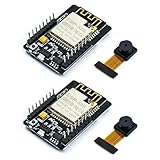
- ESP32CAM is based on ESP32 chip and OV camera module, use low-power dual-core 32-bit CPU, which can be used as an application processor.
- The main frequency is up to 240MHz, and the computing power is up to 600 DMIPS.
- Built-in 520 KB SRAM , external 8MB PSRAM ,support UART/SPI/I2C/PWM/ADC/DAC and other interfaces;Support picture wireless upload, TF card, multiple sleep modes, STA/AP/STA+AP working mode, secondary development.
- It is an ideal solution for IoT applications. The ESP-32CAM comes in a DIP package that plugs directly into the backplane for rapid production.
- ESP-32CAM can be widely used in various IoT applications. Suitable for home smart devices, industrial wireless control, wireless monitoring, QR wireless identification, wireless positioning system signals, etc.
The cited product material does not establish a measured throughput or power winner between IF912 and IF913. Choose on supported bands and the specific integration requirements rather than assuming one family is universally better.
Quick Recap
Product prices and availability are accurate as of the date/time indicated and are subject to change. Any price and availability information displayed on Amazon at the time of purchase will apply.

