
iTechGuides is reader-supported. When you buy through links on our site, we may earn an affiliate commission. As an Amazon Associate I earn from qualifying purchases. Learn more
In crypto order-book trading, a maker execution comes from an order that rested on the book before it filled; a taker execution matches against orders already resting there. A market order is usually a taker, but a limit order can be either. The distinction describes how a trade interacts with available liquidity—not whether it is a buy or a sell.
What are maker and taker fees?
Exchanges use “maker” and “taker” to classify executions, then apply the fee schedule for the relevant product, market, and account. The category depends on what happened when the order was matched, not simply on the order label.


Maker: an order rests and supplies liquidity
A maker order joins the order book and waits. By adding an available bid or ask, it supplies liquidity to traders who may want to trade against it. If it later fills, that execution is a maker fill. Binance.US describes the distinction this way: “A taker order removes liquidity: it fills immediately against an existing order, so you pay the taker fee.” (Binance.US Help Center, June 3, 2026.)
Taker: an order matches resting liquidity
A taker order matches against orders already on the book, removing some of that available liquidity. Market orders typically take liquidity because they seek an immediate match. A limit order can also be a taker if its price makes it immediately executable.
Can a limit order be maker or taker?
Yes. A limit order specifies a price, but that alone does not determine its fee category. If it matches an available order as soon as it reaches the book, it takes liquidity. If it instead rests and is filled later, it makes liquidity.
For example, an order priced so it can trade immediately against the opposite side of the book may execute as a marketable order. Kraken’s post-limit option is intended to ensure that an order rests on the book or is canceled rather than immediately taking liquidity. Check the venue’s description and order preview: names and behavior can vary by platform.
Rank #2
Can one order have both maker and taker fills?
Yes. If an order matches some available liquidity immediately and the remaining quantity then rests on the book, the immediate portion is a taker fill and the later resting portion is a maker fill. Binance.US and Coinbase Advanced describe this treatment. The order’s total fee can therefore reflect both execution categories.
Maker vs. taker at a glance
| Execution feature | Maker | Taker |
|---|---|---|
| Timing | The order rests before it fills. | The order matches available resting liquidity, usually immediately. |
| Effect on the book | Adds liquidity by making an order available to others. | Removes liquidity by matching against resting orders. |
| Typical order behavior | A limit order that waits on the book. | A market order, or a limit order that executes immediately. |
| Execution certainty | May remain unfilled while it rests. | Matches against available book liquidity; the amount filled depends on what is available. |
| Fee treatment | Set by the exchange’s current schedule for the product, market, and account. | Set by the exchange’s current schedule for the product, market, and account. |
Are maker fees always lower?
No. Fee schedules are specific to the exchange and can vary by product, market, trading volume, and other account-tier criteria. Coinbase says maker and taker rates may be the same or different; its fee information also notes that a negative maker rate can indicate a rebate. Do not assume a maker discount applies to every venue or account.
Rank #3
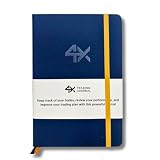
- BUILT FOR YOUR MARKET, FUTURES, STOCKS, FOREX, OPTIONS & CRYPTO: 4X is a mindset and process journal, not a strategy tool tied to one instrument. The plan, the trade log, the deep dive and the weekly review work the same whether you trade ES, EURUSD, SPY or BTC. Traders use it across all five markets every day.
- THE 2026 EDITION, REBUILT FROM TRADER FEEDBACK: Same trusted system, better in every way. An extra daily page for more room to log the session. Weekly reviews now grouped with each week's trades, so no more flipping back and forth. Crisp, darker print that's easy on the eyes after hours on a screen. A Quick-Start QR that scans straight to step-by-step instructions.
- NOT A NOTEBOOK, A COMPLETE 12-WEEK SYSTEM: Start with a one-time 9-part Trading Plan (your market, setups, risk rules and discipline checklist). Then twelve identical weeks: five Daily Logs, five Deep Dive trade pages, and a two-page Weekly Review. 189 guided pages, roughly 80 trades. Guided prompts walk you through every step. You never stare at a blank page.
- RATE YOUR EXECUTION, NOT YOUR RESULT: Your platform tracks the P&L. Nothing tracks the why. Log energy, sleep and mindset before the open; grade every trade A to F on whether you followed your plan, not on whether it won; then face the pattern every weekend with START / STOP / IMPROVE / CONTINUE. That review habit is the edge. You're 42% more likely to hit a goal you've written down.
- BUILT TO LAST, ARRIVES GIFT-READY: Vegan-leather hardcover, 100gsm bleed-resistant paper, two ribbon markers and an elastic closure band. Bound to lay flat so you're not fighting the spine while you write. 189 pages, 5.75" x 8.5", carries in a bag. Ships in a premium gift box: the gift every trader in your life actually wants.
Look up the current fee schedule for the exact market and product, and review the order preview before submitting. A listed fee rate is only one part of the outcome: a resting order may not fill when you want it to, while an immediately matching order trades against the liquidity currently available. Being a maker does not guarantee a lower overall trading cost or a better result.
Quick Recap
Product prices and availability are accurate as of the date/time indicated and are subject to change. Any price and availability information displayed on Amazon at the time of purchase will apply.

