
iTechGuides is reader-supported. When you buy through links on our site, we may earn an affiliate commission. As an Amazon Associate I earn from qualifying purchases. Learn more
Some criticism is justified, especially when sweeteners are promoted as a reliable long-term way to lose weight. But headlines can overstate what the evidence says: the World Health Organization’s dietary advice is not a finding that approved sweeteners are toxic at permitted exposure levels, and aspartame’s “possibly carcinogenic” classification does not mean ordinary consumption has been shown to cause cancer.
Why the headlines can sound contradictory
Different authorities are answering different questions. The International Agency for Research on Cancer (IARC) identifies whether an agent may be capable of causing cancer in some circumstances. The Joint FAO/WHO Expert Committee on Food Additives (JECFA) assesses exposure and sets an acceptable daily intake (ADI). The World Health Organization (WHO) issues dietary guidance, including advice about whether non-sugar sweeteners (NSS) are useful for weight control. A finding from one of these assessments is not a substitute for the others.
| Authority and date | Question addressed | Finding relevant to aspartame or NSS |
|---|---|---|
| IARC, July 2023 | Can aspartame cause cancer under some circumstances? | Classified aspartame in Group 2B, “possibly carcinogenic to humans,” based on limited evidence. |
| JECFA, July 2023 | What level of aspartame intake is acceptable over a lifetime? | Reaffirmed an ADI of 40 mg per kilogram of body weight per day. |
| WHO, May 2023 | Should NSS be used to control weight or reduce noncommunicable disease risk? | Conditionally recommended against using NSS for those purposes. |
| U.S. FDA | Are authorized sweeteners acceptable under specified U.S. conditions of use? | Says it has no safety concerns about aspartame when used under approved conditions. |
“Possibly carcinogenic” is a hazard classification, not a measure of the risk from a particular amount of aspartame in food. Conversely, an ADI is not proof that risk is impossible; it is an exposure-based limit considered acceptable for daily lifetime intake. IARC and JECFA therefore did not issue competing verdicts on the same question.
The Tool Desk
Outbyte PC Repair FREERepair Windows errors before they cause bigger problemsFix Now →Outbyte Driver Updater FREEScan for outdated or missing drivers - takes under a minuteDriver Scan →What the aspartame cancer assessment does—and does not—show
In its July 2023 evaluation, IARC found limited evidence for carcinogenicity in humans and assigned aspartame to Group 2B. That wording signals a possible hazard; it does not establish that aspartame causes cancer at typical dietary exposures. JECFA reviewed exposure and reaffirmed the ADI at 40 mg/kg of body weight per day.
#1 Best Overall

- MADE IN AMERICA: Splenda sweetener packets are made in the USA
- PURE SWEETNESS: Each packet provides the sweetness of two teaspoons of sugar
- SUGAR FREE ALTERNATIVE: Use in place of sugar or agave nectar in your coffee, tea, baking, and other beverages
- SWEETER THAN ALTERNATIVES: Substitutes made from stevia, erythritol, and xylitol are not as sweet as Splenda Sucralose
- ZERO CARB: Enjoy guilt-free sweetness suitable for people with diabetes or following a low carb lifestyle
The U.S. Food and Drug Administration (FDA) says it disagrees that the studies support IARC’s possible-carcinogen classification, citing shortcomings it identified in the evidence. FDA also says JECFA did not raise concerns at current use levels or change the ADI, and that the agency has no safety concerns when aspartame is used under approved conditions. This is the FDA’s U.S. regulatory position; it should not be generalized to every country’s rules or taken to mean that every sweetener has identical evidence.
What WHO’s advice means for weight control
WHO’s 15 May 2023 guideline conditionally recommends against using NSS to control weight or reduce the risk of noncommunicable diseases. It is dietary guidance, not a toxicological reassessment of individual sweeteners. WHO explicitly says the guidance is not based on toxicological safety assessments and does not update or replace ADIs set by JECFA or other authorities.
Rank #2

- ZERO CALORIE SWEETENER PACKETS FOR EVERYDAY USE: Add the sweet taste you love to coffee, tea and other drinks with Sweet'N Low, a zero calorie sugar substitute in convenient sweetener packets.
- THE ORIGINAL ZERO CALORIE SWEETENER: Made with saccharin, one of the world's oldest sugar substitutes, Sweet'N Low is certified kosher, vegan and gluten free with a low glycemic index.
- BAKING FRIENDLY SWEETNESS: Unlike aspartame sweeteners, Sweet'N Low keeps its sweetness when heated, making these sweetener packets a reliable sugar substitute for baking and favorite recipes.
- EASY TO USE: Sweet'N Low dissolves easily in hot or cold beverages and each packet provides the same sweetness as 2 teaspoons of sugar. Includes 100 individual packets.
- MORE WAYS TO SWEETEN: Sweet'N Low is also available in a bulk box, making it easy to enjoy zero calorie sweetness at home, at work or on the go.
The recommendation applies to adults and children, except people with pre-existing diabetes. It concerns non-sugar sweeteners used as a replacement for free sugars, not low-calorie sugars or sugar alcohols (polyols). It also does not cover sweeteners in personal-care products or medicines. WHO’s guideline is conditional, reflecting uncertainty in the evidence and the possibility that outcomes differ across people and patterns of use.
Quick wins for a faster PC:
Fix the driver behind crashes, sound loss and screen glitchesFind Drivers →Clear out junk files and repair common Windows errorsFree Scan →Why short-term trials and long-term studies tell different stories
Short-term outcomes
WHO’s systematic review, published on 12 April 2022, found that randomized controlled trials generally suggested little effect on glucose metabolism. They also suggested lower body weight in the short term when NSS were used alongside energy restriction. That result does not establish that sweeteners alone produce weight loss or that an individual will benefit.
Rank #3

- MADE IN AMERICA: Splenda sweetener packets are made in the USA
- PURE SWEETNESS: Each packet provides the sweetness of two teaspoons of sugar
- SUGAR FREE ALTERNATIVE: Use in place of sugar or agave nectar in your coffee, tea, baking, etc.
- SWEETER: Substitutes made from stevia, monk fruit, erythritol, xylitol aren't as sweet as Splenda Sucralose
- ZERO CARB: Enjoy guilt-free sweetness! Suitable for people with diabetes or following a low carb lifestyle
Long-term weight and disease outcomes
The review found no clear consensus on long-term weight loss or maintenance, or on other long-term effects at intakes within the ADI. WHO’s 2023 guideline release also described possible undesirable associations in long-term studies, including associations with type 2 diabetes, cardiovascular disease and mortality. These are observational associations, not proof that sweeteners caused the outcomes: baseline differences between people and complex patterns of sweetener use may confound the results.
Evidence about possible aspartame-related microbiome changes is inconsistent, and the mechanism connecting any such changes to health outcomes is unclear. The IARC/WHO summary identifies a need for longer-followed cohort studies with repeated dietary questionnaires and randomized trials examining pathways relevant to insulin regulation, metabolic syndrome and diabetes. Until those questions are better resolved, claims that sweeteners inevitably disrupt the microbiome or cause these diseases go beyond the evidence described here.
Rank #4
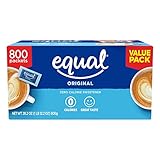
- SWEET ALTERNATIVE: Powdered Aspartame and Acesulfame-K Sweetener provides a deliciously sweet taste without compromising on flavor.
- ZERO CALORIE SWEETENER: Savor guilt-free sweetness with Equal Pink calorie free sweetener. Enjoy your favorite treats without worries, embracing a zero calorie alternative that maintains impeccable taste.
- SWEETENER PACKETS: Conveniently sweeten beverages like coffee and tea, as well as a variety of recipes, ensuring precise sweetness without the hassle of measuring.
- GREAT FOR BUSINESS: Tailored for businesses, offices, and extensive usage ensuring uninterrupted sweetness. Whether for your café, restaurant, or workplace, relish the ease of abundant supply for all your sweetening needs
- SUGAR SUBSTITUTE: Sugar substitute has the same sweetness as two teaspoons of traditional sugar, offering a guilt-free sugar alternative.
What counts as a non-sugar sweetener?
“Artificial sweetener” is an everyday umbrella term. WHO’s NSS category is broader: it includes synthetic and naturally occurring or modified non-nutritive sweeteners, such as aspartame, acesulfame K, saccharin, sucralose, stevia and stevia derivatives. Evidence or a regulatory decision about one ingredient should not automatically be applied to all of them.
In the United States, FDA lists six sweeteners authorized as food additives: aspartame, acesulfame potassium, sucralose, neotame, advantame and saccharin. FDA also says it has no questions about submitted GRAS conclusions for certain high-purity steviol glycosides under the intended conditions described in those notices. These are U.S.-specific regulatory details; authorization and product rules can differ elsewhere.
Best Value
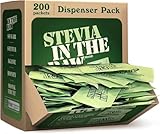
- ZERO CALORIE STEVIA SWEETENER PACKETS: Enjoy sweet taste with fewer calories using Stevia In The Raw packets, a zero calorie stevia sweetener and sugar substitute for coffee, tea and other everyday drinks.
- NO ERYTHRITOL OR ADDED FLAVORS: Made from the sweet leaves of the stevia plant, this vegan stevia sweetener is a gluten free, kosher and low glycemic sugar substitute with clean everyday sweetness.
- EVERYDAY SWEETNESS FOR DRINKS AND SNACKS: Stir this stevia sugar substitute into coffee and tea, or sprinkle it on cereal and fruit for easy zero calorie sweetness in convenient stevia sweetener packets.
- EASY TO USE: Stevia In The Raw packets dissolve easily and are equivalent in sweetness to 2 teaspoons of sugar. Includes 1 box of 200 individual packets.
- NO NONSENSE, JUST NATURAL SWEETENERS: Founded in 1970 when we began the search for a less processed sugar, In The Raw has 50+ years of sweetener expertise. Today, we offer a variety of versatile sweeteners plucked from the earth for every occasion.
What FDA’s study counts can tell you
FDA’s sweeteners page, accessed on 7 October 2026, says the agency reviewed more than 100 studies designed to identify possible toxic effects of aspartame. The same page reports more than 110 studies for sucralose. These are the counts reported on the current page, not dated totals for studies published in 2026. A study count is not a quality score and does not show that two ingredients have equivalent evidence.
Quick Recap
Practical points when choosing foods
- Check the ingredient list if you want to know which sweetener a food contains; the category name alone does not identify the ingredient.
- People with phenylketonuria (PKU) should avoid or restrict aspartame because it contains phenylalanine. FDA says foods containing aspartame must carry a notice for people with PKU.
- FDA says sweeteners generally contribute few or no calories and generally do not raise blood sugar. That broad consumer summary does not establish a personal medical benefit or make one sweetener preferable for a particular person.
- Keep the health question specific: evidence about cancer hazard, short-term weight, long-term weight maintenance, blood glucose and disease outcomes is not interchangeable.
Product prices and availability are accurate as of the date/time indicated and are subject to change. Any price and availability information displayed on Amazon at the time of purchase will apply.

