
Quick wins for a faster PC:
Scan for outdated or missing drivers - takes under a minuteDriver Scan →Clear out junk files and repair common Windows errorsFree Scan →Fix the driver behind crashes, sound loss and screen glitchesFind Drivers →iTechGuides is reader-supported. When you buy through links on our site, we may earn an affiliate commission. As an Amazon Associate I earn from qualifying purchases. Learn more
Asthma treatment is adjusted to the person, not assigned as a fixed set of four steps. The 2026 Global Initiative for Asthma (GINA) guide uses five treatment steps, with separate pathways for adults and adolescents and for children ages 6–11. A clinician chooses and reviews treatment based on symptoms, future risk, lung function, inhaler technique, adherence, and other individual factors.
What do asthma treatment steps mean?
Treatment steps describe levels of treatment intensity. Moving up a step may be considered when asthma remains poorly controlled or the risk of attacks is high; moving down may be appropriate after control has been sustained. The right choice depends on assessment and review, not symptoms alone.
GINA’s 2026 guide places inhaled corticosteroid (ICS)-containing treatment at the center of its pathways and advises against treating asthma with a short-acting beta2-agonist (SABA) alone, even when symptoms are infrequent. The U.S. NHLBI/NAEPP clinician guide presents focused updates published in 2020; its step diagrams and recommendations are not identical to GINA’s 2026 approach. Follow the guidance used by your clinician and local health system rather than combining steps from different guidelines.
What’s actually slowing this PC down?
Pick the symptom - the matching free tool is one click away.
What are the treatment steps for adults and adolescents?
GINA 2026 provides two tracks for adults and adolescents. Track 1 is preferred and uses low-dose ICS-formoterol as the reliever throughout the steps. Track 2 is an alternative in some circumstances, including when ICS-formoterol is unavailable, or for some people who are stable, adherent to ICS-containing maintenance treatment, and prefer to continue it.
#1 Best Overall

- Compact and lightweight so that you can take it with you while on the go
- Safe and Comfortable: Our spacer is made of durable plastic and soft soft silicone
- Visual Airflow Indicator; letting you know the correct speed breathe
- Tight air Seal around nose and mouth insuring no waste
GINA Track 1: preferred pathway
| Step | GINA 2026 treatment approach |
|---|---|
| 1–2 | As-needed low-dose ICS-formoterol. |
| 3 | Low-dose maintenance-and-reliever therapy (MART) with ICS-formoterol. |
| 4 | Medium-dose MART with ICS-formoterol. |
| 5 | Expert assessment, including evaluation of asthma phenotype; possible add-ons include a long-acting muscarinic antagonist (LAMA), a trial of high-dose maintenance ICS-formoterol, or eligible biologic treatments. |
At Step 5, GINA lists biologic options targeting IgE, IL-5 or its receptor, IL-4 receptor alpha, and TSLP. Eligibility, approvals, and availability vary, so an individual treatment choice requires specialist assessment.
GINA Track 2: alternative pathway
Track 2 uses an anti-inflammatory reliever when available. If a SABA is used as the reliever, GINA describes pairing it with ICS as directed. Higher steps add daily ICS-containing controller treatment; Step 5 involves specialist assessment and possible add-ons. The exact choice within this track depends on the guideline, the person’s existing treatment and circumstances, and clinician judgment. Track 1 and Track 2 are alternatives, not ingredients to combine into one universal prescription.
GINA reports that, in the adult and adolescent trials it cites among people previously using SABA alone, low-dose ICS, or a leukotriene receptor antagonist, as-needed low-dose ICS-formoterol was associated with about two-thirds fewer asthma-related emergency-room visits or hospitalizations than SABA alone, and over one-third fewer than low-dose ICS plus as-needed SABA. These are comparative trial results for the stated populations and comparators, not a prediction of an individual’s outcome.
Recommended Free Tools
Rank #2

- Compact and lightweight so that you can take it with you while on the go
- Safe and Comfortable: Our spacer is made of durable plastic and soft soft silicone
- Sealed packaging for easy unpacking and cleaning
- Tight air Seal around nose and mouth insuring no waste
How does treatment differ for children?
Children ages 6–11
GINA uses a separate five-step pathway for children ages 6–11 and says they should receive ICS-containing treatment rather than SABA alone. Its options include anti-inflammatory reliever treatment at Step 1 and daily low-dose ICS at Step 2. At Steps 3–4, options include medium-dose ICS, low-dose ICS-LABA, or ICS-formoterol MART. Step 5 involves assessment of phenotype and consideration of higher-dose ICS-LABA or add-ons such as LAMA and selected biologics. GINA advises considering expert referral when Step 4 is needed.
Children age 5 and younger
The GINA 2026 summary guide points readers to its full report for detailed guidance for children age 5 and younger. Do not apply the 6–11 pathway to a younger child; ask the child’s clinician which age-specific guidance applies.
How do clinicians decide whether to change a step?
GINA describes an “Assess, Adjust, Review” approach. Before increasing treatment, a clinician should look for correctable reasons for poor control rather than automatically raising the dose. Assessment can include:
Rank #3

- Inhaler Spacer for Adults, Nessi OTC Spacer
- Featuring a duckbill one-way valve, this spacer for inhaler minimizes medication leakage.
- Superior Comfort & Secure Seal: Designed with a soft, liquid silicone mask and an ergonomic structure, this product offers a snug, leak-free fit that enhances comfort.
- Smart Inhalation Control: Equipped with an integrated exhalation valve and whistle alert, this inhaler spacer helps maintain an optimal breathing pace.
- Durable, Hygienic & Easy to Clean: Made from durable, medical-grade ABS and silicone, our inhaler spacer is BPA-free—offering effortless disassembly and cleaning for everyday hygiene.
- Current symptoms, lung function, and history of attacks or exacerbations.
- Inhaler technique, ideally by watching the person use their own device.
- Whether medicines are being taken as prescribed, and any barriers to adherence.
- Risk factors, side effects, and other health conditions that may affect asthma.
- The person’s or caregiver’s preferences, goals, device skills, physical ability, cost, and local access.
After treatment starts or changes, the clinician reviews the response and adjusts the plan if needed. GINA says to consider stepping down after asthma has been well controlled for three months or more; a clinician should judge whether and how to do this. For an ICS used through a pressurized metered-dose inhaler, GINA recommends using a spacer. Device compatibility and technique should be checked with a clinician or pharmacist, and technique should be rechecked after training.
GINA also associates dispensing at least three 200-dose SABA canisters in a year with increased exacerbation risk, and at least 12 canisters (possibly fewer) with increased risk of asthma death. This is an association reported by GINA, not proof that SABA use itself caused an outcome; discuss frequent reliever use with a healthcare professional.
What should an asthma action plan cover?
A written asthma action plan is made with a healthcare provider and should fit the person’s prescribed medicines and local guidance. NHLBI says it should explain how to avoid triggers, recognize worsening asthma, use medicines and know when to take them, when to contact a provider or go to an emergency department, and whom to contact in an emergency. It should also set out what to do when symptoms worsen.
Rank #4
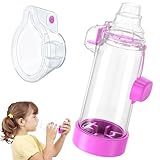
- Compact and lightweight so that you can take it with you while on the go
- Safe and Comfortable: Our spacer is made of durable plastic and soft soft silicone
- Sealed packaging for easy unpacking and cleaning
- Tight air Seal around nose and mouth insuring no waste
What should I do during an asthma attack?
Follow your own written action plan, including its instructions for using your reliever. Seek emergency medical care for a serious attack or if symptoms do not improve soon after at-home medicines, as NHLBI advises. Do not substitute a general online dose or another country’s emergency instructions for your plan. For example, NHS advice is specific to the UK and says a personal action plan with different maximum doses takes precedence over its general website directions. Nebulized medicine may be used by clinicians in emergency care; that is not a general recommendation to start unsupervised home nebulizer treatment.
Which sources underpin these pathways?
The current age-specific pathways and treatment-adjustment principles above are from the Global Initiative for Asthma’s 2026 Summary Guide for Asthma Management and Prevention. The U.S. guideline context is the NHLBI/NAEPP 2020 Focused Updates to the Asthma Management Guidelines: Clinician’s Guide. NHLBI’s Asthma: Treatment and Action Plan, Asthma: Managing Asthma, and Asthma: Asthma Attack pages were last updated April 17, 2024, according to those pages. These sources describe general guidance; they do not determine an individual diagnosis, medicine dose, or eligibility for specialist treatments.
The Tool Desk
Outbyte Driver Updater FREEFix the driver behind crashes, sound loss and screen glitchesFind Drivers →Outbyte PC Repair FREEClear out junk files and repair common Windows errorsFree Scan →Quick Recap
Product prices and availability are accurate as of the date/time indicated and are subject to change. Any price and availability information displayed on Amazon at the time of purchase will apply.

