
What’s actually slowing this PC down?
Pick the symptom - the matching free tool is one click away.
iTechGuides is reader-supported. When you buy through links on our site, we may earn an affiliate commission. As an Amazon Associate I earn from qualifying purchases. Learn more
Researchers are testing coatings and implantable devices that surround transplanted pancreatic islet cells, aiming to limit immune attack while still letting glucose, oxygen, nutrients and insulin pass. The approaches address different problems—immune rejection, oxygen shortage, inflammation and graft retrieval—and the results described so far are preclinical, not evidence of a routine human treatment.
Why put transplanted cells inside a protective barrier?
Pancreatic islet cells sense blood glucose and release insulin. Transplanting them is one way researchers hope to restore insulin production in people with type 1 diabetes, but the recipient’s immune system can attack the graft. Conventional transplantation may require systemic immunosuppressant drugs, which can cause serious adverse effects and may also damage islet cells. Researchers are therefore exploring ways to protect the graft or adjust immune responses near it.
A protective wrap cannot simply seal cells away. The cells need oxygen and nutrients to survive, glucose to detect changes in the body, and a route for insulin to reach the circulation. A barrier must permit those exchanges while limiting immune-mediated damage. That is a difficult balance: implanted materials can provoke a foreign-body response, leading to inflammation and fibrotic tissue around the device. Scar tissue and limited access to blood vessels can hinder exchange and undermine graft survival and function.
Recommended Free Tools
How the main strategies differ
These approaches are not interchangeable. Some focus on a material barrier, some on supplying oxygen, and others on changing the local immune response. The evidence also comes from different animal models and treatment conditions.
#1 Best Overall

- 【High-Quality Material and Construction】Our cell culture plates are made from premium-grade polystyrene, ensuring transparency and clarity for easy visual inspection of cell growth. The material is non-toxic and biologically inert, providing a safe environment for cells. Each plate is manufactured under strict quality control systems to guarantee consistency and reliability.
- 【Sterile and Treated for Optimal Cell Growth】The plates are sterilized, ensuring a contamination-free environment. Many of our plates feature tissue culture (TC) treatment, which creates a hydrophilic surface that enhances cell attachment and proliferation. This treatment is essential for adherent cells, allowing them to grow and spread effectively. Non-tissue culture plates are also available.
- 【Versatile Well Configurations】We offer a variety of well configurations, including 6-well, 12-well, 24-well, 48-well, 96-well with flat-Bottom, 96-well with U-bottom and 96-well with V-bottom and the positioning of horizontal and vertical numbers and letters are eye-catching of independent wells, the identification before and after the experiment is barrier-free. The plates are also available in both treated and untreated versions to accommodate different experimental needs.
- 【User-Friendly Design】Our laboratory plate feature a user-friendly design with a raised edge on the lid, ensuring stable stacking and preventing cross-contamination. The bottom of each plate includes specially designed feet that reduce contact with the lab surface, lowering the risk of contamination. Some designs include low-evaporation lids and special well layouts to minimize evaporation and ensure consistent growth conditions.
- 【Ideal for Various Applications】Our cell culture plates are suitable for a wide range of applications, including basic biological research, drug development, and stem cell studies. They are also used in high-throughput screening, allowing researchers to test multiple samples simultaneously. These plates provide a reliable platform for both 2D and 3D cell cultures, supporting diverse research needs.
| Approach | What it is intended to do | Evidence described | Key trade-off or limitation |
|---|---|---|---|
| Semipermeable encapsulation, including alginate | Place a material barrier between islet cells and immune cells while allowing molecular exchange. | The 2021 Chemistry World feature describes this approach and its challenges; it does not give a model-specific outcome figure for alginate in the available account. | Fibrosis and limited vascularization can restrict exchange and threaten cell survival. Encapsulation alone does not resolve those problems. |
| Ultrathin polymer coating | Apply a thin multilayer glycol-chitosan/hyaluronic-acid coating around islet clusters. | Chemistry World reported a coating about 140 nm thick and glucose control for more than 30 days in mice. | The reported result is in mice; it does not establish human efficacy or eliminate the broader challenges of oxygen supply and foreign-body responses. |
| Oxygen-generating “inverse-breathing” device | Use cell-produced carbon dioxide and lithium peroxide to generate oxygen, while separating the reaction from the watery environment containing the cells. | A 2021 primary-study abstract indexed by PubMed reports normoglycemia for more than three months in immunocompetent diabetic mice. It also reports functional islets in scaled-up devices retrieved from minipigs after two months. | These are animal findings. The minipig result describes functional islets at retrieval, not a demonstrated human treatment or a clinical outcome. |
| FasL-presenting microgels | Present Fas ligand locally to modulate immune activity near the graft rather than relying solely on a physical barrier. | A 2022 primary-study abstract reports graft survival beyond six months in diabetic nonhuman primates under a transient rapamycin regimen. | The result did not demonstrate freedom from immunosuppression: the regimen included transient rapamycin. It is also a nonhuman-primate result, not evidence of clinical efficacy in people. |
| Retrievable encapsulation device | Contain porcine islets in a device that can be removed, allowing the graft to be retrieved or replaced. | A PubMed Central-indexed research article reports improved glycemic control for more than 200 days in diabetic mice and describes retrieval and relay transplantation. | The reported duration and outcome are in diabetic mice. Retrievability is a design feature, not proof that the device is suitable or available for people. |
What the animal results do—and do not—show
The reported durations are not directly comparable measures of success. The studies used different devices, cell sources, animal species and endpoints: glucose control in mice, normoglycemia in mice, graft survival in nonhuman primates, or functional islets observed when a device was retrieved from minipigs. A longer duration in one model does not establish that one approach is more effective in people.
The models do help reveal different engineering questions. Mouse findings can show whether a device or coating supports glucose control in that model. The minipig retrieval result offers evidence about scaled-up devices and the condition of islets at retrieval. The nonhuman-primate microgel result tests local immune modulation in a different model, but its transient rapamycin treatment is an important part of the reported result. None of these findings, by itself, demonstrates clinical efficacy in humans.
Rank #2
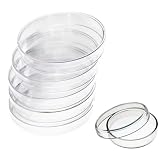
- Sterile
- Flat transparent surface for distortion-free observation
- Vacuum plasma TC treatment, excellent cell adherence
- Stackable for easy storage and handling
- Sterilized by E-Beam, Non-pyrogenic
What still has to be solved
Exchange without immune access
A material must permit the movement of glucose, oxygen, nutrients and insulin while restricting harmful immune interactions. Those needs pull in opposite directions: a tighter barrier may impede the exchanges that keep the cells working.
The Tool Desk
Outbyte PC Repair FREEClear out junk files and repair common Windows errorsFree Scan →Outbyte Driver Updater FREEScan for outdated or missing drivers - takes under a minuteDriver Scan →Oxygen and blood-vessel access
Islet cells need oxygen, but an implant does not automatically gain the blood-vessel access of native tissue. Oxygen-generating designs target that limitation; they do not make oxygen delivery or vascularization a solved problem.
Rank #3
- Sterile
- Flat transparent surface for distortion-free observation
- Vacuum plasma TC treatment, excellent cell adherence
- Stackable for easy storage and handling
- Sterilized by E-Beam, Non-pyrogenic
Fibrosis and inflammation
The body may react to an implant by forming inflammatory or fibrotic tissue around it. That response can make it harder for molecules to pass between the graft and the body. A barrier’s performance therefore depends not only on its initial permeability, but also on how the surrounding tissue responds over time.
Protection, retrieval and treatment burden
A device that can be retrieved offers a practical distinction from a coating that stays around the cells, but removal or replacement is not the same as preventing rejection. Local immune modulation is another route, yet the primate microgel study’s transient rapamycin regimen shows why it is inaccurate to describe every such strategy as eliminating immunosuppression. The approaches need to be judged on immune protection, cell function, oxygen and nutrient access, fibrosis, retrievability and any accompanying drug treatment.
Rank #4

- Cell culture plates; Laboratory-grade multi-well plate; Tissue culture treated; Sterile; Individually packed; for research use only.
Is cell encapsulation a treatment people can get now?
The cited evidence describes experimental work in mice, minipigs and nonhuman primates. It does not establish that the specific coatings, devices or microgels discussed are approved or available as treatments for people. Nor does it show that encapsulation has made systemic immunosuppression unnecessary in routine care. The central idea—protecting cells while preserving the exchanges they need—is promising as an engineering goal, but the reported animal results are not a substitute for human clinical evidence.
Do these 3 things before closing this tab:
1Scan for outdated or missing drivers - takes under a minute2Clear out junk files and repair common Windows errors3Fix the driver behind crashes, sound loss and screen glitchesQuick Recap
Best Value

- [Optimized Spore Germination] Achieve better germination rates and avoid the frustration of spores failing to colonize grain spawn
- [Enhanced Success Rates] Identify and resolve germination issues by isolating variables in the growing process.
- [Comprehensive Kit] Includes 3 sterilized liquid culture jars (30ml each), all the accessories for safe and efficient use.
- [Accessories Included] Sterile Alcohol Prep Pads Included
Product prices and availability are accurate as of the date/time indicated and are subject to change. Any price and availability information displayed on Amazon at the time of purchase will apply.

