
What’s actually slowing this PC down?
Pick the symptom - the matching free tool is one click away.
iTechGuides is reader-supported. When you buy through links on our site, we may earn an affiliate commission. As an Amazon Associate I earn from qualifying purchases. Learn more
A three-node K3s homelab tests production patterns only when you decide what each machine does. Three K3s servers running embedded etcd give you a control plane that keeps quorum when one server fails. One server with two agents gives you a workload cluster, but its control plane depends on that single server. Both setups have three machines, and they behave very differently under failure.
Start with node roles, not machine count
K3s has two node roles. A server runs k3s server and hosts the control-plane components and the datastore that K3s manages. An agent runs k3s agent and does not run those components. Servers and agents both run the kubelet, a container runtime, and a CNI plugin, which is why agents can run workloads without holding cluster state (K3s Architecture documentation).
A single-server install uses embedded SQLite as its datastore, and agents join by pointing at the server URL with a token. The K3s Quick-Start Guide states that “A single-node server installation is a fully-functional Kubernetes cluster,” and it directs readers who need several servers to the high-availability guides (K3s Quick-Start Guide).
Free tools Windows power users keep installed
One-click scans. No signup required.
Three machines is not the same as three-server HA
High availability for the control plane in K3s means embedded etcd across three or more server nodes. The K3s HA documentation says the server count should be odd. With quorum defined as (n/2)+1, a fourth server does not raise the number of failures the group can tolerate over three, so a three-server group tolerates one lost server and still keeps quorum (K3s High Availability Embedded etcd documentation).
#1 Best Overall

- 【AMD Ryzen 3 5300U CPU: Outperforms N150 & 3500U】 BOSGAME E5 mini PC is powered by the TSMC 7nm FinFET architecture AMD Ryzen 3 5300U processor (4 Cores, 8 Threads, up to 3.8GHz boost, 6MB total cache). Compared to low-end Intel N150 or 3500U chips which only have 4 single threads and throttle under load, the 5300U delivers over 30% faster multi-core speed. Run 30+ browser tabs, large Excel sheets, and Zoom meetings simultaneously without system lag.
- 【8GB DDR4 RAM & 256GB NVMe SSD Storage】 Installed with high-speed 8GB DDR4 dual-channel memory and a fast 256GB M.2 2280 SSD, eliminating slow boot times and application loading delays. To accommodate growing data requirements, the upgradeable hardware design features dual SODIMM slots that allow you to expand memory up to 64GB RAM, ensuring smooth operation during heavy multitasking.
- 【High-Capacity Dual M.2 SSD Storage Expansion】 Never worry about running out of space for your business files. In addition to the pre-installed 256GB system drive, the motherboard houses an extra empty internal M.2 2280 NVMe PCIe 3.0 slot. This allows you to easily add a second solid-state drive for up to an additional 2TB of storage capacity (upgrades not included) without needing to remove or reinstall the original operating system.
- 【Radeon 6-Core Graphics & Triple 4K Displays】 Integrated with official AMD Radeon Graphics (6 Graphics Cores, 1500 MHz frequency) for casual gaming, photo editing, and crisp 4K media decoding. Featuring 1x HDMI 2.0 port, 1x DisplayPort, and 1x Full-Function Type-C port, the E5 outputs true 4K@60Hz resolution to three monitors at once. This multi-screen setup eliminates constant window-switching for traders, programmers, and office workers.
- 【Dual 2.5GbE LAN Ports for Advanced Networking】 Experience fast wired network transmission speeds up to 2500Mbps without lagging or buffering. The integration of dual 2.5 Gigabit Ethernet ports (powered by Realtek RTL8125 controller) makes this compact computer an exceptional hardware choice for tech enthusiasts. Easily configure it into software routers, hardware firewalls (pfSense, OpnSense), home NAS servers, or local homelabs.
The layouts you can build from three machines differ as follows:
| Layout | Roles | Datastore | Control-plane failure behavior | Production patterns it exercises well |
|---|---|---|---|---|
| One server, two agents | 1 server, 2 agents | Embedded SQLite (single-server default) | Losing the server takes the API down until it returns; agents do not hold cluster state | Scheduling, rolling deployments, ingress, node drains on agents |
| Three embedded-etcd servers | 3 servers, optional agents | Embedded etcd | One server can fail while quorum holds | Control-plane failover, etcd health, server-by-server upgrades, recovery from a lost member |
Name the layout you actually run. A cluster with one server and two agents is a three-node cluster but not a three-server HA design. Only the second layout can show what happens to the API when a control-plane node disappears.
Rank #2
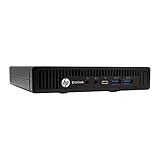
- HP EliteDesk 800 G2 Mini (DM) Desktop PC
- Intel Core i5-6500T Quad Core up to 3.1Ghz Turbo
- 8GB DDR4 Memory + 240GB Solid State Drive
- Windows 10 Professional 64-Bit | Dual Monitor Support VGA + DisplayPort
Hardware and storage
The K3s requirements page lists baseline minimums of 2 CPU cores and 2 GB RAM for a server, and 1 core and 512 MB RAM for an agent. The page is undated in the version reviewed. These figures exclude workload consumption, so treat them as a floor for the K3s processes, not a sizing guarantee for your applications (K3s Requirements documentation).
Storage matters more than the CPU numbers suggest. The same page says database performance affects cluster performance and recommends SSDs. It also recommends an external SSD for Raspberry Pi and other ARM devices because etcd is write intensive. The HA documentation adds that embedded etcd may have performance issues on slower disks, including Raspberry Pi SD cards.
Rank #3
- This Certified Refurbished product is tested and certified to look and work like new. The refurbishing process includes functionality testing, basic cleaning, inspection, and repackaging. The product ships with all relevant accessories, a minimum 90-day warranty, and may arrive in a generic box. Only select sellers who maintain a high performance bar may offer Certified Refurbished products on Amazon.com
- Intel Quad-core i5-6500T up to 3.1G,16G DDR4 memory(2 slots,supports up to 32GB),240G SSD
- Includes USB Keyboard(English Keyboard & Mouse Included)
- I/O ports:Front:2 USB 3.0 ,microphone,headphone ,USB Type-C port Rear:4USB 3.0 ,VGA DP port,RJ-45
- Operating System:Win10Pro64bit
Before you buy or repurpose hardware, check these points:
- Each server has an SSD, or an external SSD for ARM boards, and that disk is not shared with heavy workloads.
- Each server has enough RAM for its K3s processes plus the workloads you plan to schedule on it.
- The three servers have the same K3s version, so upgrades can be staged one node at a time.
- Clocks are synchronized on all nodes. Certificates and etcd leader elections both depend on accurate time.
Network ports and exposure
K3s documents the following ports for a multi-node cluster. Requirements change with the CNI and optional features you enable, so verify them against your configuration.
Rank #4

- POWERFUL 6-CORE BUSINESS PERFORMANCE: Intel Core i5-8500T 6-core processor (2.1GHz base, up to 3.5GHz turbo, 9MB cache) delivers reliable performance for business applications, multitasking, office productivity, and professional workflows with energy-efficient operation.
- DUAL DISPLAY WITH LEGACY SUPPORT: 2 DisplayPort 1.2 outputs plus VGA port drive dual monitors or connect legacy displays - perfect for offices transitioning equipment while maintaining modern productivity setups.
- FAST 32GB RAM & 1TB SSD: DDR4 memory and M.2 PCIe NVMe SSD provide responsive multitasking and quick boot times for business applications and file access.
- COMPLETE CONNECTIVITY: USB-C, 6 USB ports (4x USB 3.1), WiFi 802.11ac, Bluetooth, Gigabit Ethernet ensure comprehensive device and network connections for modern business environments.
- ULTRA-COMPACT BUSINESS DESIGN: Space-saving 6.97" x 6.89" x 1.34" mini form factor weighs just 2.75 lbs with Windows 11 Pro, perfect for offices, retail, healthcare, and commercial applications.
| Port | Protocol | Between | Purpose |
|---|---|---|---|
| 6443 | TCP | Agents and servers | Supervisor and Kubernetes API |
| 8472 | UDP | All nodes | Flannel VXLAN overlay |
| 2379 | TCP | Servers | Embedded etcd client traffic |
| 2380 | TCP | Servers | Embedded etcd peer traffic |
K3s warns that the VXLAN port should not be exposed to the world. Keep it on a private segment or behind a firewall, and keep the API port off public routes unless you deliberately publish it. The kubeconfig K3s writes to /etc/rancher/k3s/k3s.yaml grants cluster access, so restrict who can read it.
Do these 3 things before closing this tab:
1Clear out junk files and repair common Windows errors2Scan for outdated or missing drivers - takes under a minute3Repair Windows errors before they cause bigger problemsDecide which packaged components stay
K3s ships several components by default: containerd, Flannel as the CNI, CoreDNS, Traefik as ingress, ServiceLB, network policy support, local-path-provisioner, and the Spegel distributed registry mirror (K3s overview documentation). Every default you keep becomes part of what you test. Disabling or replacing one is a design choice that should be recorded.
Best Value
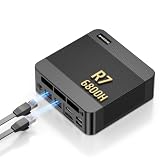
- 【POWERFUL AMD RYZEN 7 6800H PROCESSOR】: The BOSGAME P6 Neo mini Gaming PC is powered by the AMD Ryzen 7 6800H processor, featuring 8 cores, 16 threads, a 3.3GHz base clock, and up to 4.7GHz boost frequency. With 16MB of L3 cache, it delivers responsive performance for office work, content creation, entertainment, multitasking, and everyday computing.
- 【24GB LPDDR5X RAM & 1TB PCIe 4.0 SSD】: Equipped with 24GB LPDDR5X 4800MT/s onboard memory, the P6 Neo Mini pc gaming handles multiple programs and browser tabs smoothly without frequent slowdowns. The included 1TB M.2 2280 NVMe PCIe 4.0 x4 SSD provides fast system startup and file access. Two M.2 2280 SSD slots allow you to add another NVMe SSD when more storage is needed.
- 【RADEON 680M GRAPHICS & TRIPLE 4K DISPLAY】: Integrated AMD Radeon 680M graphics with a frequency of up to 2200MHz, P6 Neo Ryzen 7 6800H Mini PC delivers smooth visuals for streaming, creative applications, and popular games. Connect up to three 4K monitors simultaneously through HDMI 2.0, DisplayPort, and full-function USB-C, each supporting up to 4K at 60Hz, for a more efficient multitasking workspace.
- 【DUAL GIGABIT LAN, WIFI 6E & VERSATILE PORTS】: The AX210 wireless card of the P6 neo mini pc ryzen supports WiFi 6E and Bluetooth 5.3 for fast and stable wireless connectivity, while dual Gigabit Ethernet ports provide flexible wired networking. Connectivity includes three USB 3.2 Gen 2 Type-A ports with transfer speeds up to 10Gbps, one USB 2.0 port, one full-function USB-C port supporting data transfer, PD 3.0, and display output, plus a 3.5mm combo audio jack.
- 【COOL, QUIET & READY TO USE】: The dual-fan cooling system of the P6 neo mini computer helps efficiently remove heat and maintain stable performance while keeping operating noise under control. Windows 11 Pro comes pre-installed for convenient out-of-the-box use, with Ubuntu also supported. An included VESA mounting bracket helps save valuable desk space. BOSGAME mini PCs are FCC, RoHS, and CE certified and include a 1-year warranty for the complete unit and a 3-year warranty for parts.
- Traefik: keep it if your ingress tests should match K3s defaults; disable it with
--disable traefikif you run a different ingress controller. - local-path-provisioner: convenient, but it provisions node-local storage. A volume does not follow a pod to another node, so it cannot test replicated storage behavior.
- Flannel: the default overlay. Replacing it changes the port and firewall requirements above.
- Spegel: a local registry mirror. Note it in your test notes so image pull results are not confused with direct registry pulls.
Build order for the three-server layout
- Write down the role of each machine, the K3s version, and the datastore choice before installing anything.
- Prepare the three machines with fixed addresses, synchronized clocks, SSD storage, and the firewall rules listed above.
- Install the first server following the Quick-Start Guide, and add the
--cluster-initflag to start embedded etcd instead of SQLite. The installer configures the service to restart after reboots or process failures. - Read the join token from
/var/lib/rancher/k3s/server/node-tokenon the first server. - Join the second and third servers with
k3s server --server https://<first-server-ip>:6443 --token <token>. Use the same K3s version on every server. - Verify the cluster with
sudo k3s kubectl get nodes. Expected result: three server nodes in theReadystate. - Add agents with
k3s agent --server https://<server-ip>:6443 --token <token>if you want separate workload capacity.
Failure tests that show the difference
A three-server cluster earns its complexity only if you test it. Run these checks after each change:
- Server loss: stop one server and confirm that
kubectl get nodesstill answers and that new deployments schedule. Expected result with quorum intact: the API stays available. - Two-server loss: stop a second server. Expected result: quorum is lost and writes to the API fail until a server returns. This confirms the failure tolerance in the table above rather than assuming it.
- Rolling deployment: change an image and watch the rollout complete without dropped requests on your test endpoint.
- Node drain: drain an agent with its workloads and confirm pods reschedule where their storage allows.
- Upgrade: upgrade one server at a time, checking node status between steps.
What a three-node homelab cannot show
Three small machines on one site do not reproduce multi-zone failure, cloud load balancers, or cluster sizes that stress the control plane. Use the homelab to test mechanisms and operational habits: quorum behavior, rollout safety, firewall discipline, and restore procedures. Do not use its latency or throughput numbers to predict production capacity, because the K3s requirements figures describe minimums, not measured performance on any particular hardware.
Quick Recap
Product prices and availability are accurate as of the date/time indicated and are subject to change. Any price and availability information displayed on Amazon at the time of purchase will apply.
Quick wins for a faster PC:
Clear out junk files and repair common Windows errorsFree Scan →Scan for outdated or missing drivers - takes under a minuteDriver Scan →
