
What’s actually slowing this PC down?
Pick the symptom - the matching free tool is one click away.
iTechGuides is reader-supported. When you buy through links on our site, we may earn an affiliate commission. As an Amazon Associate I earn from qualifying purchases. Learn more
AI pipelines turn free-form text into useful telemetry by extracting candidate fields, validating them against application rules, and mapping them to stable log, trace, or metric conventions. If the result should trigger an operation, a model can propose a tool call—but application code must validate and execute it. Valid JSON alone is not a dependable data contract, and schema-conforming output is not proof that its contents are true.
How an AI pipeline turns unstructured text into structured data
A support message, document, or event description may contain useful facts without using consistent labels or formatting. A pipeline makes those facts usable in stages: it preserves necessary context, asks a model to extract a defined set of fields, checks the result, and emits records that downstream systems can interpret consistently.
- Ingest: Receive the text and retain only the source identifiers and context needed to explain or trace its processing.
- Extract: Ask the model for candidate fields in a shape defined by the application.
- Validate: Check the response status, required values, types, allowed values, ranges, and business rules.
- Map: Convert validated data into stable application and telemetry attributes.
- Route and observe: Send the record to its destination, execute any separately authorized operation, and record stage outcomes for analysis.
These stages should remain distinct. Extraction proposes an interpretation; validation decides whether that interpretation meets the application’s rules; telemetry records what happened. OpenTelemetry’s guidance explains why unstructured logs need preprocessing and why semistructured data may need normalization: OpenTelemetry logs: structured, unstructured, and semistructured logs.
Free tools Windows power users keep installed
One-click scans. No signup required.
Define the record before asking a model to extract it
Start with the downstream question the record must answer. For example, a support workflow may need an event type, an account or case identifier, a requested operation, and a review status. A monitoring workflow may need a component, a severity, and an occurrence time. The exact fields depend on the application; adding fields without a consumer makes the contract harder to maintain.
#1 Best Overall
![Arduino® UNO™ Q 4GB [ABX00173]- Hybrid Board, Qualcomm Dragonwing QRB2210 microprocessor (MPU) & STM32U585 Microcontroller(MCU), AI Vision, Voice, IoT, Robotics, Linux Debian OS, Wi-Fi 5, USB-C](https://m.media-amazon.com/images/I/51cl4xygwGL._SL160_.jpg)
- Dual-Brain Hybrid Power: Combines the Qualcomm Dragonwing QRB2210 MPU (Quad-core Arm Cortex-A53 @ 2.0 GHz CPU, Adreno GPU, AI acceleration) and the real-time, low-power STM32U585 MCU for advanced applications like object recognition, voice commands, and motion detection.
- AI & Linux Capabilities: Unlocks AI-powered vision and sound solutions; runs Linux Debian OS for coding in Python and supports the Arduino ecosystem with libraries and Sketches; quick start with Arduino App Lab.
- Advanced Features: Equipped with 4 GB LPDDR4 RAM, 32 GB eMMC built-in storage, ideal for single-board computer (SBC) mode, running multiple simultaneous high-level processes, more complex AI or ML models, extensive logs. Dual-band Wi-Fi 5 (2.4/5 GHz), Bluetooth 5.1, and high-speed headers for vision, audio, and display peripherals.
- Seamless Expansion & Connectivity: Features the classic UNO form factor for shields compatibility, an 8x13 LED matrix, and a Qwiic connector for easy expansion with Modulino nodes; power and connect via the USB-C connector.
- Intended Use & Development: The perfect platform for prototyping robotics or IoT projects, empowering innovators with a unified development experience to mix Arduino Sketches, Python scripts, and containerized AI models in a single interface.
Give every field a stable name and meaning, and specify its type and acceptable values. Decide whether it is required, optional, or nullable, and what should happen when the source does not contain enough evidence to fill it. Do not instruct the model to turn uncertainty into a plausible-looking value. An explicit missing or review state is more useful than an unsupported assertion.
Structured model output can constrain a response to a supplied schema. OpenAI’s guide describes schema-constrained outputs, including streaming structured responses and function arguments; the supported schemas and requirements are documented in the guide and can change: OpenAI Structured Outputs.
Is valid JSON enough for structured logging?
No. JSON specifies an encoding, not a durable agreement about what fields mean. Two JSON records can use different names for the same concept, assign different types to a field, or use the same name for different meanings. A parser may accept both while an alert, dashboard, or correlation query fails to treat them as equivalent.
Quick wins for a faster PC:
Scan for outdated or missing drivers - takes under a minuteDriver Scan →Repair Windows errors before they cause bigger problemsFix Now →Fix the driver behind crashes, sound loss and screen glitchesFind Drivers →OpenTelemetry describes structured logs in terms of consistent schemas or typed fields with stable names and semantics. That regularity helps downstream tools parse, validate, correlate, and analyze records. See OpenTelemetry’s explanation of log structure.
Rank #2
- Dual-Brain Hybrid Power: Combines the Qualcomm Dragonwing QRB2210 MPU (Quad-core Arm Cortex-A53 @ 2.0 GHz CPU, Adreno GPU, AI acceleration) and the real-time, low-power STM32U585 MCU for advanced applications like object recognition, voice commands, and motion detection.
- AI & Linux Capabilities: Unlocks AI-powered vision and sound solutions; runs Linux Debian OS for coding in Python and supports the Arduino ecosystem with libraries and Sketches; quick start with Arduino App Lab.
- Advanced Features: Equipped with 2 GB LPDDR4 RAM, 16 GB eMMC built-in storage, ideal to develop in PC-connected mode, running the OS, Python scripts, and basic network services (SSH) without a demanding GUI or heavy multitasking; great for lightweight AI and memory-optimized TinyML applications, needing local storage for basic OS and core libraries. Dual-band Wi-Fi 5 (2.4/5 GHz), Bluetooth 5.1, and high-speed headers for vision, audio, and display peripherals.
- Seamless Expansion & Connectivity: Features the classic UNO form factor for shields compatibility, an 8x13 LED matrix, and a Qwiic connector for easy expansion with Modulino nodes; power and connect via the USB-C connector.
- Intended Use & Development: The perfect platform for prototyping robotics or IoT projects, empowering innovators with a unified development experience to mix Arduino Sketches, Python scripts, and containerized AI models in a single interface.
There is a related distinction at model-output time: JSON mode addresses whether output is valid JSON in supported cases; it does not by itself guarantee conformance to a particular application schema. Schema-constrained output or application-side validation is needed when specific fields and types matter. OpenAI distinguishes JSON mode from Structured Outputs in its function-calling documentation and Structured Outputs guide.
Validate content separately from its shape
A response can satisfy a schema and still be wrong, incomplete, unauthorized, or unsafe to act on. Validation should therefore cover both mechanical requirements and the application’s interpretation of the data.
- Response status: Check whether generation completed as expected rather than assuming a partial or failed response is usable.
- Shape: Confirm required fields, types, enums, ranges, and any cross-field constraints.
- Evidence: Decide whether the extracted value is supported by the input or should be marked uncertain or sent for review.
- Policy: Check permissions and business rules independently of what the model requested.
- Failure path: Choose explicitly among rejecting the record, retrying, applying a bounded repair, routing it to human review, or continuing with clearly marked partial data.
Do not silently coerce a malformed or absent value into a fact. If strict schema enforcement is enabled, it enforces the supported requirements supplied to the model; it does not establish factual accuracy or authorization. OpenAI documents strict function calling and its supported JSON Schema subset, including configuration requirements and cases where an unsupported schema may be rejected, in the Function Calling in the OpenAI API guide. Check current model and endpoint support when implementing.
Do these 3 things before closing this tab:
1Clear out junk files and repair common Windows errors2Fix the driver behind crashes, sound loss and screen glitches3Repair Windows errors before they cause bigger problemsChoose the output mechanism for the job
| Approach | What it provides | Best fit | What the application still needs to do |
|---|---|---|---|
| JSON mode | Parseable JSON in supported cases; it does not guarantee a particular schema. | When JSON syntax is needed but the application can handle or validate the shape. | Check fields, types, allowed values, factual support, and policy. |
| Schema-constrained output | Output constrained to a supplied supported schema. | When a response must conform to a defined data shape. | Validate meaning, evidence, business rules, permissions, and failure handling. |
| Function calling | A model-produced function name and arguments intended to connect with an application tool or system. | When structured output is meant to request an application operation or pass data into a tool. | Validate the request, decide whether it is allowed, execute it in application code, and handle the result. |
| Post-generation validation | An application-side check of the generated content against its own rules. | As a safeguard with either JSON mode or schema-constrained output, especially for domain-specific rules. | Define what passes, what fails, and whether to reject, retry, repair, or escalate. |
These mechanisms are not interchangeable guarantees. A schema constrains form; post-generation checks can enforce application-specific conditions; function calling connects a structured request to application behavior. A workflow can use more than one.
Rank #3
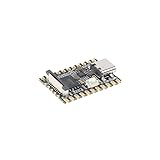
- Single core ARM Cortex-A7 32-bit core, integrated with NEON and FPU
- Built in Micro's self-developed 4th generation NPU, with high computational accuracy and support for mixed quantization of int4, int8, and int16. Among them, int8 has a computing power of 0.5 TOPS and int4 has a computing power of up to 1.0 TOPS
- Built in self-developed 3rd generation ISP3.2, supports 4 million pixels, and supports various image enhancement and correction algorithms such as HDR, WDR, and multi-level denoisin
- It has powerful encoding performance, supports intelligent encoding, adapts to save bit rates according to the scene, and saves more than 50% of the bit rate compared to conventional CBR mode, making the captured images high-definition, smaller in size, and doubling the storage space
- The design with built-in RISC-V MCU supports low-power fast startup, 250ms fast capture, and simultaneous loading of AI model library, enabling facial recognition to be completed within 1 second
How function calling turns text into an action
Function calling bridges model output and application behavior, but the model’s function call is a request, not proof that an operation has run. The application receives the proposed function and arguments, checks them, and decides whether and how to invoke the underlying function. It then handles the result and may provide that result back to the model.
- Describe an available function: Supply the tool’s name, purpose, and argument schema.
- Receive the model’s proposal: Parse the requested function and arguments, and check that the response is complete and conforms to expectations.
- Apply application controls: Enforce permissions, business rules, and any required confirmation or review. Do not treat a schema-valid argument as authorization.
- Execute in application code: Call the real function only after those checks pass.
- Record and handle the outcome: Capture the invocation outcome and relevant identifiers, then handle errors or return the result to the model as appropriate.
OpenAI describes function calling as a way to connect models with external tools and systems, including extracting structured data from raw text for storage in a database. The application, not the model’s generated text, performs the operation: Function Calling in the OpenAI API.
Independent reader supportYour contribution helps us test, update, and keep practical guides available for everyone.Map pipeline events to stable telemetry
Once the application has a validated result, emit telemetry that describes the stages and their outcomes. Useful signals may include input received, extraction attempted, validation passed or failed, a tool requested or invoked, and the downstream result. Emit only stages that exist in the workflow, and give each attribute one stable meaning.
The Tool Desk
Outbyte PC Repair FREEClear out junk files and repair common Windows errorsFree Scan →Outbyte Driver Updater FREEScan for outdated or missing drivers - takes under a minuteDriver Scan →OpenTelemetry semantic conventions provide common attribute names, types, meanings, and accepted values across logs, metrics, and traces. Its general conventions documentation is labeled version 1.44.0. The GenAI attributes are maintained in a dedicated, evolving area: the general conventions page notes their move, while the registry still presents GenAI attributes and notes the migration. Treat GenAI fields as an evolving convention set, not as a guarantee that every attribute is permanently stable. See OpenTelemetry semantic conventions and the GenAI semantic-convention attribute registry.
Rank #4

- 【POWERFUL ESP32‑S3 CONTROLLER】Built‑in Xtensa 32‑bit LX7 dual‑core processor, 512KB SRAM, 8MB PSRAM, 16MB Flash for stable AI voice computing and multitask processing.
- 【Preloaded Dual AI Platforms】Comespre-installed with complete Deepseek and OpenAI voice dialogue projects.Experience intelligent voice interaction instantly. (Note: OpenAI functionality requires your own API key.)
- 【STABLE WIRELESS & CLEAR AUDIO】Integrated 2.4GHz Wi‑Fi + Bluetooth 5 (LE); dedicated audio decoding module for natural, responsive voice interaction.
- 【USER‑FRIENDLY VISUAL & PLUG‑AND‑PLAY】2” TFT‑SPI color screen shows real‑time chat; modular design, no extra wiring, ready to use after setup.
- 【FULL LEARNING SUPPORT】45 programmable GPIOs, rich interfaces, online web tutorials, free technical support for beginners & developers.
The GenAI registry covers attributes for model operations, input and output messages, retrieval, tool calls, and token usage. Use applicable conventions to make signals easier to interpret consistently; version or clearly distinguish application-specific extensions rather than changing the meaning of a shared field. For a trace, connect related processing stages with correlation identifiers so operators can follow an extraction and its downstream result without relying on copied prompt text.
Design observability without making sensitive text the default
Raw input, model messages, retrieved text, and tool arguments may contain personal data, confidential content, or operational details. The OpenTelemetry GenAI attribute registry explicitly warns that several message, retrieval, and tool-call attributes may contain sensitive information. Capturing every prompt and response can therefore create a privacy and security risk, not just a larger log.
- Prefer recording stage, status, duration, model-operation identifiers, validation outcome, and correlation identifiers when they answer the operational question.
- Do not capture full message or retrieval content by default. If content is necessary for a defined diagnostic purpose, limit access and retention and apply suitable filtering or truncation.
- Review tool arguments and results before recording them; they may expose user data or internal system details.
- Keep operational telemetry separate from the application record that must retain business data, and apply the relevant access and retention controls to each.
Attribute sensitivity and coverage are described in the OpenTelemetry GenAI attribute registry.
What to check before putting the pipeline into production
- Contract: Are field names, types, meanings, requiredness, and missing-value behavior documented and versioned?
- Quality: Are extraction errors distinguishable from schema errors, policy rejections, and downstream failures?
- Action safety: Does application code validate authorization and business rules before every tool execution?
- Traceability: Can operators correlate the relevant stages and outcomes without storing all raw text?
- Privacy: Have sensitive attributes been filtered, truncated, access-controlled, and assigned a retention policy?
- Compatibility: Have model, endpoint, strict-mode, and supported-schema requirements been checked for the actual configuration? Are evolving GenAI conventions handled as such?
A dependable pipeline does not rely on one model response to do the work of an entire data system. It combines extraction with validation, stable semantics, application-controlled execution, and observability that records enough to operate the workflow without indiscriminately retaining its most sensitive content.
Quick Recap
Product prices and availability are accurate as of the date/time indicated and are subject to change. Any price and availability information displayed on Amazon at the time of purchase will apply.

