
iTechGuides is reader-supported. When you buy through links on our site, we may earn an affiliate commission. As an Amazon Associate I earn from qualifying purchases. Learn more
To measure a display’s input lag at home, either compare it with a screen whose lag is already known using a millisecond timer, or use a dedicated HDMI lag tester. The timer method gives a relative estimate; a tester measures the display’s response to a known video signal. Neither result, by itself, measures the full delay from pressing a controller button to seeing the result in a game.
What display input lag measures
Display input lag is the time between a display receiving a video signal and beginning to show the corresponding image. It is only one part of total button-to-screen latency, which can also include the input device, game or application, computer or console rendering, and the signal path. RTINGS’ TV testing explanation and monitor testing explanation describe this display-specific boundary.
A display-only tester begins with a known video signal and detects when the screen starts emitting light for it. It does not measure controller delay, game simulation, or the whole button-to-photon chain. If your concern is how responsive a complete gaming setup feels, that is a different measurement question.
What’s actually slowing this PC down?
Pick the symptom - the matching free tool is one click away.
Input lag is not pixel response time
Input lag measures when the display begins showing an incoming image. Pixel response time measures how long pixels take to transition from one color to another after display begins. A screen can have low input lag but slower pixel transitions, or the reverse. Some products combine these quantities, so check what the instrument or published test actually counts. RTINGS describes its photodiode test as ending when pixels begin changing color, excluding pixel response time; DisplayLag’s methodology is another example of why the measurement method matters.
#1 Best Overall

- Smooth motion: 240Hz refresh rate and fast 0.5ms response time provide crisp visuals and fluid movement with less input lag.
- Seamless gaming: FreeSync Premium and HDMI VRR eliminate tearing for smooth, responsive PC and console gameplay.
- Fast IPS: Faster 0.5ms response with excellent color accuracy across wide IPS viewing angles.
- Rich color: 99% sRGB color coverage delivers vivid, detailed imagery with strong accuracy.
- Eye comfort: TÜV Rheinland 3‑star certified display lowers blue light while preserving color quality.
Choose a home measurement method
| Method | What you need | What the result means | Main limitation |
|---|---|---|---|
| Timer comparison | A millisecond timer shown simultaneously on the target and a display with known input lag | A relative estimate against that reference | Camera capture, synchronization, and reference accuracy constrain precision |
| Dedicated HDMI tester | A compatible tester, HDMI connection, power, and its sensor | A tool-measured display-path reading for the tester’s signal and setup | Supported resolution and refresh-rate modes depend on the tester and display; readings can vary by screen position |
Method A: compare two screens with a timer
- Connect a laptop to the target monitor, or use one computer with both displays.
- Show the same millisecond timer on both screens at the same time.
- Photograph both screens in one capture and compare the timer values.
- Use the screen with known input lag as the reference. Interpret the difference relative to that known baseline.
This approach follows the comparative method described by RTINGS. Without a trustworthy known-lag reference, the photo does not establish an absolute measurement. Treat the result as an estimate, not a precision test: the displays may not update in perfect sync, and the camera captures only a moment.
Method B: use a dedicated HDMI tester
The Leo Bodnar 4K Lag Tester quick-start guide describes this workflow:
Rank #2
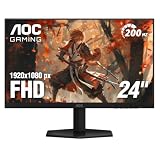
- SHARP CLARITY: This 24'' class (23.8″ viewable) AOC gaming monitor delivers crisp Full HD visuals. Enjoy games, movies, and videos with remarkable detail, all wrapped in a 3-sided frameless design, perfect for multi-monitor setups
- SPEED INTO VICTORY: Lightning-fast 200Hz refresh rate and rapid 1ms MPRT response time lets you target moving opponents with precision. With Adaptive-Sync and low input lag, fast-moving action and dramatic transitions will be rendered smoothly without the effects of ghosting
- ASTONISHING COLORS: Enjoy true-to-life images and vivid colors with 116% sRGB wide color gamut. Elevate your viewing experience with HDR ready
- THE ULTIMATE BATTLE STATION: This sleek gaming monitor is frameless on three sides, so you get minimal bezel distraction. Enjoy next level immersion by creating your own seamless multi-monitor setup
- BETTER CONSOLE GAMING: AOC gaming monitors are designed to maximize the performance of your consoles by unleashing up to 120Hz frame rate (exact performance depends on consoles) and ultra low latency with its low input lag mode, giving you an edge over your opponents
- Connect the tester’s HDMI output to the display and connect USB power.
- Wait for the test screen’s three flashing bars.
- Place the photosensor over one bar, then wait a few seconds to confirm the reading is stable.
- Record the value. Repeat at the other bars if you want to account for scan-position differences.
The guide says the top, middle, and bottom bars can produce different readings because displays form images across the screen. It recommends averaging the three values or using the center bar. The guide says the 4K tester ships configured for 3840×2160p60; if the display does not support the selected format, its resolution must be changed through the tester’s configuration application. Supported formats depend on the tester and display.
Do not assume all lag testers report the same quantity or have the same accuracy. The older Leo Bodnar HDMI/DVI tester’s product page claims better than 1 ms accuracy for that particular model and says it measures combined input lag and pixel response time. Those claims apply to that model and its combined measurement, not to every tester or method.
Rank #3

- High-Resolution QHD Gaming Display: 27-inch QHD (2560 x 1440) gaming monitor with 180Hz refresh rate designed for professional gamers and immersive gameplay
- ASUS Extreme Low Motion Blur Sync Technology: ELMB Sync technology enables ELMB and variable-refresh-rate technologies to work simultaneously to eliminate ghosting and tearing for sharp gaming visuals with high frame rates
- Advanced Synchronization Technologies: FreeSync Premium, G-Sync compatible and AdaptiveSync technology delivers a seamless, tear-free gaming experience by enabling VRR (variable refresh rate) by default
- High Dynamic Range Support: HDR technology supports HDR-10 format to enhance bright and dark areas for improved visual depth and contrast
- Package Contents: DisplayPort cable, L-shaped Screwdriver, Power cord, Power adapter, Quick start guide, Warranty Card
Make the result match your real setup
Record the configuration alongside any reading so you can interpret it later. A result at one refresh rate or picture mode is not automatically the result for another.
- Display model and input connection
- Resolution and refresh rate
- Picture mode, including whether Game Mode or another low-latency mode is enabled
- Any relevant processing options, such as motion interpolation
- Tester position on the screen, if applicable
For a gaming result, use the refresh rate and low-latency picture mode you actually use. RTINGS says Game Mode is generally the low-lag TV configuration and that processing such as motion interpolation can add delay. Its TV methodology also notes that a middle-screen sensor samples halfway through the screen refresh cycle.
Rank #4

- QHD at 240Hz by DisplayPort or HDMI - Enjoy smoother, vivid colors and high-resolution graphics thanks to HDMI 2.1 and DisplayPort 1.4. Both connections are supported on this display and let you experience up to 240Hz refresh rate.
- IPS 1ms (GtG) - Re-imagine every scene with vivid, responsive IPS. At 27“, LG's UltraGear IPS Display features vibrant color, contrast, clarity and detail, while delivering ultra-fast 1ms (GtG) response rates.
- NVIDIA G-SYNC Compatible - Officially validated by NVIDIA as G-SYNC Compatible. That translates to faster, smoother gaming that's been tested to reduce screen tearing and stutter. Never miss a frame of the action as you clinch your victories.
- AMD FreeSync Premium - AMD FreeSync Premium equips serious gamers with a fluid, virtually tear-free gaming experience. With at least 120hz refresh rate at minimum FHD resolution and low latency gameplay, you'll never miss a frame of the action as you play at peak performance.
- HDR400 with up to DCI-P3 95 percent (Typ.) - This UltraGear display supports up to 95 percent (Typ.) of the DCI-P3 color gamut, expressing high-fidelity color paired with VESA DisplayHDR 400 delivering dynamic contrast, on the QHD display.
That scan position contributes time to a measurement: in the RTINGS setup, the middle of a 120 Hz screen is reached 4.17 ms into the frame, while the middle of a 60 Hz screen is reached 8.33 ms into the frame. These are scan-position contributions, not complete input-lag scores or universal results for every display. RTINGS does not state a publication year for these figures on its living methodology page.
Quick wins for a faster PC:
Repair Windows errors before they cause bigger problemsFix Now →Fix the driver behind crashes, sound loss and screen glitchesFind Drivers →Clear out junk files and repair common Windows errorsFree Scan →If the problem is gaming responsiveness
A display-only reading cannot identify every source of delay in a game. If your goal is to investigate the complete experience, keep the categories separate: a display tester measures the display path, while game-level methods examine an action and response within gameplay. inputlag.science’s methodology recommends a mostly static scene, consistent response location, an action without gameplay buffering, and repeated trials; it states that 300 points is its minimum for a decent measure. Those gameplay measurements are not interchangeable with an HDMI tester’s display-only reading.
Best Value
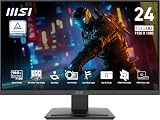
- MSI's 23.8-inch Full HD IPS gaming monitor (1920×1080) delivers a 1500:1 contrast ratio with wide 178°/178° viewing angles — producing deeper blacks, brighter highlights, and accurate colors from virtually any position for gaming and productivity.
- TÜV Rheinland certified Flicker Free and Low Blue Light — eliminating the ~200Hz screen flicker common on standard monitors and reducing harmful blue light exposure to minimize eye strain during extended gaming or work sessions.
- 144Hz high refresh rate delivers ultra-smooth motion and sharper tracking versus standard 60Hz or 75Hz monitors — keeping every frame fluid and responsive for fast-paced FPS, racing, and action games without screen tearing or stuttering.
- MSI's built-in Eye-Q Check provides a vision assessment tool to help optimize display settings for healthier long-term viewing — designed for professionals and students spending extended hours in front of a Full HD IPS screen.
- Tilt-adjustable stand (-5°~20°) for comfortable viewing at any desk setup, with VESA 100×100mm wall mount compatibility for monitor arms, brackets, and multi-monitor arrangements — reducing neck strain during long gaming or work sessions.
For general system troubleshooting, Intel suggests trying another input device if a keyboard, mouse, or gamepad may be faulty, and checking wireless battery and connection conditions. It also discusses frame-rate changes as a possible input-latency adjustment. These checks concern the broader system, not a way to change a display’s hardware-defined latency. See Intel’s input-lag guidance.
Quick Recap
Product prices and availability are accurate as of the date/time indicated and are subject to change. Any price and availability information displayed on Amazon at the time of purchase will apply.

