
Do these 3 things before closing this tab:
1Repair Windows errors before they cause bigger problems2Fix the driver behind crashes, sound loss and screen glitches3Clear out junk files and repair common Windows errorsiTechGuides is reader-supported. When you buy through links on our site, we may earn an affiliate commission. As an Amazon Associate I earn from qualifying purchases. Learn more
There is no defensible universal winner among enterprise AI platforms. The right choice depends on the workload, your cloud and data estate, governance needs, integrations, deployment constraints, and the team that will operate the system. Before committing to a broad rollout, compare candidates against the same production-like workload and measurable requirements—not a polished demo.
Microsoft, AWS, and IBM document different approaches to governance, evaluation, and orchestration. Those materials can help you build a shortlist, but they do not establish an independent ranking. Use the scorecard below to decide what your organization needs to prove.
How to compare enterprise AI platforms
Start with the business task and its constraints, then assess each candidate against the same evidence. A platform’s feature list is less useful than proof that it can meet your requirements with your data, integrations, security boundaries, expected traffic, and operating model.
| Evaluation area | What to test | Evidence to require |
|---|---|---|
| Workload fit and quality | Representative tasks, including difficult and unusual cases. For generative AI, assess accuracy, relevance, groundedness, task completion, and safety. | Results on an evaluation dataset you control, with agreed thresholds and documented failure cases. |
| Latency, reliability, and cost | Response times and behavior under production-like load, alongside the computational cost of the solution. | Measurements under the expected service conditions and a cost model tied to anticipated usage. |
| Security and governance | Policy controls, deployment authority, auditability, content safeguards, and applicable compliance requirements. | Configuration-specific evidence that matches your security review and compliance obligations. |
| Integration and data context | Fit with your applications, structured and unstructured data, identity systems, tools, and workflows. | A working integration test using the access boundaries and systems the production solution will actually use. |
| Operations and observability | Evaluation, traces, production metrics, alerting, incident response, and drift detection. | A defined monitoring and response plan, plus proof that the necessary signals are available to your team. |
| People and adoption | Team skills, training, change management, workflow redesign, and sustained ownership. | Named owners and a realistic plan for supporting users and maintaining the system. |
| Deployment constraints | Cloud or hybrid requirements, target geography, and organizational policies. | Confirmation from the provider for your intended region, configuration, and contract. |
Set the pass/fail thresholds before a proof of value begins. Otherwise, teams can end up comparing different workloads, changing success criteria after seeing results, or treating an impressive demonstration as evidence of production readiness.
#1 Best Overall

- 【Leading AI Mini Workstation】MINISFORUM AI MS-S1 Max Workstation comes with AMD Ryzen AI Max+ 395 processor, which uses AMD's latest generation Zen 5 architecture. It has 16 Cores and 32 Threads, the boost clock is up to 5.1GHz. The overall processor performance is up to 126 TOPS, and the NPU performance reaches up to 50 TOPS. AMD Ryzen AI enables improved productivity, advanced collaboration, and improved efficiency.
- 【AMD Radeon 8060S Graphics 】The MS-S1 Max Mini PC equipped with AMD Radeon 8060S Graphics which built on the new generation of RDNA 3.5 architecture AMD graphics, it brings ultra-high frame rate experiences and advanced content creation features anywhere and delivers staggering performance. It can handle all your computing and multimedia tasks efficiently.
- 【Five 8K Video Output】This MS-S1 Max Workstation comes with five video outputs, 1x HDMI (8K@60Hz), 2x USB4(40Gbps,Alt DP2.0,PD out 15W) and 2x USB4 V2(80Gbps,Alt DP2.0,PD out 15W) Outputs, which support multiple monitors display at the same time and provide a larger and wider filed of view and improve your work efficiency. It is used in fields that require high-performance computing and graphics processing, including digital signage and securities trading, as well as work that uses CAD, such as engineering design, scientific calculations, animation production, and post-production for movies and television.
- 【 Fast and Stable Wire & Wireless Speed】It comes with Two 10G Lan Ports for wired connection and and Wi-Fi 7 / BT5.4 for wireless connection, which increased the network speed greatly and expand its functions and improved performance of computer to a large extent and allows you to use more networks such as software routers (OpenWRT / DD-WRT / Tomato etc.), firewalls, NAT, network isolation etc.
- 【Large Storage & Flexible Expandability】This Workstation equipped with 128GB LPDDR5-8000MHz + 2TB M.2 2280 PCIe4.0 SSD. There is another PCIe4.0 SSD slot available for up to 8TB, these SSD slots are compatible with RAID0 and RAID1, you can store movies, videos, photos, important files easily. What’s more, it also comes with 1x standard PCIex16 slot(PCIe4.0x4) inside.
Why promising pilots fail to scale
A pilot can work in a contained environment and still be unsuitable for routine use. Scaling introduces production traffic, real integrations, sensitive data, user expectations, support responsibilities, and costs that may not have been represented in the initial demonstration.
- Integration is incomplete: the pilot may not exercise the production identity model, data access, tools, or business workflow.
- Load and service conditions change: response time, reliability, and cost need to be checked under the conditions the business expects.
- Governance is unclear: teams need defined policies, audit practices, and boundaries for who can deploy or change workloads.
- Ownership stops at launch: production systems need people responsible for monitoring, incidents, evaluation, and ongoing changes.
- Adoption is assumed: user feedback, training, and workflow changes affect whether a technically successful solution delivers business value.
These are operating-model questions as much as platform questions. Microsoft’s AI management guidance recommends strategic oversight through an AI center of excellence, workload-appropriate MLOps or GenAIOps practices, standardized SDKs and APIs, and a sandbox separated from development, test, and production. It also describes giving workload teams deployment authority within defined governance boundaries, supported by explicit policies and audits. These are recommendations for organizing AI work, not proof that Microsoft is the best platform for every buyer.
Rank #2
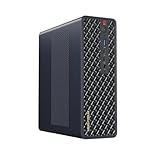
- 【Leading AI Mini Workstation】MINISFORUM AI MS-S1 Max Workstation comes with AMD Ryzen AI Max+ 395 processor, which uses AMD's latest generation Zen 5 architecture. It has 16 Cores and 32 Threads, the boost clock is up to 5.1GHz. The overall processor performance is up to 126 TOPS, and the NPU performance reaches up to 50 TOPS. AMD Ryzen AI enables improved productivity, advanced collaboration, and improved efficiency.
- 【AMD Radeon 8060S Graphics 】The MS-S1 Max Mini PC equipped with AMD Radeon 8060S Graphics which built on the new generation of RDNA 3.5 architecture AMD graphics, it brings ultra-high frame rate experiences and advanced content creation features anywhere and delivers staggering performance. It can handle all your computing and multimedia tasks efficiently.
- 【Five 8K Video Output】This MS-S1 Max Workstation comes with five video outputs, 1x HDMI (8K@60Hz), 2x USB4(40Gbps,Alt DP2.0,PD out 15W) and 2x USB4 V2(80Gbps,Alt DP2.0,PD out 15W) Outputs, which support multiple monitors display at the same time and provide a larger and wider filed of view and improve your work efficiency. It is used in fields that require high-performance computing and graphics processing, including digital signage and securities trading, as well as work that uses CAD, such as engineering design, scientific calculations, animation production, and post-production for movies and television
- 【 Fast and Stable Wire & Wireless Speed】It comes with Two 10G Lan Ports for wired connection and and Wi-Fi 7 / BT5.4 for wireless connection, which increased the network speed greatly and expand its functions and improved performance of computer to a large extent and allows you to use more networks such as software routers (OpenWRT / DD-WRT / Tomato etc.), firewalls, NAT, network isolation etc.
- 【Large Storage & Flexible Expandability】This Workstation equipped with 64GB LPDDR5-8000MHz + 2TB M.2 2280 PCIe4.0 SSD. There is another PCIe4.0 SSD slot available for up to 8TB, these SSD slots are compatible with RAID0 and RAID1, you can store movies, videos, photos, important files easily. What’s more, it also comes with 1x standard PCIex16 slot(PCIe4.0x4) inside.
What the platform examples show
The providers below document capabilities and approaches that may fit different enterprise needs. Their documentation and customer examples are provider statements; they are not a neutral head-to-head assessment. Validate availability, implementation details, pricing, and contractual terms with the provider for your target configuration.
| Provider and documented approach | What to investigate | Evidence qualification |
|---|---|---|
| Microsoft Foundry: documentation describes quality and safety evaluators, pre-production evaluation datasets and red teaming, as well as post-production operational metrics, sampled continuous evaluation, scheduled dataset evaluation for drift, scheduled red teaming, alerting, and distributed tracing. | Test whether the evaluators and monitoring meet your application’s quality, safety, tracing, alerting, and operational requirements in the intended implementation. | Microsoft’s documentation describes product capabilities; it does not establish that they satisfy every buyer’s service or implementation requirements. |
| AWS: AWS’s October 24, 2025 article frames scaling as validation, verification, and sustained adoption, emphasizing integration and stress testing, compliance, user feedback, governance, change management, operational readiness, security, and total cost planning. | Assess the full production path, including the workload’s performance and accuracy, latency, computational cost, and the team’s capability to operate it. | The article reports AWS’s perspective and experience, not an industry-wide benchmark or independent platform comparison. |
| IBM: IBM positions watsonx Orchestrate as a control and orchestration layer connecting agents, workflows, tools, and systems, with governance and hybrid operation. IBM’s May 4, 2026 announcement describes Enterprise Advantage on AWS as a consulting-led approach involving orchestration, context management, controlled tool access, lifecycle management, and observability. | For an AWS-aligned organization considering Enterprise Advantage, validate interoperability, control boundaries, operational fit, and the consulting engagement model. | IBM says Enterprise Advantage is available through IBM Consulting engagement teams and select AWS Partner Network members. This is a named implementation service, not an independent platform comparison. |
How to interpret vendor customer examples
Customer results can illustrate a possible use case, but they are not a forecast for a new buyer. AWS reported in 2025 that 65% of AWS Generative AI Innovation Center customer projects moved from concept to production, with some launching in 45 days. That is AWS’s report about its own projects, not an industry-wide conversion rate.
Rank #3

- Built for Local AI and Advanced Workflows – The BOSGAME M5 AI Mini PC is powered by AMD Ryzen AI Max+ 395 with 16 cores, 32 threads, up to 5.1GHz, 50 TOPS NPU performance and up to 126 TOPS total AI performance. It is designed for local AI inference, private AI assistants, coding, data analysis, virtualization, content creation and demanding multitasking while keeping sensitive data on the device.
- 128GB Unified Memory for Large Models and Creative Projects – M5 includes 128GB LPDDR5X-8000 unified memory, giving the CPU and Radeon 8060S graphics access to a large shared memory pool. This helps support memory-intensive AI workloads, large project files, multiple virtual machines, 3D work, video editing and complex professional applications without the capacity limits of typical 32GB or 64GB mini computers.
- Radeon 8060S Graphics for Creation, Rendering and Gaming – Integrated Radeon 8060S graphics with 40 RDNA 3.5 compute units delivers high-end visual performance without a separate graphics card. Use the M5 creator workstation for 4K video editing, 3D rendering, CAD, AI image workflows, high-resolution media and modern gaming, while maintaining a compact desktop footprint.
- 2TB PCIe 4.0 SSD and Flexible Expansion – A pre-installed 2TB NVMe PCIe 4.0 SSD provides fast access to models, datasets, media libraries and project files. A second M.2 2280 PCIe 4.0 slot allows additional storage expansion, while the SD 4.0 card reader supports efficient photo and video workflows for creators and production teams.
- Professional Connectivity and Four-Display Support – Dual USB4 ports, HDMI 2.1 and DisplayPort 1.4 support up to four displays and resolutions up to 8K@60Hz. WiFi 7, Bluetooth 5.4 and 2.5GbE deliver fast networking for cloud collaboration, NAS access and business deployment. Windows 11 Pro, performance-mode switching, Wake-on-LAN and auto power-on support flexible workstation use.
AWS also reported that more than 1,000 customer implementations informed its 2025 article. In an EPA example, AWS reported an 85% decrease in document processing time, a 99% reduction in evaluation costs, and faster advancement of more than 10,000 regulatory applications. AWS describes the solution as using Anthropic models on Amazon Bedrock and as supporting transparent, verifiable, human-controlled AI practices. Treat these as AWS’s reported results for that example; they do not establish the result another organization should expect.
Microsoft’s July 28, 2026 corporate blog reported that Atos was using Microsoft Foundry, Copilot Studio, and Agent 365 to build, operate, and govern 19,000 agents. This is Microsoft’s customer example, not a neutral benchmark of platform performance.
Rank #4

- Speed up your tasks with AI: Unlock new levels of productivity and creativity by upgrading to Intel Core Ultra processors with built-in AI.
- Supports multiple monitors: Connect up to four FHD monitors using DisplayPort and Daisy Chaining*. Or connect two 4K displays using HDMI 2.1 port and DisplayPort.
- Effortless upgrades: The tool-less entry and removable side panel let you quickly access the internal components, making upgrades convenient and stress-free.
- Ready for business: Keep your data secure with a hardware TPM security chip. And when you need to step away from your desk, simply secure your desktop using the built-in lock slot or padlock loop.
- Style meets sustainability: Dell Tower Desktop seamlessly combines elegance with sustainability. Its sleek, modern design, crafted from recycled materials and featuring refined corners, makes it a stylish addition to any home or office.
Run a production-like proof of value
A useful proof of value answers a decision, not just whether a model can produce a convincing output. Agree on the workload, evaluation method, owners, and success measures before testing begins.
Quick wins for a faster PC:
Fix the driver behind crashes, sound loss and screen glitchesFind Drivers →Repair Windows errors before they cause bigger problemsFix Now →- Choose representative tasks and data. Include routine cases, edge cases, and the data and workflow context the production solution is expected to use.
- Set quality and safety thresholds. Define how you will judge accuracy, relevance, groundedness, task completion, and safety, and how failures will be recorded.
- Set service and cost limits. Establish acceptable latency, reliability, and cost under expected usage; test under production-like load rather than relying on a demo.
- Test integration and access controls. Exercise the required applications, identity, tools, and data permissions, and check that access boundaries behave as intended.
- Complete security and compliance review. Verify governance policies, auditability, content safeguards, deployment authority, and any requirements specific to your organization.
- Define the operating plan. Name owners for monitoring, evaluation, incident response, lifecycle changes, and user support. Confirm the team can access the traces and metrics it needs.
- Get user feedback and measure business value. Test the workflow with intended users and agree on the business outcomes that would justify rollout.
Microsoft Foundry’s documented evaluation approach includes pre-production datasets and red teaming, then operational metrics and ongoing evaluation after launch. AWS’s October 2025 guidance similarly emphasizes integration testing, stress testing, compliance, user feedback, and operational readiness. Together, these provider recommendations reinforce a practical distinction: launch evaluation and production monitoring are separate responsibilities.
Make the decision in context
Shortlist platforms that fit your cloud and data estate, governance requirements, integration needs, deployment constraints, and operating skills. Then compare them on the same workload and scorecard, with explicit thresholds for quality, safety, latency, cost, reliability, and business value. The sources available here do not establish a neutral overall winner or a complete current pricing comparison; service availability and terms must be confirmed for your geography, configuration, and contract.
Quick Recap
Product prices and availability are accurate as of the date/time indicated and are subject to change. Any price and availability information displayed on Amazon at the time of purchase will apply.

