
The Tool Desk
Outbyte PC Repair FREEClear out junk files and repair common Windows errorsFree Scan →Outbyte Driver Updater FREEFix the driver behind crashes, sound loss and screen glitchesFind Drivers →iTechGuides is reader-supported. When you buy through links on our site, we may earn an affiliate commission. As an Amazon Associate I earn from qualifying purchases. Learn more
A model ID advertised by an API gateway should be usable on the request path and for the capabilities the gateway claims it supports. But a successful GET /v1/models response does not, by itself, prove that every listed ID routes correctly or that its advertised capabilities work. Official documentation describes several ways discovery and execution can diverge, including aliases, routing groups, and per-model capability settings. It does not establish how often gateways have these mismatches, so “most” is not a verified prevalence claim.
What does a public model list promise?
OpenAI’s API reference describes GET /v1/models as listing currently available models with basic information about each one. The model object includes an id, a Unix created timestamp, an object type, an owned_by value, and an optional shutdown_date. OpenAI specifies that the id is the identifier that can be referenced in API endpoints. OpenAI API reference: List models.


For a client, that makes the catalogue more than a decorative inventory: it is a discovery interface. If a gateway publishes an ID for a caller, a reasonable expectation is that the same caller can use that ID on a supported endpoint. If the listing also communicates capabilities or other properties, clients may rely on those when choosing a model. The exact contract depends on what the gateway exposes; the endpoint’s existence alone does not guarantee every possible operation.
Windows Errors? Fix Them Before They Spread
Repair common Windows errors and clear accumulated junk for a smoother, more stable PC - no reinstall needed.Free scan · no reinstallOutdated Drivers Are Slowing You Down
One free scan finds every outdated or missing driver and matches the right update for your exact hardware.Free scan · exact hardware matchWhy is a model in /v1/models but my request says the model doesn’t exist?
The public alias and upstream ID do not match
A gateway may accept a client-facing alias and translate it to an upstream provider’s model name. Kong documents this routing pattern, including a stable alias that lets an operator change the upstream model without requiring clients to change their requests. Kong notes: “This is useful when you want to decouple your client API from upstream provider changes.” Kong AI Gateway documentation: AI Models.
#1 Best Overall
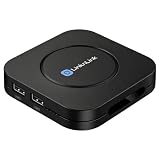
- ONE-CLICK HA INSTALL - Deploy Home Assistant in seconds, no coding. Unifies multi-brand devices into one control center. Includes one-click HACS, Add-on Manager, OTA, backup, and 30s auto-restore watchdog. Full Linux SSH and Docker access.
- AI HOME AUTOMATION - OpenClaw AI agent learns your routines to auto-adjust lighting, climate, and devices. Skip YAML—describe needs in plain language and AI creates automation instantly. Proactively recommends useful automations, evolving into a smart household manager.
- MATTER BRIDGE - Connects Zigbee, Wi-Fi, and other smart devices into Apple Home, Alexa, and Google Home. Generates a Matter pairing QR code—simply scan with your preferred app to add devices. Control everything by voice via HomePod, Echo, or Nest for a unified multi-platform smart home.
- FULL AI SERVER - A compact 24/7 OpenClaw AI server beyond smart home control. Handles writing, research, emails, and content generation as your everyday AI assistant. Saves hardware costs and power versus a separate PC/Mac. Affordable, low-maintenance local AI.
- MOBILE APP SETUP - Download the free LinknLink App, sign in, and add multi-brand devices via smartphone. All device info auto-syncs to HomeClaw—no repeated config or manual importing. Drastically reduces setup time and effort for first-time installation and future expansion.
The alias is the identifier clients must send if the route is configured to require it. Kong’s documentation describes a failure case when a client sends the upstream model name instead of the configured alias. Conversely, if a gateway lists an alias that is absent from its active routing configuration, discovery can succeed while a request using that alias fails.
The catalogue and routing configuration are separate
LiteLLM documents that routing-group names appear in /v1/models discovery. That is useful for exposing gateway-level names, but the listing is not a substitute for checking that the intended request can resolve through the configured routes. LiteLLM documentation: Router – Load Balancing.
Rank #2
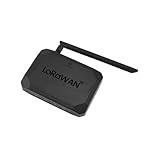
- NO SUBSCRIPTION FEES & PRIVATE LORAWAN NETWORK: Build a local LoRaWAN IoT network with the built-in SIoT server and pre-installed Node-RED. Collect data, create dashboards, and run automation flows locally without required cloud service fees. Suitable for DIY makers, home gardeners, educators, and small IoT prototype projects.
- LOCAL DATA PROCESSING & PRIVACY CONTROL: Sensor data can be processed on the local network through the built‑in MQTT/SIoT server, reducing reliance on third‑party cloud platforms. Local automation rules continue running when internet access is unavailable — suitable for home, garden, greenhouse, and classroom IoT setups.
- 4KM COVERAGE & 8-CHANNEL RELIABILITY: Equipped with the SX1302 8-channel LoRaWAN chip, -140dBm sensitivity, 27dBm max transmit power, and included 5dBi antenna. Supports up to 4km coverage in open environments, helping connect garden sensors, greenhouse nodes, garages, mailboxes, and remote monitoring points.
- NODE-RED DRAG-AND-DROP VISUAL AUTOMATION:Automation rules, data dashboards, and control logic can be built with little to no coding using the pre‑installed Node‑RED. Flows such as reading soil moisture, checking temperature, and sending relay commands are created through a visual interface — reducing setup time for maker, education, and prototype projects.
- EASY SETUP WITH WIFI AP & MQTT INTEGRATION: Configure the gateway via Wi-Fi AP mode using a laptop or mobile device. Built-in MQTT broker supports integration with Node-RED dashboards, and other MQTT-compatible platforms. Designed for indoor residential, educational, and prototyping use; not intended for outdoor installation.
The caller’s view may differ from another client’s
A list fetched with one base URL or authorization context may not represent what a different client can discover or invoke. Fetch and test the catalogue with the same endpoint and credentials used by the intended client. Whether discovery is scoped to callers depends on the deployment; verify that behavior rather than assuming a global list applies to every key.
Can a model list imply capabilities as well as names?
Yes, when a catalogue publishes capability or model metadata, clients can use it to decide whether an entry fits a task. OpenRouter documents properties including input and output modalities, context length, pricing, supported parameters, and provider details. Its API also documents filtering options for the model list. OpenRouter API documentation: List all models and their properties.
Those properties make accuracy and freshness important. An ID might resolve successfully while an operation the client expects—such as embeddings, chat completion, or image generation—is not configured for that route. Kong documents capabilities as configurable for each model, separate from alias routing. A listing that signals an operation should therefore be checked against both the gateway’s configuration and a real request for that operation.
How to test whether advertised model IDs actually work
Run this check in staging or another low-impact environment, using the same base URL and authorization context as the client whose experience you want to verify. Generate the test cases from the exact public catalogue rather than from a hand-maintained list.
- Fetch and save the catalogue. Send
GET /v1/modelsto the gateway’s client-facing base URL with the intended client’s credentials. Save the response as a fixture so you can compare results after configuration changes. - Try every advertised ID on a supported endpoint. For each
idor alias in the response, send a minimal valid request to the relevant endpoint. Record the HTTP status, any model name returned, and whether the request reached the intended route. - Test the public identifier exactly as published. Compare each public ID with the gateway’s alias rules and upstream target. Do not substitute an upstream provider’s model name unless that is what the public list advertises and the gateway accepts. Kong documents a mismatch failure when a required alias is replaced with the upstream name.
- Exercise each advertised capability separately. Check capability declarations against per-model configuration, then make an appropriate request for each claimed operation—for example, chat completion, embeddings, or image generation where those are exposed. A successful request to one endpoint does not prove other capabilities work.
- Check for drift and response changes. Include tests for stale IDs, aliases that resolve to an unexpected upstream, entries without the capability configuration clients expect, and catalogue fields that disappear or change type. These are useful test cases because discovery, routing, and capability configuration can be separate; they are not claims that a particular vendor has experienced those failures.
- Make mismatches visible over time. Alert when a listed ID fails its route or capability check, and run the checks when gateway configuration changes. This is an engineering recommendation, not a requirement specified by the cited vendors.
What to compare when choosing or configuring a gateway
These questions help distinguish a catalogue that merely returns names from one clients can use predictably. The documented behaviors below are examples from the named products, not a cross-vendor ranking.
Do these 3 things before closing this tab:
1Repair Windows errors before they cause bigger problems2Scan for outdated or missing drivers - takes under a minute3Clear out junk files and repair common Windows errors| Contract area | What to check | Documented example |
|---|---|---|
| Identifier semantics | Does the client send an upstream ID, a gateway-owned alias, or either? Can an alias remain stable when the upstream changes? | Kong documents routing by alias and an example intended to let operators change an upstream model without clients noticing. Kong AI Gateway documentation. |
| Discovery semantics | Which IDs or routing-group names appear in /v1/models, and does the response represent the caller’s access? |
LiteLLM documents routing-group names appearing in model discovery; access behavior should be verified in the deployment. LiteLLM Router documentation. |
| Capability declaration | Does each entry state supported operations or modalities, and do those claims match the configured route? | Kong documents per-model capability configuration; OpenRouter documents modality and supported-parameter metadata. Kong and OpenRouter. |
| Metadata quality and freshness | Are context length, supported parameters, pricing, provider, and retirement information available where relevant, and kept current? | OpenAI documents basic model fields and an optional shutdown date; OpenRouter documents richer model properties. OpenAI and OpenRouter. |
| Failure visibility | Can a client distinguish an invalid public ID or unsupported operation from a failure farther upstream? | Kong documents a concrete alias-mismatch failure path. The cited documentation does not establish a cross-vendor comparison of error clarity. Kong AI Gateway documentation. |
What the evidence does—and doesn’t—show about “most” gateways
The cited official documentation establishes mechanisms that can create a mismatch: public aliases can differ from upstream names, routing groups can be discoverable, and capabilities can be configured separately from model listing. It does not provide a measured rate of gateways that violate their advertised behavior. Treat “most” as a warning in the headline, not a statistic about the gateway market.
Quick Recap
Product prices and availability are accurate as of the date/time indicated and are subject to change. Any price and availability information displayed on Amazon at the time of purchase will apply.

