
Quick wins for a faster PC:
Fix the driver behind crashes, sound loss and screen glitchesFind Drivers →Repair Windows errors before they cause bigger problemsFix Now →Scan for outdated or missing drivers - takes under a minuteDriver Scan →iTechGuides is reader-supported. When you buy through links on our site, we may earn an affiliate commission. As an Amazon Associate I earn from qualifying purchases. Learn more
Local AI can take on some of the work that currently goes to large hosted models, but only the bounded parts. The most practical pattern, as Chris Green describes it in his Search Engine Journal article published September 30, 2026, is hybrid: exact operations go to deterministic code, lightweight interpretation can run on a small local model where errors are easy to check, and a stronger remote model handles only the cases that need it. Green’s evidence is a single practitioner experiment rather than an independently replicated benchmark, so treat his findings as a well-reasoned starting point, not a verdict on any particular model.
What Green built and what he found
Green is identified by Search Engine Journal as Technical Director & Senior Consultant at Torque Partnership. He describes building Exactly Matchy, a Chrome extension meant to help assess whether content is retrievable by AI systems. His question was not whether a small model can reproduce ChatGPT or Claude on a laptop. It was how much useful work can move closer to the user.
He draws a clear line between two kinds of task. Sitemap URL extraction and deduplication are, in his account, better handled by an XML parser and a script than by a language model, because the correct output is mechanically determinable and an XML parser returns the same result every time.
Free tools Windows power users keep installed
One-click scans. No signup required.
The harder case is interpretation. Green compares the raw HTML of a page with its rendered DOM, and the link evidence he gathers can include:
#1 Best Overall

- [Personal AI Supercomputer]: Built for AI developers, researchers, data scientists, startup labs, and university labs, the ASUS Ascent GX10 is designed for local AI development, model testing, inferencing, RAG workflows, and agentic AI experimentation beyond a standard mini PC.
- [NVIDIA GB10 Grace Blackwell Superchip]: Powered by the NVIDIA GB10 Grace Blackwell Superchip with Blackwell GPU architecture and a 20-core Arm CPU, GX10 delivers up to 1 PetaFLOP of FP4 AI performance for generative AI prototyping and local model workflows.
- [128GB Unified Memory for Large AI Workloads]: 128GB LPDDR5x unified memory helps support demanding AI development and testing scenarios, including workflows for large language models, multimodal AI, local inference, fine-tuning experiments, and model evaluation.
- [2TB NVMe Storage for AI Projects]: The 2TB M.2 2242 NVMe SSD provides high-speed local storage for AI model libraries, datasets, Docker containers, checkpoints, development environments, and RAG or vector database workflows.
- [DGX OS and Advanced Connectivity]: DGX OS and the NVIDIA AI software stack help streamline CUDA, PyTorch, TensorFlow, TensorRT, NVIDIA NIM, and AI Blueprint workflows, while Wi-Fi 7, 10GbE, USB-C, HDMI, and NVIDIA ConnectX-7 support modern lab and desktop deployments.
- links whose destination has changed between the two versions;
- links whose anchor text has changed;
- links that are broken in the initial HTML but work after rendering;
- different URLs that resolve to the same destination.
He supplied this structured evidence to Gemini Nano. He found it useful for some tasks but not reliable enough for a final decision he could trust. He reports that a stronger API model handled the same evidence considerably better. These outcomes are qualitative and come from his own experiment. The article provides no independent replication and no quantitative benchmark for accuracy, speed or cost.
The three-tier architecture
Green’s recommendation reduces to an ordered pipeline. Each tier takes only the work it suits.
Rank #2

- Built for Local AI and Advanced Workflows – The BOSGAME M5 AI Mini PC is powered by AMD Ryzen AI Max+ 395 with 16 cores, 32 threads, up to 5.1GHz, 50 TOPS NPU performance and up to 126 TOPS total AI performance. It is designed for local AI inference, private AI assistants, coding, data analysis, virtualization, content creation and demanding multitasking while keeping sensitive data on the device.
- 128GB Unified Memory for Large Models and Creative Projects – M5 includes 128GB LPDDR5X-8000 unified memory, giving the CPU and Radeon 8060S graphics access to a large shared memory pool. This helps support memory-intensive AI workloads, large project files, multiple virtual machines, 3D work, video editing and complex professional applications without the capacity limits of typical 32GB or 64GB mini computers.
- Radeon 8060S Graphics for Creation, Rendering and Gaming – Integrated Radeon 8060S graphics with 40 RDNA 3.5 compute units delivers high-end visual performance without a separate graphics card. Use the M5 creator workstation for 4K video editing, 3D rendering, CAD, AI image workflows, high-resolution media and modern gaming, while maintaining a compact desktop footprint.
- 2TB PCIe 4.0 SSD and Flexible Expansion – A pre-installed 2TB NVMe PCIe 4.0 SSD provides fast access to models, datasets, media libraries and project files. A second M.2 2280 PCIe 4.0 slot allows additional storage expansion, while the SD 4.0 card reader supports efficient photo and video workflows for creators and production teams.
- Professional Connectivity and Four-Display Support – Dual USB4 ports, HDMI 2.1 and DisplayPort 1.4 support up to four displays and resolutions up to 8K@60Hz. WiFi 7, Bluetooth 5.4 and 2.5GbE deliver fast networking for cloud collaboration, NAS access and business deployment. Windows 11 Pro, performance-mode switching, Wake-on-LAN and auto power-on support flexible workstation use.
- Compute exact facts in code. Parse the XML, extract URLs, normalize values, deduplicate, and keep the intermediate output so every result can be audited. Do not ask a generative model to perform an operation whose correct answer can be computed.
- Use local inference for limited interpretation. Ask a small model to summarize or classify structured evidence, such as the list of link differences above. Choose this tier where an occasional error can be spotted and contained before it affects anything important.
- Escalate hard judgments. Route ambiguous or consequential cases to a stronger model or to a human reviewer. Keep the evidence format and the task interface stable, so the model behind the escalation step can be swapped without redesigning the whole pipeline.
Green summarizes the approach this way:
“The opportunity isn’t to recreate ChatGPT or Claude locally. It is to build software where: Exact computation happens in code, lightweight intelligence happens locally, and expensive intelligence is called only when it is truly needed.”
Special offer. See more information about Outbyte and uninstall instructions. Please review EULA and Privacy policy.
Which tasks belong where
The table below applies Green’s framework to the kinds of work discussed in the article. The assignments for interpretive tasks reflect his reported results, and the local-model row should be read as conditional on the errors being checkable.
Rank #3

- 【High-Performance APU】The MS-S1 MAX features an AMD Ryzen AI Max+ 395 APU, integrating a Zen 5 architecture CPU (up to 5.1GHz, 16C/32T, 64M L3 Cache), an RDNA 3.5 GPU, and an NPU (50 TOPS). The total system output is 126 TOPS. It provides powerful parallel computing capabilities for demanding AI workflows. It is ideal for running local LLMs, multimodal models, and computationally intensive tasks
- 【128GB UMA Memory】Equipped with up to 128GB of LPDDR5x-8000MT/s unified memory, it enables the CPU and GPU to access a shared, high-bandwidth memory pool with extremely low latency. Ideal for large-scale AI inference, 3D workloads, and complex timelines in video editing. It eliminates traditional VRAM bottlenecks, ensuring smoother data transfer during high-intensity computations. The UMA design maximizes performance stability under high loads
- 【Flexible Expansion】The MS-S1 MAX features USB4 V2 (up to 80Gbps), dual 10GbE LAN, HDMI 2.1 (up to 8K60), a full-length PCIe x16 expansion slot, and dual M.2 slots supporting up to 16TB RAID 0/1. Wi-Fi 7 provides stronger signal coverage and a more stable wireless experience. The slide-out design facilitates upgrades and maintenance. It easily adapts to personal, studio, or rack-mount enterprise environments
- 【High-Efficiency Cooling System】Utilizing an aerospace-grade aluminum alloy chassis, copper base plate, six heat pipes, dual turbine fans, and advanced PCM thermal conductive material, it maintains stable cooling performance even under continuous load. This system supports 130W continuous power and 160W peak power operation, with a built-in 320W power supply. It boasts multiple global certifications including CCC, FCC, UL, CE, and UKCA, ensuring stable and reliable operation in various environments
- 【Cluster Design】Two MS-S1 MAX units can be configured as a dual-unit cluster to run a large 235B Q4 model locally, achieving an output speed of 10.87 tok/s. Supporting 2U rack deployment, multiple MS-S1 MAX units can be cascaded into a distributed cluster to create a high-efficiency AI computing center. A cluster of four MS-S1 MAX units successfully ran a DeepSeek-R1 671B Q4 large model. A reserved cluster power-on interface allows for unified start-up and shutdown
| Task | Suggested tier | Reason given or implied by the article |
|---|---|---|
| Extracting URLs from a sitemap XML file | Code (XML parser and script) | The correct output is mechanically determinable and reproducible. |
| Deduplicating a URL list | Code | Normalization and comparison are exact operations; the result should be auditable. |
| Comparing raw HTML with rendered DOM links | Code to collect the differences | Detecting changed destinations, changed anchor text and broken initial links is a structured comparison. |
| Summarizing or labeling the collected link differences | Local model | Green found this useful for some tasks, and errors can be checked against the structured evidence. |
| Deciding whether a flagged link problem needs action | Stronger remote model or human reviewer | Green reports that Gemini Nano was not reliable enough for this final judgment in his test. |
Chrome’s Prompt API: what you need to run it
If you want to run a local model inside Chrome, the built-in Prompt API is the route Green’s experiment relies on. Chrome for Developers’ Prompt API documentation, last updated August 26, 2026, describes the following requirements. They are specific to Chrome’s built-in API, not general requirements for local AI runtimes.
| Requirement | Documented value (as of August 26, 2026) |
|---|---|
| Model | Gemini Nano |
| Supported operating systems for foundation-model APIs | Windows 10/11; macOS 13 and later; Linux; ChromeOS on Chromebook Plus devices |
| Not yet supported | Chrome for Android and iOS; ChromeOS on non-Chromebook Plus devices |
| Free storage | At least 22 GB |
| Processing hardware | Either a GPU with strictly more than 4 GB of VRAM, or a CPU with at least 16 GB of RAM and at least four cores |
| Initial model download | Downloaded separately on first use; requires an unmetered connection |
| Use after download | Does not require a network connection |
Note that the RAM figure is one of two hardware routes. A machine with 16 GB of RAM qualifies only if it also meets the CPU core count and the storage requirement. Meeting one route does not satisfy the requirements on its own, and a computer that is merely “AI-ready” in marketing terms may still fall short on storage or operating system. Model size and requirements can change as Chrome updates the model, so check the current documentation before planning a deployment.
Rank #4
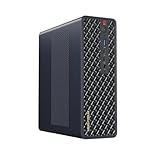
- 【Leading AI Mini Workstation】MINISFORUM AI MS-S1 Max Workstation comes with AMD Ryzen AI Max+ 395 processor, which uses AMD's latest generation Zen 5 architecture. It has 16 Cores and 32 Threads, the boost clock is up to 5.1GHz. The overall processor performance is up to 126 TOPS, and the NPU performance reaches up to 50 TOPS. AMD Ryzen AI enables improved productivity, advanced collaboration, and improved efficiency.
- 【AMD Radeon 8060S Graphics 】The MS-S1 Max Mini PC equipped with AMD Radeon 8060S Graphics which built on the new generation of RDNA 3.5 architecture AMD graphics, it brings ultra-high frame rate experiences and advanced content creation features anywhere and delivers staggering performance. It can handle all your computing and multimedia tasks efficiently.
- 【Five 8K Video Output】This MS-S1 Max Workstation comes with five video outputs, 1x HDMI (8K@60Hz), 2x USB4(40Gbps,Alt DP2.0,PD out 15W) and 2x USB4 V2(80Gbps,Alt DP2.0,PD out 15W) Outputs, which support multiple monitors display at the same time and provide a larger and wider filed of view and improve your work efficiency. It is used in fields that require high-performance computing and graphics processing, including digital signage and securities trading, as well as work that uses CAD, such as engineering design, scientific calculations, animation production, and post-production for movies and television
- 【 Fast and Stable Wire & Wireless Speed】It comes with Two 10G Lan Ports for wired connection and and Wi-Fi 7 / BT5.4 for wireless connection, which increased the network speed greatly and expand its functions and improved performance of computer to a large extent and allows you to use more networks such as software routers (OpenWRT / DD-WRT / Tomato etc.), firewalls, NAT, network isolation etc.
- 【Large Storage & Flexible Expandability】This Workstation equipped with 64GB LPDDR5-8000MHz + 2TB M.2 2280 PCIe4.0 SSD. There is another PCIe4.0 SSD slot available for up to 8TB, these SSD slots are compatible with RAID0 and RAID1, you can store movies, videos, photos, important files easily. What’s more, it also comes with 1x standard PCIex16 slot(PCIe4.0x4) inside.
Downloads, network use and privacy
The model is not bundled with Chrome. It downloads on first use, and that download must happen over an unmetered connection. Once it is on disk, inference does not need a network connection, which is what allows offline use.
What’s actually slowing this PC down?
Pick the symptom - the matching free tool is one click away.
Google’s documentation states: “No data is sent to Google or any third party when using the model.” That statement covers the built-in Prompt API. It does not describe what an individual extension does with its own network requests, logs, storage or telemetry. An extension that calls the Prompt API can still send data elsewhere through its own code, so a developer or user who cares about data handling should inspect the extension separately from the model.
Best Value

- 【Leading AI Mini Workstation】MINISFORUM AI MS-S1 Max Workstation comes with AMD Ryzen AI Max+ 395 processor, which uses AMD's latest generation Zen 5 architecture. It has 16 Cores and 32 Threads, the boost clock is up to 5.1GHz. The overall processor performance is up to 126 TOPS, and the NPU performance reaches up to 50 TOPS. AMD Ryzen AI enables improved productivity, advanced collaboration, and improved efficiency.
- 【AMD Radeon 8060S Graphics 】The MS-S1 Max Mini PC equipped with AMD Radeon 8060S Graphics which built on the new generation of RDNA 3.5 architecture AMD graphics, it brings ultra-high frame rate experiences and advanced content creation features anywhere and delivers staggering performance. It can handle all your computing and multimedia tasks efficiently.
- 【Five 8K Video Output】This MS-S1 Max Workstation comes with five video outputs, 1x HDMI (8K@60Hz), 2x USB4(40Gbps,Alt DP2.0,PD out 15W) and 2x USB4 V2(80Gbps,Alt DP2.0,PD out 15W) Outputs, which support multiple monitors display at the same time and provide a larger and wider filed of view and improve your work efficiency. It is used in fields that require high-performance computing and graphics processing, including digital signage and securities trading, as well as work that uses CAD, such as engineering design, scientific calculations, animation production, and post-production for movies and television.
- 【 Fast and Stable Wire & Wireless Speed】It comes with Two 10G Lan Ports for wired connection and and Wi-Fi 7 / BT5.4 for wireless connection, which increased the network speed greatly and expand its functions and improved performance of computer to a large extent and allows you to use more networks such as software routers (OpenWRT / DD-WRT / Tomato etc.), firewalls, NAT, network isolation etc.
- 【Large Storage & Flexible Expandability】This Workstation equipped with 128GB LPDDR5-8000MHz + 2TB M.2 2280 PCIe4.0 SSD. There is another PCIe4.0 SSD slot available for up to 8TB, these SSD slots are compatible with RAID0 and RAID1, you can store movies, videos, photos, important files easily. What’s more, it also comes with 1x standard PCIex16 slot(PCIe4.0x4) inside.
Checking whether a task suits a local model
Before routing a task to a local model, answer these questions in order:
- Can the correct result be computed exactly? If yes, use code and stop.
- What does a wrong answer cost, and would anyone catch it before it matters?
- Can the evidence be structured so that the model’s output can be checked against it?
- Do the target machines meet the platform, storage and hardware requirements in the table above?
- Is there a stronger model or a human reviewer to receive the cases the local model cannot settle?
- Does the data path meet the privacy requirements of the application, including any code outside the model call?
The available evidence does not quantify latency or cost for local versus hosted options. Those comparisons need to be measured in your own environment before any decision is based on them.
Limits of the current evidence
- Green’s model comparison comes from one practitioner experiment. The article provides no independent replication and no published accuracy scores.
- Chrome’s requirements and the Gemini Nano model may change with Chrome updates, and the documentation was last updated August 26, 2026.
- The Prompt API requirements apply to Chrome. Other local-model runtimes, and other browsers, have their own requirements that this article does not cover.
The practical takeaway for an SEO or web team is narrower than “replace the frontier model.” Move deterministic work into code first, test whether a small local model improves interpretation on your own evidence, and keep a stronger path ready for the cases where a wrong answer would be costly.
The Tool Desk
Outbyte Driver Updater FREEFix the driver behind crashes, sound loss and screen glitchesFind Drivers →Outbyte PC Repair FREERepair Windows errors before they cause bigger problemsFix Now →Quick Recap
Product prices and availability are accurate as of the date/time indicated and are subject to change. Any price and availability information displayed on Amazon at the time of purchase will apply.

