
PC Slower Than It Used to Be?
A free scan shows the junk files, broken settings and background clutter dragging Windows down - then fixes them in one click.Free scan · Windows 10 & 11Outdated Drivers Are Slowing You Down
One free scan finds every outdated or missing driver and matches the right update for your exact hardware.Free scan · exact hardware matchiTechGuides is reader-supported. When you buy through links on our site, we may earn an affiliate commission. As an Amazon Associate I earn from qualifying purchases. Learn more
Replacing standing administrative access means turning always-on admin rights into short, narrowly scoped grants. A named person signs in from a trusted device, requests a specific permission, receives it through a role activation or a brokered connection for a fixed window, and the grant expires on its own. Every request, approval, and session leaves a record. “Brokered session” is not one product or one architecture. The right design depends on the systems you administer, so the sections below separate the cloud case from the server case before turning to migration.
What a brokered session is in practice
The phrase covers any step where something other than the administrator’s own standing permission decides whether, when, and how a privileged connection happens. In cloud platforms that step is usually a role activation or a short-lived federated credential. For servers it is more often a privileged access management (PAM) proxy or a managed session service that opens the connection on the user’s behalf. These are different designs with different failure modes, so they should not be treated as interchangeable.
| Scenario | What is granted | Where the control sits | Limits to confirm |
|---|---|---|---|
| Cloud control plane (resource or role administration) | Temporary role activation or a short-lived federated token | Identity provider and cloud IAM policy | Usually bound to one provider account, tenant, region, or supported resource type |
| Mixed Windows and Linux servers | Proxied RDP or SSH session, or controlled use of a credential the user does not see | PAM proxy or privileged remote access gateway | Protocol and platform coverage must be confirmed; the broker becomes critical infrastructure |
| Managed cloud-agent nodes (AWS Systems Manager example) | Temporary access granted through an approval policy and temporary token | The cloud service’s JIT node-access workflow | Documented for nodes in the same account and Region for a session; scoped through AWS account and Region preferences |
| Vendor or contractor sessions | Time-bound remote session, often with recording | PAM session gateway | Recording storage, export, and vendor identity handling must be designed, not assumed |
Why standing rights are the problem
Standing administrative access is a permission that stays active between tasks. The danger is duration. A stolen password, a hijacked session token, or a compromised workstation can reach an admin path at any hour, not only during the work that justified the permission. CISA’s guidance on hardening networks, drawn from red team findings, puts the control directly: “Configure time-based access for accounts set at the admin level and higher.” CISA also describes just-in-time (JIT) access as enabling admin access for a defined period after a request.
Quick wins for a faster PC:
Repair Windows errors before they cause bigger problemsFix Now →Fix the driver behind crashes, sound loss and screen glitchesFind Drivers →Time limits shrink the window; they do not stop every attack. An attacker who controls a device the administrator is using can still act during an approved window, which is why the controls below are meant to be stacked rather than used alone.
#1 Best Overall

- POWERFUL SECURITY KEY: The YubiKey 5C NFC is the most versatile physical passkey, protecting your digital life from phishing attacks. It ensures only you can access your accounts
- WORKS WITH 1000+ ACCOUNTS: Compatible with popular accounts like Google, Microsoft, and Apple. A single YubiKey 5C NFC secures 100+ of your favorite accounts, including email, password managers, and more
- FAST & CONVENIENT LOGIN: Plug in your YubiKey 5C NFC via USB and tap it, or tap it against your phone (NFC), to authenticate. No batteries, no internet connection, and no extra fees required
- MOST SECURE PASSKEY: Supports FIDO2/WebAuthn, FIDO U2F, Yubico OTP, OATH-TOTP/HOTP, Smart card (PIV), and OpenPGP. That means it’s versatile, working almost anywhere you need it
- PRIMARY & SPARE KEYS: Just like having a spare house key, we recommend buying two YubiKeys - one for daily use and one as a spare. That way you’ll never get locked out of your accounts
The controls a brokered session needs
Microsoft’s guidance for privileged access requires JIT workflows for privileged interfaces and names peer approval, an audit trail, and privilege expiration as core controls, alongside identity and device trust and least privilege. Each of the following is one link in that chain.
Verified identity and device
Each grant starts with a named individual, never a shared account. Require phishing-resistant MFA where your platform supports it. Pair identity with device trust: the privileged session should originate from a compliant, managed workstation or from the controlled intermediary, not from any laptop that can sign in. A valid identity on a compromised device should not be enough.
Least privilege and task scope
Replace broad administrator roles with the narrowest entitlement that covers the operation. Map what each task actually needs, such as restarting a service, reading logs, or changing one DNS record, and grant only that. Where change control requires a reason or ticket reference, make the reference a required field in the request rather than optional text.
Do these 3 things before closing this tab:
1Clear out junk files and repair common Windows errors2Scan for outdated or missing drivers - takes under a minute3Repair Windows errors before they cause bigger problemsApproval proportionate to risk
Approval is a judgment about impact. Read-only access to low-risk systems may need no human approval beyond the verified identity, while production changes to high-impact systems may need an owner or peer to approve. Microsoft’s guidance lists peer approval as one of the JIT controls. Measure approval latency during the pilot: approvals that take hours push people back toward standing access.
Activation or brokered connection
Once approved, the grant takes effect in one of two ways. A native cloud role is activated, so the user’s session carries temporary permissions. A broker opens the connection itself, so the user reaches the server through a proxy and, where configured, the broker uses a credential the user never sees. Confirm which model you have, because it determines what the audit log can show.
Rank #2

- POWERFUL SECURITY KEY: The YubiKey 5 NFC is the most versatile physical passkey, protecting your digital life from phishing attacks. It ensures only you can access your accounts
- WORKS WITH 1000+ ACCOUNTS: Compatible with popular accounts like Google, Microsoft, and Apple. A single YubiKey 5 NFC secures 100+ of your favorite accounts, including email, password managers, and more
- FAST & CONVENIENT LOGIN: Plug in your YubiKey 5 NFC via USB and tap it, or tap it against your phone (NFC), to authenticate. No batteries, no internet connection, and no extra fees required
- MOST SECURE PASSKEY: Supports FIDO2/WebAuthn, FIDO U2F, Yubico OTP, OATH-TOTP/HOTP, Smart card (PIV), and OpenPGP. That means it’s versatile, working almost anywhere you need it
- PRIMARY & SPARE KEYS: Just like having a spare house key, we recommend buying two YubiKeys - one for daily use and one as a spare. That way you’ll never get locked out of your accounts
Maximum duration and expiry
Set a maximum activation window and make expiry automatic. Choose the shortest window that covers a normal change. Renewal should require a new request, not a silent extension of the same grant. Revocation matters as well: if an account is disabled or a device is flagged, active grants should end rather than run to their timer. Whether an issued token can be revoked before it expires depends on the platform, so verify this for each target.
Audit trail
Record who requested what, who approved it, the identity and target, the start and end times, and what happened during the session. The depth of session activity you capture depends on the environment, and so do retention and access rules. A log that nobody can search, or that sits beside the admin accounts it monitors, is weak evidence.
Two things you may be governing: the entitlement and the session
A control-plane entitlement lets someone change cloud resources through an API or console. An interactive server session lets someone log in to an operating system and run commands. A brokered workflow can govern either or both, but approval for one does not cover the other. Someone who activates a cloud role may still hold an RDP or SSH path to a virtual machine that bypasses the workflow. Map which of the two each path grants before you call the design complete.
Native cloud JIT or a PAM broker: how to choose
The enforcement point should follow the target, and the policy should come first. A product does not define access rules; it can only enforce the rules you write. The table compares the two main options on the axes that matter during selection.
| Axis | Native identity or cloud JIT | PAM or session broker |
|---|---|---|
| Best fit | Role activation or managed cloud resources where native policy can scope and expire access | Mixed estates, remote server protocols, credential mediation, vendor sessions, centralized session review |
| Access mechanism | Temporary role, claim, or token, or time-bound role activation | Proxied session, controlled credential use, or temporary elevation coordinated by the PAM system |
| Session visibility | Limited to what the cloud service logs and supports for recording | Can include command monitoring or recording; confirm protocol coverage and storage or export options |
| Deployment scope | Usually bound to one provider account, region, tenant, or supported resource type | Can span more platforms, but you run broker infrastructure, connectors, and integrations |
| Risks to test | Alternate permissions that keep direct access; token duration, scope, and log settings | Broker compromise, weak broker administration, endpoint compromise, credential leakage, outages |
| Operating questions | Can existing roles be narrowed? Are approvals and logs integrated? Can standing start-session rights be removed? | Which protocols and systems are supported? How are secrets rotated? Who can open recordings? What is the recovery path? |
- Start with native controls when the targets are cloud resources and the provider’s role activation can scope, expire, and log the actions you need.
- Consider a PAM broker when you must cover mixed Windows and Linux servers, specific remote protocols, vendor sessions, credential checkout or rotation, or centralized session review.
- Many estates end up with both: native cloud roles for the control plane and a broker for server protocols, with the same identity and approval rules applied to each path.
Setting up just-in-time access to managed servers: an AWS example
AWS Systems Manager documents a JIT workflow for managed nodes. It uses approval policies and temporary tokens, and it offers logging and RDP recording options. This is one service’s design, not a template for all AWS administration or every environment. Its guide describes access to nodes in the same account and Region for a session, and the setup is scoped through AWS account and Region preferences.
Rank #3

- FIDO2 & Passkey Ready: Business-ready and FIDO2 L1 certified. This key is supported by major management suites and is ideal for both individual and enterprise deployment. Works seamlessly with Gmail, Facebook, GitHub, Dropbox, Coinbase, and more.
- Universal Connectivity (USB-A ): Features a built-in USB-A connector—simply unfold the key and plug it into your compatible PC or laptop for seamless authentication on the go.
- Dedicated Manager App: Use the Thetis Manager App for the initial hardware PIN setup. Setting the PIN on the device first ensures a smooth registration process. Once the PIN is configured, you can begin registering the key across your favorite FIDO2-compatible online services.
- Ultra-Durable & Portable: Featuring a rotating metal cover, this key is water, crush, and tamper-resistant. It fits easily on a keychain and requires no batteries or network connectivity.
- Check FIDO2 compatibility before purchase - Known limitations: ID Austria is not supported (requires FIDO2 Level 2). Windows Hello login only works with Windows Enterprise editions that support Entra ID, and NFC is NOT supported.
Two details matter during migration. First, RDP recording requires an S3 bucket and a customer-managed KMS key. Second, if previous users keep Session Manager start-session permissions, they may continue using the older Session Manager path instead of the new JIT node-access workflow. Removing standing access therefore means auditing who holds start-session permissions, not only configuring the new workflow’s approvers.
How do you remove standing admin access without slowing operations?
Move in the order below. Each step produces the evidence the next one needs. Skipping the inventory is the most common reason standing rights survive a rollout. Admin console labels and product features change, so confirm current menu names and capabilities in your provider’s or PAM vendor’s documentation before configuring anything.
Step 1: Inventory every standing path
- Human admin rights: local administrator membership, directory group memberships, and cloud role assignments.
- Shared and local admin accounts, including those on appliances.
- Remote paths: VPN routes, bastions, exposed RDP or SSH, and vendor remote tools.
- Vendor and contractor accounts.
- Service identities and automation credentials.
- Emergency (break-glass) accounts.
Keep human interactive access separate from workload identities and automation. Service credentials need their own lifecycle, such as secret vaulting, rotation, and workload identity federation where available. A human approval flow does not fit them.
Step 2: Define scope and risk tiers
Start with high-impact privileged interfaces or a bounded cohort of systems, such as one application tier or a set of production domain controllers, rather than the whole estate. For each tier, list the operations that genuinely need elevation. Where a task-specific entitlement can replace a broad administrator role, use it. The tiers then drive approval rules and maximum durations.
Step 3: Choose the enforcement point
Use native identity or cloud JIT where it covers the target. Use a PAM or privileged remote access intermediary when you need protocol mediation, credential checkout or rotation, cross-platform coverage, or session capture. Confirm protocol coverage for each product you evaluate, because a broker that cannot mediate a required protocol leaves that path open.
Rank #4

- SOLID CONSTRUCTION: This lock box for house key is made of strong and durable aluminum alloy material, sturdy, unbreakable, have a long time use
- SECURE: All-metal high strength alloy material makes this lockbox for keys safe and secure, no breaking, prying or stealing issues, the protection waterproof cover prevents the box from water and dust
- EASY TO INSTALL: Easy to install the key lock box for outside on wall or door with the included mounting hardware, no power source required
- EASY TO SET CODE: Remove the inside white plastic cover and turn the screws to the desired code, and replace the cover, the combinatinon password code is changeable as your demands, will come with instructions,If you meet any problems for setting code or other issues, please contact us at any time
- WIDE USE: This key lock box is very versatile, dimension is 105X65X55MM (Inside size 70X40X25MM), you can store keys or others little items in the key cabinet for indoor or outdoor, apartment building, office, warehouse, garage etc. Perfect for home owners, family members, landlord, vacation rentals, property management, realtors etc. for children after to school, friends access, emergency access, gardener, cleaners etc.
Step 4: Write the access policy
Write the rules per tier, then configure them. Each tier’s policy should state:
- The named identity required and the MFA method.
- The device requirement: compliant managed endpoint or controlled intermediary.
- The least-privilege scope of the grant.
- The reason or ticket required, if any.
- The approval rule for that tier.
- The maximum duration, plus expiry and revocation behavior.
A policy that exists only in a design document enforces nothing. Each line should map to a setting you can point to.
Step 5: Make the broker privileged infrastructure
A broker concentrates access, so it must be protected like the systems behind it. Microsoft’s guidance warns that intermediaries can themselves be targeted, which makes a broker a high-value target rather than a shield.
- Limit who can administer the broker, and keep that group smaller than the group of people who use it.
- Harden and patch the broker host and its connectors on a schedule you can demonstrate.
- Monitor the identities and devices that administer the broker with the same alerting you apply to other critical infrastructure.
- Protect broker secrets and logs. Logs kept only on the broker are a single point of tampering.
- Verify that no direct network path reaches the targets around the broker. Otherwise it becomes an unrestricted alternate route.
Logging and session records
At minimum, record the request, the decision, the identity, the target, the start and end times, and the session activity appropriate to the environment. AWS describes streamed session data that includes commands, user identity, and timestamps. Command logs and recordings are different kinds of evidence. Command logs do not show everything a tool does internally, and a video of an RDP session is slow to search. Choose the level that fits how your reviews will actually run.
Free tools Windows power users keep installed
One-click scans. No signup required.
A recording becomes useful audit evidence only when the right session can be found quickly and someone knows how to read it. Decide the following before rollout:
Best Value
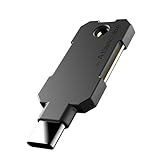
- PHISHING-RESISTANT 2FA: Cryptographically binds to real domains, making phishing attacks impossible unlike SMS codes or authenticator apps.
- 3-SIDE CAPACITIVE TOUCH: Tap the end, left, or right side to authenticate, so it works in any orientation or crowded USB port.
- MULTI-COLOR LED INDICATOR: Blue means ready, blinking blue means tap now, green means success, and red means error for instant status feedback.
- IP68 WATERPROOF & BATTERY-FREE: Crush-resistant one-piece construction survives daily carry on a keychain or in a bag for years without any batteries.
- UNIVERSAL COMPATIBILITY: Works with Google, Microsoft, Apple, GitHub, AWS, and any FIDO2 / U2F / WebAuthn service, storing up to 100 passkeys.
- Retention periods set by your policy and any regulatory duty you have, not by vendor defaults.
- Who may open recordings, controlled through the same access rules as other privileged data.
- Employee notice that sessions are recorded, aligned with the privacy rules that apply where you operate.
- Tamper resistance: write logs to storage that the administrator accounts cannot modify.
- Searchability by user, target, and time window.
- An incident-response procedure that names who uses these logs and when.
Testing the paths before standing rights go
Do not retire standing rights on the strength of a configuration screen. Test each path and record the result for each tier:
- Successful elevation: an approved request produces a working session with only the scoped permissions.
- Expiry: the session ends at the window, and a new attempt triggers a new request.
- Denial: unapproved, out-of-scope, and unmanaged-device requests fail, and each denial is logged.
- Approval latency: the time from request to approval, compared with what operators will accept.
- Disconnect and reconnect: what happens to a session after a network drop, and whether reconnecting re-checks entitlement.
- Emergency access: break-glass works when the normal path fails.
- Broker outage: which operations stop, and whether the recovery path is documented and has been practiced.
- Audit retrieval: an auditor can pull the complete record for a given session within the time you define.
- Removal of old permissions: standing admin rights and legacy start-session permissions are actually gone.
- Bypass search: check for any route to the target outside the broker, including direct network access, local accounts, SSH keys, and native start-session permissions.
Rolling out and retiring standing access
Roll out in cohorts
Move one cohort at a time, starting with the tier whose workflow has passed testing. Measure operational friction: denied requests, delayed approvals, and the workarounds people invent. A workaround is a finding about the design. Fix the design rather than adding another exception.
Retire standing privileges last
Remove a standing right only after the replacement workflow and its recovery path have been proven for that population. Keep a dated record of each removal so you can show what changed and when.
What’s actually slowing this PC down?
Pick the symptom - the matching free tool is one click away.
Keep break-glass access tightly governed
Keep a small number of emergency accounts for when the broker, identity provider, or device trust fails. Store their credentials under strict control, trigger an alert on every use, and require a post-use review that asks why the account was needed and whether the normal path should have worked.
What brokered sessions do not solve
- Endpoint compromise: Microsoft notes that PAM and PIM do not address device compromise. A brokered session started from a compromised workstation is still a risk.
- Alternate paths: any permission that reaches the target outside the workflow undoes the design.
- Recordings as monitoring: recordings support review, but they do not detect anomalies on their own.
- Mandatory third-party tooling: many estates can begin with native cloud and operating-system controls. Assess native capability and protocol coverage first, and buy a PAM product only for the gaps that remain.
The Bottom Line
The aim is not to strip privilege from administrators. It is to make each use of privilege time-limited, approved where the impact warrants it, and reconstructable afterwards. Begin with the paths that carry the most risk, protect the broker and its records as carefully as the systems behind them, and remove standing rights only when the replacement has been shown to work.
Quick Recap
Product prices and availability are accurate as of the date/time indicated and are subject to change. Any price and availability information displayed on Amazon at the time of purchase will apply.

