
Quick wins for a faster PC:
Clear out junk files and repair common Windows errorsFree Scan →Fix the driver behind crashes, sound loss and screen glitchesFind Drivers →Repair Windows errors before they cause bigger problemsFix Now →iTechGuides is reader-supported. When you buy through links on our site, we may earn an affiliate commission. As an Amazon Associate I earn from qualifying purchases. Learn more
SSL and a firewall protect different things. SSL, which today means TLS (Transport Layer Security), encrypts the connection between a visitor and your server and lets the browser check who it is talking to. A web application firewall (WAF), the kind of firewall that matters for websites, inspects incoming requests and blocks those that match malicious or unwanted patterns. TLS protects data in transit. A WAF helps protect the application that receives the data. Most websites benefit from both, and neither one replaces the other.
Does SSL protect my website?
It protects the connection, and only the connection. The name “SSL” stuck, but the SSL protocols have been replaced by TLS. When people say they have an SSL certificate, what they actually use is a TLS certificate that enables HTTPS. TLS does three jobs:


- Encryption. Data exchanged between the browser and the server is scrambled, so someone on the same Wi-Fi network or along the route cannot read login details or form submissions.
- Server authentication. The certificate ties the server to a hostname. If the certificate does not match the address in the browser, or is not issued by a trusted authority, the browser warns the visitor.
- Integrity checks. Data changed in transit is detected rather than silently accepted.
What TLS does not do is look at what a request asks for. Once the connection is encrypted, a malicious request travels through it just as safely as a legitimate one. A search box vulnerable to SQL injection receives an attack delivered over HTTPS without any objection from the encryption layer.
What is a web application firewall?
Cloudflare’s WAF concepts documentation describes it this way: “A Web Application Firewall or WAF creates a shield between a web app and the Internet.”
#1 Best Overall
A WAF reads incoming web and API requests and compares them with rules. Rules can match request properties such as the IP address, the URL path, request headers, and body content. A matching request can be allowed, challenged, or blocked. Common rule targets include SQL injection and cross-site scripting, two attack types that exploit how an application handles user input.
Coverage depends on the rules. A WAF catches the patterns it is configured to recognise and nothing more. It is a useful layer against common attacks, not a guarantee that every attack is stopped, and it does not encrypt anything.
Rank #2
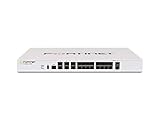
- Protects against known exploits, malware and malicious websites; detects unknown attacks; identify thousands of applications
Why “firewall” can mean two different things
A network firewall filters traffic by IP address, port, and protocol before a web server sees it. It can decide that only ports 80 and 443 are open, for example. It does not read the content of a web request, so it cannot tell a normal product search from a SQL injection string sent to the same port. A WAF works at the HTTP layer and reads the request itself. When someone recommends “a firewall for my website,” check which of the two they mean. Hosting-level network filtering and a WAF are complementary, and most sites need an application-aware layer more than a port-level one.
Do these 3 things before closing this tab:
1Fix the driver behind crashes, sound loss and screen glitches2Clear out junk files and repair common Windows errors3Scan for outdated or missing drivers - takes under a minuteWhat each one stops, in practice
The clearest way to see the difference is to walk through specific situations.
| Situation | TLS (SSL certificate with HTTPS) | Web application firewall |
|---|---|---|
| Someone on public Wi-Fi tries to read login traffic | Protects it, provided HTTPS is working and enforced | No effect; the WAF does not encrypt |
| SQL injection sent through a search form over HTTPS | Does not stop it; the request is encrypted and still delivered | Can block it if a matching rule is active and scoped to that request |
| Cross-site scripting payload in a comment field | Does not stop it | Can block or challenge it if rules match the payload |
| Certificate expires | Visitors see a browser certificate warning | No effect on the warning |
| Visitor types the plain http:// address and no redirect exists | Connection stays unencrypted unless HTTPS is enforced | Sees the request, but cannot make the connection secure |
| Flood of traffic aimed at taking the site offline | No effect | Limited; volumetric attacks are handled by separate DDoS protection |
Do I need SSL and a firewall?
For most sites that accept any input from visitors, yes. The answer shifts with what the site does:
- Login forms, checkouts, or any personal data: HTTPS is required. Without it, credentials and personal details travel in readable form.
- Dynamic sites, CMS platforms, or custom applications with forms, search, or user accounts: a WAF gives you a layer that inspects the application’s inputs. The value is highest when the application runs plugins or code that you update less often.
- APIs: both matter. Traffic to APIs should be encrypted, and request-level inspection helps catch malformed or abusive calls. API security is often treated as a separate discipline from the WAF, so review it on its own terms.
- A static site with no forms or server-side code: HTTPS is still the baseline, but there is little for a WAF to inspect.
Making HTTPS protect every visitor
An active certificate does not automatically force every visitor onto HTTPS. Cloudflare’s guidance on enforcing HTTPS makes the same point: unsecured HTTP requests can still reach the site unless enforcement is switched on. Work through these steps in order.
- Check the certificate. Confirm that it covers every hostname visitors use, including both the bare domain and the www version, and that it has not expired. Open the padlock in the browser and inspect the certificate details.
- Redirect HTTP to HTTPS. In the Cloudflare dashboard, go to SSL/TLS, then Edge Certificates, and turn on Always Use HTTPS. Afterwards, a request to an http:// address should return a redirect to the https:// address.
- Check for redirect loops. If the origin server also redirects HTTP to HTTPS while the proxy talks to it over HTTP, the two redirects can loop endlessly. Fix the encryption mode before retrying, as described in the next section.
- Find mixed content. Open the browser developer console and look for “Mixed Content” warnings. Any image, script, or stylesheet still loaded over http:// should be changed to https:// or to a relative address.
- Retest from a clean browser session. Browsers cache redirects and security states, so test with a private window and an address typed without a scheme.
Behind a proxy: two TLS connections
When a service such as Cloudflare sits between visitors and your server, there are two separate connections: visitor to the proxy edge, and proxy edge to your origin server. Protecting only the first leaves the second exposed. Cloudflare’s encryption modes control this, and the strictest mode, Full (strict), validates the origin certificate.
Full (strict) only works when the origin meets all of these conditions:
Best Value
![ZyXEL ZyWALL (USG) UTM Firewall, Gigabit Ports, for Small Offices, 20 IPSec VPN, 5 SSL VPN, Limited, Hardware Only [USG40-NB]](https://m.media-amazon.com/images/I/31HNlmmmCnL._SL160_.jpg)
- Perfect for small offices: High performance ICSA-certified Gigabit UTM firewall delivers fast speeds of 400 Mbps (FW), 100 Mbps (VPN) and 50 Mbps UTM for 50,000 sessions
- Robust and secure VPN options (SSL, L2TP and IPSec) ensure excellent site-to-site, client-to-site and mobile-to-site connectivity with 20 IPSec Tunnels and 5 SSL Upgradable to 15
- 30 Day Free Trial of best-in-class antivirus, anti-malware, anti-spam, content filtering, intrusion detection and next-generation application intelligence from TrendMicro and other industry leaders
- Limited lifetime hardware warranty, free firmware upgrades and free technical support (90 days upon registration)
- Quiet, fanless design makes an ideal deployment in small offices
- The origin server serves HTTPS.
- Its certificate has not expired.
- The certificate was issued by a trusted certificate authority or by the Cloudflare Origin CA.
- The certificate name matches the hostname being requested.
If one of these fails, visitors can receive Cloudflare error 526, which indicates an invalid origin certificate. Lower-security modes such as Flexible encrypt only the visitor-to-edge leg, which is why Full (strict) is the recommended target when the origin can support it. These settings are specific to Cloudflare. Other proxies and load balancers have their own equivalents.
Adding a WAF without blocking real visitors
A WAF that is too aggressive will block legitimate users, and one that is too loose will do little. Roll it out in stages:
- Start with the rules that match your application. Enable the managed rules for common attacks, then add custom rules only where you know the application’s exposure, such as admin paths or API endpoints.
- Scope rules narrowly. A rule that matches a path, method, or parameter is easier to tune than one that matches every request.
- Observe before you enforce. Where the platform offers a logging or simulation action, watch what a new rule would match before it blocks anything.
- Review blocked requests. Look for false positives, such as a legitimate form submission that contains characters a rule flags. Adjust the rule’s scope rather than switching the whole WAF off.
- Keep the application patched. A WAF reduces exposure to known patterns; it does not fix a vulnerable plugin or code path.
Cloudflare’s application security material treats WAF, DDoS protection, bot defenses, API security, and client-side script monitoring as separate parts of a defense-in-depth approach. Each addresses a different threat, so choosing one does not cover the others.
The Tool Desk
Outbyte Driver Updater FREEFix the driver behind crashes, sound loss and screen glitchesFind Drivers →Outbyte PC Repair FREEClear out junk files and repair common Windows errorsFree Scan →For a plain-language overview of how a site’s defences fit together, see this site’s guides on itechguides.com.
Quick Recap
Product prices and availability are accurate as of the date/time indicated and are subject to change. Any price and availability information displayed on Amazon at the time of purchase will apply.

